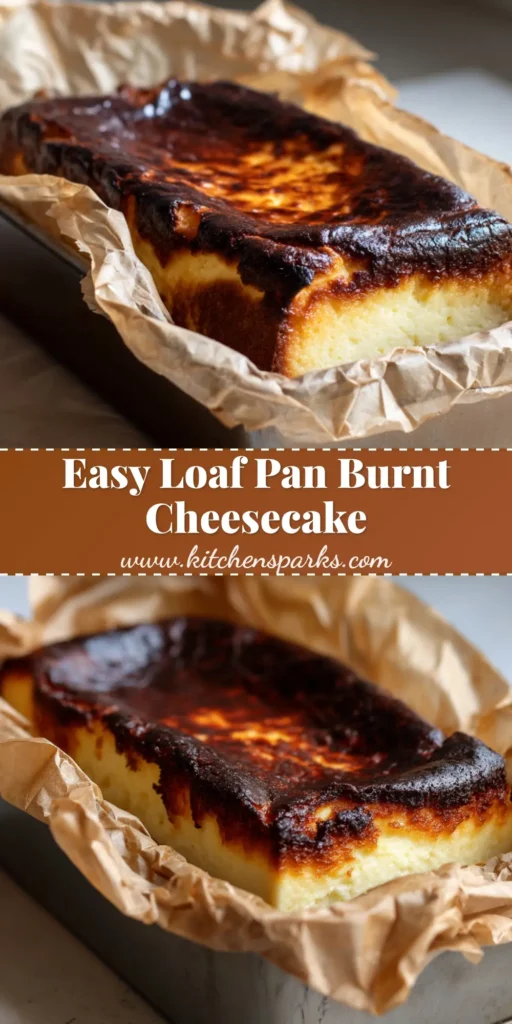
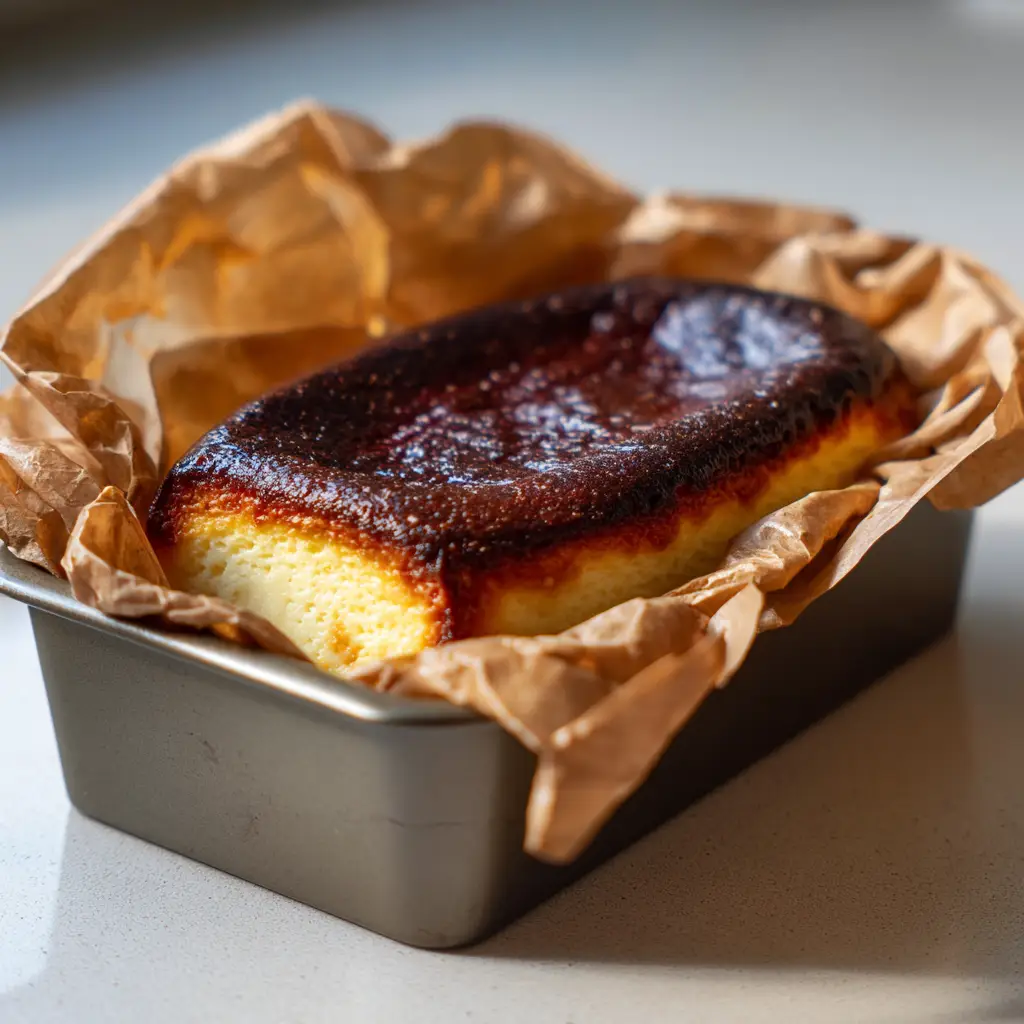
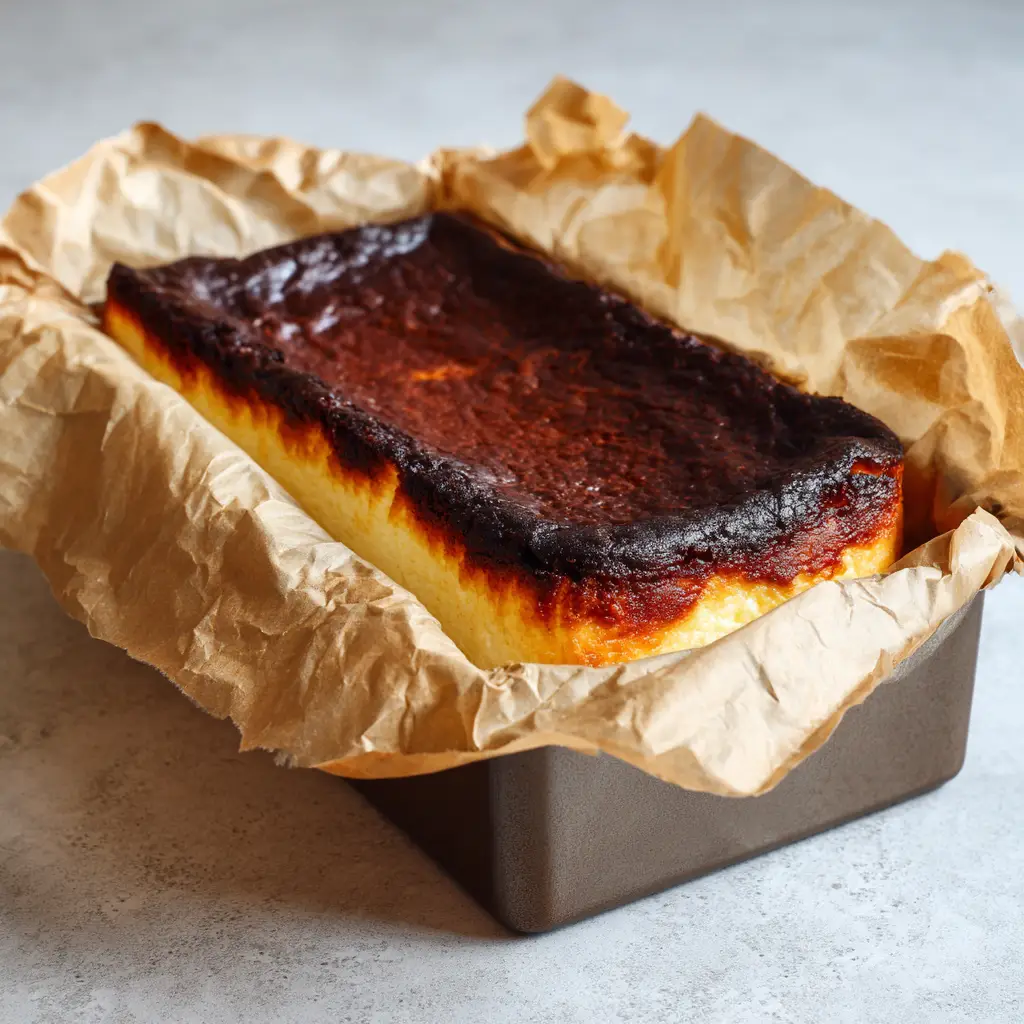
Prepare yourself for a cheesecake experience unlike any other. This loaf pan burnt cheesecake delivers that iconic, deeply caramelized, and almost blackened charred top crust that shatters under your fork. It gives way to a smooth, dense, and unbelievably creamy pale yellow cheesecake body inside.
We’ve captured the soul of a traditional Basque cheesecake and scaled it perfectly for an easy-to-make loaf pan size. The crinkled, browned parchment paper holding the rustic cake is not just for looks—it’s a signature part of the process that makes this dessert both stunning and foolproof.
Forget everything you know about water baths and fears of cracking. This recipe embraces the imperfections, turning them into the main feature. The high-heat baking method creates a complex, slightly bitter crust that perfectly balances the sweet, tangy, and rich interior.
Why You’ll Love This Recipe
- Stunning Visuals: The dramatic contrast between the dark, blistered top and the pale, creamy center makes this a show-stopping dessert with minimal effort.
- Incredibly Creamy Texture: We’re talking dense, rich, and silky-smooth. It’s a luxurious texture that melts in your mouth, achieved without any complicated steps.
- No Water Bath, No Worries: This recipe is designed to be baked at a high, direct heat. Cracks are welcome, and the rustic charm is part of the appeal.
- Perfectly Portioned: The loaf pan format is ideal for smaller gatherings, offering easy, clean slices without committing to a full-sized cheesecake.
Ingredients & Substitutions
Every ingredient plays a critical role in achieving the perfect texture and flavor. Here’s what you’ll need:
- Cream Cheese: 16 oz (452g) full-fat, brick-style cream cheese, softened to room temperature. This is the foundation of the cheesecake, providing the dense, tangy, and creamy body. Do not substitute with whipped or low-fat versions, as it will alter the final texture.
- Granulated Sugar: 1 cup (200g). Sugar provides sweetness and, more importantly, is what allows the top to achieve that deep, burnt caramelization under high heat.
- Large Eggs: 3 large eggs, at room temperature. Eggs are crucial for the custard-like structure, adding richness and helping the cheesecake set into its dense, sliceable form.
- Heavy Cream: 1 cup (240ml) heavy whipping cream, at room temperature. This adds fat and moisture, resulting in that ultra-smooth, creamy cheesecake body that contrasts so beautifully with the charred top.
- All-Purpose Flour: 2 tbsp (15g). A small amount of flour acts as a binder, giving the cheesecake just enough stability to hold its shape while remaining incredibly tender.
- Vanilla Extract: 1 tsp (5ml). A dash of vanilla adds aromatic depth and enhances the rich flavors of the cream and eggs.
- Kosher Salt: 1/4 tsp (1g). Salt is a non-negotiable flavor enhancer; it balances the sweetness and brings out the tanginess of the cream cheese.
Equipment Needed
- 9×5 inch (23×13 cm) Metal Loaf Pan
- Parchment Paper
- Stand Mixer or Hand Mixer with a large bowl
- Silicone Spatula
Step-by-Step Instructions
Achieving the perfect burnt top and creamy center is all about temperature and technique. Follow these steps closely for a flawless result.
1. Prepare the Pan and Preheat the Oven
First, position a rack in the center of your oven and preheat to 400°F (200°C). This high heat is essential for creating the signature burnt crust.
Take a large sheet of parchment paper (about 16×12 inches) and press it firmly into your loaf pan. Don’t worry about making it perfect; the goal is to create crinkled, overlapping folds along the sides and corners, with a generous amount of paper extending over the edges of the pan. This rustic look is part of its charm.
2. Make the Cheesecake Batter
In the bowl of a stand mixer fitted with the paddle attachment, or in a large bowl with a hand mixer, beat the room temperature cream cheese and granulated sugar on medium speed. Scrape down the sides of the bowl as needed. You are looking for a completely smooth mixture with no lumps, which should take about 2-3 minutes. This step is critical for a non-lumpy final product.
Turn the mixer to low and add the room temperature eggs one at a time, waiting for each egg to be fully incorporated before adding the next. This slow process ensures the batter remains emulsified and smooth.
With the mixer still on low, slowly stream in the heavy cream and vanilla extract. Mix just until the cream is blended. Now, you’ll hear the batter change to a more fluid, liquid sound. Sift the all-purpose flour and salt directly into the bowl and mix on low for another 15-20 seconds, just until no dry streaks remain. Do not overmix.
3. Bake to Perfection
Pour the thin batter into your prepared loaf pan. The pan should be about three-quarters full. Gently tap the pan on the counter a few times to release any large air bubbles.
Bake for 50-60 minutes. During this time, the magic happens. The cheesecake will puff up dramatically, and the top will transform into a deeply caramelized, dark brown, and almost blackened charred crust in spots. To check for doneness, gently nudge the pan. The edges should be set, but the center should still have a very noticeable, distinct jiggle. This jiggle is essential—it means the inside is still creamy.
4. Cool Completely for the Perfect Texture
Remove the cheesecake from the oven and place it on a wire rack. It will be very puffy at first but will sink dramatically in the center as it cools; this is normal. Let it cool completely to room temperature in the pan, which will take about 2 hours.
Once at room temperature, cover the pan loosely with plastic wrap and transfer it to the refrigerator to chill for at least 6 hours, but preferably overnight. This long chill time is crucial for the cheesecake to set into its final dense, creamy, and sliceable state.
When ready to serve, use the parchment paper overhangs to lift the cheesecake out of the pan. Slice with a sharp, hot knife and serve chilled.
Expert Tips for Success
- Use Room Temperature Ingredients: This is non-negotiable for a smooth, lump-free batter. Set your cream cheese, eggs, and heavy cream out on the counter at least 1-2 hours before you begin.
- Don’t Overmix the Batter: Especially after adding the eggs and flour. Overmixing incorporates too much air, which can cause the cheesecake to crack excessively or become tough.
- Embrace the Jiggle: The biggest mistake is overbaking. A significant jiggle in the center when you pull it from the oven is the key to a creamy interior. The cheesecake will continue to set as it cools.
- Patience is Key: Do not rush the cooling and chilling process. Slicing into a warm cheesecake will result in a soupy mess. The overnight chill allows the flavors to deepen and the texture to become perfectly dense.
Storage & Reheating/Freezing
This Loaf Pan Burnt Cheesecake is best enjoyed chilled. Store it in an airtight container in the refrigerator for up to 5 days. The flavors actually meld and become even more delicious after a day or two.
We do not recommend freezing this cheesecake, as it can cause the delicate, creamy texture to become grainy upon thawing.
What to Serve With This
While this burnt cheesecake is a showstopper on its own, it pairs beautifully with a variety of dishes. For a truly decadent “soup and sweet” combination, serve a slice after a comforting bowl of cheesy-broccoli-potato-soup.
If you’re hosting a party, this makes a fantastic dessert after serving savory, crowd-pleasing appetizers like pepperoni-pizza-crescent-rolls or a zesty spicy-korean-bbq-chicken-sandwich.
For a dessert-focused spread, it stands up beautifully next to other rich treats like an italian-lemon-cream-cake or a platter of strawberry-cheesecake-cookies.
Frequently Asked Questions
Yes, this is an ideal make-ahead dessert. It requires at least 6 hours to chill, but the flavor and texture are even better if you let it chill overnight in the refrigerator. It can be made up to 2 days in advance.
Use a piece of parchment paper that is significantly larger than your pan. Don’t try to make it fit perfectly. Simply press the sheet into the pan, creasing it into the corners and allowing the sides to fold and overlap naturally. This creates the signature rustic folds.
Yes, absolutely. When you remove the cheesecake from the oven, the center should have a very pronounced jiggle. It will not be fully set. The residual heat will continue to cook it slightly, and it will firm up into its final dense, creamy state as it cools and chills in the refrigerator.
They are very different! New York cheesecake is dense, firm, and often has a crust, baked low-and-slow in a water bath to prevent cracking. Basque cheesecake is crustless, baked at a very high heat to encourage a burnt top and cracked, rustic appearance, and has a softer, creamier interior.
The key to the ‘burnt’ top is high, direct heat. Ensure your oven is fully preheated to 400°F (200°C) and the cheesecake is baked on a center rack. Every oven is different, so if it’s not dark enough, you can bake it for an additional 5-10 minutes.
The Recipe You Need To Try
We know you’ll fall in love with the rustic elegance and incredible flavor of this Loaf Pan Burnt Cheesecake. If you make this recipe, please leave a comment and rating below!
For more delicious inspiration, be sure to follow us on Pinterest @kitchen_spark. We’re always sharing new and exciting recipes you’ll want to make again and again.
Loaf Pan Burnt Cheesecake
Loaf Pan Burnt Cheesecake Recipe (Easy Basque Style)
Ingredients
Equipment
Method
- Position a rack in the center of your oven and preheat to 400°F (200°C). Press a large sheet of parchment paper into a 9x5 inch loaf pan, ensuring it overhangs on the sides.
- In a large bowl, beat the softened cream cheese and sugar on medium speed until completely smooth. On low speed, add eggs one at a time, mixing until just combined. Slowly stream in the heavy cream and vanilla. Sift in the flour and salt, mixing on low for 15-20 seconds until just combined.
- Pour the batter into the prepared pan. Bake for 50-60 minutes, until the top is a deep, dark brown and the center has a significant jiggle.
- Let the cheesecake cool completely to room temperature in the pan on a wire rack (about 2 hours). It will sink as it cools. Cover loosely and refrigerate for at least 6 hours or overnight before serving.
Notes
Don't Overmix the Batter: Overmixing incorporates too much air, which can cause textural issues.
Embrace the Jiggle: A very jiggly center when it comes out of the oven is the secret to a creamy interior.
Patience is Key: Do not rush the cooling and chilling process. An overnight chill yields the best texture and flavor.