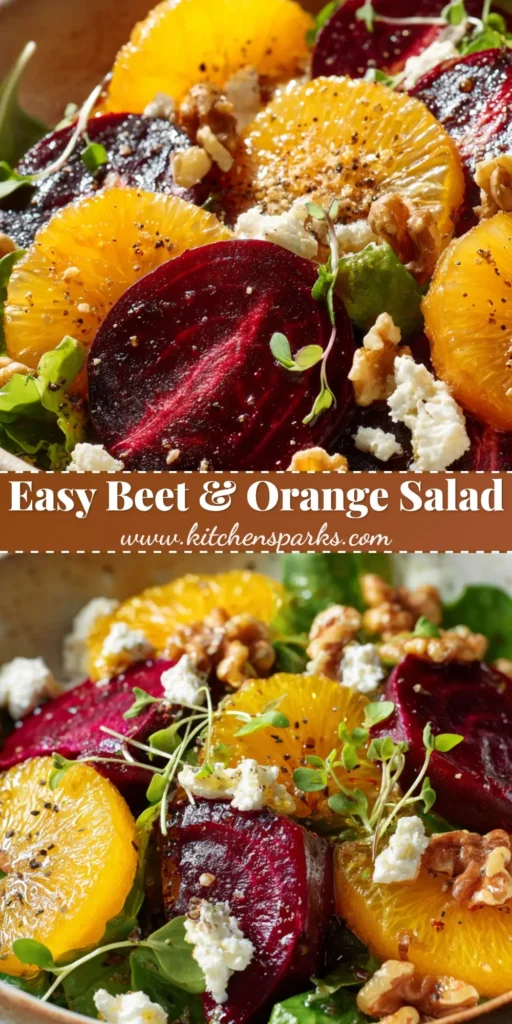
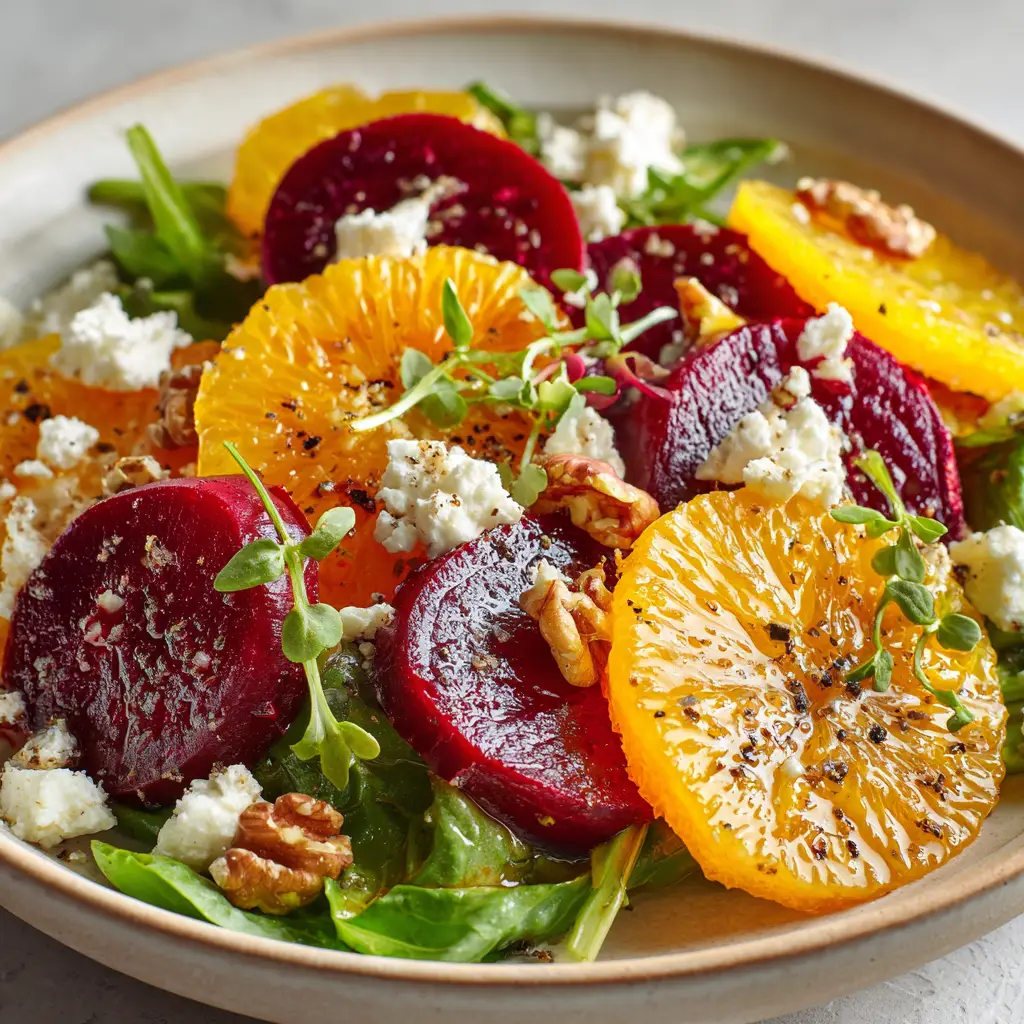
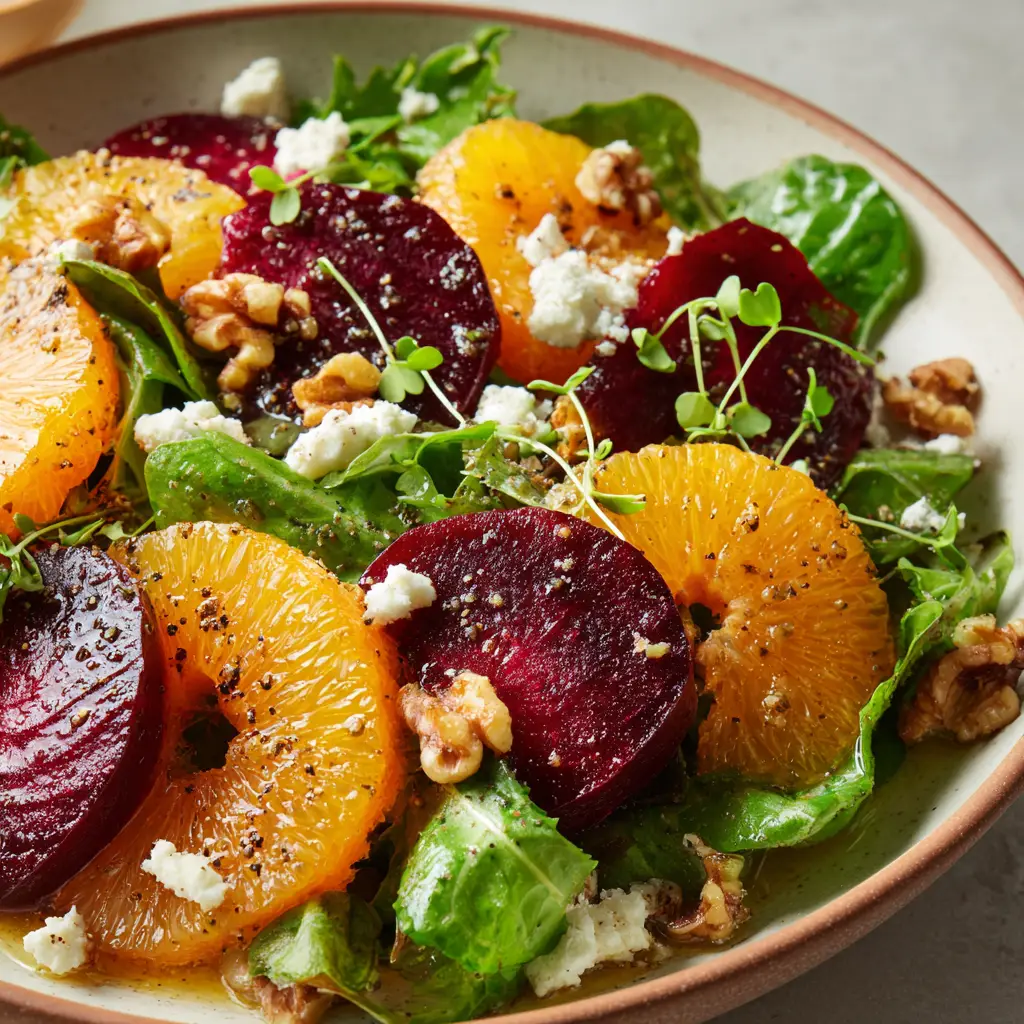
There is something inherently striking about a perfectly composed Beet and Orange Salad resting in a shallow white ceramic bowl. The stark contrast between deep ruby-red roasted beets and bright orange citrus wheels creates a visual masterpiece that practically jumps off the plate. Soft natural daylight highlights a glistening, translucent vinaigrette dressing that lightly coats the ingredients, pooling slightly at the edges of the citrus. It is a stunning display of culinary artistry that tastes even better than it looks.
This Beet and Orange Salad is not just about vibrant colors; it is a masterclass in flavor and texture balancing. The sweet, earthy notes of the roasted root vegetables harmonize beautifully with the acidic pop of the citrus. We finish the dish by scattering rough white crumbles of salty feta cheese and toasted walnut pieces across the layers. The result is an unforgettable dish that belongs at the center of your table.
Why This Beet and Orange Salad Delivers Maximum Sensory Appeal
- Visual Brilliance: The alternating slices of deep ruby-red beets and bright orange wheels create a mesmerizing, jewel-toned pattern that elevates any dining experience.
- Textural Contrast: The base foundation consists of fresh mixed greens and baby spinach, providing a crisp bite that perfectly offsets the tender, yielding texture of the roasted beets.
- Flavor Harmony: Sweet, tart, earthy, and salty notes collide. The rough white crumbles of feta cheese offer a briny bite that cuts through the natural sugars of the root vegetables and citrus.
- Aromatic Finish: Garnished with tiny delicate microgreens and cracked black pepper flakes, every forkful offers a subtle, herbaceous warmth.
Architecting the Salad Foundation: Essential Ingredients
Building this Beet and Orange Salad requires precise ingredient selection to ensure structural integrity and vibrant flavor. Here is exactly what you need to achieve professional results.
Ruby-Red Beets: You will need 3 medium (about 450g) whole beets. Roasting them concentrates their natural sugars and develops a deep, earthy flavor while softening their dense structure.
Navel Oranges: Select 2 large (about 400g) firm oranges. Slicing these into thick wheels provides the necessary acidic brightness and brilliant color contrast.
Fresh Mixed Greens & Baby Spinach: Use 4 cups (120g) of a 50/50 blend. This specific mixture offers a delicate yet sturdy base foundation that will not instantly wilt under the weight of the sliced vegetables.
White Feta Cheese: You need 1/2 cup (75g) of block feta. Crumbling it yourself ensures you get those rustic, rough white crumbles scattered across the layers.
Walnut Pieces: Measure out 1/2 cup (60g) of raw walnuts. Toasting them is a non-negotiable step to release their essential oils and provide a crucial, savory crunch.
Extra Virgin Olive Oil & White Wine Vinegar: The base of our dressing requires 1/4 cup (60ml) of high-quality oil and 2 tbsp (30ml) of vinegar. This creates the glistening, translucent vinaigrette dressing that lightly coats the ingredients.
Invisible Flavor Builders: Gather 1 tsp (5g) kosher salt, 1 tbsp (15ml) honey to balance the acid, and 1 tsp (5g) Dijon mustard to emulsify the liquid.
Delicate Microgreens & Cracked Black Pepper: Reserve 1/4 cup (10g) of microgreens and 1/2 tsp (1g) freshly cracked black pepper flakes for the final garnish.
Professional Equipment Required for Precision Assembly
Achieving the precise textures seen in a premium Beet and Orange Salad requires a few specific kitchen tools.
- Aluminum Baking Sheet & Foil: Essential for tightly wrapping the root vegetables so they steam and roast evenly in their own juices.
- Sharp Chef’s Knife: Critical for cleanly carving away the citrus rind and slicing the oranges into perfect, uniform wheels without crushing the fruit.
- Small Dry Skillet: Needed for carefully toasting the walnut pieces until they are deeply fragrant.
- Glass Mason Jar or Whisking Bowl: The best vessel for aggressively emulsifying the translucent vinaigrette dressing.
- Shallow White Ceramic Bowl: The ideal presentation vessel to allow the colorful layers to spread horizontally rather than sinking to the bottom.
Step-by-Step Culinary Assembly for the Perfect Beet and Orange Salad
1. Roasting the Root Vegetables
Preheat your oven to 400°F (200°C). Wash the beets thoroughly and wrap each one individually in aluminum foil, adding a slight drizzle of olive oil and a pinch of salt inside the foil packet. Place the wrapped beets on a baking sheet and roast for 45 to 60 minutes. Sensory Cue: A paring knife should glide into the center of the beet with zero resistance.
2. Prepping the Citrus Wheels
While the vegetables are roasting, take your chef’s knife and slice off the top and bottom of the oranges. Stand them upright and carefully slice down the sides following the curve of the fruit to remove the peel and white pith completely. Lay the peeled fruit on its side and cut it into thick, 1/4-inch (6mm) orange citrus wheels.
3. Toasting the Walnut Pieces
Place a small, dry skillet over medium heat. Add the walnut pieces and toast them for 4 to 5 minutes, tossing frequently to prevent burning. Sensory Cue: Listen for a faint crackling sound and smell a deep, nutty aroma. Remove from heat immediately and let them cool on a separate plate.
4. Crafting the Translucent Vinaigrette Dressing
In your glass jar, combine the extra virgin olive oil, white wine vinegar, honey, Dijon mustard, and kosher salt. Seal the jar tightly and shake vigorously for 15 seconds until the mixture is fully emulsified yet remains slightly translucent. Set aside to let the flavors meld.
5. Peeling and Slicing the Beets
Once the roasted root vegetables are cool enough to handle, use a paper towel to gently rub the skins off; they should slip away effortlessly. Slice the peeled, deep ruby-red roasted beets into 1/4-inch (6mm) rounds, matching the thickness of your citrus wheels.
6. Constructing the Layers
Select a wide, shallow white ceramic bowl. Lay down the base foundation of fresh mixed greens and baby spinach. Arrange the alternating slices of ruby-red beets and bright orange wheels in an overlapping, circular pattern on top of the greens. Scatter the rough white crumbles of feta cheese and toasted walnut pieces evenly across the layers.
7. Dressing and Garnishing
Drizzle the glistening vinaigrette evenly over the top, allowing it to naturally pool slightly at the edges of the citrus. Finish the presentation by thoughtfully placing tiny delicate microgreens across the surface and sprinkling generously with cracked black pepper flakes. Serve immediately.
Chef’s Secrets for a Flawless Presentation
- Temperature Matters: Ensure the roasted root vegetables are completely cooled before assembling. If they are too warm, they will instantly wilt the delicate baby spinach foundation.
- Prevent Color Bleed: Keep the ruby-red slices separate from the other ingredients until the absolute last moment before serving to prevent the red juices from staining the feta cheese and oranges.
- Dressing Control: Only dress the portion of the salad you plan to eat immediately. The acid in the translucent vinaigrette dressing will break down the fresh mixed greens over time.
- Nut Prep: Never skip toasting the nuts. Raw nuts lack the brittle crunch and deeply savory flavor needed to contrast the sweet citrus.
Keeping the Greens Crisp: Storage Protocol
Because of the high moisture content in the citrus and the delicate nature of the greens, this dish is best consumed fresh. If you must store leftovers, disassemble the salad. Keep the roasted root slices and citrus wheels in an airtight container in the refrigerator for up to 3 days. Store the dry greens separately with a paper towel to absorb excess moisture.
The translucent vinaigrette can be stored in its sealed mason jar in the fridge for up to two weeks. The oil may solidify slightly; simply leave it at room temperature for 10 minutes and shake vigorously before using. Do not freeze any components of this salad, as freezing will entirely destroy the cellular structure of the fresh ingredients.
Expert Pairings: Elevating Your Culinary Experience
This vibrant dish is incredibly versatile. For a light and refreshing spring lunch, serve it alongside a warm bowl of spring minestrone soup. The rich vegetable broth complements the bright acidity of the salad perfectly.
If you are serving this at a dinner party, the earthy flavors cut through rich meats beautifully. Try pairing it with a hearty main course like oven baked beef brisket. For those who love bold, acidic profiles, layering the salad with some tangy Gordon Ramsay pickled onions adds an incredible pop of flavor.
Looking for a lighter alternative menu? Serve this alongside a protein-packed Asian edamame salad to create an ultra-healthy, texture-rich lunch spread that won’t weigh you down.
Frequently Asked Questions About Root Vegetable Salads
You can prep the individual components ahead of time, such as roasting the beets, slicing the oranges, and making the vinaigrette. However, do not assemble the salad until you are ready to serve to prevent the delicate spinach and mixed greens from wilting.
While you can eat beets raw if they are shaved paper-thin, roasting them is highly recommended. Roasting softens their dense texture and concentrates their natural sugars, which perfectly contrasts the sharp acidity of the citrus.
To maintain the stark visual contrast, keep the sliced roasted beets separate from the feta cheese and orange wheels until the absolute last moment before serving. Toss the greens in the dressing first, then layer the beets and oranges on top.
Use a sharp chef’s knife to slice off the top and bottom of the orange. Stand it upright on a cutting board and slice downwards, following the curve of the fruit, to cleanly remove both the peel and the bitter white pith.
Navel oranges and Cara Cara oranges are excellent choices because they are sweet, seedless, and firm enough to hold their shape when sliced into wheels. Blood oranges also work beautifully if you want an even darker, more dramatic color palette.
Official Recipe Card: Beet and Orange Salad
Vibrant Beet and Orange Salad with Feta and Toasted Walnuts
Ingredients
Equipment
Method
- Preheat your oven to 400°F (200°C). Wash the beets, wrap each in aluminum foil with a drizzle of olive oil and a pinch of salt. Roast on a baking sheet for 45 to 60 minutes until a paring knife glides into the center with zero resistance.
- Slice off the top and bottom of the oranges. Stand upright and slice down the sides to remove all peel and pith. Lay the fruit on its side and cut into 1/4-inch (6mm) orange citrus wheels.
- Place walnut pieces in a small dry skillet over medium heat. Toast for 4 to 5 minutes, tossing frequently, until you hear a faint crackling sound and smell a deep, nutty aroma. Cool on a separate plate.
- In a glass jar, combine olive oil, white wine vinegar, honey, Dijon mustard, and kosher salt. Seal tightly and shake vigorously for 15 seconds until fully emulsified and translucent.
- Once cooled, use a paper towel to rub the skins off the roasted beets. Slice them into 1/4-inch (6mm) rounds to match the citrus wheels.
- In a shallow white ceramic bowl, lay down the mixed greens and baby spinach. Arrange alternating slices of roasted beets and orange wheels in an overlapping pattern. Scatter crumbled feta and toasted walnuts over the top.
- Drizzle the translucent vinaigrette evenly over the salad, allowing it to pool slightly at the citrus edges. Garnish with tiny delicate microgreens and cracked black pepper flakes. Serve immediately.
Notes
Prevent Color Bleed: Keep the sliced beets separate from the oranges and cheese until the very last moment before serving.
Final Thoughts & Culinary Inspiration
Crafting this incredible recipe proves that healthy eating can be a visual and gastronomic triumph. The balance of sweet citrus, earthy roots, salty cheese, and crunchy nuts creates a symphony of textures that will leave your dinner guests highly impressed. We hope you enjoy bringing this beautiful dish to life in your own kitchen.
If you loved this colorful creation, please leave a 5-star rating and a comment below! Do not forget to save this recipe for your next gathering by pinning it directly to Pinterest using the image below.