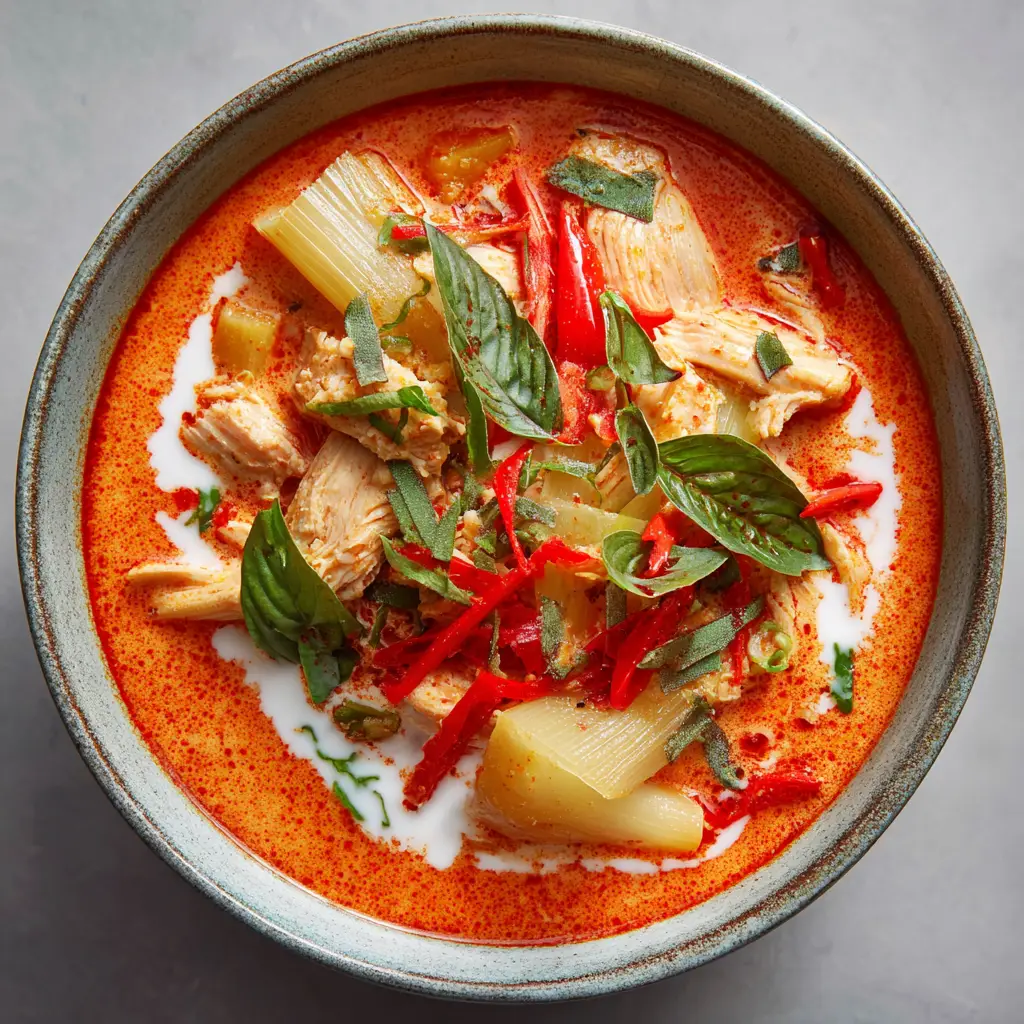
Mastering a restaurant-quality Thai Red Curry with Chicken at home is surprisingly simple and deeply rewarding. This iconic dish features a visually striking reddish-orange, creamy coconut milk curry broth that awakens the senses before you even take a bite. The aroma of blooming spices fills the kitchen, promising a complex flavor profile that balances heat, sweetness, and savory umami notes.
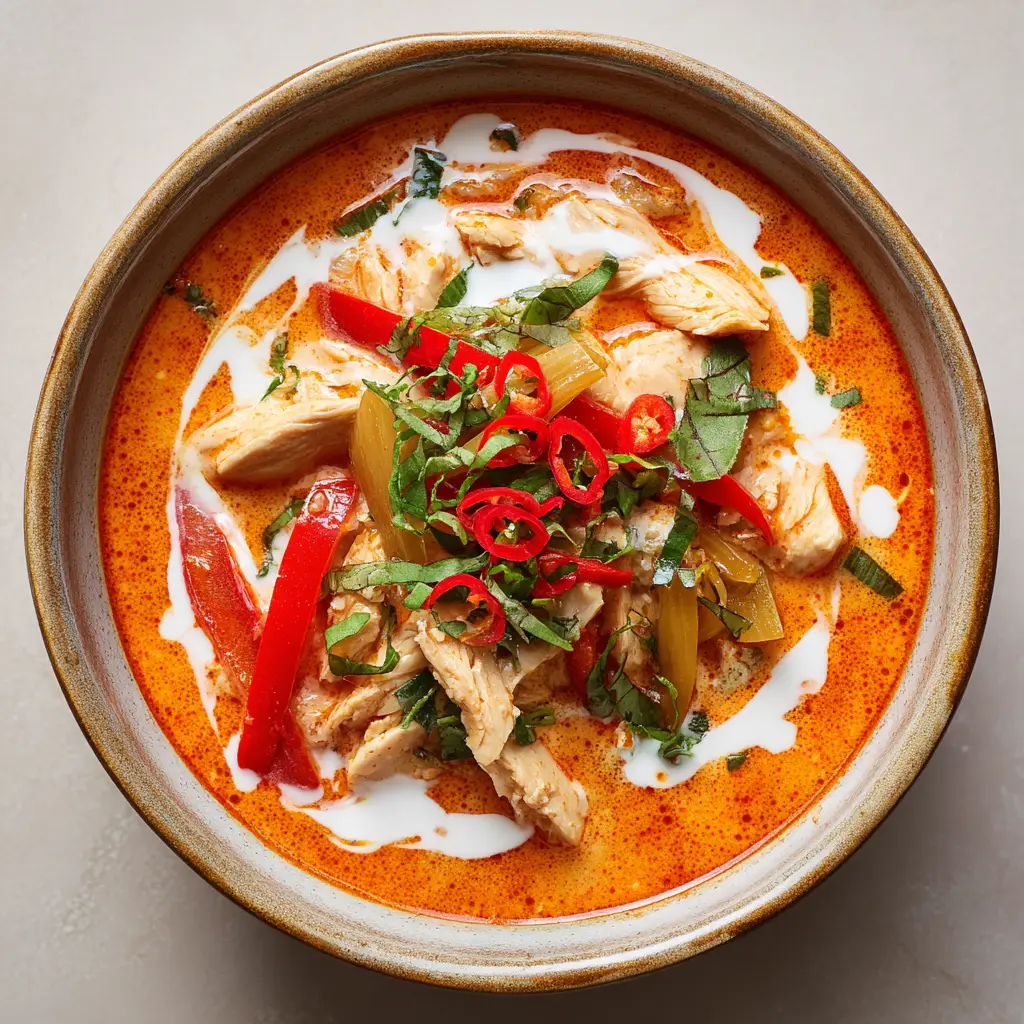
Our meticulously tested method ensures perfectly submerged, tender cooked white meat chicken strips that contrast beautifully against vibrant red bell pepper slices and pale yellow bamboo shoots. Finished with a professional touch of glossy thick white coconut cream, vibrant green fresh Thai basil leaves, and a sprinkle of finely sliced red chilies, this bowl is a true culinary triumph.
Why This Thai Red Curry with Chicken Will Transform Your Dinner Routine
Cooking this spectacular dish is more than just making dinner; it’s a sensory experience. You will love how quickly these incredible flavors meld together in a single pan.
- Vibrant Visual Contrast: The reddish-orange base perfectly highlights the stark white chicken strips, green Thai basil, and bright red chilies.
- Luxurious Mouthfeel: Frying the curry paste before adding the coconut milk ensures a silky, glossy broth rather than a grainy one.
- Perfectly Cooked Protein: Gently simmering the white meat chicken strips prevents them from drying out, keeping them exceptionally tender.
- Sensory Garnishing: The final drizzle of thick coconut cream and fresh herbs provides a cooling contrast to the warm, spicy broth.
Essential Components for the Perfect Reddish-Orange Coconut Broth
Boneless, Skinless Chicken Breast: You will need 1 lb (450g) of chicken breast, sliced evenly into thin strips. The pale white meat provides a stunning visual contrast when submerged in the brightly colored broth.
Full-Fat Coconut Milk: Use 1 can (13.5 oz / 400ml) of premium full-fat coconut milk for the necessary fat content. Scoop 2 tbsp (30ml) of the thick white cream from the top to save for your stunning final garnish drizzle.
Thai Red Curry Paste: Incorporate 3 tbsp (45g) of authentic red curry paste as the foundational flavor base. This paste is what yields the signature vibrant reddish-orange hue and complex aromatic heat.
Red Bell Pepper: Core and slice 1 medium (120g) red bell pepper into thin strips. Adding these near the end of the cooking process ensures they remain vividly red and pleasantly crisp.
Canned Bamboo Shoots: Drain and rinse 1/2 cup (120g) of pale yellow bamboo shoots for a mild, earthy crunch. Their pale yellow color adds necessary visual dimension to the rustic ceramic bowl presentation.
Fish Sauce: Add 1 tbsp (15ml) of high-quality fish sauce to build essential umami. This invisible foundation ingredient provides a deep savory backbone that balances the rich coconut.
Brown Sugar: Measure 1 tbsp (15g) of light brown sugar to tame the spice of the curry. The subtle sweetness enhances the natural richness of the coconut milk.
Vegetable Oil: Heat 1 tbsp (15ml) of neutral cooking oil to bloom the curry paste. Frying the paste in hot oil forces the oils to separate, creating that sought-after glossy sheen.
Fresh Thai Basil: Pick 1/4 cup (10g) of vibrant green fresh Thai basil leaves for an anise-scented finish. They must be stirred in off the heat to preserve their brilliant color.
Fresh Red Chilies: Finely slice 1 small red bird’s eye chili for a fiery, colorful garnish. A delicate sprinkle over the surface provides isolated pops of intense heat and beauty.
Tools Required to Achieve Restaurant-Quality Curry
To execute this recipe flawlessly, use a heavy-bottomed wok or a large, deep skillet. A wide surface area helps the coconut milk simmer evenly and prevents the chicken from steaming instead of poaching.
You will also need a sharp chef’s knife for precise vegetable slicing and a dedicated spoon to skim the thick white cream from your coconut milk can.
Step-by-Step Guide to Cooking Thai Red Curry with Chicken
Blooming the Aromatics for Maximum Color
Heat your wok or skillet over medium-high heat and add the vegetable oil. Once the oil is shimmering, spoon in the red curry paste.
Stir constantly for 1-2 minutes until you smell a pungent, fragrant aroma and the paste darkens slightly. You should see the red oils begin to separate and bubble, which creates our vibrant reddish-orange base.
Building the Creamy Coconut Broth
Pour in the coconut milk, remembering to reserve that thick white cream from the top for later. Whisk the milk into the bloomed paste until the broth becomes a smooth, glossy reddish-orange liquid.
Stir in the fish sauce and brown sugar, allowing the mixture to come to a gentle simmer. Do not let it boil violently, as this can cause the coconut milk to curdle and lose its luxurious texture.
Simmering the Chicken and Bamboo Shoots
Carefully slide the sliced white meat chicken strips into the bubbling broth. Lower the heat to medium and allow the chicken to poach gently in the coconut milk for 5-6 minutes.
Stir occasionally until the chicken is completely opaque, tender, and partially submerged in the glossy broth. Add the drained pale yellow bamboo shoots to soak up the savory liquid.
Incorporating the Vibrant Red Bell Peppers
During the last 3 minutes of cooking, scatter the vibrant red bell pepper slices into the wok. Gently press them into the broth to soften slightly while retaining their bright color.
Once the chicken is fully cooked through and the peppers are crisp-tender, immediately remove the pan from the heat. This prevents the vegetables from turning dull and mushy.
Garnishing for Visual Perfection
Ladle the steaming curry into a rustic ceramic bowl, ensuring the chicken strips, red bell peppers, and pale yellow bamboo shoots are visible near the surface. Take your reserved thick white coconut cream and create a striking drizzle over the glossy broth.
Finish by scattering the vibrant green fresh Thai basil leaves across the top, allowing the residual heat to release their anise aroma. Sprinkle the finely sliced red chilies evenly for a final pop of heat and visual flair.
Expert Culinary Secrets for a Flawless Thai Red Curry with Chicken
- Skim the Cream First: Do not shake your coconut milk can before opening! You need that separated solid white cream at the top for your beautiful, cooling garnish.
- Fry the Paste Vigorously: Taking the time to fry the curry paste in oil is non-negotiable. This step releases the fat-soluble flavor compounds and yields the authentic reddish-orange sheen.
- Off-Heat Herb Addition: Never boil your Thai basil leaves. Adding them after you remove the pan from the stove keeps them vibrant green rather than turning them a bruised, muddy brown.
- Perfect Chicken Slicing: Slice your chicken breast against the grain to ensure every bite is incredibly tender when submerged in the curry broth.
Preserving and Reheating Your Coconut Milk Curry
Store any leftover Thai Red Curry with Chicken in an airtight glass container in the refrigerator for up to 3 days. Glass prevents the reddish-orange oils from staining your storage ware.
When reheating, do so gently in a saucepan over medium-low heat. Boiling leftover coconut curry aggressively can cause the emulsion to break, leaving you with a greasy, separated broth instead of a creamy masterpiece.
Side Dishes to Serve Alongside Thai Red Curry with Chicken
A saucy, rich dish like this requires the perfect starchy companion to soak up every drop of the luxurious broth. Traditional steamed jasmine rice is always a safe bet.
For a spectacular Southeast Asian feast, consider pairing your curry with a flavorful Nasi Goreng to elevate the dining experience. If you prefer lighter sides, a crisp Asian Edamame Salad or blistered Chinese Garlic Green Beans provide excellent textural contrast.
Frequently Asked Questions About Thai Red Curry with Chicken
It is not recommended to freeze coconut milk-based curries, as the emulsion tends to break when thawed, resulting in a grainy, separated texture. It is best stored in the refrigerator for up to 3 days.
Yes, boneless, skinless chicken thighs work wonderfully in Thai Red Curry. They contain more fat than white meat and remain extremely juicy, though they will alter the bright white visual contrast slightly.
The heat level depends entirely on the brand of red curry paste you use. To keep it mild, use less paste and omit the fresh sliced red chili garnish. The coconut milk and brown sugar naturally temper the spice.
If you cannot find canned bamboo shoots, thinly sliced water chestnuts, zucchini moons, or snap peas provide an excellent textural crunch.
Coconut milk can curdle if it is boiled too aggressively. To maintain a smooth, creamy texture, keep your curry at a gentle simmer after adding the coconut milk.
Printable Thai Red Curry with Chicken Formula
Thai Red Curry with Chicken: A Creamy, Vibrant One-Pan Masterpiece
Ingredients
Equipment
Method
- Heat your wok or skillet over medium-high heat and add the vegetable oil. Once the oil is shimmering, spoon in the red curry paste. Stir constantly for 1-2 minutes until fragrant and the red oils begin to separate.
- Pour in the coconut milk, remembering to reserve 2 tablespoons of the thick white cream from the top. Whisk the milk into the bloomed paste until smooth. Stir in the fish sauce and brown sugar, allowing the mixture to come to a gentle simmer.
- Carefully slide the sliced white meat chicken strips into the bubbling broth. Lower the heat to medium and poach gently for 5-6 minutes. Stir in the drained pale yellow bamboo shoots.
- During the last 3 minutes of cooking, scatter the vibrant red bell pepper slices into the wok. Gently press them into the broth until the chicken is fully cooked and the peppers are crisp-tender. Remove from heat.
- Ladle the steaming curry into a rustic ceramic bowl. Drizzle the reserved thick white coconut cream over the glossy broth. Finish by scattering the vibrant green fresh Thai basil leaves and sprinkling the finely sliced red chilies across the top.
Notes
Tip 2: Add Thai basil entirely off the heat to preserve its vibrant green color.
Final Thoughts on Mastering Thai Red Curry with Chicken
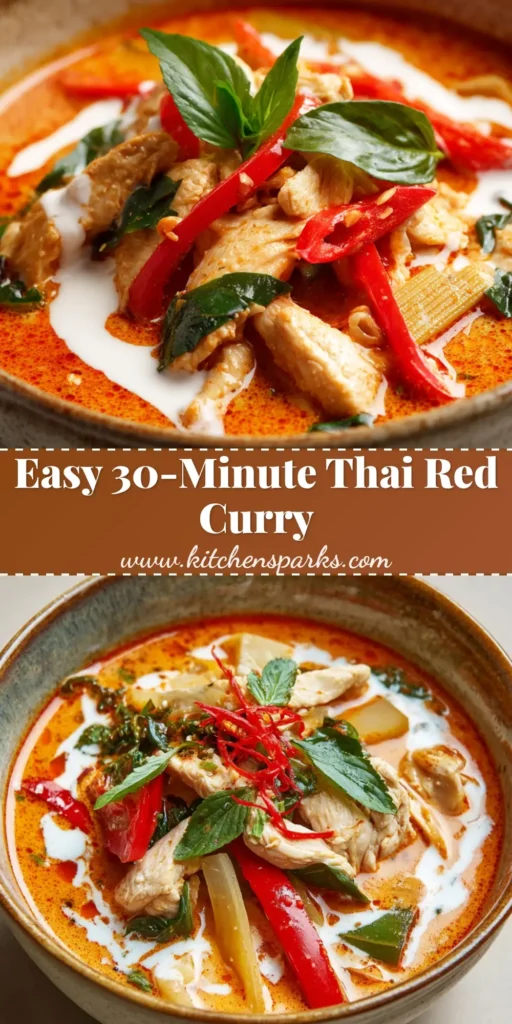
Crafting this vibrant Thai Red Curry with Chicken transforms a simple weeknight dinner into an extraordinary culinary event. By paying attention to the visual cues and sensory techniques outlined above, your final bowl will look precisely like a gourmet food photograph.
If you created this beautiful creamy coconut masterpiece, please leave a comment below and share your results! Don’t forget to pin this recipe to your Pinterest boards for future dinner inspiration.