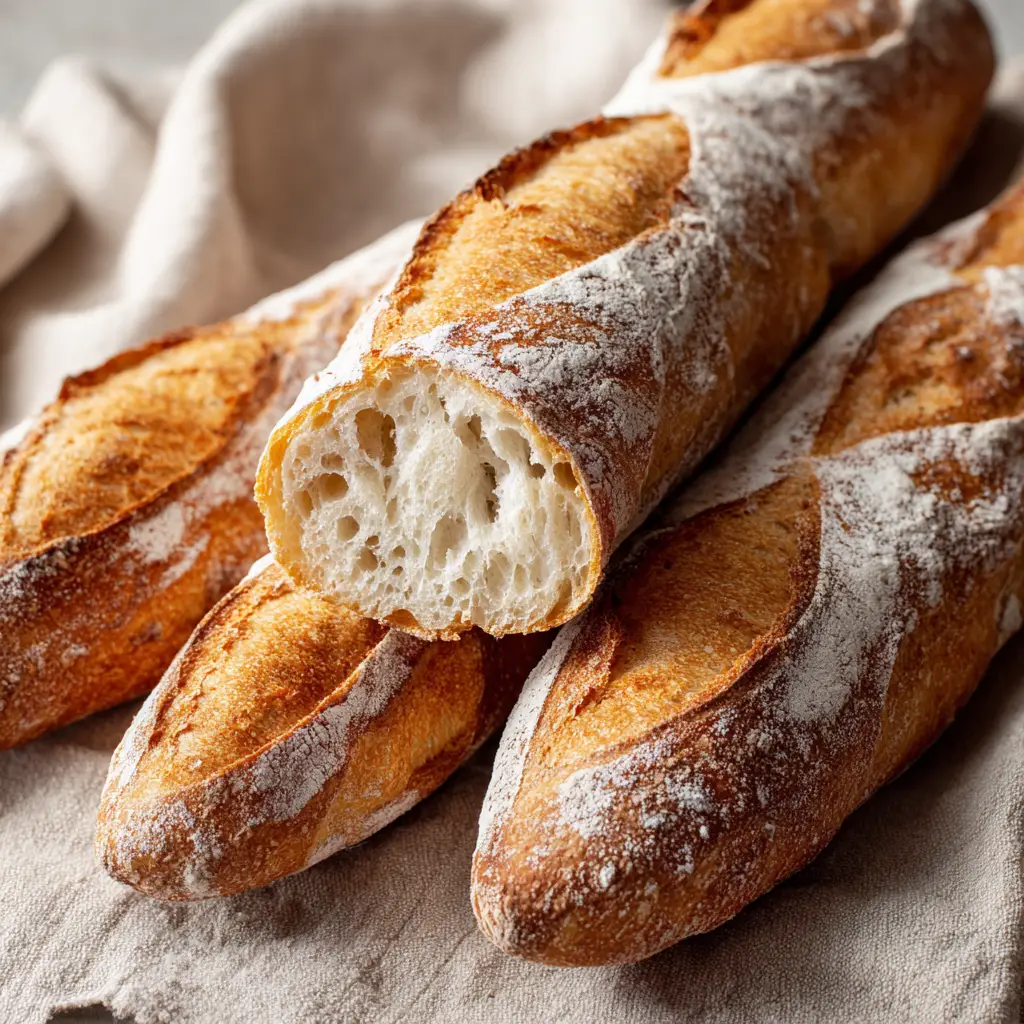
There is nothing quite like pulling a Homemade Baguette Recipe fresh from your own oven. The aroma of toasted wheat and blooming yeast instantly transforms your kitchen into a rustic Parisian bakery. If you crave that quintessential artisanal bread experience, you are in exactly the right place.
Picture this: three perfectly baked golden-brown French baguettes resting horizontally on a beige textured linen cloth over a rustic wooden baking peel. This recipe delivers exactly that visual masterpiece. You will learn the secrets to achieving a gorgeously thick crispy crust and a deeply satisfying, soft white interior crumb.
Whether you are looking to elevate your dinner party or just want a phenomenal sandwich base, mastering this bread is a fulfilling journey. Let’s dive into the science, the shaping, and the baking required to bring these stunning loaves to life.
Why This Crusty Artisan French Bread is a Game-Changer
- Unmatched Textural Contrast: Expect a thick, shatteringly crispy outer crust that perfectly protects an open, airy, soft white interior crumb.
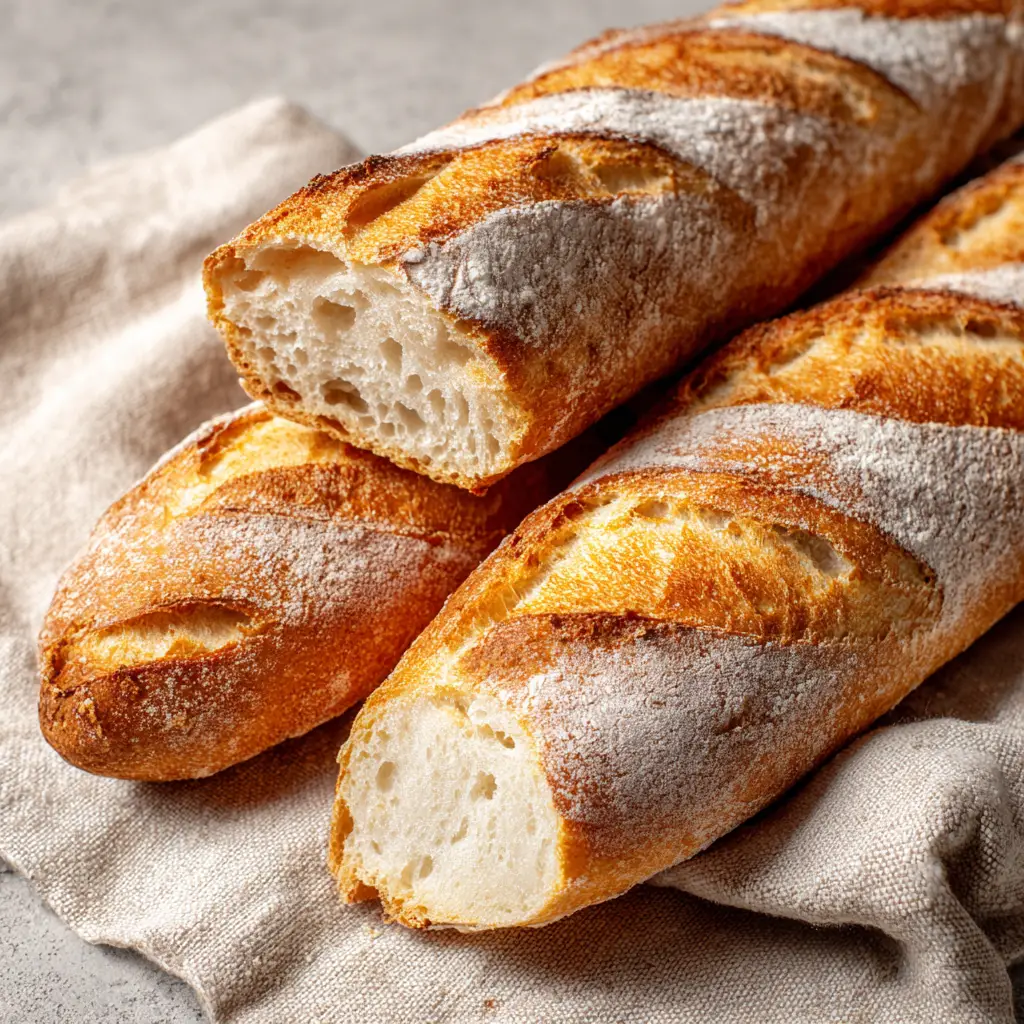
- Visual Perfection: Step-by-step guidance ensures you get those classic four distinct diagonal expansion scores beautifully bloomed across the top.
- Simple Ingredient Magic: You will transform just flour, water, salt, and yeast into three bakery-quality golden-brown loaves.
- Sensory Delight: The delightful crackle the crust makes as it cools, combined with a light dusting of white flour, is incredibly rewarding.
The Building Blocks: Foundational Ingredients for Bread Perfection
3 ¼ cups (390g) Bread Flour: You absolutely must use high-protein bread flour rather than standard all-purpose flour for the dough itself. This provides the crucial gluten network needed to trap air and create that airy, soft white interior crumb structure.
1 ½ cups (360ml) Warm Water: Temperature matters immensely when waking up your yeast. Aim for water that is between 105°F to 110°F (40°C to 43°C) to encourage a steady, healthy fermentation process.
1 tsp (3g) Active Dry Yeast: This is the engine of your Homemade Baguette Recipe. It provides the lift and the complex, slightly sour fermented aroma that makes artisan bread irresistible.
1 ½ tsp (9g) Fine Sea Salt: Salt tightens the gluten structure and drastically enhances the flavor of the final bake. Never skip the salt, or your bread will taste remarkably flat.
2 tbsp (15g) White All-Purpose Flour: This is reserved specifically for the finishing touch. A light white flour dusting right before baking gives your loaves that beautiful, rustic, unedited aesthetic.
French Bakery Tools You Actually Need
To replicate the authentic bakery experience, a few specialized tools are incredibly helpful. A beige textured linen cloth, known as a baker’s couche, is essential for supporting the dough during its final proofing stage so it holds a tight, cylindrical shape.
You will also need a sharp baker’s lame or a fresh razor blade. This tool allows you to cleanly slice the dough, creating those distinct diagonal expansion scores without dragging or tearing the dough skin. Finally, a rustic wooden baking peel is highly recommended to swiftly slide your delicate loaves onto a hot baking stone.
Crafting Your Dough: From Shaggy Mass to Golden Loaves
Activating the Yeast and Mixing
Begin by pouring your warm water into a large mixing bowl and sprinkling the active dry yeast evenly over the surface. Let this sit for about 5 to 10 minutes until you see a foamy layer and smell a sweet, bready aroma.
Add the bread flour and fine sea salt to the yeast mixture. Use a wooden spoon or your hands to mix until a shaggy, rough dough forms, ensuring no dry flour patches remain.
Developing the Gluten with Stretch and Folds
Cover the bowl with a damp towel and let the dough rest for 30 minutes. This resting period, called an autolyse, allows the flour to fully absorb the water.
Instead of heavy kneading, perform a series of “stretch and folds” every 30 minutes for the next 2 hours. Grab one side of the dough, gently stretch it upwards, and fold it over the center, rotating the bowl until all four sides are folded.
Dividing and Shaping on the Linen Cloth
Turn the proofed dough out onto a lightly floured surface and divide it into three equal portions. Gently pat each portion into a rectangle, being careful not to pop the gas bubbles inside.
Fold the top third down to the center, press the seam, and fold the bottom third up, sealing it tightly. Roll the dough under your palms to extend it into a classic 15-inch rope with slightly tapered ends.
Place your shaped loaves seam-side up onto a generously floured beige textured linen cloth. Pinch the cloth between each loaf to create protective ridges that will support their shape as they rise for an additional 45 minutes.
Scoring, Steaming, and Baking
Preheat your oven to 475°F (245°C) with a heavy baking stone inside and a cast-iron skillet placed on the bottom rack. Once heated, gently roll the loaves right-side up onto a rustic wooden baking peel.
Lightly dust the loaves with white all-purpose flour. Using your baker’s lame at a shallow 45-degree angle, swiftly create four distinct diagonal expansion scores down the length of each baguette.
Slide the loaves onto the hot baking stone and carefully toss a cup of ice cubes into the bottom cast-iron skillet. The burst of steam is the absolute secret to achieving that thick crispy crust.
Bake for 15 minutes with steam, then carefully remove the steam pan and bake for an additional 10 to 15 minutes. Pull them out when you see perfectly baked golden-brown loaves that sound hollow when tapped on the bottom.
Baker’s Troubleshooting Guide for the Perfect Bake
- Crust Isn’t Crispy? You likely lacked enough steam during the first half of the bake. Ensure your steam pan is blazing hot before adding your water or ice cubes.
- Flat Loaves? This usually indicates over-proofing. Watch the dough, not the clock; it should look puffy but still spring back slowly when gently poked.
- Ragged Scoring Marks? Your razor blade must be wet or incredibly sharp. Cut with confidence and speed to cleanly slice the dough’s tension skin.
- Dense Interior? You may have added too much extra flour during the shaping process. Keep your hands lightly oiled or floured, but avoid working heavy flour into the actual dough.
Keeping Your French Bread Fresh: Storing and Freezing
Fresh baguettes are notoriously short-lived and are best enjoyed within 12 hours of baking. To keep the crust crispy for a day, store the cooled bread loosely in a brown paper bag at room temperature.
Never store artisan bread in the refrigerator, as the cold temperatures will rapidly stale the crumb. If you need to keep it longer, wrap the fully cooled baguettes tightly in aluminum foil and place them in the freezer.
To revive frozen baguettes, run the frozen foil-wrapped loaf lightly under tap water for a split second, then place it straight into a 400°F (200°C) oven for 10 minutes. It will emerge smelling and tasting just as fresh as bake day.
Perfect Pairings: Soups, Dips, and Sandwiches
A fresh, warm Homemade Baguette Recipe is the ultimate culinary canvas. Slicing through the thick crispy crust to expose that open, airy white crumb begs for something rich to dip it into.
Try serving hearty chunks alongside a steaming bowl of comforting lasagna soup or a rich cheesy broccoli potato soup to soak up every drop of broth.
If you are hosting a gathering, toast crostini slices for a bubbly, savory spinach artichoke dip pasta bake. Alternatively, slice them down the middle to build incredible slow cooker French dip sandwiches that won’t fall apart when dunked in au jus.
Your Baking Queries Answered
Yes! A cold fermentation process in the refrigerator overnight actually deepens the complex yeast flavors and creates a much more robust interior crumb structure.
Use a highly sharpened baker’s lame or a fresh razor blade. Hold it at a 45-degree angle to the dough and slice swiftly across the top skin to create the distinct ridges.
Steam is scientifically essential during the first 10-15 minutes of baking. Adding a tray of ice cubes to the bottom of your preheated oven allows the dough to expand fully and gelatinizes the crust for that perfect shatter.
Over-handling the dough or working too much excess flour into it during shaping can result in a dense loaf. Handle the dough gently during the final shaping to preserve those beautifully airy pockets.
Step-by-Step Artisan Baguette Recipe Details
The Ultimate Homemade Baguette Recipe for a Flawless Crust
Ingredients
Equipment
Method
- Pour the warm water into a large bowl and sprinkle the active dry yeast over the top. Let sit for 5 to 10 minutes until foamy.
- Add the bread flour and fine sea salt. Mix until a shaggy, rough dough forms with no dry patches.
- Cover and let rest for 30 minutes. Perform a series of stretch and folds every 30 minutes over the next 2 hours to develop gluten.
- Divide the dough into three equal portions. Shape each gently into a 15-inch rope, preserving the air bubbles inside.
- Place the loaves seam-side up on a floured beige textured linen cloth, pinching the cloth between loaves. Let rise for 45 minutes.
- Preheat the oven to 475°F (245°C) with a baking stone and a cast-iron skillet on the bottom rack.
- Transfer loaves to a wooden baking peel. Dust lightly with white all-purpose flour and make four distinct diagonal expansion scores on each using a lame.
- Slide onto the baking stone and add a cup of ice cubes to the skillet. Bake for 15 minutes with steam, then remove the skillet and bake 10-15 more minutes until golden-brown.
Notes
Tip 2. Do not skip the steam step in the oven; it is mandatory for achieving that thick, crispy artisan crust.

Share Your Baking Triumph with Us!
Successfully baking this Homemade Baguette Recipe is a massive culinary achievement! Slicing off that single thick piece to reveal the airy, soft crumb structure is a moment worth celebrating.
If this recipe helped you achieve bakery-quality bread at home, please leave a 5-star rating and a comment below. Don’t forget to subscribe to our newsletter for more masterclass recipes, and be sure to pin this to your favorite boards on Pinterest!