There is nothing quite like the aroma of fresh Homemade Naan Bread wafting through the kitchen. Imagine a stack of thick, pillowy yeast flatbreads, still warm from the pan, glistening with a rich melted butter glaze.
This isn’t just any bread; it is a culinary masterpiece featuring those iconic charred golden-brown leopard spots and a bubbly texture that beckons for a dip. Topped with finely minced garlic and a vibrant scatter of fresh chopped cilantro, this recipe delivers restaurant-quality results right on your own rustic wood board.
Whether you are a seasoned baker or a novice in the kitchen, this guide will walk you through the science of achieving that perfect, flexible fold. We have engineered this recipe to ensure every bite is soft, airy, and structurally sound for scooping up your favorite curries and stews.
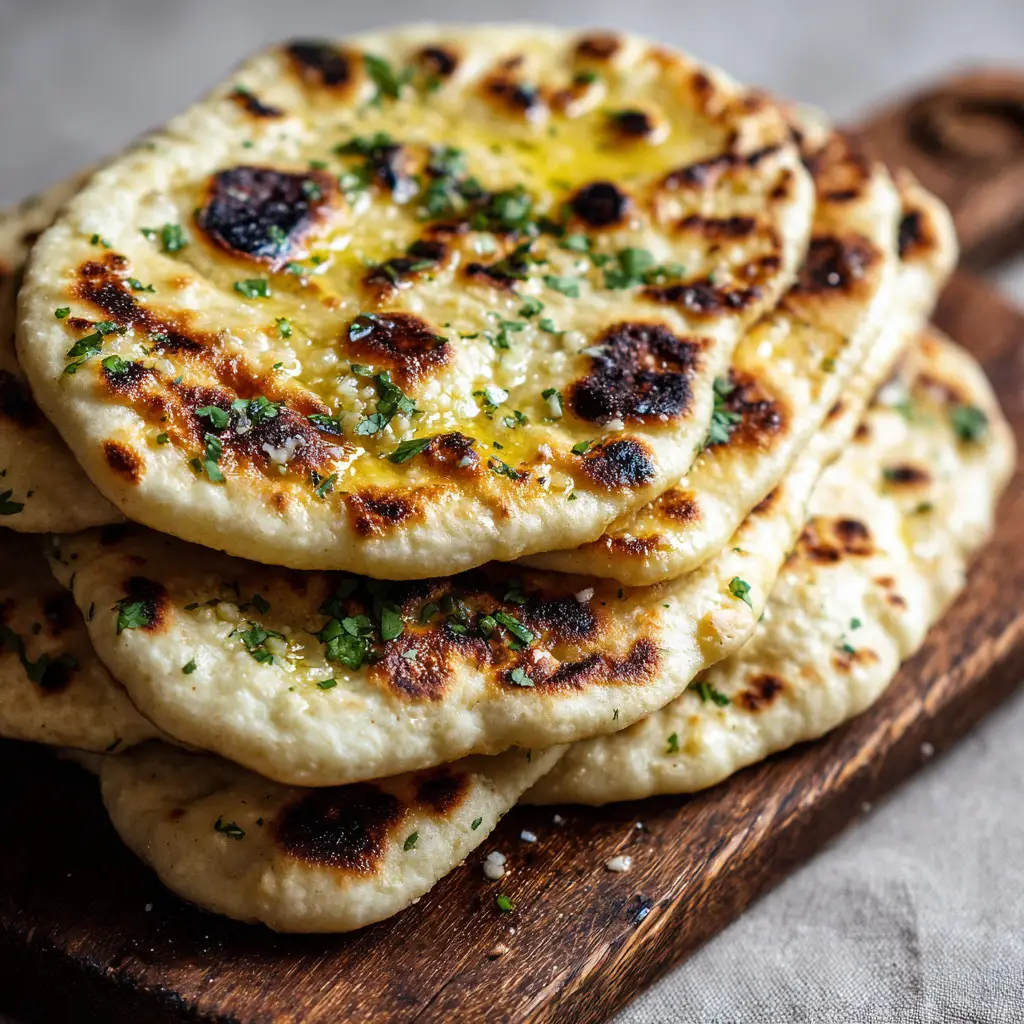
Why This Is the Only Yeast Flatbread Recipe You Need
- Unbeatable Texture: We achieve a thick, fluffy interior and a soft, flexible exterior that stays pliable even after cooling.
- Authentic Char: Using specific heat management, we replicate the dark brown charred spots usually reserved for high-heat tandoor ovens.
- Flavor Infusion: The combination of shimmering melted butter and raw minced garlic creates a sensory explosion that complements any meal.
- Visual Perfection: Every piece is garnished with fresh green cilantro, providing a beautiful contrast against the golden patches.
The Essential Pantry Staples for Better-Than-Takeout Naan
To achieve the visual and textural success seen in our blueprint, every ingredient serves a specific scientific purpose. Here is what you need for the perfect dough and garnish.
Warm Water (110°F/43°C): 1 cup (240ml). This specific temperature is critical to bloom the yeast without killing the living cultures, ensuring a high rise.
Active Dry Yeast: 2 tsp (7g). The powerhouse of the recipe, providing the carbon dioxide needed to create those signature bubbles and airy pockets.
Granulated Sugar: 1 tsp (4g). While it adds a hint of sweetness, its primary role is to feed the yeast, accelerating the fermentation process for a faster rise.
Full-Fat Greek Yogurt: 1/4 cup (60g). The secret to a soft crumb; the lactic acid tenderizes the gluten, keeping the bread flexible and moist.
All-Purpose Flour: 3 cups (375g). Provides the necessary protein structure to hold the air bubbles while remaining soft enough for that pillowy feel.
Kosher Salt: 1 tsp (6g). Beyond seasoning, salt tightens the gluten structure and controls the rate of yeast fermentation for a more complex flavor.
Unsalted Butter (Melted): 4 tbsp (56g). Used both in the dough for richness and as a shimmering glaze to finish the charred bread.
Fresh Minced Garlic: 3 cloves. Finely minced to ensure every bite of the Homemade Naan Bread is infused with aromatic, savory notes.
Fresh Cilantro: 2 tbsp (5g). Chopped finely for a pop of color and a citrusy herbal finish that cuts through the rich butter.
Must-Have Tools for the Perfect Flatbread Bake
Achieving those characteristic dark brown spots requires the right equipment to distribute heat evenly. A heavy-bottomed cast iron skillet is the best tool for the job, as it mimics the radiant heat of a traditional clay oven.
You will also need a sturdy rolling pin to achieve a uniform thickness of about 1/4 inch (6mm). A silicone pastry brush is essential for applying that shimmering melted butter glaze to the hot surfaces immediately after cooking.
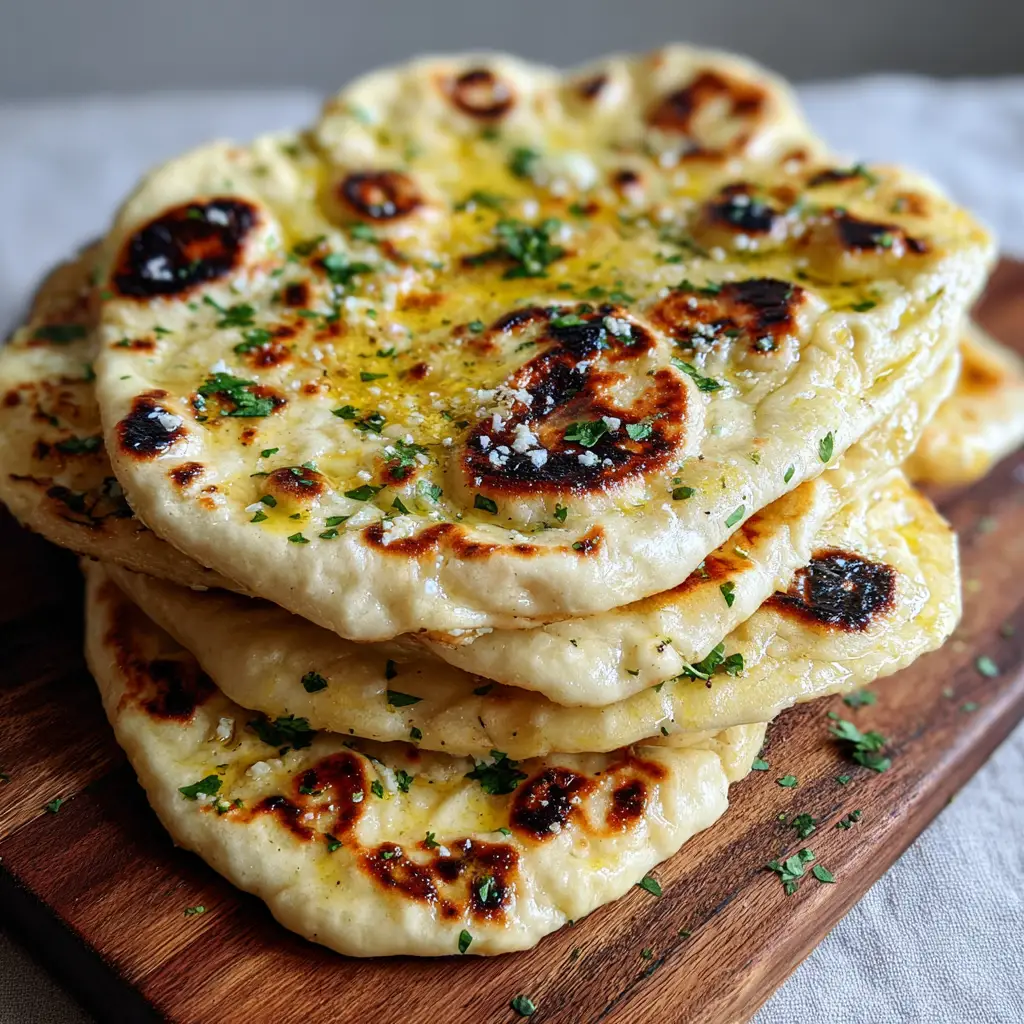
The Step-by-Step Evolution of the Perfect Naan
Activating the Yeast and Preparing the Base
In a large mixing bowl, combine your warm water (110°F/43°C) and granulated sugar. Sprinkle the active dry yeast over the top and let it sit for 5–10 minutes until a thick, frothy foam forms on the surface.
Once the yeast is “blooming,” whisk in the Greek yogurt and 2 tablespoons (28g) of the melted butter. The yogurt should be at room temperature to prevent shocking the yeast and slowing down the rise.
Building Structure and the Initial Rise
Gradually add the all-purpose flour and salt to the wet mixture. Use a wooden spoon to stir until a shaggy dough forms, then transition to hand-kneading on a lightly floured surface.
Knead for about 5–7 minutes. You are looking for a dough that is smooth, elastic, and slightly tacky but not sticking to your hands. Place the dough in a greased bowl, cover with a damp cloth, and let it rise in a warm spot for 1 hour, or until doubled in size.
Shaping and Rolling for Maximum Air Pockets
Punch down the risen dough to release excess gas. Divide the dough into 8 equal portions and roll them into smooth balls. Let these rest for another 10 minutes to allow the gluten to relax.
Using your rolling pin, flatten each ball into an oval or teardrop shape about 1/4 inch (6mm) thick. Do not roll them too thin; we want a thick, fluffy interior that can hold its shape on a rustic wood board.
The High-Heat Sear and Charring Technique
Heat your cast iron skillet over medium-high heat until it is lightly smoking. Place one piece of dough into the dry pan. Within 30 seconds, you should see large bubbles Begin to inflate across the surface.
Flip the bread and cook for another 30–60 seconds. You are looking for deep golden-brown patches and those specific dark charred leopard spots described in our visual blueprint. The bread should look soft and flexible as you remove it.
The Butter Glaze and Final Garnish
Immediately after removing the naan from the pan, use your pastry brush to apply a heavy layer of the remaining melted butter. The shimmering glaze should soak into the bubbly textures of the bread.
While the butter is still wet, scatter a generous amount of finely minced garlic and chopped fresh cilantro over the top. The residual heat from the bread will slightly mellow the raw garlic, releasing its aroma without burning it.
Expert Tips for Success Every Time
- The Flour Balance: If your dough is too sticky, add flour 1 tablespoon at a time. Over-flouring will lead to a dense, tough bread rather than a pillowy one.
- Temperature Control: If your naan isn’t bubbling, your pan isn’t hot enough. Wait for that light wisp of smoke before laying down the dough.
- The Steam Secret: Keep the finished naan stacked and covered with a clean kitchen towel. This traps the steam, ensuring the bread remains soft and flexible.
- Yogurt Choice: Always use full-fat yogurt. The fat content is essential for that luxurious mouthfeel and the characteristic tang of Homemade Naan Bread.
Creative Ways to Serve Your Fresh Flatbread
This bread is a versatile workhorse in the kitchen. For a full Mediterranean spread, serve it alongside a creamy feta and green olive dip or use it to scoop up a fresh Mexican street corn salad.
If you are hosting a summer barbecue, these fluffy rounds are the perfect vessel for smoky brisket elote tacos or served on the side of charred grilled seafood skewers. The garlic and cilantro notes also pair beautifully with a zesty jalapeno slaw for a bit of crunch.
Maintaining Freshness: Storage and Reheating
Storage: Once completely cool, store your Homemade Naan Bread in an airtight bag at room temperature for up to 2 days. To keep it longer, refrigerate for up to 5 days.
Freezing: These freeze beautifully! Wrap each piece in parchment paper and place them in a freezer bag. They will stay fresh for up to 3 months.
Reheating: For the best results, avoid the microwave as it can make the bread rubbery. Instead, place the naan in a hot dry skillet for 30 seconds per side, or wrap in foil and bake at 350°F (175°C) for 5 minutes until soft and pliable again.
Common Questions About Making Naan
While traditional naan uses yeast for its characteristic airy bubbles, you can substitute yeast with 1 teaspoon of baking powder and 1/4 teaspoon of baking soda for a quicker version, though it will be less pillowy.
You can replace up to 50% of the all-purpose flour with whole wheat flour, but keep in mind the bread will be denser and may require an extra tablespoon of water.
No! A well-seasoned cast iron skillet or a heavy stainless steel pan provides excellent radiant heat to create those iconic dark brown leopard spots at home.
Immediately after glazing with butter, stack the naan and wrap them in a clean kitchen towel or foil. The steam trapped inside keeps the bread soft and flexible.
The most common reason is that the skillet wasn’t hot enough. Your pan should be preheated on medium-high until a drop of water flicked onto it sizzles and evaporates instantly.
The Ultimate Recipe for Fluffy Homemade Naan Bread
Homemade Naan Bread: The Ultimate Soft and Fluffy Garlic Butter Recipe
Ingredients
Equipment
Method
- Combine warm water and sugar in a bowl; sprinkle yeast on top and wait 10 minutes until frothy.
- Stir in yogurt, 2 tbsp melted butter, flour, and salt. Knead for 5-7 minutes until smooth and elastic.
- Place dough in a greased bowl, cover, and let rise in a warm spot for 1 hour until doubled.
- Divide into 8 balls, rest 10 minutes, then roll into 1/4 inch thick ovals.
- Cook in a hot cast iron skillet for 30-60 seconds per side until bubbles form and charred leopard spots appear.
- Brush with remaining melted butter and sprinkle with minced garlic and fresh cilantro.
Notes
Keep finished naan under a towel to maintain softness through steam.

Join Our Culinary Community
We hope this Homemade Naan Bread becomes a staple in your home! The combination of thick, fluffy dough and that signature garlic butter glaze is truly life-changing. If you enjoyed this recipe, please leave a comment below and let us know how your charred leopard spots turned out!
Don’t forget to follow us on Pinterest for more kitchen inspiration and share your creations with our community. Happy baking!