There is a specific kind of culinary magic found in the simplicity of traditional Pennsylvania Dutch cooking. These Amish Onion Fritters are the embodiment of that heritage, offering a sensory experience that balances the sweetness of tender onions with a shatteringly crisp, lacy batter. Unlike heavy, doughy commercial appetizers, these fritters are light, airy, and boast those iconic dark charred edges that signify a perfect shallow fry.
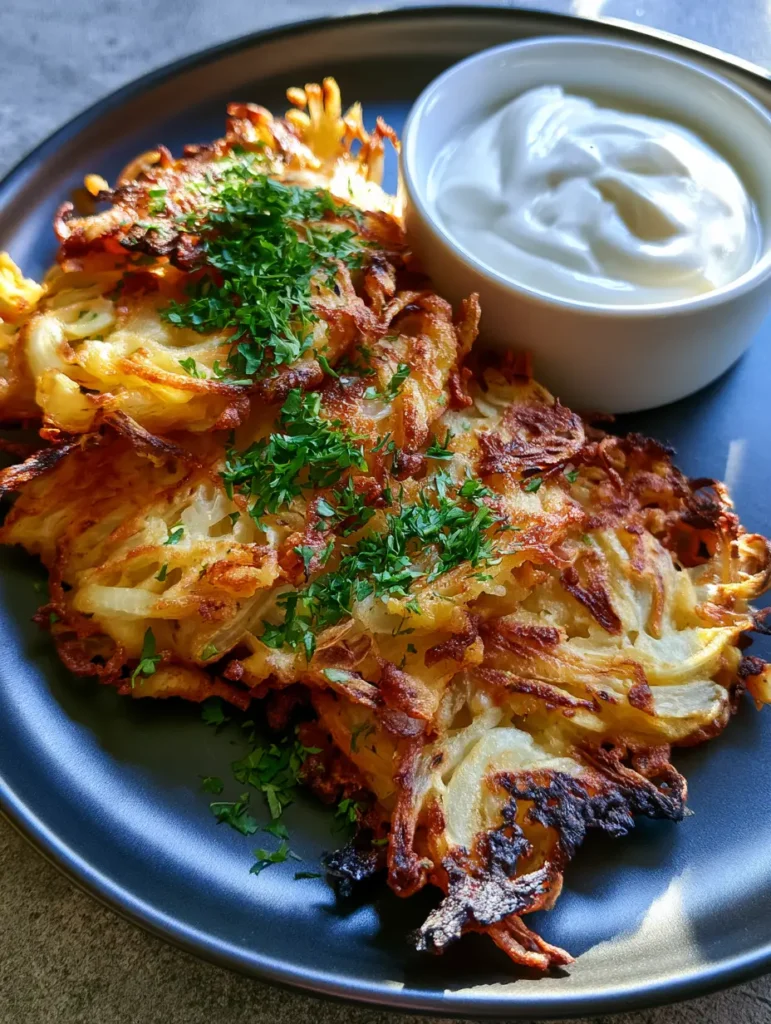
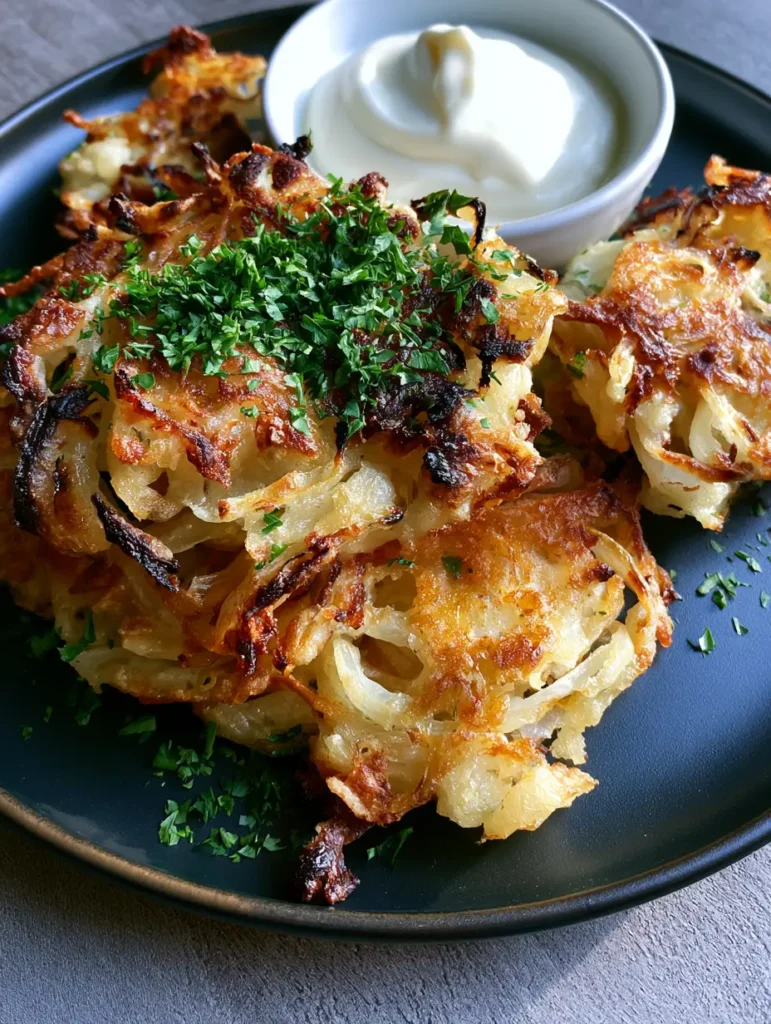
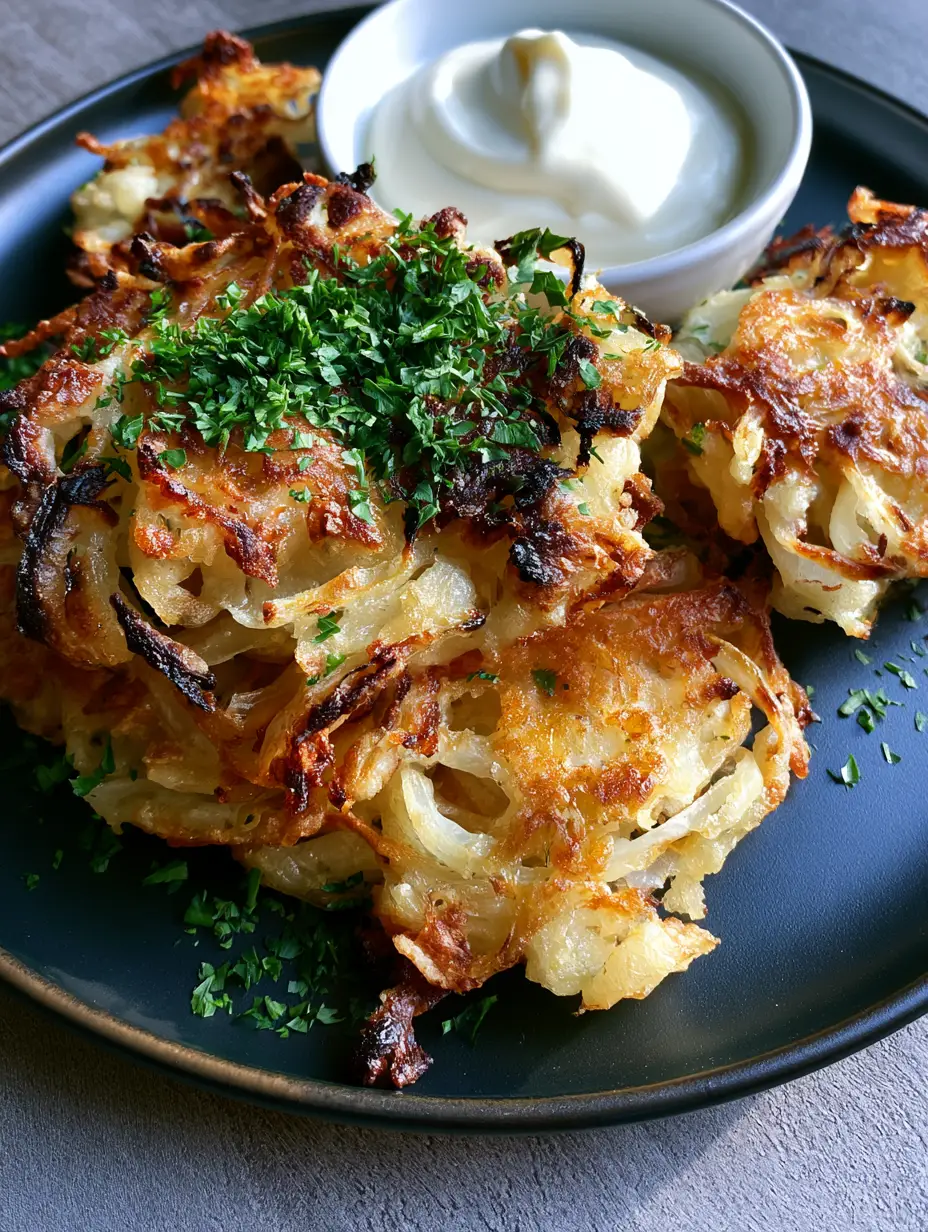
When you look at a plate of these golden-brown beauties, you immediately notice the visible strands of thinly sliced onions held together by a delicate webbing of batter. They aren’t perfectly uniform circles; they are rustic, textured, and deeply savory. Served on a dark matte ceramic plate with a dollop of thick white sour cream sauce and a dusting of fresh parsley, they represent the ultimate comfort food for any enthusiastic home cook.
Why This Recipe Defines the Ultimate Savory Crunch
- The Lacy Texture: By using a specific ratio of flour to moisture, we achieve a “webbed” look rather than a heavy breading, allowing the onions to be the star.
- Signature Charred Edges: We utilize a medium-high heat sear to create those dark, caramelized tips that provide a smoky depth to every bite.
- Visual Contrast: The vibrant green of finely chopped fresh parsley flakes pops against the deep golden-brown hue of the fried batter.
- The Cooling Element: A smooth, thick sour cream dipping sauce provides the necessary lactic acidity to cut through the richness of the fried onions.
The Anatomy of a Perfect Amish Onion Fritter
Every ingredient in this recipe serves a structural or flavor-based purpose. To achieve the visual and textural results seen in the most authentic Amish kitchens, we must balance foundational pantry staples with fresh produce.
Large Yellow or Sweet Onions: You will need 2 large (approx. 500g) onions. Yellow onions provide a robust flavor, while Vidalia or sweet onions offer a higher sugar content which helps in achieving those beautiful dark charred edges through caramelization.
All-Purpose Flour: 1 cup (125g) serves as the primary binding agent. It creates the structure of the batter that clings to the individual onion strands.
Cornstarch: 2 tbsp (16g) is the secret weapon for longevity in crispness. It prevents the fritters from becoming soggy as they cool on the dark matte ceramic plate.
Baking Powder: 1 tsp (5g) provides just enough lift to ensure the batter remains light and “lacy” rather than dense and heavy.
Whole Milk: 1/2 cup (120ml) creates the liquid base for our batter. The fats in whole milk contribute to the golden-brown browning reaction (Maillard reaction) during frying.
Egg: 1 large egg (50g) acts as the protein glue. It ensures the sliced onions don’t separate from the batter the moment they hit the hot oil.
Kosher Salt and Black Pepper: 1 tsp (6g) salt and 1/2 tsp (1g) pepper are essential. Salt draws out a tiny bit of moisture from the onions, helping the batter adhere better.
Neutral Frying Oil: You will need approximately 1 cup (240ml) of canola or vegetable oil. A high smoke point is required to reach the temperatures necessary for that crispy exterior.
Fresh Parsley: 2 tbsp (8g) of finely chopped fresh green parsley flakes. This is not just a garnish; it adds a hit of freshness to the savory profile.
Full-Fat Sour Cream: 1/2 cup (120g) for the dipping sauce. It must be thick and smooth to match the visual blueprint of the dish.
Essential Tools for the Perfect Golden Char
To replicate the top-down close-up photo of these stacked fritters, your equipment matters. A heavy-bottomed skillet, preferably cast iron, is ideal for maintaining consistent heat. You will also need a sharp mandoline or chef’s knife to ensure the onion strands are thin enough to create that lacy texture.
A wire cooling rack set over a baking sheet is another non-negotiable. Placing fried Amish Onion Fritters directly onto paper towels can trap steam and soften the bottom. A rack allows air to circulate, preserving the crunch on all sides.
The Step-by-Step Path to Fritter Perfection
Preparing the Onion Strands
Begin by peeling your onions and slicing them into very thin half-moons. Aim for a thickness of about 1/8 inch (3mm). If the slices are too thick, they won’t soften in time; if they are too thin, they will disappear into the batter. Place the sliced onions in a large mixing bowl and toss them gently to separate the layers into individual strands.
Mixing the Lacy Batter
In a separate medium bowl, whisk together the 1 cup (125g) flour, 2 tbsp (16g) cornstarch, baking powder, salt, and pepper. In a small jug, beat the egg into the 1/2 cup (120ml) milk. Pour the wet ingredients into the dry ingredients and stir until just combined. The batter should be the consistency of a thick pancake batter.
The Folding Technique
Pour the batter over the onions. Use a spatula to fold the mixture until every single onion strand is thinly coated. It should look like there is almost too much onion and not enough batter—this is exactly what you want for that visible strand, lacy texture. If you are serving these as a side to smash burger tacos, you’ll appreciate how the light texture complements a heavier main.
Achieving the Perfect Fry
Heat 1/2 inch (12mm) of oil in your skillet over medium-high heat until it reaches 350°F (175°C). Drop a small bit of batter into the oil; if it sizzles immediately, you are ready. Use a 1/4 cup (60ml) measuring cup to scoop the onion mixture into the oil. Flatten them slightly with the back of a spoon to ensure they fry evenly.
Visual and Sensory Cues
Watch for the “Lacy Effect.” As the fritters fry, the edges should start to turn golden within 2 minutes. Look for the “dark charred edges”—this is where the sugars in the onions are caramelizing against the pan. Flip carefully and fry for another 2 minutes. You are looking for a deep golden-brown color and a firm, crispy sound when tapped with tongs.
The Finishing Touches
Transfer the fritters to your wire rack and immediately sprinkle with a tiny bit more salt while the oil is still wet. While they rest for 60 seconds, prepare your dipping sauce by stirring a pinch of salt into the thick sour cream. Garnish the fritters generously with the finely chopped fresh parsley.
Expert Tips for Success
- Don’t Overcrowd the Pan: Frying too many at once drops the oil temperature, leading to greasy, soggy fritters. Fry in batches of three or four.
- Keep the Oil Clean: Use a slotted spoon to remove any stray bits of onion or batter between batches to prevent them from burning and sticking to the next set.
- The Sour Cream Secret: For an even thicker sauce, strain your sour cream through a coffee filter for 20 minutes to remove excess whey before serving.
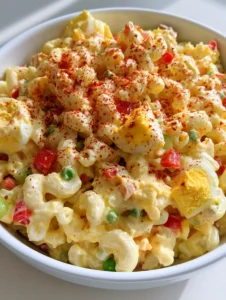
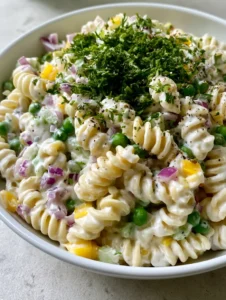
- Pairing with Sides: These fritters are incredible when served alongside a refreshing Amish pasta salad for a full traditional spread.
Storage, Reheating, and Freezing
While these are best served immediately to enjoy the maximum crunch, you can store leftovers in an airtight container in the refrigerator for up to 3 days. To reheat, avoid the microwave at all costs. Instead, place them in a 375°F (190°C) oven or air fryer for 4-5 minutes until the oil sizzles again and the crispness returns.
You can also freeze these fritters. Place them in a single layer on a baking sheet to freeze solid, then transfer to a freezer bag. Reheat directly from frozen in the oven, adding 2-3 minutes to the reheating time.
What to Serve With Amish Onion Fritters
These fritters are incredibly versatile. They function as a decadent appetizer or a side dish for a heavy protein. Try pairing them with French onion pork chops to lean into the allium flavor profile. If you want something a bit more steakhouse-style, serve them with garlic parmesan roasted potatoes. For a lighter lunch, a simple bowl of sour cream pasta salad balances the fried texture beautifully.
Frequently Asked Questions
While traditional Amish fritters are shallow-fried, you can air fry them at 375°F for 10-12 minutes. However, you will lose some of that signature ‘lacy’ texture and charred edge profile.
The key is to use a high ratio of onions to batter and to slice the onions very thin. The batter should only lightly bridge the gaps between the onion strands, not fully enclose them in a dough ball.
You can use buttermilk for a tangier flavor or a non-dairy alternative like unsweetened soy milk. However, whole milk provides the best fat content for that specific golden-brown Amish finish.
Yellow onions are standard for a sharp, savory flavor, but sweet onions like Vidalia are excellent if you prefer a more caramelized, sweeter finish with darker charred edges.
This usually happens if the batter is too thin or the oil isn’t hot enough. Ensure your oil is at 350°F (175°C) and the onions are fully coated in the flour-egg binding mixture.
The Ultimate Amish Onion Fritters Recipe
Amish Onion Fritters: The Crispiest Old-Fashioned Fried Onion Cakes
Ingredients
Equipment
Method
- Thinly slice the onions into 1/8 inch half-moons and separate the strands into a large bowl.
- In a medium bowl, whisk flour, cornstarch, baking powder, salt, and pepper. Add milk and egg, stirring until smooth.
- Fold the onions into the batter until every strand is thinly coated.
- Heat oil in a skillet to 350°F (175°C).
- Drop 1/4 cup portions of the mixture into the oil. Flatten slightly. Fry for 2 minutes per side until golden-brown with dark charred edges.
- Drain on a wire rack. Serve on a dark plate with sour cream and a sprinkle of chopped parsley.
Notes
Always reheat in an oven or air fryer to maintain the lacy, crispy texture.
Closing & Call to Action
These Amish Onion Fritters are a testament to the idea that simple ingredients, when treated with the right technique, can create a world-class dish. Whether you are serving them at a summer BBQ or as a cozy winter snack, that lacy, charred texture is guaranteed to impress. If you enjoyed this recipe, please leave a comment below and let us know how your char turned out! Don’t forget to share your photos and follow us on Pinterest for more culinary inspiration.