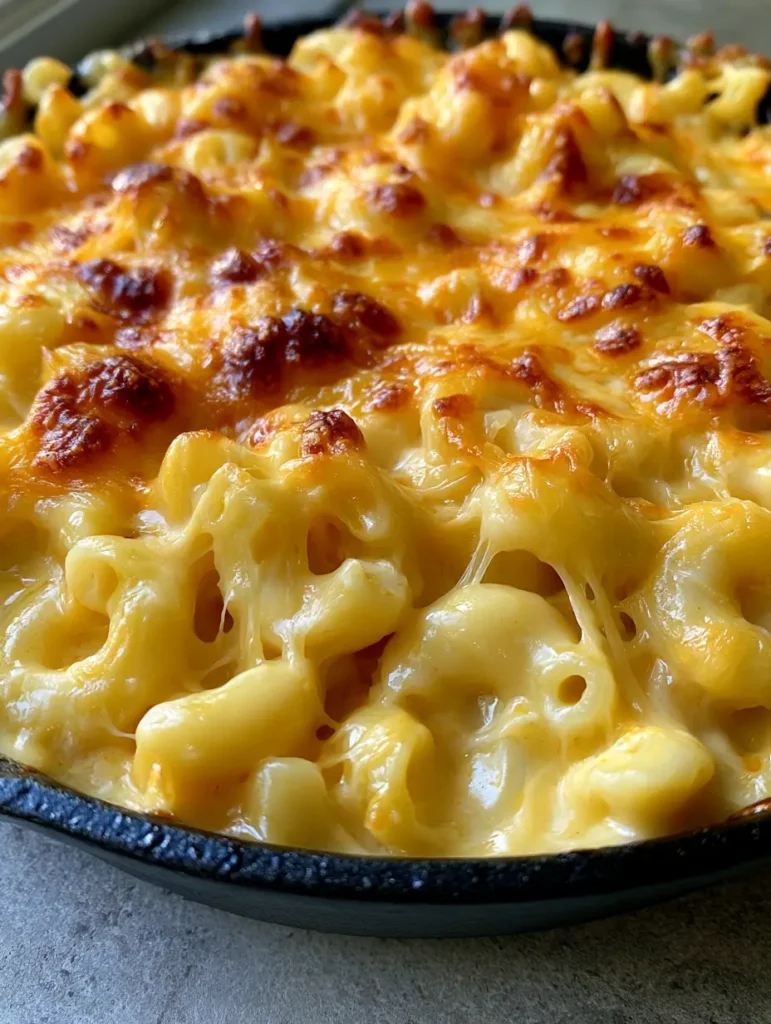
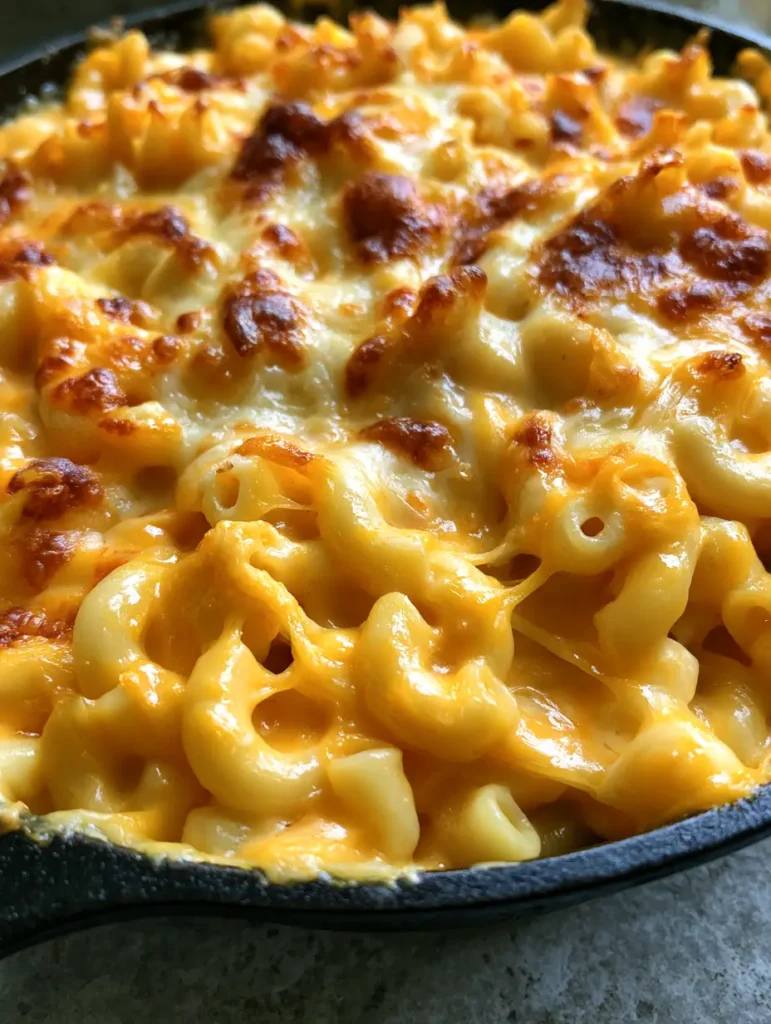
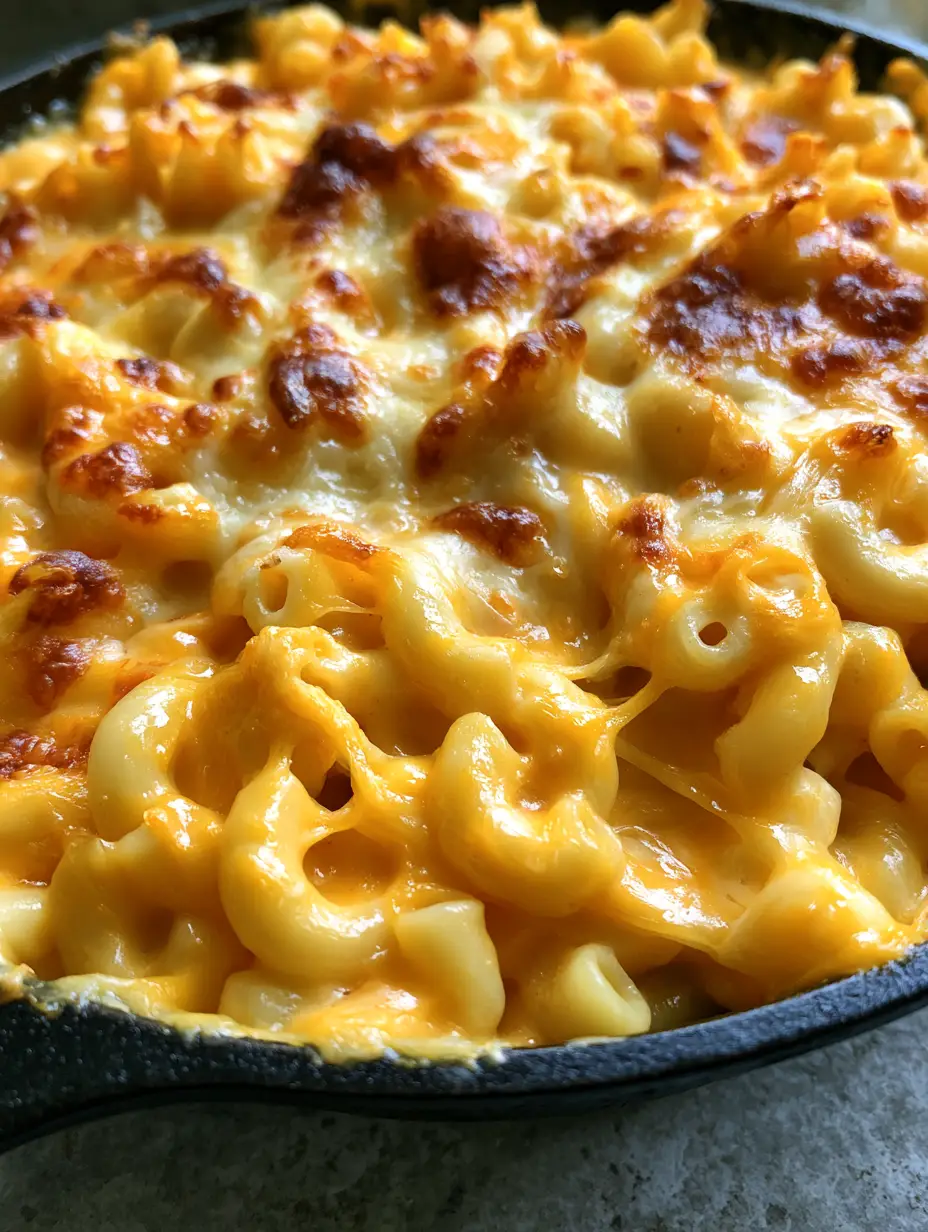
When it comes to the pantheon of comfort foods, few dishes evoke the same visceral reaction as a perfectly executed Baked Macaroni and Cheese. Imagine a black cast iron skillet, its seasoned surface radiating heat, cradling a mountain of tender elbow macaroni. Each curve of the pasta is completely submerged in a thick, velvety, and glossy golden-yellow cheese sauce that stretches into long, stringy ribbons as you pull a spoonful away. This isn’t just a side dish; it is a culinary masterpiece of texture and temperature.
The visual appeal is undeniable. Beneath the soft natural light of a kitchen window, the top layer reveals a bubbling, melted cheese crust. You will see localized golden-brown toasted spots where the high heat of the oven has caramelized the dairy, and crispy, jagged edges where the cheese has fused with the cast iron. There are no green garnishes to distract from the purity of the dish—just the unadulterated glow of melted cheddar and the promise of a soul-warming meal. This recipe is designed to bridge the gap between forensic visual perfection and professional culinary science.
The Anatomy of a Perfect Skillet Pasta: Why This Recipe Works
To achieve the results seen in our visual blueprint, we must focus on three core pillars: moisture retention, heat distribution, and the specific chemistry of the cheese. Unlike traditional recipes that can turn out dry or grainy, this Baked Macaroni and Cheese utilizes an evaporated milk-based cheese base to ensure a silkiness that remains stable even under high heat. Here is what makes this version stand out:
- The Evaporated Milk Advantage: By using evaporated milk, we introduce a concentrated dairy protein that prevents the sauce from breaking or becoming oily during the baking process.
- Cast Iron Heat Retention: The heavy black skillet provides a constant, even heat that creates those coveted toasted cheese edges that a glass baking dish simply cannot replicate.
- The Dual-Cheese Strategy: We utilize sharp cheddar for that iconic golden-yellow color and pungent flavor, paired with high-moisture cheeses to ensure the sauce remains stringy and visible between the pasta shells.
- No-Crumb Crust: This recipe focuses on a pure cheese topping, allowing the cheese itself to blister and brown, creating a textural contrast without the need for breadcrumbs.
The Essential Components for a Glossy Cheese Sauce
Creating a Baked Macaroni and Cheese that looks as good as it tastes requires high-quality ingredients. Every item in this list serves a specific purpose, from the structural integrity of the pasta to the emulsification of the sauce. If you are planning a full spread, this dish pairs beautifully with a hearty main like French onion pork chops or even alongside some garlic parmesan roasted potatoes.
1 lb (454g) Elbow Macaroni: The classic choice for a reason. The hollow centers and ridged exteriors are designed to trap as much of that thick cheese sauce as possible.
12 oz (355ml) Evaporated Milk: This is the secret to a velvety, glossy finish. It provides a creamy mouthfeel without the heaviness of heavy cream, while staying emulsified at high temperatures.
4 cups (450g) Sharp Yellow Cheddar: Always grate your own cheese from the block. Pre-shredded cheeses are coated in potato starch or cellulose, which prevents them from melting into that smooth, stringy texture we see in the visual prompt.
2 cups (225g) Monterey Jack or Mozzarella: These cheeses provide the “stretch.” While cheddar provides the flavor and color, these high-melt cheeses give us those stringy pulls visible between the pasta shells.
4 tbsp (56g) Unsalted Butter: The fat base for our roux, providing a rich, nutty foundation for the sauce.
1/4 cup (30g) All-Purpose Flour: When cooked with the butter, this creates the thickening agent that ensures the sauce is thick enough to coat the macaroni without sliding off.
1 tsp (5g) Dry Mustard Powder: An invisible but essential ingredient. It doesn’t make the dish taste like mustard; instead, it amplifies the sharpness of the cheddar and helps emulsify the sauce.
1/2 tsp (2.5g) Smoked Paprika: This adds a subtle depth and helps achieve those localized golden-brown toasted spots on the top crust.
Tools Required for the Perfect Bake
To replicate the authentic mobile photography style of this dish, equipment matters. You will need a 10-inch or 12-inch black cast iron skillet. The skillet is the star of the show, providing the rustic aesthetic and the heat capacity needed for those crispy edges.
Additionally, a heavy-bottomed saucepan is required for the cheese sauce, and a sturdy whisk to ensure there are no lumps in your roux. Because we want a thick, velvety sauce, a silicone spatula is also helpful for scraping every drop of “liquid gold” into the skillet over the pasta.
Mastering the Art of the Perfectly Baked Skillet Pasta
Follow these steps closely to ensure your Baked Macaroni and Cheese matches the visual blueprint of a bubbling, melted cheese crust and a stringy, glossy interior.
1. Preparing the Pasta Foundation
Bring a large pot of salted water to a rolling boil. Add the 1 lb (454g) of elbow macaroni and cook for approximately 2 minutes less than the package directions for “al dente.” The pasta should still have a firm bite in the center.
This is a critical culinary step; the pasta will continue to cook in the oven as it absorbs the evaporated milk base. If you overboil it now, the final result will be mushy rather than tender. Drain the pasta and set it aside, but do not rinse it—the natural starches help the sauce cling to the shells.
2. Crafting the Velvety Roux and Sauce
In a large saucepan over medium heat, melt the 4 tbsp (56g) of butter. Once bubbling, whisk in the 1/4 cup (30g) of flour. Cook this mixture for 1-2 minutes until it smells slightly nutty and looks like wet sand, but do not let it brown.
Slowly pour in the 12 oz (355ml) of evaporated milk while whisking constantly. You will see the mixture thicken into a glossy, pale base. Add your dry mustard, paprika, salt, and black pepper. Continue to simmer for 3-5 minutes until the sauce is thick enough to coat the back of a spoon.
3. The Great Cheese Integration
Turn the heat to low. Gradually fold in 3 cups (340g) of your shredded cheese blend, reserving the rest for the topping. Stir in a circular motion until the cheese is completely melted and the sauce looks thick, velvety, and glossy golden-yellow.
The sauce should be thick enough that it moves slowly. If it seems too thin, let it simmer for another minute. If it’s too thick, a splash of regular milk can loosen it. The goal is a “liquid gold” consistency that will submerge the pasta shells entirely.
4. Assembly and the Cast Iron Bake
Preheat your oven to 400°F (200°C). Add the cooked elbow macaroni directly into the cheese sauce and fold gently until every shell is filled with cheese. Transfer the mixture into your seasoned black cast iron skillet.
Spread the remaining cheese evenly over the top, making sure to push some of the cheese all the way to the edges where it meets the skillet walls. This is how you achieve those toasted cheese edges and crispy bits.
5. Achieving the Bubbling Golden Crust
Place the skillet in the center of the oven and bake for 15-20 minutes. Keep a close eye on the visual cues: you are looking for the cheese to be bubbling vigorously around the perimeter. For the localized golden-brown toasted spots, turn on the broiler for the last 2-3 minutes of cooking.
Remove the skillet from the oven when the top features a melted cheese crust with deep golden highlights. Let it rest for 5 minutes before serving; this allows the sauce to set slightly, ensuring that “stringy” look when served.
Expert Tips for a Glossy, Never-Grainy Result
- Temperature Control: Never add your cheese to boiling liquid. High heat causes the proteins in the cheese to tighten and squeeze out the fat, resulting in a grainy sauce. Always lower the heat before adding the cheddar.
- The Grate Rule: As mentioned, block cheese is non-negotiable for that professional, glossy look. Use the large holes on a box grater for the best melting profile.
- The Rest Period: Patience is an ingredient. Letting the Baked Macaroni and Cheese sit for five minutes ensures the sauce doesn’t just run to the bottom of the pan but stays suspended between the pasta.
- Skillet Prep: If your cast iron isn’t perfectly non-stick, lightly rub it with a teaspoon of neutral oil before adding the pasta to enhance the “crispy edge” effect.
What to Serve With This Decadent Dish
While this Baked Macaroni and Cheese is a star on its own, it plays well with others. For a Southern-style feast, serve it alongside crispy amish onion fritters. If you want to balance the richness, a fresh sour cream pasta salad provides a tangy contrast.
For those looking for a unique fusion dinner, try serving this creamy mac as a side to smash burger tacos. The combination of the toasted cheese edges and the seared beef is a match made in comfort food heaven.
Storage, Reheating, and Freezing Advice
In the Fridge: Store leftovers in an airtight container for up to 4 days. Because of the evaporated milk base, this recipe holds its creaminess better than most during refrigeration.
Reheating: To maintain the stringy texture, avoid the microwave if possible. Instead, place a portion in a small oven-safe dish, add a splash of milk, cover with foil, and bake at 350°F (175°C) until bubbly. This revives the “glossy” look of the sauce.
Freezing: You can freeze this dish before the final bake. Wrap the skillet (or transfer to a foil pan) tightly with plastic wrap and foil. Freeze for up to 3 months. Thaw in the fridge overnight before baking as directed.
Frequently Asked Questions about Skillet Mac
Yes. Assemble the dish entirely but do not bake it. Cover tightly and refrigerate for up to 24 hours. When ready, bake as directed, adding 5-10 minutes to the cook time to account for the cold temperature.
While you can use a standard baking dish, a cast iron skillet is superior for heat retention, which specifically creates the crispy, toasted cheese edges that are a hallmark of this recipe.
While sharp cheddar provides flavor and color, adding high-moisture cheeses like Monterey Jack, Mozzarella, or Gouda is essential for achieving that stringy, stretchy texture visible between the pasta shells.
Dryness usually happens because the pasta was overcooked initially (absorbing too much sauce) or there wasn’t enough sauce-to-pasta ratio. Our evaporated milk base ensures a surplus of glossy sauce to prevent this.
Evaporated milk has a higher protein content and less water than regular milk, making the cheese sauce more stable, creamier, and less likely to break or become grainy when baked at high temperatures.
The Ultimate Baked Macaroni and Cheese Recipe Card
Baked Macaroni and Cheese: The Ultimate Ultra-Creamy Cast Iron Skillet Recipe
Ingredients
Equipment
Method
- Cook macaroni in salted boiling water for 2 minutes less than the 'al dente' package directions. Drain and set aside without rinsing.
- Melt butter in a saucepan over medium heat. Whisk in flour and cook for 1-2 minutes until nutty but not browned.
- Slowly whisk in evaporated milk. Add mustard powder and paprika. Simmer until the sauce is thick and glossy, coating the back of a spoon.
- Reduce heat to low. Stir in 3 cups of the cheese blend until completely smooth and velvety.
- Fold pasta into the sauce and transfer to the cast iron skillet. Top with remaining cheese, pushing it to the edges.
- Bake at 400°F (200°C) for 15-20 minutes. Broil for 2-3 minutes at the end to achieve golden-brown toasted spots.
Notes
Don't overcook the pasta initially as it bakes in the sauce.
Bring the Comfort Home
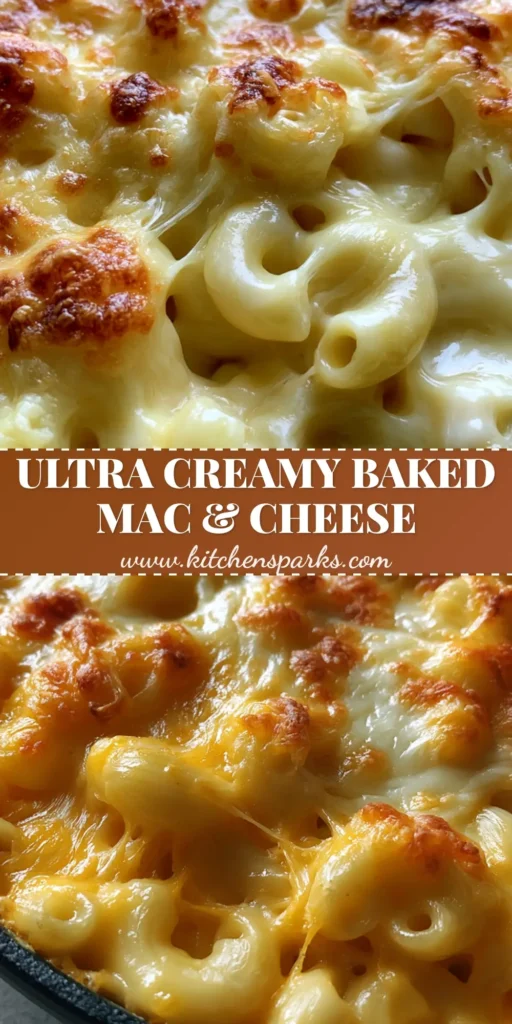
There is nothing quite like the sight of a bubbling skillet of Baked Macaroni and Cheese arriving at the table. From the thick, velvety sauce to those localized golden-brown toasted spots, this recipe is a feast for both the eyes and the palate. It captures the essence of home cooking with a professional edge that ensures success every time you step into the kitchen.
If you enjoyed this recipe, we would love to hear from you! Please leave a comment below and tell us how your toasted edges turned out. Don’t forget to share your creations and follow us on Pinterest for more culinary inspiration. Happy cooking!