There is something uniquely comforting about a bowl of warm, thick rice pudding, but when you infuse it with the rich, velvety essence of the tropics, it transforms into an elite dessert. This Coconut Rice Pudding Recipe is designed for those who crave a dense, opaque, and incredibly satisfying treat that balances the earthy sweetness of rice with the bold fat of premium coconut milk. Whether you are looking for a dairy-free indulgence or simply a new way to enjoy a classic, this recipe delivers a restaurant-quality experience right in your home kitchen.
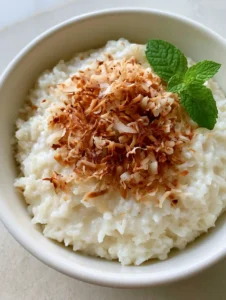
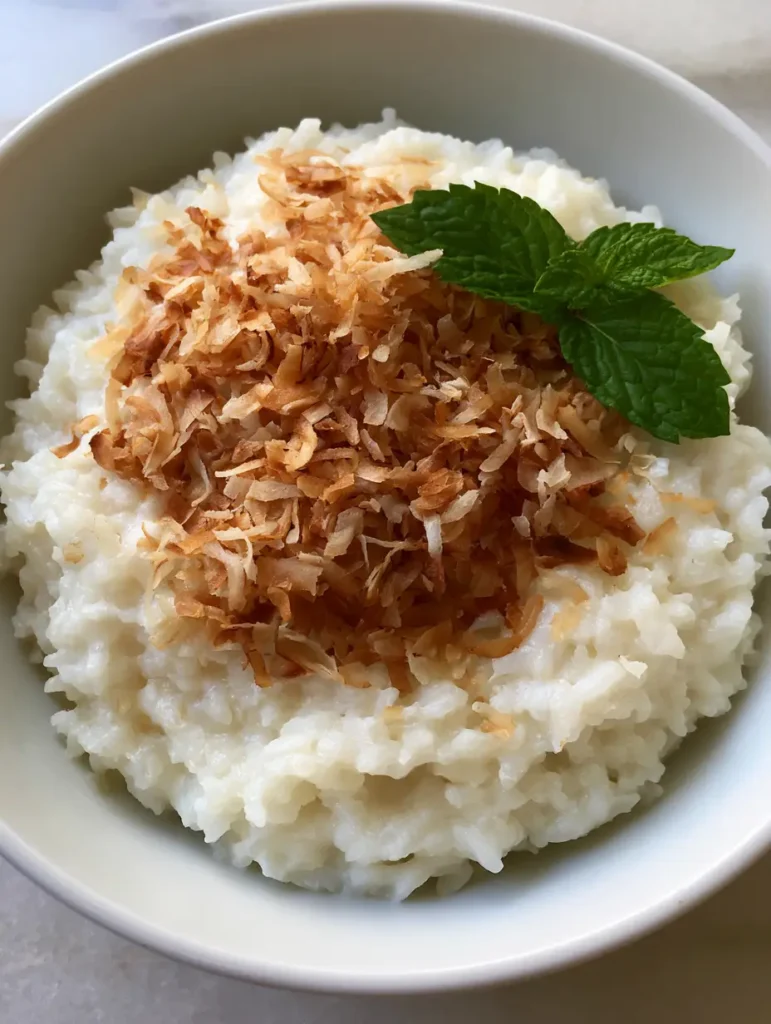
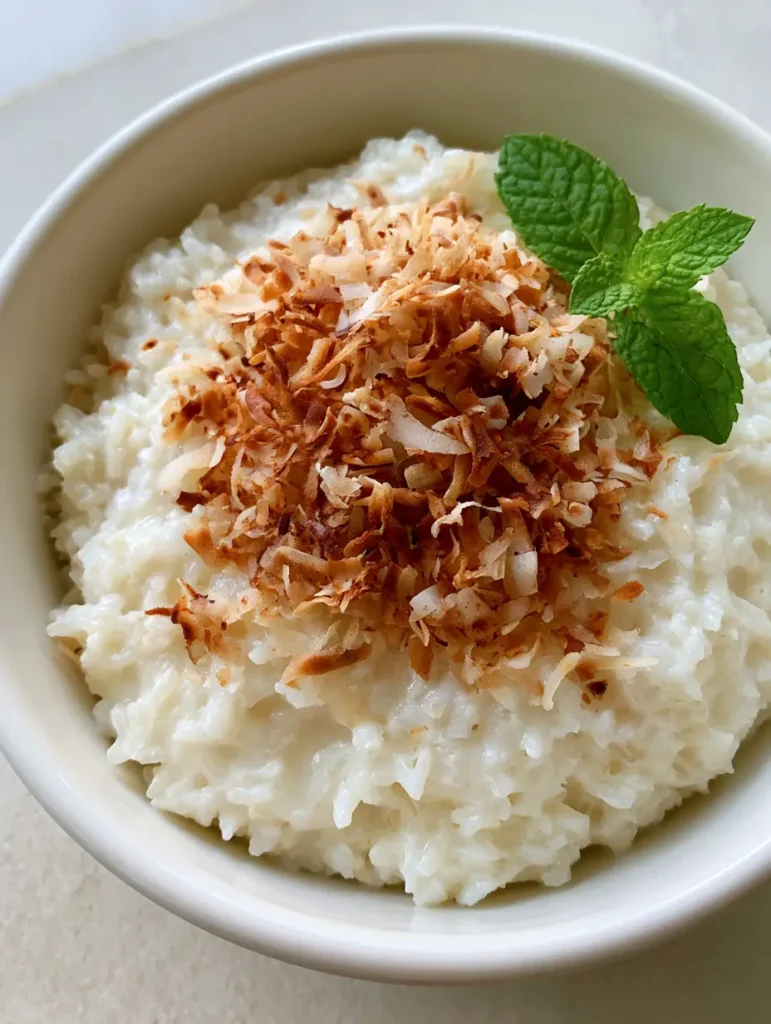
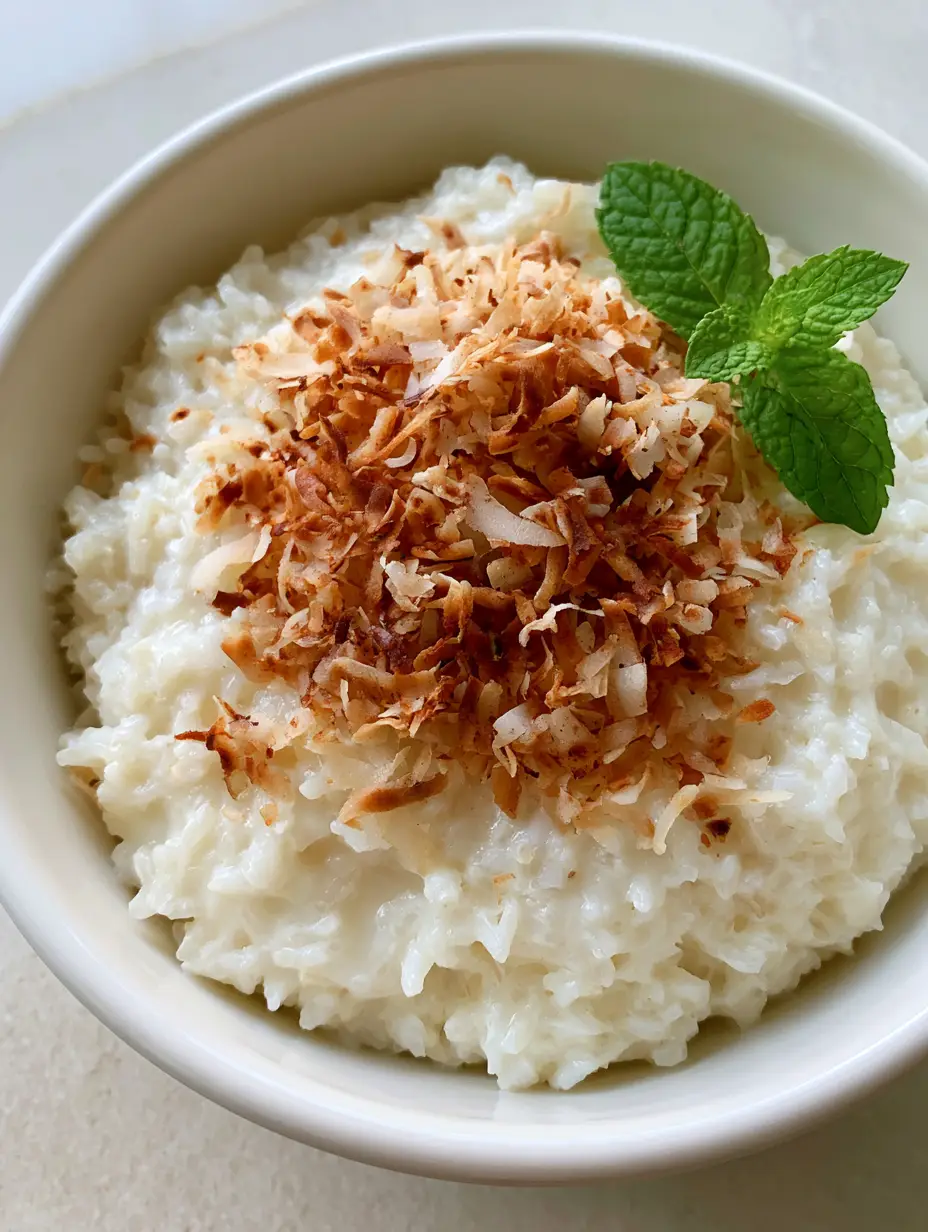
Visually, this dish is a showstopper, featuring a rustic white ceramic bowl filled with soft, individual grains of rice suspended in a thick, cream-colored base. The contrast of the stark white pudding against the heap of toasted golden-brown coconut flakes and the pop of vibrant green mint leaves creates a sensory experience before you even take your first bite. It is the kind of dish that looks as good on a light-colored stone countertop as it tastes on your tongue.
Why This Creamy Coconut Rice Pudding Works
- Dense and Opaque Texture: Unlike watery versions, this recipe uses a specific ratio of full-fat coconut milk to ensure a rich, heavy mouthfeel that coats the spoon perfectly.
- Visual Grain Integrity: We utilize a cooking method that ensures the rice is fully cooked and soft while maintaining the visible structure of individual grains, exactly as seen in professional food photography.
- Multi-Layered Coconut Flavor: By using both thick coconut milk and toasted golden coconut flakes, we build a profile that is both creamy and nutty.
- Natural Aesthetic Appeal: The addition of fresh green mint provides a necessary aromatic lift and a professional visual finish that balances the warm tones of the toasted coconut.
The Tropical Elements Required for This Dense Pudding
Every ingredient in this Coconut Rice Pudding Recipe has been selected to mirror the visual blueprint of a dense, opaque dessert with distinct textures. We aren’t just making porridge; we are building a structural masterpiece of flavor.
Long-Grain White Rice or Jasmine Rice: 1 ½ cups (285g). You need a rice that stays distinct; Jasmine rice is preferred for its natural floral aroma which complements the coconut perfectly.
Full-Fat Canned Coconut Milk: 2 cans (27oz / 800ml). To achieve the “dense and opaque” look from our visual guide, you must use the canned variety rather than the refrigerated carton version, which is too thin.
Granulated White Sugar: ½ cup (100g). This provides a clean sweetness that doesn’t muddy the beautiful off-white color of the pudding base.
Fine Sea Salt: ½ tsp (3g). Salt is the “invisible” hero that cuts through the heavy fats of the coconut milk and heightens the overall sweetness.
Pure Vanilla Extract: 1 tsp (5ml). This adds a foundational warmth to the dish, making the coconut flavor feel more complex and “baked” rather than just raw.
Unsweetened Coconut Flakes: ½ cup (45g). These will be toasted until they reach varying shades of golden brown to provide the signature crunch and visual contrast seen in the bowl.
Fresh Mint Leaves: 3-5 leaves. A small cluster of bright green mint is essential for the final presentation, offering a cool olfactory contrast to the rich pudding.
Water: 2 cups (480ml). Used for the initial par-boiling of the rice to ensure it is soft and fully hydrated before the heavy coconut fats are added.
Essential Tools for Visual and Culinary Success
To recreate the handheld smartphone photo aesthetic of a rustic ceramic bowl, you need the right tools for the job. A heavy-bottomed saucepan is non-negotiable for preventing the coconut milk from scorching during the thickening process.
You will also need a fine-mesh strainer to rinse your rice. Removing excess surface starch initially prevents the pudding from becoming a gummy mass, allowing those individual grains to remain visible. A wide skillet is best for toasting the coconut flakes, as it provides more surface area for even browning. Finally, a rustic ceramic bowl, preferably in white or off-white, is needed to match the styling of the visual blueprint.
Mastering the Creamy Simmer: A Step-by-Step Guide
Preparing the Rice Foundation
Begin by rinsing 1 ½ cups (285g) of rice under cold water until the water runs clear. This step is vital for the visual integrity of the dish; it ensures the grains don’t clump together into a singular mushy block.
In your heavy-bottomed saucepan, combine the rinsed rice with 2 cups (480ml) of water and the ½ tsp (3g) of sea salt. Bring to a boil, then immediately reduce to a low simmer. Cover and cook for about 10-12 minutes, or until the water is mostly absorbed but the rice is still “al dente.”
Infusing the Opaque Coconut Base
Once the water is absorbed, pour in both cans (800ml) of the thick coconut milk and the ½ cup (100g) of sugar. Increase the heat slightly to reach a gentle simmer, stirring constantly with a wooden spoon or silicone spatula.
Watch for sensory cues: the mixture will begin to bubble softly and the steam will smell intensely of sweet cream. Continue to simmer, uncovered, for 15-20 minutes. You are looking for a “nappe” consistency, where the pudding is thick enough to coat the back of a spoon without running off instantly. The rice should now be soft and fully cooked, yet the grains should still be clearly visible through the opaque off-white liquid.
Engineering the Golden Toasted Topping
While the pudding thickens, place your ½ cup (45g) of coconut flakes in a dry skillet over medium heat. This requires your full attention. Shake the pan frequently as the flakes transition from white to a pale tan, and finally to a rich, golden brown.
The visual goal is a “heap” of flakes with varying shades, which indicates a handcrafted, rustic quality. Once toasted, remove them from the heat immediately to prevent burning, as the residual heat of the pan can carry the cooking too far.
The Final Flourish and Styling
Stir the vanilla extract into the thickened pudding. Ladle the hot, dense mixture into a rustic white ceramic bowl. The pudding should sit heavy in the bowl, creating a smooth but textured surface.
Generously pile the toasted coconut flakes in the center. Finally, take your three fresh green mint leaves and place them neatly on the side of the coconut heap. This pop of green against the brown and white is the exact visual signature required for the perfect Coconut Rice Pudding Recipe presentation.
Expert Tips for a Professional Result
- Control the Heat: Coconut milk contains high levels of fat and sugar; if the heat is too high, it will separate or scorch at the bottom. Keep it at a “lazy bubble” rather than a rolling boil.
- The Cooling Thickening: Remember that rice pudding will continue to thicken significantly as it cools. If it looks a tiny bit looser than you want while hot, it is likely perfect.
- Toast with Care: Coconut flakes can go from golden to burnt in a matter of seconds. Use your nose—the moment you smell a toasted, nutty aroma, they are almost done.
- Mint Freshness: Only add the mint leaves immediately before serving. The heat of the pudding can wilt the leaves quickly, so for that “fresh handheld photo” look, timing is everything.
Storage and Reheating Advice
This Coconut Rice Pudding Recipe keeps exceptionally well, making it a great make-ahead dessert. Store leftovers in an airtight container in the refrigerator for up to 4 days. Because the rice continues to absorb liquid, the pudding will become much denser overnight.
To reheat, place a portion in a small saucepan with a splash of extra coconut milk or water. Stir gently over low heat until it returns to that creamy, opaque consistency. Avoid the microwave if possible, as it can heat the fats unevenly, but if you must, use 30-second intervals and stir well between each.
What to Serve with Tropical Rice Pudding
While this pudding is a powerhouse on its own, it fits beautifully into a larger tropical or Asian-inspired menu. If you are hosting a dinner party, consider starting with a bright Vietnamese noodle salad to cleanse the palate before this rich dessert.
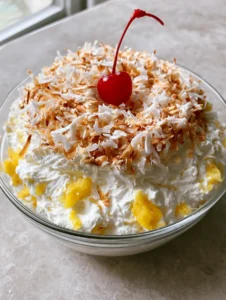
For those who love the combination of fruit and cream, pairing this with a slice of homemade pineapple bread can double down on the island vibes. If you are looking for more coconut-centric treats to round out a dessert table, our Hawaiian pineapple coconut fluff is a lighter, airier companion to this dense pudding. For a completely different texture profile that still hits those gourmet notes, try serving this alongside a Dubai chocolate pistachio tart for a truly global dessert spread.
Frequently Asked Questions
Absolutely. It is delicious warm, but it sets into a firm, custard-like consistency when chilled, which many people prefer.
While you can, the results will not be as dense or opaque. Full-fat canned coconut milk is essential for the rich, creamy texture shown in the photos.
Rinse the rice thoroughly before cooking to remove excess starch and ensure you don’t over-stir the pudding once it begins to thicken.
Yes! This recipe is naturally dairy-free and vegan, as long as you use plant-based granulated sugar.
Jasmine rice or long-grain white rice are best because they maintain their individual grain structure and offer a pleasant floral aroma that complements coconut.
The Complete Coconut Rice Pudding Recipe
Coconut Rice Pudding Recipe: The Ultimate Creamy Tropical Comfort
Ingredients
Equipment
Method
- Rinse the rice under cold water until clear. Combine rice, water, and salt in a saucepan; bring to a boil, then simmer covered for 10-12 minutes until water is absorbed.
- Stir in coconut milk and sugar. Simmer uncovered for 15-20 minutes, stirring frequently, until the mixture is thick, opaque, and coats the back of a spoon.
- In a dry skillet over medium heat, toast coconut flakes for 3-5 minutes, shaking the pan constantly until they reach varying shades of golden brown.
- Stir vanilla into the pudding. Ladle into a rustic white bowl, top with a heap of toasted coconut, and garnish with 3 fresh mint leaves.
Notes
If the pudding is too thick after cooling, stir in a tablespoon of coconut milk to loosen.
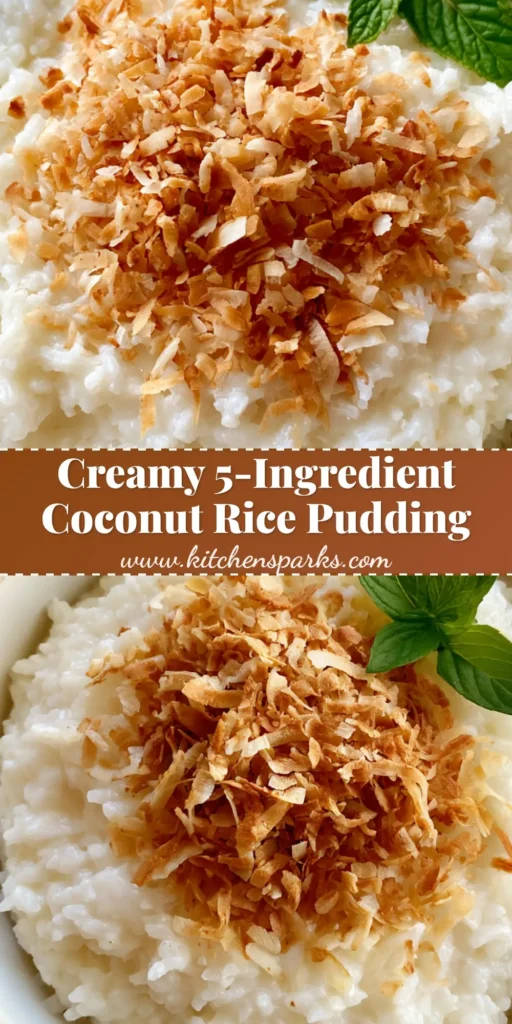
This Coconut Rice Pudding Recipe is the ultimate intersection of simple ingredients and sophisticated execution. By focusing on the texture of the rice and the richness of the coconut milk, you create a dessert that is far more than the sum of its parts. It’s a dish that invites you to slow down, pick up a spoon, and enjoy the creamy, toasted, and minty layers of flavor.
If you enjoyed this recipe, please leave a comment below and let us know how yours turned out! Don’t forget to share your creations and follow us for more culinary inspiration on Pinterest. Happy cooking!