There is a specific, intoxicating aroma that fills a Thai street kitchen—a heady mix of fermented soy, searing high-heat aromatics, and the peppery punch of Thai basil. This recipe for Thai Drunken Noodles, known traditionally as Pad Kee Mao, captures that exact sensory experience, delivering a dish that is as visually stunning as it is crave-worthy. If you have been searching for a noodle dish that balances a deep, smoky char with a vibrant heat, you have arrived at the definitive guide.
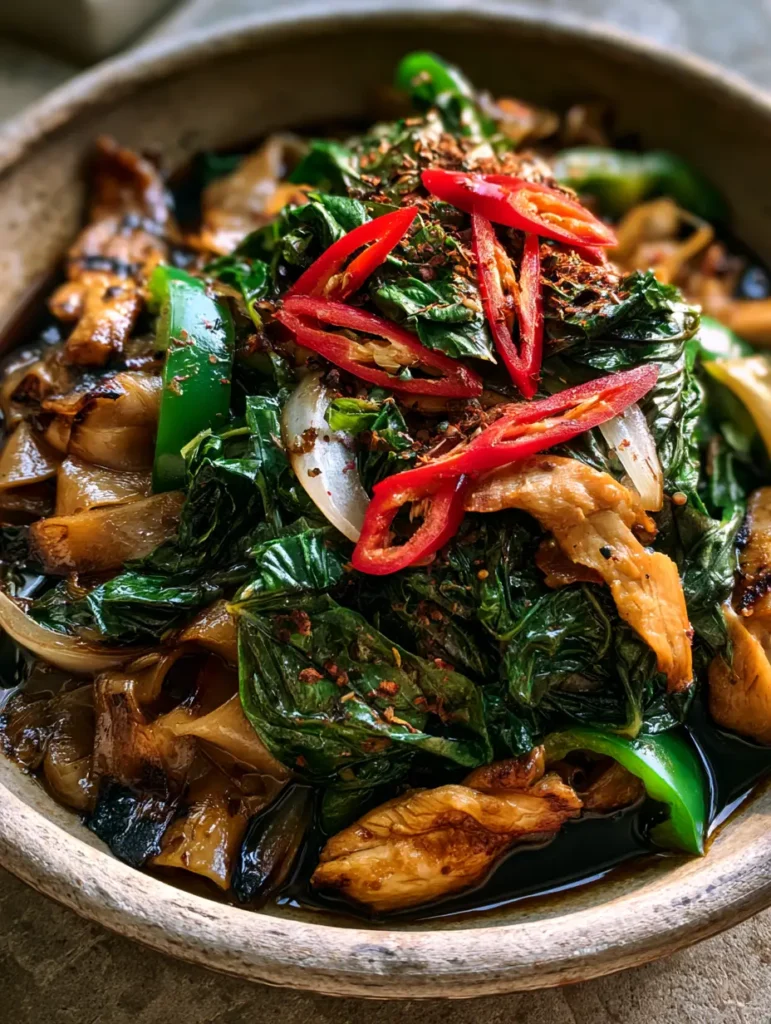
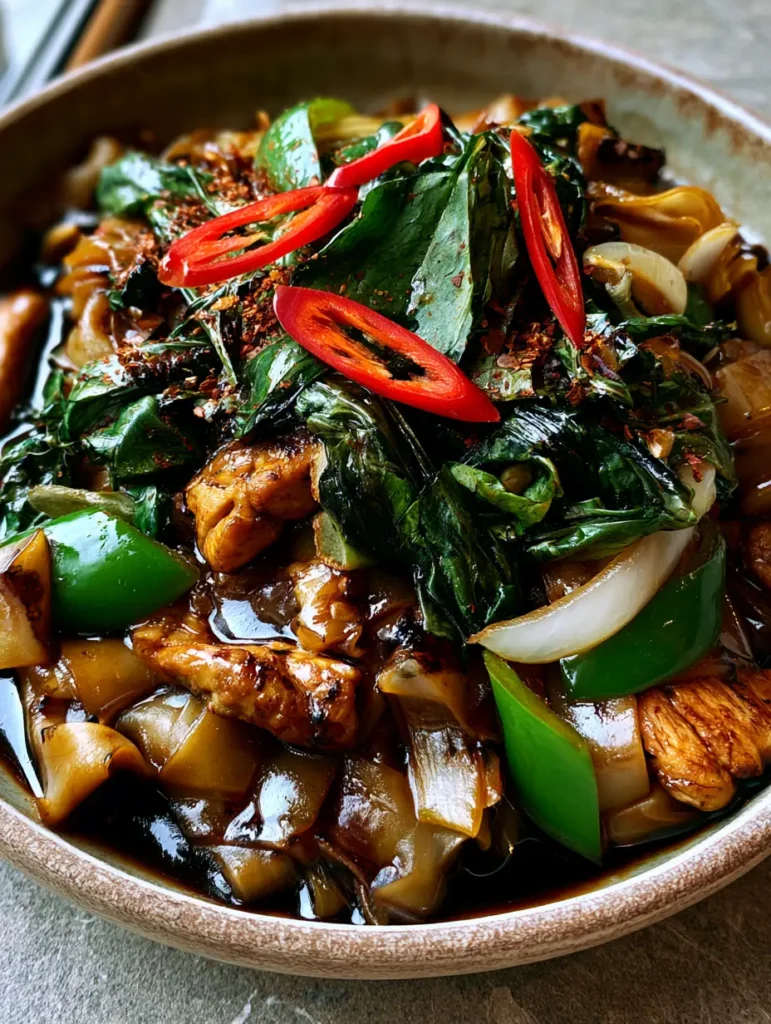
The magic of these Thai Drunken Noodles lies in the contrast of textures. Imagine wide, flat rice noodles that are glossy and coated in a dark, thick savory soy sauce, yet boast those coveted visible charred edges from a high-heat wok sear. It is a dish designed for the bold, featuring tender strips of chicken breast, the crunch of green bell peppers, and the lingering fire of red bird’s eye chilies.
While the name “Drunken Noodles” often sparks curiosity, the dish contains no alcohol. Legend suggests it was created as a spicy cure for a long night of imbibing, or perhaps that the heat is so intense one must drink heavily to quench it. Regardless of the origin, our version stays true to the visual blueprint of a rustic home-cooked masterpiece, perfect for a weeknight dinner or an impressive weekend feast.
The Visual Allure of Authentic Pad Kee Mao
Before we dive into the wok, let’s look at what makes this specific iteration of Thai Drunken Noodles stand out from the average takeout container. Achieving the “Visual Recipe Blueprint” requires precision in both preparation and heat management.
- The Wok Hei (Breath of the Wok): The noodles must not just be soft; they must be blistered. We look for those dark, caramelized edges that signify a successful Maillard reaction against the metal.
- The Color Palette: The deep mahogany of the soy-laden noodles provides a dramatic backdrop for the vibrant green of the wilted Thai basil and the shocking red of the bird’s eye chilies.
- The Gloss Factor: A perfect sauce should be thick enough to cling to every crevice of the noodles without pooling at the bottom of the bowl, creating a smartphone-ready sheen.
- Translucent Textures: Onions should be sautéed until just translucent, retaining a slight bite that complements the tender seared chicken breast.
Essential Ingredients for the Ultimate Flavor Profile
To recreate the complex flavors of Thai Drunken Noodles, we need a balance of salty, sweet, and spicy. These ingredients are curated to match the visual and structural requirements of a professional-grade stir-fry.
The Noodle Foundation
Wide Flat Rice Noodles: You will need 14 oz (400g) of dried wide rice noodles or 1 lb (454g) of fresh ones. If using dried, soak them in lukewarm water until they are flexible but still have a firm core; over-soaking leads to mushy noodles that won’t char.
The Protein and Produce
Chicken Breast Strips: 1 lb (450g) of chicken breast, sliced into thin, uniform strips. Slicing against the grain ensures the chicken remains tender during the high-heat searing process required for that golden-brown exterior.
Thai Basil (Horapha): 2 cups (60g) of fresh leaves. Do not substitute with Italian basil; Thai basil has a distinct anise-like flavor and sturdy leaves that wilt into a deep green without losing their aromatic integrity.
Red Bird’s Eye Chilies: 4-6 chilies, sliced thin on a diagonal. These provide the primary heat source and the bright red visual garnish that defines the dish’s aesthetic.
Aromatics and Vegetables: 1 medium white onion (150g), sliced into translucent wedges, and 1 large green bell pepper (150g), sliced into vibrant strips. These provide the structural “crunch” and volume to the stir-fry.
The Dark Savory Sauce
Dark Soy Sauce: 2 tbsp (30ml). This is the “secret” to the visual blueprint, providing the intense dark color and a slightly molasses-like sweetness that coats the noodles.
Oyster Sauce: 3 tbsp (45ml). This adds the necessary viscosity and a deep, savory umami base that helps the sauce cling to the flat surfaces of the rice noodles.
Fish Sauce: 1 tbsp (15ml). Essential for that authentic Thai funk and saltiness that balances the heat of the chilies.
Light Soy Sauce and Sugar: 1 tbsp (15ml) light soy and 1 tbsp (12g) palm sugar or brown sugar to round out the flavor profile and assist in the caramelization of the noodle edges.
Kitchen Equipment for Professional Stir-Fry Results
Achieving the perfect Thai Drunken Noodles requires tools that can handle intense heat and rapid movement. This isn’t just about cooking; it’s about culinary physics.
The Carbon Steel Wok: A well-seasoned wok is the gold standard for achieving “wok hei.” The high sloped sides allow you to toss the noodles effectively, ensuring even coating and preventing the “steaming” effect that occurs in flat pans.
High-Heat Spatula: A metal or high-heat silicone spatula is necessary to scrape the bottom of the pan, ensuring the dark soy sauce caramelizes onto the noodles rather than burning onto the surface.
Chef’s Knife: Precision is key for the bird’s eye chilies and bell peppers. You want thin diagonal slices for the chilies to maximize their visual impact as a garnish.
Step-by-Step Instructions to Mastery
Phase 1: Prepping the Noodle Base
If using dried noodles, submerge them in a bowl of room-temperature water for 30-40 minutes. You are looking for a texture that is “al dente” before they even hit the pan. If they are too soft now, they will disintegrate during the stir-fry. Drain them thoroughly and toss with 1 tsp (5ml) of neutral oil to prevent sticking.
Phase 2: Searing the Chicken and Aromatics
Heat 2 tbsp (30ml) of high-smoke-point oil (like canola or peanut oil) in your wok over medium-high heat. Add the chicken breast strips in a single layer. Resist the urge to move them for at least 60 seconds; this allows a golden-brown crust to form, matching the visual prompt’s description of “tender strips of seared chicken.”
Once seared, push the chicken to the side and add the white onion slices and sliced green bell peppers. Sauté for 2 minutes until the onions are translucent and the peppers are slightly softened but still vibrant. Add 4 cloves of minced garlic and half of the sliced bird’s eye chilies, stirring for 30 seconds until the air smells spicy and fragrant.
Phase 3: The High-Heat Noodle Char
Turn the heat to the highest setting. Add the prepared rice noodles to the wok. Immediately pour the pre-mixed sauce (dark soy, oyster sauce, fish sauce, sugar) over the noodles. Using a lifting and folding motion, toss the noodles constantly.
Spread the noodles against the hot surface of the wok and let them sit for 15-20 seconds without moving. This creates those charred edges. Repeat this process 2-3 times. You will see the noodles transform from pale to a deep, glossy mahogany. If you enjoy this high-protein approach, you might also love our high protein pasta salad.
Phase 4: The Final Fold and Garnish
Turn off the heat. This is crucial—the residual heat is all you need to wilt the Thai basil. Add the 2 cups (60g) of basil leaves and the remaining red bird’s eye chilies. Fold them gently into the noodles until the basil is dark green and soft. This prevents the delicate herbs from turning black or losing their oils.
Transfer the Thai Drunken Noodles to a rustic shallow bowl. For the final touch, sprinkle a light dusting of dried red chili flakes over the surface to add an extra layer of textural heat and visual detail, just like a professional food photograph.
Expert Tips for Success
- Don’t Overcrowd the Pan: If your wok isn’t large enough, cook in two batches. Overcrowding drops the temperature, resulting in boiled noodles rather than seared ones.
- The Sauce Ratio: If your noodles look dry, add a splash of water (15ml at a time) to help the sauce emulsify and coat the starch.
- Basil Timing: Never cook the basil over active high heat for more than a few seconds. Its beauty lies in being “just wilted.”
- Chili Control: Bird’s eye chilies are potent. For a milder dish, remove the seeds or reduce the count, but keep the diagonal slices for the visual appeal.
What to Pair with Your Spicy Stir-Fry
While Thai Drunken Noodles are a complete meal on their own, they pair beautifully with other textured dishes. For a refreshing contrast, try serving them alongside a Vietnamese noodle salad or a crisp cowboy caviar as a fusion appetizer. If you are looking for a lighter protein side, these dill pickle chicken skewers offer a tangy brightness that cuts through the rich soy sauce.
Storing and Reheating Your Leftovers
Thai Drunken Noodles are best enjoyed fresh from the wok to maintain the noodle texture. However, leftovers can be stored in an airtight container in the refrigerator for up to 3 days. To reheat, add a teaspoon of water to the noodles and microwave in 30-second bursts, or toss them back in a hot pan for 2 minutes to revive the glossy sauce.
Freezing is not recommended for rice noodles, as they tend to become brittle and break upon thawing. If you are looking for meal prep options that freeze better, consider our oven baked beef brisket.
Frequently Asked Questions
It is not recommended. Thai basil (Horapha) has a distinct licorice or anise flavor and a sturdier texture that holds up to high stir-fry heat, whereas Italian basil is much sweeter and more delicate.
The key is to not over-soak them. Soak dried noodles in room-temperature water until they are flexible but still firm. They will finish softening in the wok while absorbing the sauce.
No. While both use wide rice noodles and dark soy sauce, Pad See Ew is sweet and salty without heat, whereas Pad Kee Mao is defined by its spiciness and the heavy use of Thai basil and chilies.
You need high heat and patience. Once the sauce is added, spread the noodles out and let them sit undisturbed against the hot surface of the wok for 15-20 seconds before tossing again.
There are many theories; the most popular suggest it’s a great ‘hangover cure’ or that it’s so spicy you need to be drunk to handle the heat. In reality, it’s a Thai-Chinese fusion dish designed for bold flavor.
The Definitive Thai Drunken Noodles Recipe
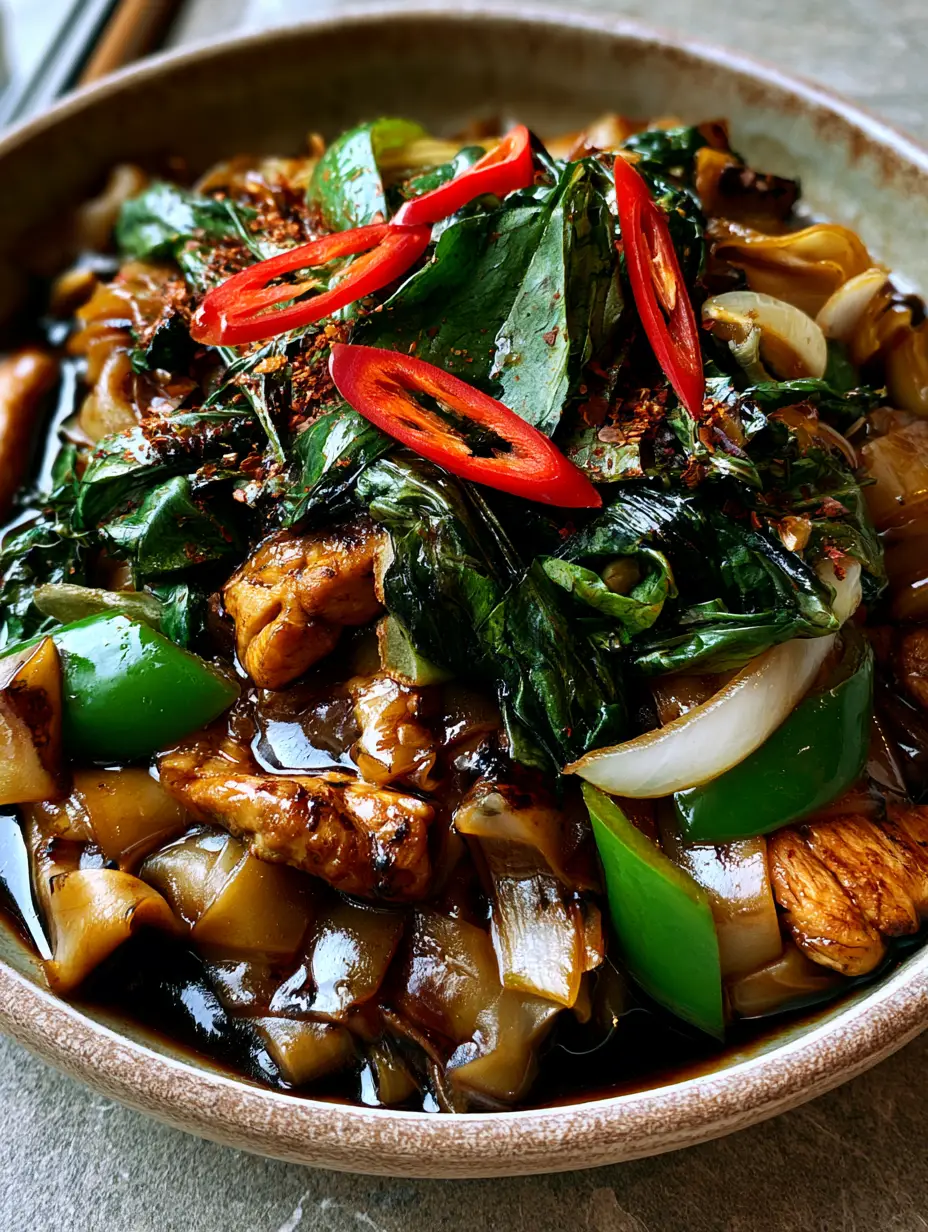
Thai Drunken Noodles with Seared Chicken and Blistered Basil
Ingredients
Equipment
Method
- Soak dried rice noodles in room-temperature water for 30-40 minutes until flexible but firm. Drain and set aside.
- Heat oil in a wok over medium-high heat. Add chicken strips and sear for 1-2 minutes per side until golden brown and cooked through.
- Add onions and bell peppers to the wok. Sauté until onions are translucent and peppers are tender-crisp. Add garlic and half the chilies.
- Increase heat to high. Add noodles and sauce mixture. Toss vigorously. Let noodles sit against the hot wok surface for 20 seconds to achieve charred edges.
- Turn off heat. Fold in Thai basil leaves and remaining fresh chilies. Top with a dusting of dried red chili flakes.
Notes
Do not over-soak the noodles or they will break in the pan.
Bring the Taste of Thailand Home
Mastering Thai Drunken Noodles is a rite of passage for any home cook who loves bold, assertive flavors. By focusing on the high-heat sear and the specific visual cues of charred noodles and wilted basil, you can create a restaurant-quality meal in under 30 minutes. The balance of the dark, savory sauce against the sharp heat of the bird’s eye chilies makes every bite an adventure.
Did you achieve the perfect wok char? We want to see your results! Leave a comment below and let us know how your Pad Kee Mao turned out. Don’t forget to share your photos and save this recipe to your favorite boards on Pinterest so you can find it whenever the craving for authentic Thai street food hits!