There is a profound culinary difference between soggy, steamed greens and the vibrant, high-impact crunch of professionally Sautéed Vegetables. When heat meets the heavy surface of a seasoned skillet, a transformation occurs that elevates humble garden produce into a restaurant-quality masterpiece. This recipe focuses on achieving that elusive balance: tender-crisp textures, caramelized edges, and a glistening olive oil glaze that highlights the natural sweetness of every slice.
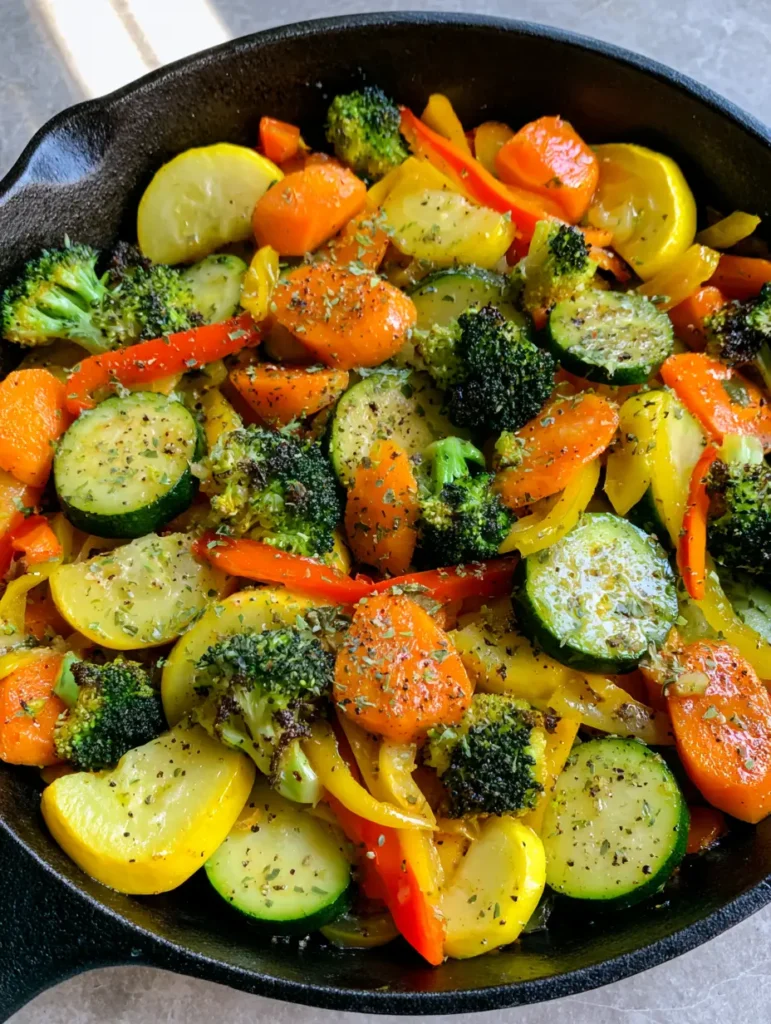
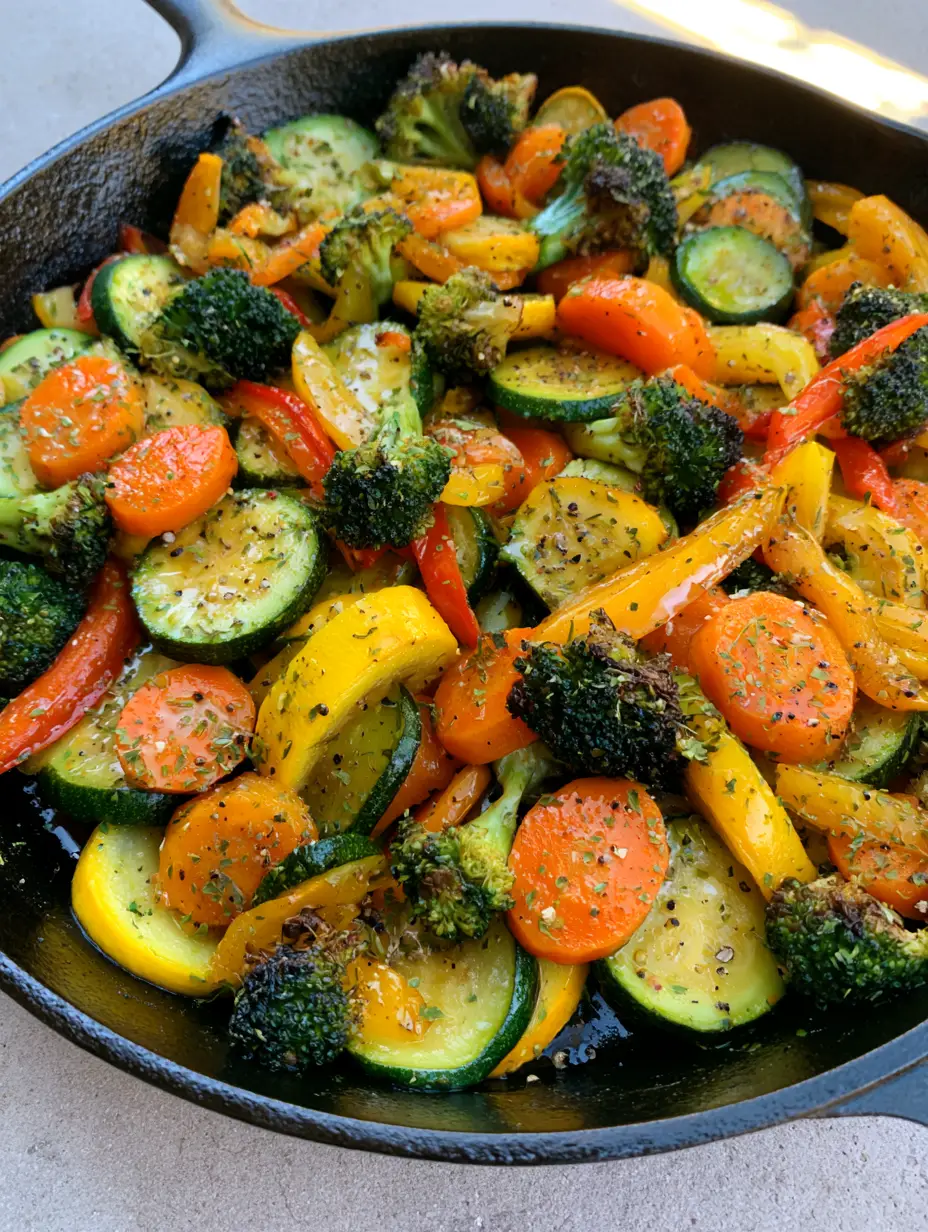
Imagine a cast iron skillet filled with emerald broccoli showing a hint of smoky char, sun-bright yellow squash half-moons, and red bell peppers blistered to perfection. This isn’t just a side dish; it’s a sensory experience defined by the “snap” of a carrot coin and the aromatic dusting of dried herbs. Whether you are looking for a quick weeknight nutrient boost or a show-stopping accompaniment to a dinner party, mastering this technique is a foundational skill for every home cook.
The Secrets to Achieving Vibrant Textures and Bold Flavors
- The Cast Iron Advantage: Using a heavy-bottomed skillet ensures superior heat retention, which is the key to getting those charred broccoli tips and blistered pepper skins without overcooking the centers.
- Precision Cutting: By slicing zucchini into rounds and yellow squash into half-moons, we create varying surface areas that interact with the oil and heat differently, providing a complex mouthfeel.
- Sequential Sautéing: We don’t just dump everything in at once; we layer the vegetables based on their density to ensure the carrots are softened while the peppers remain bright and crisp.
- Visual Indicators: We look for specific sensory cues, such as the olive oil glaze shimmering under natural light and the coarse black pepper providing a sharp, visual contrast against the orange carrot coins.
The Vibrant Ingredients for Our Skillet Medley
Zucchini Rounds: Two medium zucchini (approx. 400g) provide a mild, buttery base that absorbs the seasoned oil perfectly. We slice these into 1/4-inch (6mm) rounds to maintain structural integrity during high-heat contact.
Yellow Squash Half-Moons: Two medium yellow squash (approx. 400g) add a splash of color and a slightly sweeter profile than their green cousins. Cutting them into half-moons allows them to nestle against the broccoli florets for even heat distribution.
Carrot Coins: Three large carrots (approx. 200g), peeled and sliced into thin coins. Because carrots are the densest element in our Sautéed Vegetables, they require a head start in the pan to reach that perfect “softened” state.
Broccoli Florets: One small head (approx. 250g) of broccoli, broken into small, bite-sized florets. These are the stars of the “char,” with the tight buds catching the heat to create deep green, smoky tips.
Red and Yellow Bell Peppers: One of each color (approx. 300g total), sliced into thin, elegant strips. These provide the “blistered” visual appeal and a hit of vitamin-rich sweetness that balances the earthy herbs.
Extra Virgin Olive Oil: 3 tablespoons (45ml) of high-quality oil to create a luxurious glaze. This isn’t just for cooking; it’s a foundational flavor carrier that makes the vegetables glisten on the plate.
Seasoning Trio: 1 teaspoon (6g) of sea salt, 1 teaspoon (5g) of coarse ground black pepper, and 1 teaspoon (1g) of dried herb flakes (like oregano or parsley). The coarse pepper is essential for that rustic, “hand-held smartphone photo” aesthetic.
Essential Heavy-Duty Tools for the Perfect Sear
To replicate the visual blueprint of this dish, a 12-inch (30cm) seasoned black cast iron skillet is non-negotiable. The thermal mass of cast iron prevents the temperature from dropping when the cold vegetables hit the pan, which is how we avoid the dreaded “steaming” effect. You will also need a sharp chef’s knife for those precise carrot coins and a sturdy wooden spatula to scrape up the flavorful browned bits (fond) that develop during the sauté.
Mastering the High-Heat Sauté Technique
Phase 1: Preheating and Searing the Dense Roots
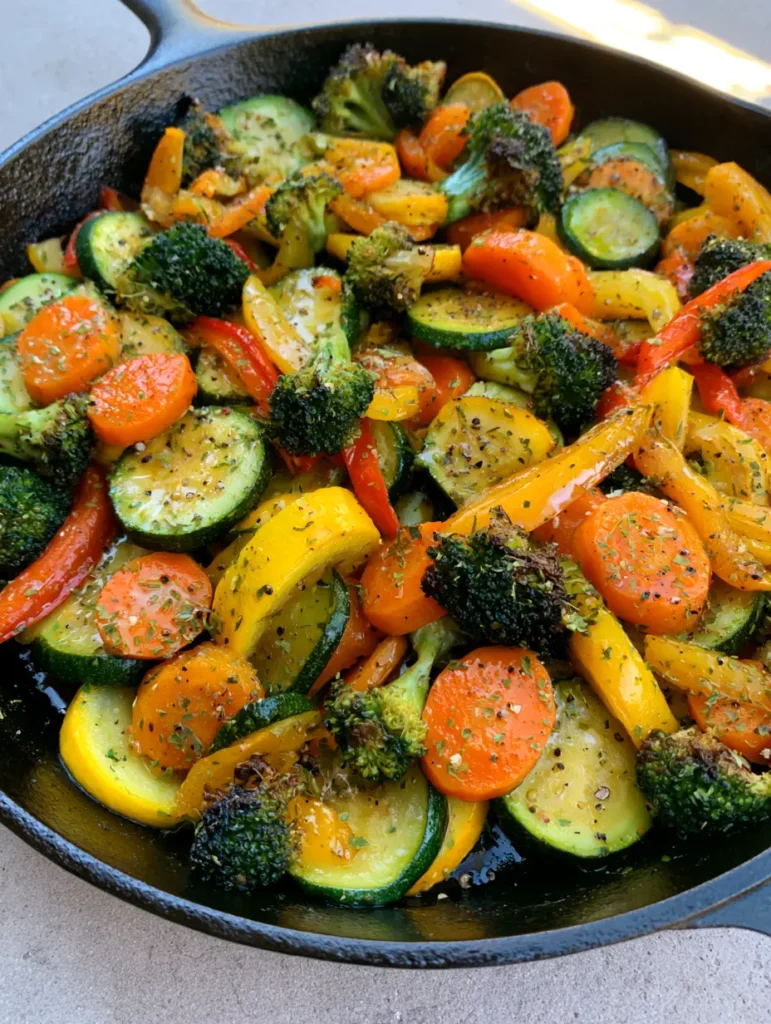
Place your cast iron skillet over medium-high heat and add 2 tablespoons (30ml) of the olive oil. Wait until the oil shimmers and just begins to send up a faint wisp of smoke—this is your cue that the pan is ready. Toss in the carrot coins first, stirring occasionally for 3-4 minutes until the edges appear softened and translucent.
Phase 2: Introducing the Squash and Broccoli Char
Add the zucchini rounds, yellow squash half-moons, and broccoli florets to the skillet. Spread them out into a single layer as much as possible to ensure direct contact with the hot iron. Let them sit undisturbed for 2 minutes; you should hear a vigorous sizzling sound as the broccoli tips begin to char and the squash takes on a golden hue.
Phase 3: Blistering the Peppers and Final Glazing
Add the remaining tablespoon (15ml) of oil along with the red and yellow bell pepper strips. Toss the mixture frequently now to ensure the peppers soften and “blister” without losing their vibrant red and yellow pigments. The peppers should look slightly wilted but still offer a distinct snap when bitten.
Phase 4: The Finishing Touch of Herbs and Pepper
Sprinkle the sea salt, coarse black pepper, and dried herb flakes over the medley. Give everything one final, aggressive toss to ensure the olive oil glaze evenly coats every vegetable. The black pepper should be clearly visible, and the green herb flakes should cling to the glistening skins of the zucchini.
Professional Culinary Tips for Skillet Success
- Don’t Overcrowd the Pan: If your skillet is too small, cook the vegetables in two batches. Overcrowding traps steam, which turns your Sautéed Vegetables mushy rather than crisp.
- Dry Your Produce: After washing your veggies, ensure they are bone-dry before they hit the oil. Water is the enemy of the Maillard reaction (browning).
- Listen to the Pan: A quiet pan means the temperature is too low. You want a consistent, rhythmic sizzle throughout the entire cooking process.
- The Salt Timing: We add salt at the end to prevent the vegetables from releasing their juices too early, which helps maintain that tender-crisp structure.
How to Store and Revive Your Leftovers
While these are best served immediately from the skillet, leftovers can be stored in an airtight container in the refrigerator for up to 4 days. To reheat, avoid the microwave, which will make them limp. Instead, toss them back into a hot, dry skillet for 2-3 minutes until they are warmed through and the edges regain a bit of their crispness.
Perfect Pairings: What to Serve with This Skillet
This versatile medley pairs beautifully with a variety of proteins. For a Mediterranean-inspired feast, serve these alongside a Greek chicken marinade or as a vibrant topping for a mediterranean quinoa salad (coming soon). If you’re looking for a hearty vegetarian option, they provide the perfect textural contrast to a quinoa salad (coming soon). They also make an excellent side for a Sunday roast, much like these garlic roasted vegetables. For a clever use of extra zucchini, try our chicken zucchini bake.
Frequently Asked Questions About Sautéing
For this specific texture, fresh is highly recommended. Frozen vegetables release too much water, making it impossible to achieve the blistered and charred effects shown in the blueprint.
Leave the broccoli florets undisturbed in a hot cast iron skillet for at least 2 minutes. The direct contact with the heavy iron creates the smoky char without overcooking the stems.
Salt the vegetables at the end. Salting early draws out moisture, which can lead to steaming and mushy textures rather than a crisp sear.
Extra virgin olive oil provides the best flavor, but for very high heat, an avocado oil or a blend is excellent. Always wait for the oil to shimmer before adding the vegetables.
Sogginess is usually caused by overcrowding the pan or cooking over too low a heat, which traps steam. Ensure your cast iron skillet is preheated and cook in batches if necessary.
The Perfect Cast Iron Sautéed Vegetables Recipe
Sautéed Vegetables: The Ultimate Guide to a Perfect Cast Iron Medley
Ingredients
Equipment
Method
- Wash and thoroughly dry all vegetables. Slice the zucchini into rounds, the squash into half-moons, carrots into coins, and peppers into thin strips. Break broccoli into small florets.
- Heat 2 tbsp of olive oil in a cast iron skillet over medium-high heat. Add carrot coins and sauté for 3-4 minutes until they begin to soften.
- Add zucchini, yellow squash, and broccoli. Let sit undisturbed for 2 minutes to achieve charring on the tips, then toss and cook for another 3 minutes.
- Add the remaining 1 tbsp of oil and the bell pepper strips. Sauté for 3-4 minutes until peppers are blistered and glistening.
- Stir in the sea salt, coarse black pepper, and dried herb flakes. Toss to coat and serve immediately from the hot skillet.
Notes
Use a high-quality extra virgin olive oil for the best flavor glaze.
Join Our Culinary Community
We hope this guide helps you master the art of the perfect sauté! These Sautéed Vegetables are a testament to the fact that simple ingredients, when treated with the right technique, can be truly extraordinary. If you enjoyed this recipe, please leave a comment below and tell us which vegetable is your favorite in the mix! Don’t forget to follow us on Pinterest for more daily recipe inspiration and kitchen tips.