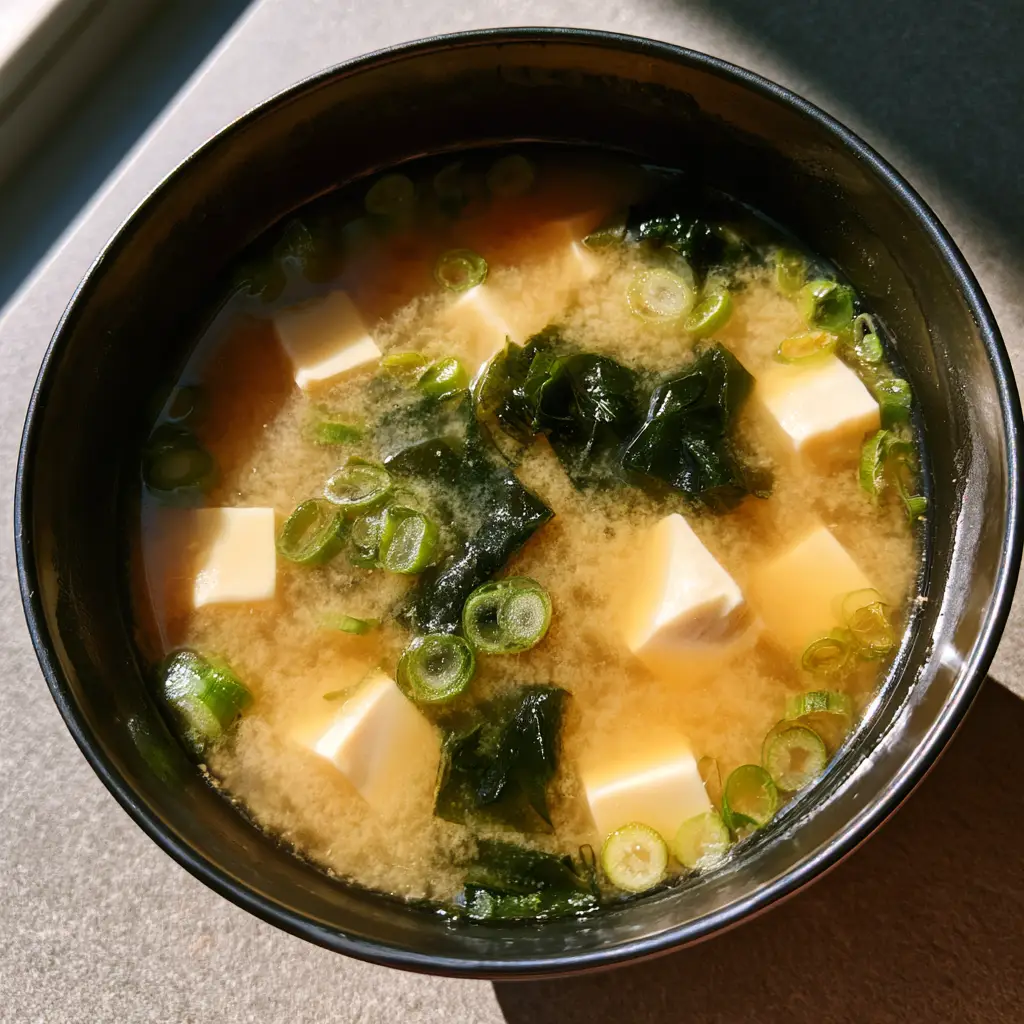
Easy Miso Soup Recipe is the quintessential Japanese comfort food that brings a sense of calm and nourishment to any meal. If you have ever sat in a traditional Japanese restaurant and marveled at the cloudy dashi miso broth swirling gently in a black lacquer bowl, you know that this soup is as much a visual experience as it is a culinary one.
This authentic Easy Miso Soup Recipe recreates that exact restaurant-quality experience in your own kitchen using just a few high-quality staples. We are focusing on the perfect balance of cubed soft silken tofu, rehydrated dark green wakame seaweed, and the sharp, fresh bite of fresh sliced green onions.
Whether you are looking for a light lunch or a probiotic-rich starter for your next dinner party, this Easy Miso Soup Recipe delivers a hit of umami that is unparalleled in its simplicity and depth of flavor. Let’s dive into how to master the “cloudy swirl” and achieve that silky texture every time.
Why This Easy Miso Soup Recipe Is A Pinterest Favorite
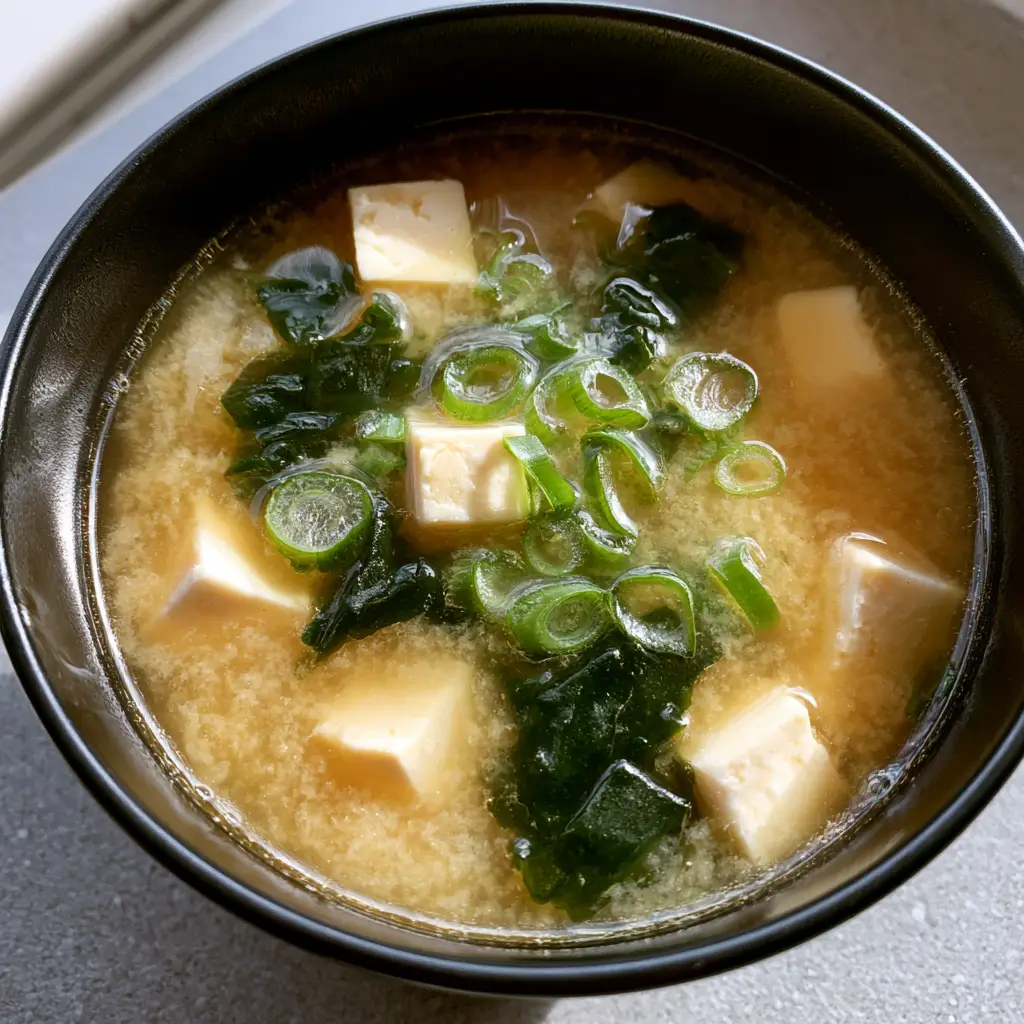
- Visual Texture: The contrast between the silky white tofu cubes and the dark green wakame seaweed creates a stunning, minimalist aesthetic.
- The Iconic “Cloudy” Broth: We use traditional techniques to ensure your broth has those beautiful, suspended miso particles that look like a golden nebula in your bowl.
- Quick & Healthy: High in probiotics and protein, yet ready in under 15 minutes—perfect for busy weeknights or as a side to creamy garlic chicken ramen.
- Sobering Umami: The dashi base provides a savory foundation that satisfies the palate without being heavy.
The Core Ingredients for Authentic Miso Soup
To achieve the professional results seen in our Easy Miso Soup Recipe photos, the quality of your ingredients matters. Each component plays a specific role in the flavor profile and final presentation.
Dashi (Japanese Soup Stock): 4 cups (950ml). This is the backbone of the soup. You can use homemade dashi made from kombu and katsuobushi, or high-quality dashi granules for a faster version. It provides the deep “sea” flavor that characterizes authentic Japanese cuisine.
Miso Paste: 3-4 tablespoons (50-70g). We recommend a white (Shiro) miso or a yellow (Awase) miso for this Easy Miso Soup Recipe. White miso is milder and slightly sweet, which complements the delicate tofu. Do not boil the miso! boiling kills the healthy probiotics and alters the flavor.
Soft Silken Tofu: 1/2 block (approx 7 oz / 200g). Soft silken tofu is essential for that melt-in-your-mouth texture. We cut them into uniform 1/2-inch (1.25cm) cubes to match the traditional aesthetic.
Dried Wakame Seaweed: 1 tablespoon (approx 2g). A little goes a long way. This dark green wakame rehydrates quickly in the broth, providing a slippery, tender texture and a hit of iodine-rich nutrients.
Green Onions: 2 stalks. Freshness is key. Thinly sliced rings of the green parts provide a necessary crunch and an aromatic pop against the savory broth.
The Secret to the Perfect Dashi Foundation
Before you start your Easy Miso Soup Recipe, you must understand the dashi. Dashi is not just “fish stock”; it is a clear infusion of umami. If you are using granules, ensure they are fully dissolved in 4 cups (950ml) of water before adding other ingredients.
If you have extra time, try making dashi from scratch. It creates a cleaner, more nuanced base that elevates the Easy Miso Soup Recipe from a simple side dish to a gourmet experience. This light, golden liquid is what allows the miso to “bloom” visually in the bowl.
While the dashi simmers, it’s the perfect time to prep your other meal components. If you’re planning a full spread, this soup pairs beautifully with a fresh mediterranean quinoa salad for a light, fusion-style lunch.
Prepping the Delicate Tofu and Wakame
Handling soft silken tofu requires a gentle touch. Because it is so fragile, it can easily crumble into the broth, ruining the “clean” look of your Easy Miso Soup Recipe.
Gently remove the tofu from its packaging and drain the excess water. Use a sharp knife to slice it into small, uniform cubes. Set these aside and handle them as little as possible.
For the wakame seaweed, you don’t even need to pre-soak it in a separate bowl. You can add it directly to the simmering dashi, where it will expand into vibrant, dark green ribbons in just a minute or two.
Mastering the “Miso Tempering” Technique
This is the most critical step in the Easy Miso Soup Recipe. Never drop a clump of miso paste directly into a large pot of water. It won’t dissolve evenly, and you’ll end up with “miso lumps.”
Instead, place your miso paste in a small strainer or a ladle. Partially submerge the ladle in the hot dashi and use chopsticks or a small whisk to dissolve the paste into the liquid. This ensures a perfectly smooth, cloudy dashi miso broth.
Once the miso is integrated, remove the pot from the heat immediately. Maintaining the temperature just below boiling preserves the delicate fermentation notes of the miso.
Step-by-Step Execution for Miso Perfection
1. Simmer the Dashi
Bring 4 cups (950ml) of dashi to a very gentle simmer over medium heat. You should see small bubbles, but it should not be a rolling boil.
2. Rehydrate the Seaweed
Add 1 tablespoon (2g) of dried wakame to the pot. Watch as it transforms from small black shards into rehydrated dark green wakame seaweed pieces. This takes about 1-2 minutes.
3. Incorporate the Tofu
Carefully slide the cubed soft silken tofu into the broth. Let them sit for 1 minute to warm through. Avoid stirring vigorously, as you want the cubes to remain intact and distinct for the final presentation.
4. The Final Miso Bloom
Turn off the heat. Using the tempering method described above, whisk in 3-4 tablespoons (50-70g) of miso paste until completely dissolved. You will see the characteristic cloudy swirls begin to form.
5. Garnish and Serve
Ladle the soup into traditional bowls. Scatter fresh sliced green onions generously over the top. The heat of the soup will slightly soften the onions, releasing their aroma without losing their bright green color.
Expert Tips for Success
- Don’t Over-Salt: Miso paste is naturally salty. Always taste your dashi before adding the miso, and adjust the amount of paste to your preference.
- Use Fresh Miso: Check the expiration date on your miso tub. Fresh miso has a more vibrant color and a sweeter, more complex scent.
- Temperature Control: If you see the soup boiling after the miso is added, turn it down! High heat destroys the nuances of the bean paste.
- The Bowl Matters: A dark bowl (like black or deep red) makes the golden-brown broth and silky white tofu pop visually.
- Pairing: This soup acts as a great palate cleanser between heavier dishes like smash burger tacos.
Storage, Reheating & Freezing
Storage: This Easy Miso Soup Recipe is best enjoyed fresh. However, you can store leftovers in an airtight container in the refrigerator for up to 2 days.
Reheating: Reheat gently over low heat on the stovetop. Again, do not let it boil. Stop as soon as it is steaming.
Freezing: We do not recommend freezing miso soup. The texture of silken tofu changes dramatically when frozen, becoming spongy and tough, and the delicate dashi loses its vibrancy.
What to Serve With This Easy Miso Soup Recipe
While this soup is a star on its own, it is traditionally served as part of a larger meal. It provides a light, liquid element to balance out crunchy or fried foods.
Try serving it alongside a crisp classic broccoli salad for a meal full of different textures. For a more traditional Japanese-inspired lunch, pair it with steamed rice and grilled fish. If you’re ending a hearty dinner, a slice of southern banana cobbler provides a sweet, comforting finish to the day.
Frequently Asked Questions
No, you should never boil miso soup once the miso paste is added. Boiling destroys the beneficial probiotics and ruins the delicate, complex flavor of the fermented paste.
While you can use firm tofu, it won’t have the traditional melt-in-your-mouth texture. Silken tofu is preferred for its custard-like consistency which complements the delicate broth.
It depends on the dashi. Traditional dashi is made with bonito (fish) flakes. To make this recipe vegan, simply use a kombu (seaweed) only dashi or a vegetable-based dashi broth.
White (Shiro) miso or Yellow (Awase) miso is best for this recipe. They are milder and slightly sweeter than Red miso, which allows the taste of the tofu and dashi to shine.
Cloudiness is actually a sign of quality! It signifies that the miso particles are perfectly suspended in the dashi. This ‘bloom’ or swirl is a hallmark of fresh, correctly prepared miso soup.
The Complete Easy Miso Soup Recipe

Save This Recipe to Pinterest!
Did you love the cloudy swirls and silky tofu in this Easy Miso Soup Recipe? Make sure to Pin it to your favorite Japanese Recipes board so you can find it whenever the craving for comfort hits!
We love seeing your kitchen creations! Follow @kitchen_spark on Pinterest for more daily inspiration. If you made this dish, please share a photo in the comments below and leave a 5-star rating in the recipe card. Your feedback helps our community grow and thrive!