There is something fundamentally satisfying about tearing into a slice of warm, freshly baked bread. Now, imagine that bread is a spectacular homemade focaccia, with a crust that crackles and shines with olive oil, and an interior as soft and airy as a cloud. This is that recipe.
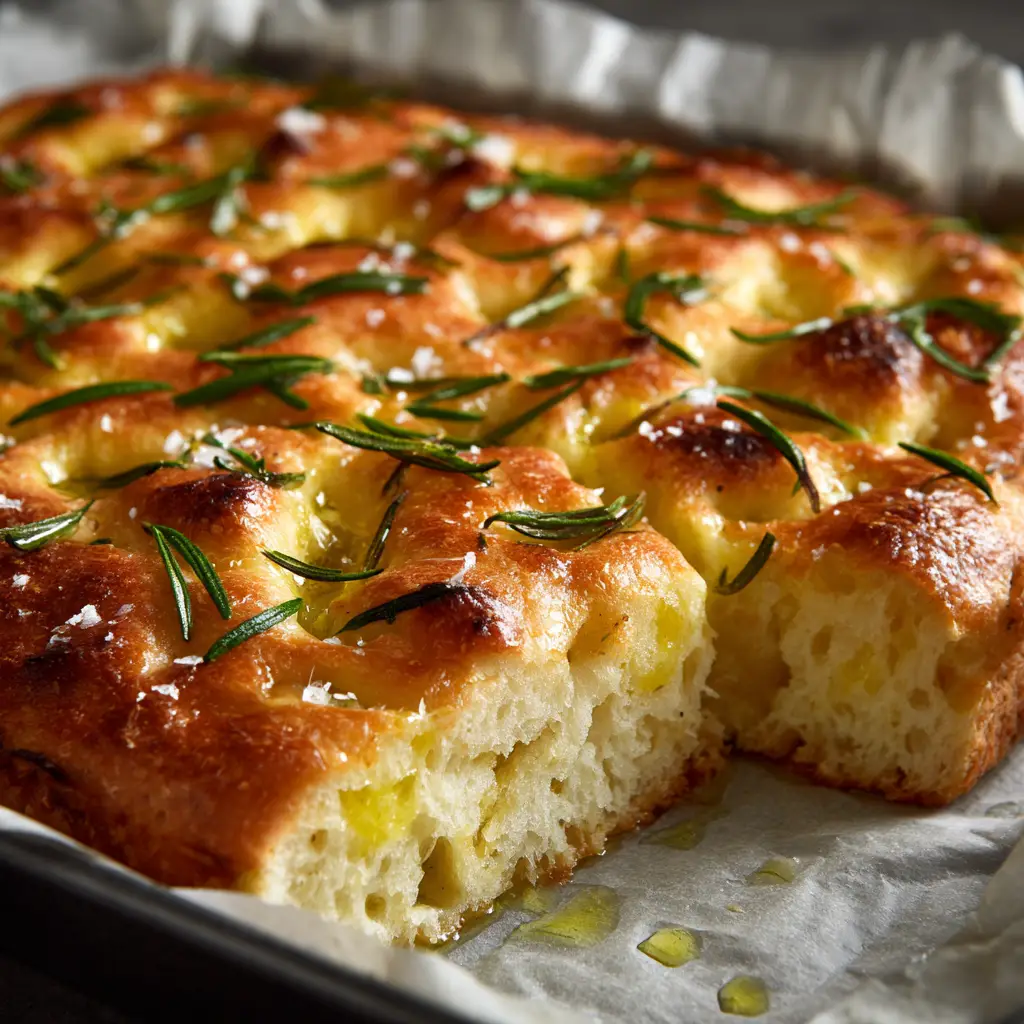
Forget everything you think you know about complicated bread-making. This easy, no-knead focaccia bread recipe is designed for the home cook who craves artisan results without the fuss. We’re talking about a deeply dimpled, golden-brown masterpiece, glistening with a generous drizzle of high-quality olive oil, and perfumed with fresh rosemary and the sharp crunch of coarse sea salt.
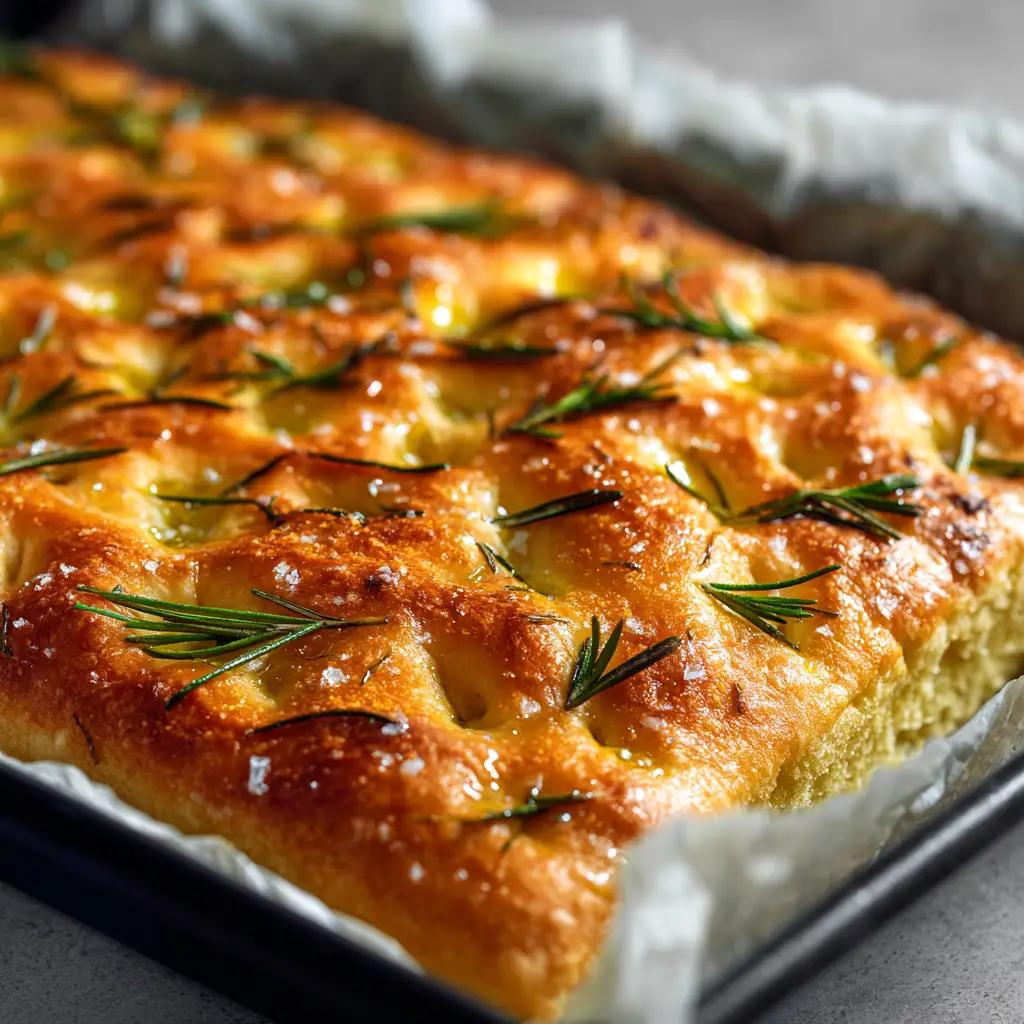
Inspired by the rustic beauty of a handheld photo, this recipe is engineered to produce that exact result: a puffy, perfectly textured focaccia with slightly charred, crispy edges that give way to a tender, open crumb. It’s not just bread; it’s an experience.
Why You’ll Love This Recipe
- Picture-Perfect Golden Crust: Following these steps guarantees a deeply dimpled, highly textured golden-brown crust that’s as beautiful as it is delicious.
- Incredibly Airy & Chewy Texture: We use a high-hydration, no-knead method that develops an open, puffy, and satisfyingly chewy crumb with minimal effort.
- Rich, Savory Flavor: Infused with high-quality extra virgin olive oil, fresh rosemary, and flaky sea salt, every bite is packed with classic Italian flavor.
- Surprisingly Simple to Make: No kneading, no special equipment, just a little bit of patience. This recipe is perfect for beginners and seasoned bakers alike.
Ingredients & Substitutions
The beauty of focaccia lies in its simplicity. Here are the key players that create the magic.
- Bread Flour: 4 cups (512g) of bread flour is the structural backbone here. Its higher protein content is what creates that quintessentially chewy and elastic crumb that makes focaccia so irresistible. If you only have all-purpose flour, it will work, but the texture will be slightly less chewy.
- Instant Yeast: You’ll need 2 tsp (7g) of instant yeast. This powerful leavener is what makes the dough rise and creates the puffy, airy pockets inside the bread. You can use active dry yeast, but you’ll want to proof it in the warm water first.
- Warm Water: 2 cups (480ml) of warm water (around 105-115°F or 40-46°C) hydrates the flour and activates the yeast. It’s crucial that the water isn’t too hot, as it can kill the yeast.
- Extra Virgin Olive Oil: We use a total of 1/2 cup (120ml), divided. This ingredient does triple duty: it adds rich flavor to the dough, prevents sticking, and creates that signature crispy, golden, glistening crust when generously used in the pan and drizzled on top. Don’t skimp here; a good quality oil makes all the difference.
- Fine Sea Salt: 2 tsp (12g) of fine sea salt goes into the dough itself to season it from the inside out. It’s essential for flavor balance.
- Fresh Rosemary Sprigs: About 4-5 sprigs of fresh rosemary are non-negotiable for that classic aroma and visual appeal. The sprigs get tucked into the dimples, infusing the bread with their piney essence as it bakes.
- Coarse White Sea Salt Flakes: A generous sprinkle of flaky sea salt (like Maldon) is for finishing. It provides a delightful crunchy texture and a burst of salinity that contrasts beautifully with the rich olive oil.
- Honey or Granulated Sugar (Optional): 1 tsp (5g) of honey or sugar gives the yeast a little boost to get started. It also contributes to a more beautifully browned crust.
Equipment Needed
- Large Mixing Bowl
- 9×13 inch (23×33 cm) Dark Metallic Baking Pan
- Parchment Paper
- Measuring Cups and Spoons
- Dough Scraper (optional, but helpful)
Step-by-Step Instructions
Follow these phases closely to achieve a focaccia that looks like it was plucked right from a rustic Italian bakery.
1. Mix the Dough (No-Knead Method)
In a large bowl, whisk together the 4 cups (512g) of bread flour, 2 tsp (7g) instant yeast, and 2 tsp (12g) fine sea salt. If you’re using it, add the 1 tsp (5g) of honey or sugar.
Pour in the 2 cups (480ml) of warm water and 1/4 cup (60ml) of the extra virgin olive oil. Mix with a spatula or wooden spoon until a shaggy, sticky dough forms and no dry flour remains. The dough will look very wet – this is normal and is the key to an airy crumb.
2. First Rise (Bulk Fermentation)
Cover the bowl with plastic wrap or a damp kitchen towel. Let it rise in a warm, draft-free spot for 1.5 to 2 hours, or until the dough has doubled in size and you see large bubbles on the surface.
For even better flavor, you can perform this first rise in the refrigerator for 12 hours or up to 3 days. This slow, cold fermentation develops a more complex, delicious taste.
3. Second Rise (In the Pan)
Pour 2 tbsp (30ml) of extra virgin olive oil into your 9×13 inch baking pan. Use your hands to spread it evenly across the bottom and up the sides. Gently transfer the risen dough into the pan.
With oiled hands, gently stretch and pat the dough until it mostly fills the pan. Don’t worry if it doesn’t reach the corners perfectly. Cover the pan and let the dough rise again at room temperature for another 30-45 minutes, until it’s puffy and fills the pan.
4. Dimple and Top
Preheat your oven to 425°F (220°C). Uncover the risen dough. Drizzle the remaining 2 tbsp (30ml) of olive oil over the top.
Now for the fun part. Coat your fingertips in olive oil to prevent sticking. Press straight down into the dough, firmly but gently, until you touch the bottom of the pan. Create deep dimples all over the surface of the dough.
Tuck small sprigs of the fresh rosemary into the dimples. Sprinkle generously with the coarse white sea salt flakes. You’re looking for that signature visual of vibrant green and white contrasted against the dough.
5. Bake to Golden Perfection
Place the pan in the preheated oven and bake for 25-30 minutes. You’ll know it’s done when the crust is a deep golden-brown, and the edges are slightly charred and crispy. The smell will be absolutely intoxicating.
Remove the pan from the oven. For that final, glistening look from the photo, you can add one last, light drizzle of extra virgin olive oil over the hot crust. Let the focaccia cool in the pan for 5-10 minutes before using a spatula to transfer it, along with the parchment paper, to a wire rack. Slice and serve warm.
Expert Tips for Success
- Don’t Be Afraid of Sticky Dough: A high-hydration (wet) dough is the secret to a light and airy focaccia. Keep your hands and scraper oiled to make it easier to handle.
- Use High-Quality Olive Oil: Since olive oil is a primary flavor, using a good quality extra-virgin olive oil will make a noticeable difference in the final taste and aroma.
- Embrace the Dimples: Don’t be shy when dimpling the dough. These wells create the classic texture and are perfect little pools for olive oil and toppings.
- Patience is Key: The long, slow rises are what develop the flavor and texture of your focaccia. Don’t rush the process! A patient rise leads to a puffy, airy center.
Storage & Reheating/Freezing
Focaccia is best enjoyed the day it’s made. However, you can store any leftovers in an airtight container at room temperature for up to 2 days.
To reheat, place slices on a baking sheet and warm in a 350°F (175°C) oven for 5-7 minutes, or until warmed through and the crust is crisp again. For longer storage, wrap the focaccia tightly and freeze for up to one month.
What to Serve With This
This homemade focaccia bread is a showstopper on its own, but it also pairs beautifully with a wide range of dishes. Use it to sop up the last bits of a hearty cheesy broccoli potato soup, or serve it alongside a crowd-pleasing buffalo chicken dip.
It makes the ultimate foundation for an epic sandwich; try it with our spicy korean bbq chicken sandwich for a flavor explosion. For a lighter pairing, a crisp spicy cucumber salad offers a refreshing contrast. And for a truly comforting meal, nothing beats a slice of this focaccia next to a bowl of tiktok lasagna soup.
FAQ
Absolutely! This recipe is a fantastic base. Try adding sliced olives, blistered cherry tomatoes, thinly sliced red onions, or grated Parmesan cheese. Add them during the dimpling step before the final bake.
Yes, this dough is perfect for making ahead. After the initial mix, you can place the covered dough in the refrigerator for a slow cold ferment for up to 3 days. This actually develops a deeper, more complex flavor. Just let it sit at room temperature for an hour or two before proceeding with the second rise in the pan.
Yes, you can. All-purpose flour will still yield a delicious focaccia, but it may be slightly less chewy and have a tighter crumb compared to the result from bread flour. Bread flour’s higher protein content is what creates that classic chewy texture.
The key is to be firm but gentle. After the second rise, coat your fingertips in olive oil to prevent sticking, and press straight down into the dough until you touch the bottom of the pan. These deep wells create the perfect texture and hold the olive oil and toppings.
A dense focaccia is usually due to one of three things: old or inactive yeast, not letting the dough rise long enough, or overworking/kneading the dough. This no-knead recipe is designed to prevent overworking and develop an airy crumb through a long, slow fermentation.
Closing & Subscribe
Thank you for joining us on this journey to create the perfect homemade focaccia bread. We hope you feel the pride and joy of pulling this golden, dimpled masterpiece from your own oven. If you make this recipe, we’d love to see it! Leave a comment below or tag us on social media.
For more recipes that inspire confidence in the kitchen, be sure to subscribe to our newsletter. And don’t forget to follow us on Pinterest @kitchen_spark for daily culinary inspiration!

Recipe Card
Homemade Focaccia Bread (Easy No-Knead Recipe)
Ingredients
Equipment
Method
- In a large bowl, whisk together the 4 cups (512g) of bread flour, 2 tsp (7g) instant yeast, and 2 tsp (12g) fine sea salt. Add the optional honey or sugar.
- Pour in the 2 cups (480ml) of warm water and 1/4 cup (60ml) of the extra virgin olive oil. Mix with a spatula until a shaggy, sticky dough forms.
- Cover the bowl and let rise in a warm place for 1.5-2 hours, or until doubled in size.
- Pour 2 tbsp (30ml) of olive oil into a 9x13 inch baking pan. Transfer the dough to the pan, stretch gently, and let rise again for 30-45 minutes.
- Preheat oven to 425°F (220°C). Drizzle dough with the remaining 2 tbsp (30ml) olive oil. Use oiled fingertips to press deep dimples all over the surface.
- Tuck fresh rosemary sprigs into the dimples and sprinkle generously with coarse sea salt flakes. Bake for 25-30 minutes until deep golden-brown and crispy.
Notes
Use High-Quality Olive Oil: Since olive oil is a primary flavor, using a good quality extra-virgin olive oil will make a noticeable difference in the final taste and aroma.
Embrace the Dimples: Don't be shy when dimpling the dough. These wells create the classic texture and are perfect little pools for olive oil and toppings.
Patience is Key: The long, slow rises are what develop the flavor and texture of your focaccia. Don't rush the process! A patient rise leads to a puffy, airy center.