The Authentic Greek Salad, known in Greece as Horiatiki, is a masterclass in culinary simplicity. Unlike the versions often found in western delis, a true village salad contains no lettuce, no fillers, and no complicated vinaigrettes. It is a vibrant celebration of sun-drenched produce, salty cheese, and liquid gold olive oil.
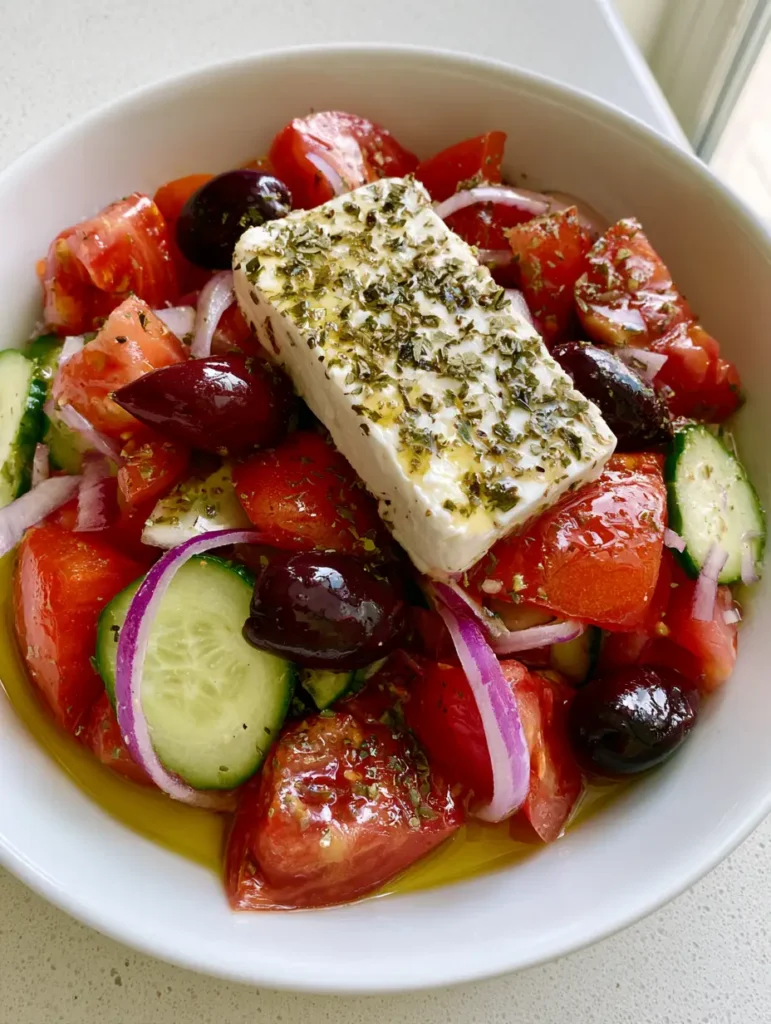
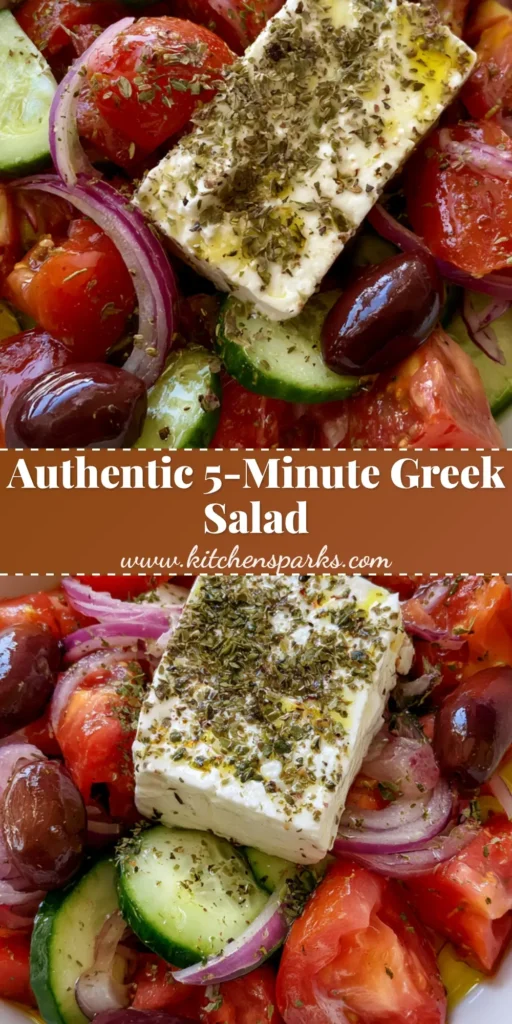
When you look at a bowl of this salad, you should see a rustic, unpolished beauty. Large, irregular chunks of juicy red vine-ripened tomatoes mingle with thick half-moon slices of crisp green cucumber and thin, translucent rings of purple red onion. Every element is intentional, designed to capture the essence of a Mediterranean summer.
In this guide, we are recreating the exact visual and sensory experience of a traditional Greek seaside taverna. We will focus on the high-quality textures described in our visual blueprint: the glossy sheen of whole Kalamata olives and that iconic, singular slab of feta cheese seasoned with fragrant dried oregano. This is more than a side dish; it is a foundational piece of Greek culture.
The Visual Allure: What Makes a Salad Truly Authentic?
To achieve the perfect Authentic Greek Salad, we must adhere to specific visual and structural standards. This isn’t a tossed salad; it is an assembled work of art that relies on “rough-hewn” textures rather than precision dicing. Here is what we are aiming for:
- Irregular Geometry: Tomatoes should be cut into large, juicy chunks that vary slightly in size, allowing their juices to pool at the bottom of the bowl.
- Structural Integrity: Thick half-moon cucumber slices provide a necessary crunch that stands up to the weight of the feta.
- Translucent Aromatics: The red onion must be sliced into paper-thin rings to provide sharp flavor without overpowering the palate.
- The Feta Crown: Never crumble the cheese; a single, large rectangular slab of white feta sits prominently on top, acting as the centerpiece.
- Golden Glisten: A generous drizzle of extra virgin olive oil should coat every surface, catching the light and making the vegetables shine.
The Essential Mediterranean Pantry for Horiatiki
To create a recipe that tastes as good as it looks in a high-angle smartphone photo, you need ingredients at the peak of their season. Because there are so few components, there is nowhere for low-quality produce to hide.
Vine-Ripened Tomatoes: You need 3-4 large (approx. 600g) tomatoes. Look for fruit that feels heavy for its size and smells like the earth at the stem end; these will provide the “juicy” quality seen in our visual prompt.
English or Persian Cucumbers: 1 large (approx. 300g) cucumber. These varieties have thinner skins and fewer seeds, allowing for those beautiful green half-moon slices without the bitterness of thick-skinned field cucumbers.
Red Onion: 1/2 small onion (approx. 50g). Slicing these into thin, translucent rings ensures they soften slightly when they hit the acidic tomato juices.
Whole Kalamata Olives: 10-12 glossy, dark purple olives. Keep them whole to preserve their brine and prevent the salad from becoming overly salty or stained by olive juice.
Greek Feta Cheese: 1 large rectangular slab (approx. 200g). Always buy feta in brine. The slab should be about 1/2 inch (1.25cm) thick to sit proudly atop the vegetables.
Extra Virgin Olive Oil: 1/4 cup (60ml) of the highest quality “liquid gold” you can find. This is the only dressing needed, and it must be robust enough to stand up to the oregano.
Dried Oregano & Sea Salt: 1 tsp (2g) dried oregano and a pinch of flaky salt. The oregano provides the “dried green flakes” visual, while the salt draws out the tomato juices to create a natural sauce.
If you are looking for more fresh vegetable inspiration, you might enjoy our savory caprese galette which uses similar summer produce in a baked format.
Tools for the Perfect Rustic Cut
You don’t need a pantry full of gadgets, but a few specific tools will help you achieve that “unedited mobile photography” look. The goal is clean cuts that don’t bruise the delicate tomatoes.
A sharp Chef’s knife is non-negotiable for creating the large irregular tomato chunks. A mandoline slicer is helpful for achieving the translucent red onion rings, though a steady hand with a knife works just as well. Finally, use a shallow white ceramic bowl to provide a neutral background that makes the reds and greens pop.
Step-by-Step Guide to Assembling the Authentic Greek Salad
Prepping the Foundation: Tomatoes and Cucumbers
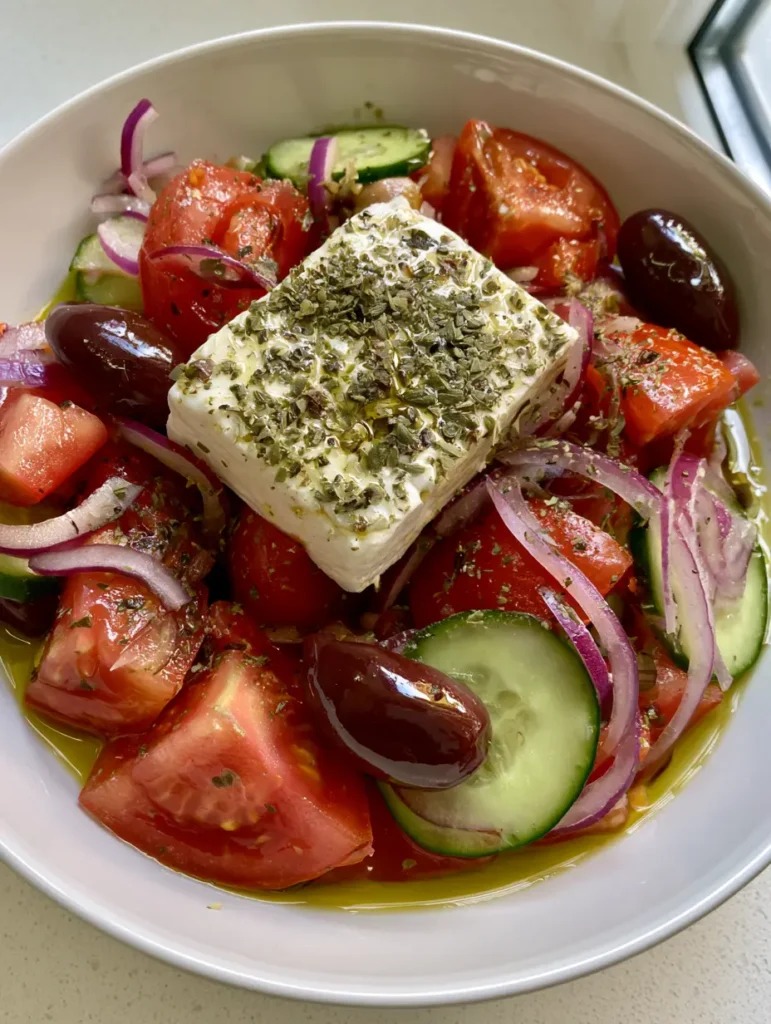
Start with your vine-ripened tomatoes. Instead of perfect cubes, use a “rolling cut” to create large, irregular chunks. This increases the surface area, allowing the olive oil and salt to penetrate the fruit more deeply.
Place the tomato chunks into your shallow white bowl. Next, take your cucumber. If using an English cucumber, leave the skin on for that vibrant green contrast. Slice it into 1/2 inch (1.25cm) thick rounds, then cut those rounds in half to create the “thick half-moons” described in the blueprint.
Adding the Aromatics and Olives
Peel your red onion and slice it as thinly as possible. You want the rings to be translucent, almost like purple lace. Scatter these over the tomatoes and cucumbers. They should look light and airy, not heavy or clumped together.
Distribute the whole Kalamata olives throughout the bowl. Do not pit them if you want to be truly authentic; the pit helps the olive maintain its firm, glossy shape. At this stage, you can add a small pinch of sea salt, but be careful as the feta and olives are naturally salty.
The Final Flourish: Feta and Dressing
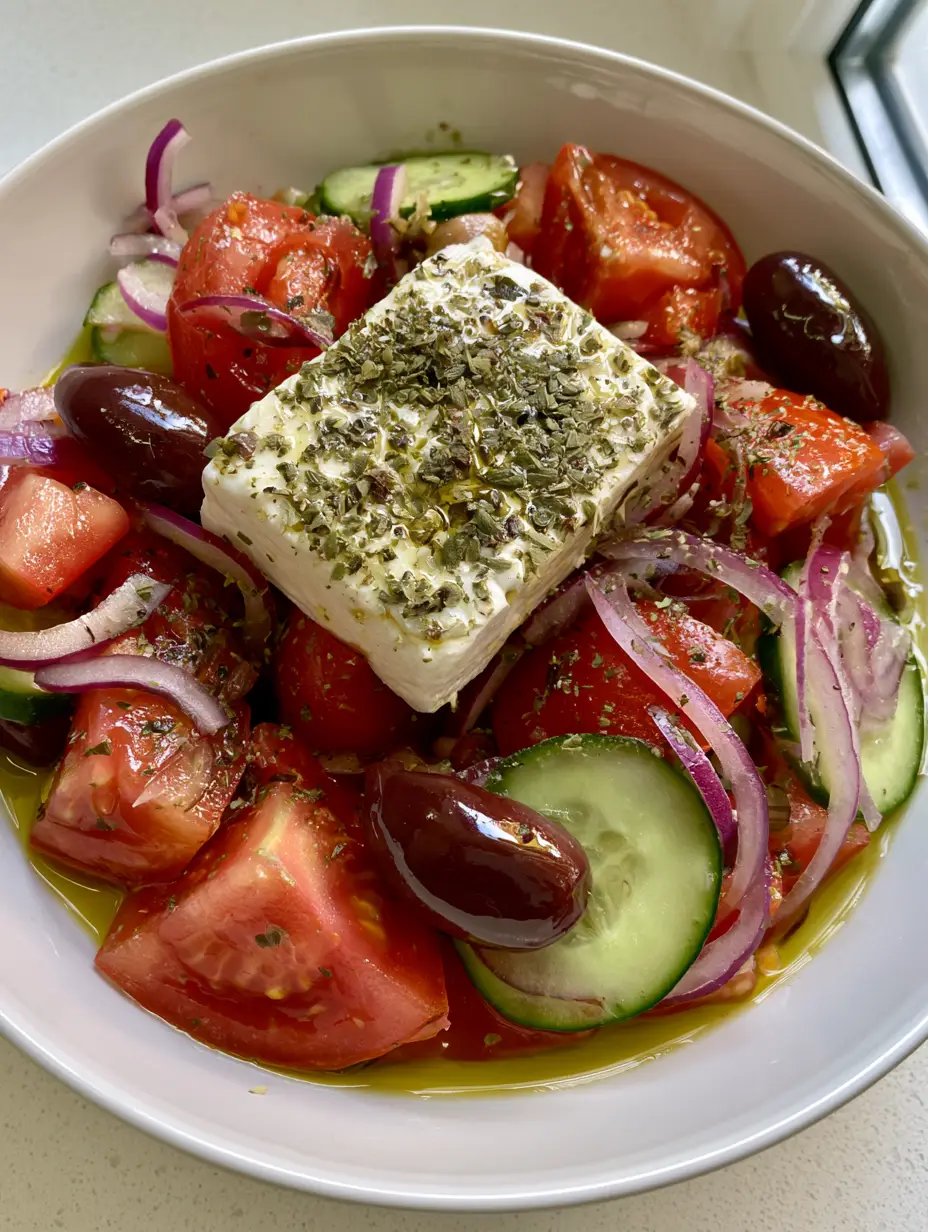
This is the most critical visual step. Place the single, rectangular slab of feta directly in the center of the salad. It should rest on the “bed” of vegetables rather than being buried by them.
Take your extra virgin olive oil and drizzle it slowly over the entire dish. Ensure some oil hits the feta and the rest cascades over the vegetables, creating that “glistening” effect. Finish by crushing the dried oregano between your palms directly over the feta slab, letting the green flakes fall where they may.
For a complete Mediterranean-themed dinner, consider serving this alongside our mediterranean chicken tacos for a modern fusion twist.
Expert Tips for Taverna-Quality Results
- Temperature Matters: Never serve a Greek salad ice cold. The tomatoes lose their flavor in the fridge. Assemble the salad and let it sit at room temperature for 15 minutes before eating.
- The “Vouta”: This is the Greek word for “diving” a piece of bread into the leftover juices at the bottom of the bowl. Ensure you use enough olive oil to facilitate this!
- No Vinegar? While some regions add a splash of red wine vinegar, the most traditional Horiatiki relies on the acidity of the tomatoes. Taste your tomatoes first; if they are very sweet, a teaspoon of vinegar can help.
- Onion Harshness: If your red onion is too “sharp,” soak the translucent rings in cold water for 5 minutes, then pat dry before adding to the salad.
How to Store Your Authentic Greek Salad
Truthfully, an Authentic Greek Salad is best enjoyed within an hour of assembly. As it sits, the salt draws moisture out of the cucumbers and tomatoes, which can make the vegetables lose their “crisp” and “crunchy” visual appeal.
If you have leftovers, store them in an airtight container in the refrigerator for up to 24 hours. The feta will soften slightly and the juices will mingle further. This salad cannot be frozen, as the high water content of the vegetables will cause them to turn to mush upon thawing.
What to Serve With Your Village Salad
This salad is incredibly versatile. It is the perfect accompaniment to grilled meats or seafood. If you are planning a large spread, it pairs beautifully with garlic shrimp or even as a refreshing side to hearty baked beans.
If you are looking for more “easy vacation meals” to keep the summer vibes going, check out our collection of simple holiday recipes that require minimal kitchen time.
Common Questions About Horiatiki
While it tastes the same, an authentic presentation always uses a whole slab. Crumbled feta is often a sign of lower-quality, pre-packaged cheese. A slab preserves the creamy texture and traditional look.
In traditional recipes, English or Persian cucumbers are left unpeeled to provide a vibrant green color and extra crunch. Only peel them if you are using thick-skinned field cucumbers.
Whole Kalamata olives are the standard. They are cured in red wine vinegar and brine, providing the perfect salty-tangy punch that complements the sweet tomatoes.
There is no whisked vinaigrette. The dressing is simply high-quality extra virgin olive oil and the natural juices from the salted tomatoes, topped with dried oregano.
Traditional Greek Horiatiki (Village Salad) is a summer dish focusing on sun-ripened produce. Lettuce is a cool-weather crop in Greece and was never part of the original rustic recipe.
The Ultimate Authentic Greek Salad Recipe
Authentic Greek Salad (Horiatiki): The Traditional Village Recipe
Ingredients
Equipment
Method
- Using a sharp knife, cut the vine-ripened tomatoes into large, irregular chunks. Slice the English cucumber into thick half-moon shapes. Place both into a shallow ceramic bowl.
- Thinly slice the red onion into translucent rings and scatter over the tomatoes and cucumbers. Add the whole Kalamata olives to the bowl.
- Place the entire rectangular slab of feta cheese prominently on top of the vegetable mixture.
- Generously drizzle the extra virgin olive oil over the entire salad. Sprinkle with dried oregano flakes and a small pinch of sea salt. The salad should look glistening and fresh.
Notes
Always use feta stored in brine to ensure the correct creamy texture.
Bring the Taste of Greece to Your Kitchen
There is a reason the Authentic Greek Salad has become a global icon of healthy, delicious eating. It proves that when you have incredible ingredients, you don’t need to hide them behind complex techniques. By following these visual cues—the large chunks, the translucent rings, and the proud slab of feta—you can transport yourself to a sun-bleached Greek island from your own dining room.
Did you try this recipe? We would love to see your “unedited mobile photography” versions! Leave a comment below or share your photos on Pinterest. For more fresh summer ideas, don’t forget to sign up for our newsletter!