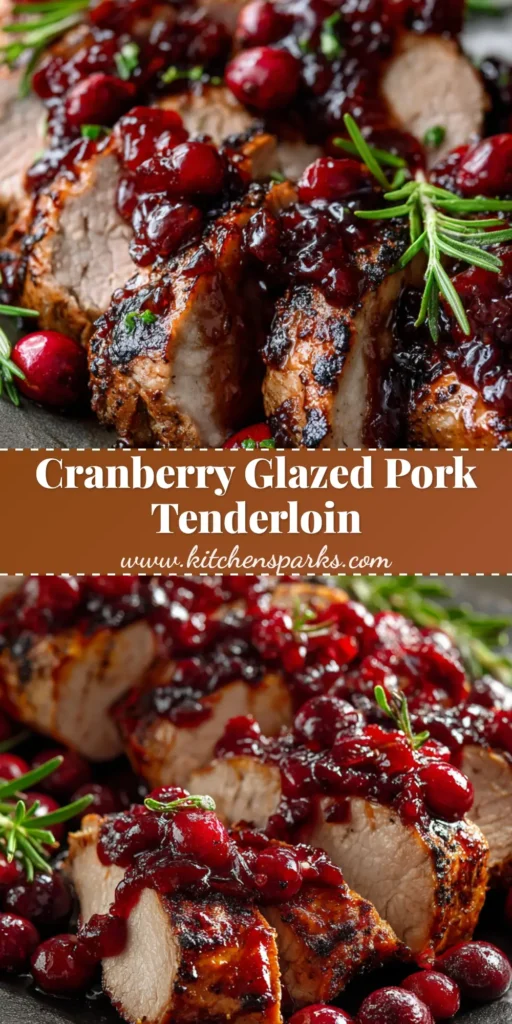
Imagine a show-stopping centerpiece dish that looks like it came from a high-end restaurant but is secretly simple to make. That’s the magic of this Cranberry Glazed Pork Tenderloin. Picture thick, juicy slices of perfectly roasted pork, each with a deeply caramelized and savory crust. What truly sets it apart is the glaze—a thick, sticky, dark red cranberry sauce that drips lusciously over every piece.
This isn’t just a hint of cranberry; it’s a bold, glossy coating studded with whole, bursting cranberries that add a pop of tartness. Finished with the fresh, piney aroma of scattered rosemary sprigs, this dish is a feast for the senses before you even take the first bite. It’s the kind of meal that feels special, yet is achievable for any home cook ready for a stunning result.
Why You’ll Love This Recipe
- Perfectly Juicy & Tender: By searing first and then roasting, we lock in all the natural juices, guaranteeing every slice is incredibly moist and tender.
- Spectacular Glossy Glaze: The cranberry glaze is the star. It’s thick, sticky, and strikes the perfect balance between sweet and tart, creating an unforgettable flavor.
- Visually Stunning: With its deep red, dripping glaze, caramelized crust, and accents of whole berries and fresh herbs, this dish is a true showstopper fit for any holiday or special occasion.
- Surprisingly Simple: The techniques are straightforward, making this an impressive meal that doesn’t require complex steps or cheffy skills.
Ingredients & Substitutions
This recipe uses a handful of simple ingredients to create a symphony of flavor and texture. Here’s what you’ll need:
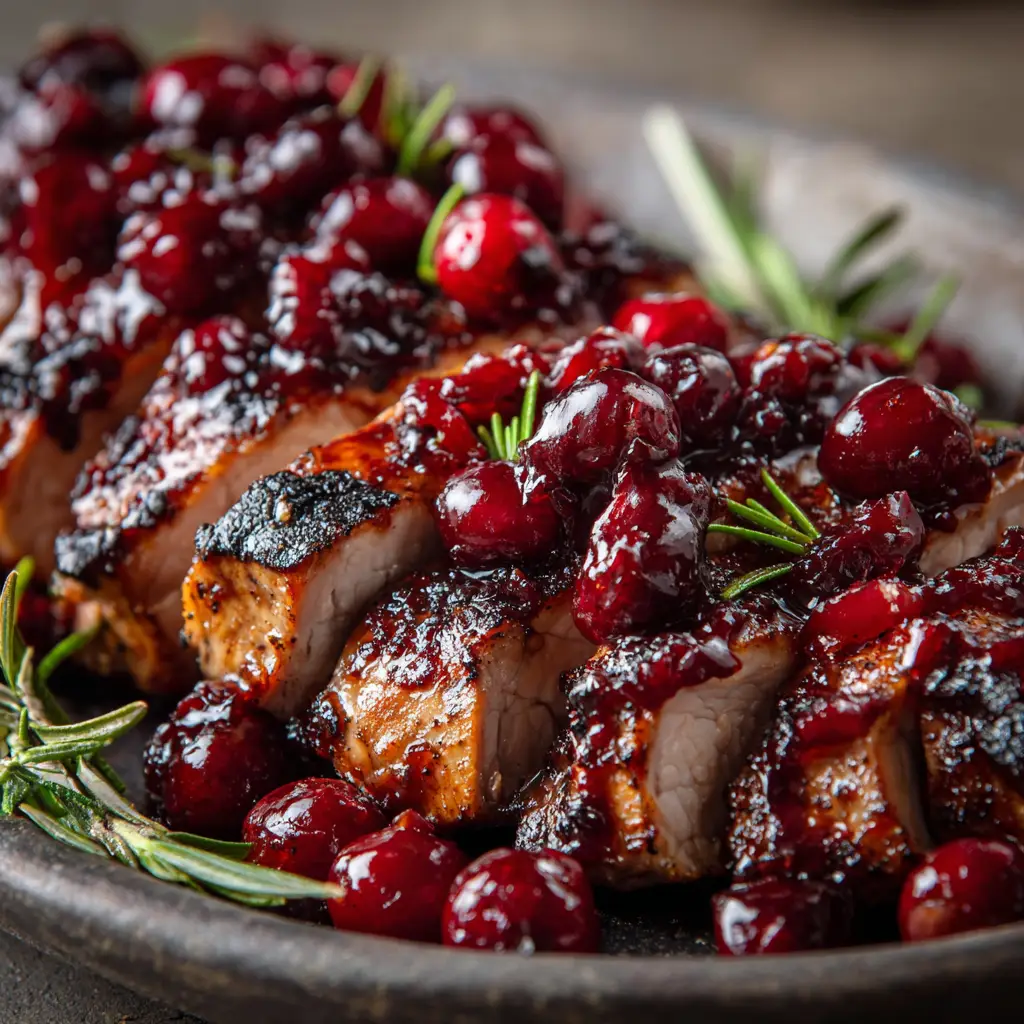
- Pork Tenderloin: You will need a 1.5 lb (680g) pork tenderloin. This cut is naturally lean and incredibly tender, making it ideal for roasting. It cooks relatively quickly and provides a perfect canvas for our rich glaze.
- Olive Oil: We’ll use 1 tbsp (15ml) of olive oil for searing. The oil helps create that beautiful, caramelized crust described in the prompt. Any neutral high-heat oil like avocado or canola oil will also work.
- Fresh Cranberries: The recipe calls for 12 oz (340g) of fresh cranberries. These berries break down to create the body of the glaze and provide a vibrant, tart flavor. You can absolutely use frozen cranberries without thawing them first.
- Light Brown Sugar: To balance the tartness of the cranberries, we’ll use 1/2 cup (100g) of packed light brown sugar. This is essential for creating the thick, sticky, and glossy consistency of the glaze. Maple syrup can be used as a substitute for a different flavor profile.
- Orange Juice: A 1/2 cup (120ml) of orange juice adds a hint of citrus brightness and acidity that complements both the pork and cranberry. Freshly squeezed is great, but bottled works just fine.
- Balsamic Vinegar: Just 2 tbsp (30ml) of balsamic vinegar adds a deep, complex flavor and helps give the glaze its rich, dark red color.
- Fresh Rosemary: We’ll use 2-3 sprigs. One sprig infuses the glaze with its aromatic, piney flavor, while the others are used as a fresh garnish that provides a beautiful color contrast and aroma.
- Salt & Black Pepper: These foundational ingredients are crucial for seasoning the pork and enhancing all the other flavors in the dish.
Equipment Needed
- Large Oven-Safe Skillet (Cast Iron or Stainless Steel)
- Instant-Read Meat Thermometer
- Small Saucepan
- Whisk or Wooden Spoon
Step-by-Step Instructions
Follow these steps closely to achieve that perfect seared crust and juicy interior, just like in the photos.
Prep the Pork and Preheat
First, preheat your oven to 400°F (200°C). This ensures the oven is ready the moment your pork is done searing.
Remove the pork tenderloin from its packaging and pat it completely dry with paper towels. A dry surface is the absolute key to achieving a deep, caramelized sear. Season it generously on all sides with salt and freshly cracked black pepper.
Make the Cranberry Glaze
In a small saucepan, combine the fresh cranberries, light brown sugar, orange juice, balsamic vinegar, and one sprig of rosemary. Bring the mixture to a simmer over medium heat, stirring occasionally.
Let it bubble gently for 8-10 minutes. You’ll see the cranberries start to burst and the liquid will begin to thicken. The visual cue you’re looking for is a glaze that has darkened in color and can coat the back of a spoon. Once it’s ready, remove it from the heat and discard the cooked rosemary sprig.
Sear for a Perfect Crust
While the glaze simmers, heat the olive oil in your large, oven-safe skillet over medium-high heat. The oil should be shimmering but not smoking.
Carefully place the seasoned pork tenderloin in the hot skillet. You should hear a satisfying sizzle. Sear for 2-3 minutes per side, until a deep golden-brown crust forms. Don’t move it around too much; let the heat do its work. Once all sides are seared, remove the skillet from the heat.
Roast, Glaze, and Rest
Brush a generous layer of the cranberry glaze all over the seared pork tenderloin. Transfer the entire skillet to your preheated 400°F (200°C) oven.
Roast for 15-20 minutes, or until an instant-read thermometer inserted into the thickest part of the tenderloin reads 145°F (63°C). For the last 2-3 minutes of cooking, brush another layer of glaze over the pork to create that thick, heavily coated finish.
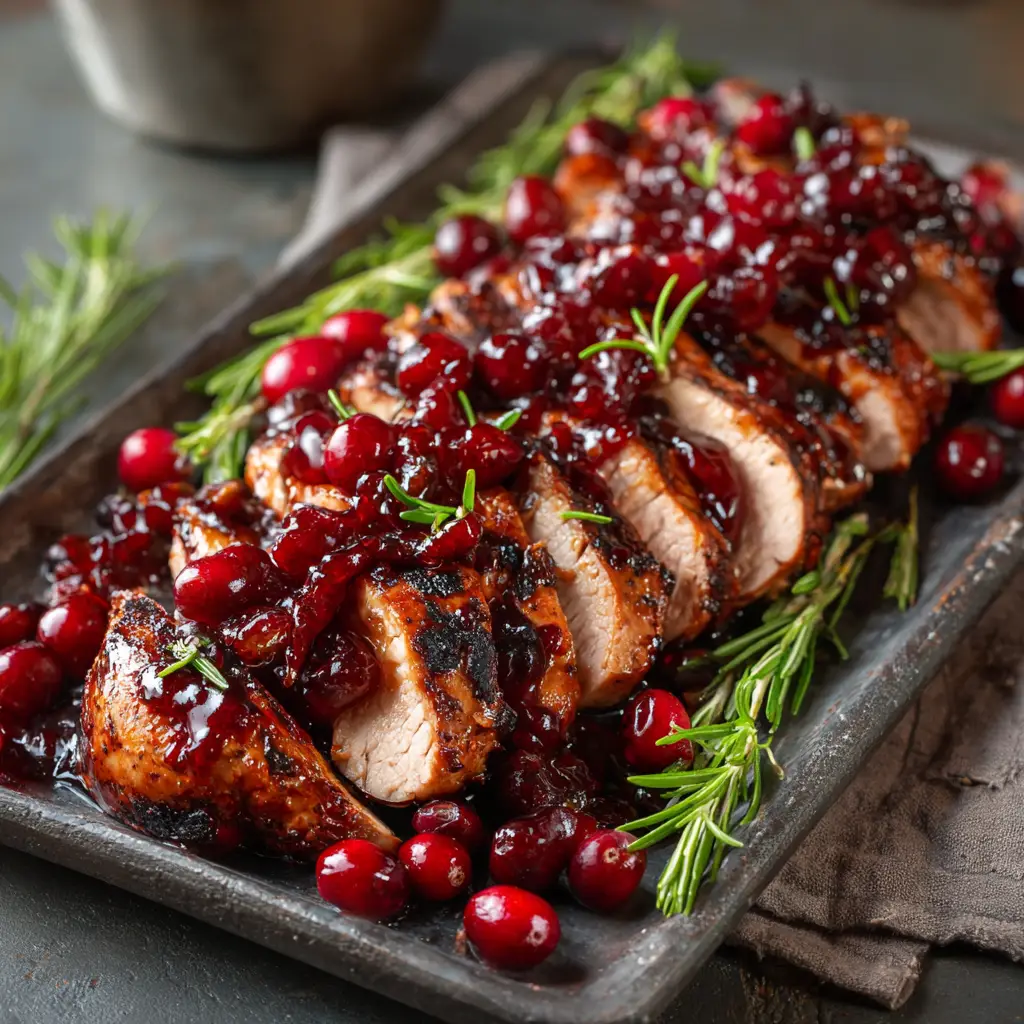
Remove the pork from the oven and transfer it to a cutting board. Tent it loosely with foil and let it rest for 10 minutes. This step is crucial for the juices to redistribute, ensuring a moist and tender result. To serve, slice the tenderloin into thick pieces, arrange on a platter, and spoon the remaining warm glaze over the top. Garnish with fresh rosemary sprigs and any whole cranberries from the glaze.
Expert Tips for Success
- Use a Meat Thermometer: This is the single most important tool for this recipe. Pork tenderloin is lean and can overcook quickly. A thermometer is the only way to guarantee a perfectly cooked, juicy result.
- Don’t Skip the Sear: Searing in a hot pan creates the Maillard reaction, which develops a complex, savory flavor and the beautiful caramelized crust that makes this dish so appealing.
- Rest the Meat: Never slice into the pork right out of the oven. Letting it rest for 10 minutes allows the juices to settle back into the meat, preventing them from running out onto your cutting board.
- Adjust Glaze Thickness: If your glaze gets too thick upon standing, simply stir in a teaspoon of warm water or orange juice until it reaches the desired consistency.
Storage & Reheating/Freezing
Store any leftover Cranberry Glazed Pork Tenderloin in an airtight container in the refrigerator for up to 3-4 days. The glaze can be stored separately in its own container.
To reheat, gently warm sliced pork in a skillet over low heat with a splash of chicken broth or water to prevent it from drying out. You can also microwave it at 50% power in short bursts. The glaze can be rewarmed in a small saucepan over low heat.
For freezing, wrap the cooked and cooled tenderloin tightly in plastic wrap and then foil. It can be frozen for up to 2 months. Thaw overnight in the refrigerator before reheating.
What to Serve With This
This rich and flavorful pork tenderloin pairs beautifully with a variety of side dishes. For a truly comforting meal, serve it alongside some Crispy Oven-Roasted Potatoes to soak up the extra glaze.
A warm bowl of Cheesy Broccoli-Potato Soup makes for a wonderfully cozy pairing on a cold day. For something green, simple Oven-Roasted Vegetables are always a fantastic choice. If you want a truly decadent side, you can’t go wrong with our Homemade Focaccia Bread to mop up every last drop of that delicious cranberry sauce.
Frequently Asked Questions
Yes, frozen cranberries work perfectly for this glaze. You don’t need to thaw them first; simply add them to the saucepan and they may just need a couple of extra minutes to cook down and burst.
The keys to a great sear are a hot pan, a dry surface on the meat, and not moving the meat too much. Pat the tenderloin completely dry with paper towels, season it, and place it in a preheated, oiled skillet over medium-high heat. Let it develop a deep brown crust before turning.
The USDA recommends cooking pork tenderloin to an internal temperature of 145°F (63°C), followed by a 3-minute rest. This will result in a slightly pink, juicy, and perfectly safe center. An instant-read thermometer is the best way to ensure accuracy.
Store leftover pork and glaze in an airtight container in the refrigerator for up to 3 days. To reheat, you can gently warm slices in a skillet over low heat with a splash of broth or water to keep them from drying out, or warm them in the microwave at 50% power.
Join The Fun!
If you make this recipe, be sure to leave a comment and rating below! I love hearing from you. And for more delicious inspiration, don’t forget to follow along on Pinterest at @kitchen_spark.
Printable Recipe Card
Cranberry Glazed Pork Tenderloin (Juicy & Easy Recipe)
Ingredients
Equipment
Method
- Preheat oven to 400°F (200°C). Pat the pork tenderloin completely dry with paper towels and season generously on all sides with salt and pepper.
- In a small saucepan, combine cranberries, brown sugar, orange juice, balsamic vinegar, and 1 rosemary sprig. Bring to a simmer over medium heat and cook for 8-10 minutes, until the cranberries burst and the sauce thickens enough to coat a spoon. Remove from heat and discard the rosemary sprig.
- Heat olive oil in a large, oven-safe skillet over medium-high heat until shimmering. Sear the pork for 2-3 minutes per side, until a deep golden-brown crust forms all over.
- Remove skillet from heat. Brush a generous layer of the cranberry glaze over the seared pork. Transfer the skillet to the preheated oven and roast for 15-20 minutes.
- During the last 2-3 minutes of cooking, brush with another layer of glaze. The pork is done when an instant-read thermometer inserted into the thickest part registers 145°F (63°C).
- Transfer the pork to a cutting board and tent loosely with foil. Let it rest for 10 minutes before slicing.
- Slice the tenderloin into thick pieces. Arrange on a platter and spoon the remaining warm glaze over top. Garnish with fresh rosemary sprigs to serve.
Notes
Don't Skip the Sear: Searing in a hot pan creates the Maillard reaction, which develops a complex, savory flavor and the beautiful caramelized crust that makes this dish so appealing.
Rest the Meat: Never slice into the pork right out of the oven. Letting it rest for 10 minutes allows the juices to settle back into the meat, preventing them from running out onto your cutting board.
Adjust Glaze Thickness: If your glaze gets too thick upon standing, simply stir in a teaspoon of warm water or orange juice until it reaches the desired consistency.