The Cucumber Beetroot Salad is a masterclass in texture, color contrast, and refreshing seasonal flavors. Imagine crisp, cool cucumber rounds meeting the earthy, concentrated sweetness of oven-roasted crimson beets, all tied together by a zesty, herbaceous dressing.
This dish isn’t just a salad; it’s a visual centerpiece designed to capture the soft natural daylight of a summer afternoon. Whether you are hosting a sophisticated garden party or looking for a vibrant mid-week lunch, this recipe delivers professional results with accessible ingredients.
Inspired by the minimalist beauty of modern culinary plating, we focus on the raw crunch of the cucumber and the matte, softened finish of perfectly roasted beetroot. Every bite is accented by the punch of fresh dill and the crystalline crunch of coarse sea salt.
Why This Vibrant Root and Vine Combination Works
- Structural Contrast: The paper-thin cucumber slices provide a flexible, crunchy base that beautifully supports the dense, bite-sized cubes of roasted beet.
- Visual Brilliance: Deep crimson red against vibrant green creates a high-contrast palette that looks stunning in a shallow white ceramic bowl.
- Flavor Balance: The natural earthiness of the beets is cut by the sharp acidity of our translucent green herb vinaigrette and the cooling nature of the cucumber.
- Nutrient Density: This Cucumber Beetroot Salad is packed with antioxidants, nitrates for blood flow, and hydrating electrolytes.
The Anatomy of a Perfect Cucumber Beetroot Salad
To achieve the specific visual result of matte beetroot and glossy cucumbers, we must select our ingredients with a forensic eye for quality. Each component plays a specific role in the architectural integrity of the dish.
English Cucumbers: Use 2 large (approx. 400g each) English cucumbers. Their thin, vibrant green skins are essential for the visual border of each slice and they contain fewer seeds than standard slicing cucumbers.
Fresh Beetroot: You will need 3 medium (approx. 500g) raw beetroots. Roasting them whole before cubing ensures a matte, softened surface that contrasts perfectly with the glossy dressing.
Extra Virgin Olive Oil: Use 1/4 cup (60ml) for the dressing and a drizzle for roasting. A high-quality oil provides the “glossy” finish described in our visual blueprint.
Fresh Dill & Parsley: A generous handful of each. The dill provides a feathery texture, while the flat-leaf parsley adds tiny specks of deep green for visual complexity.
Lemon Juice or White Wine Vinegar: 2 tbsp (30ml) of acid is required to brighten the earthy tones of the beet and keep the cucumber tasting fresh.
Coarse Sea Salt: This is the final “pinch” that provides the sparkling highlights seen in professional food photography. Avoid table salt; the large grains are key for the finish.
Professional Tools for Culinary Precision
Achieving “thinly sliced raw cucumbers” requires more than just a sharp knife. For the most consistent, translucent rounds, a mandoline slicer is highly recommended.
You will also need a shallow white ceramic bowl. The white background reflects natural light, making the “crimson roasted beetroot cubes” pop against the neutral grey of a stone countertop.
Finally, a small high-speed blender or immersion blender is necessary to create the translucent green herb vinaigrette. This allows the herbs to be partially emulsified into the oil without turning the dressing into a thick paste.
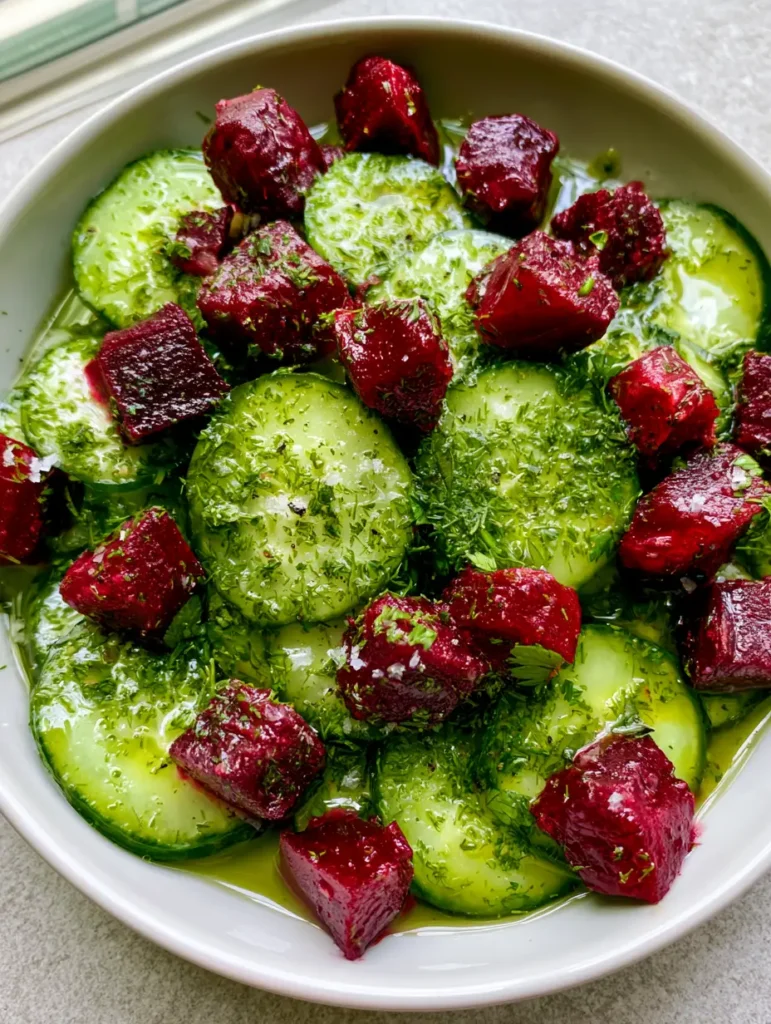
Mastering the Roasted Beetroot Technique
Preparing the Crimson Cubes
Preheat your oven to 400°F (200°C). Scrub the beetroots thoroughly but leave the skins on for roasting to lock in the moisture and sugar. Wrap each beet individually in foil with a tiny drop of oil.
Roast for 45–60 minutes. You are looking for a “matte, softened surface.” Test with a skewer; it should slide in with minimal resistance. Once cooled, the skins will slip right off, leaving a perfectly smooth, deep-red sphere.
Cut the beets into uniform 1/2-inch (1.25cm) cubes. This uniformity is crucial for the “scattered” look in the final plating. Let them reach room temperature before assembling to prevent the cucumbers from wilting.
Slicing the Cucumber Base
While the beets roast, prepare your cucumber base. Slice the English cucumbers into circular rounds approximately 1/8-inch (3mm) thick. They should be sturdy enough to hold their shape but thin enough to be slightly translucent.
Arrange the slices in overlapping layers in your shallow white bowl. This creates the “vibrant base layer” mentioned in our Midjourney prompt. If the cucumbers are very watery, pat them dry with a paper towel to ensure the dressing doesn’t get diluted.
Emulsifying the Green Herb Vinaigrette
In your blender, combine the olive oil, lemon juice, a pinch of salt, and half of your chopped parsley. Pulse until the dressing turns a “translucent pale green.” You want the herbs broken down enough to color the oil but not so much that it becomes opaque.
This dressing is designed to “pool slightly in the crevices” of the salad, creating those gentle highlights that catch the daylight. The translucency allows the vibrant red of the beets to still shine through the coating.
Assembling Your Cucumber Beetroot Salad
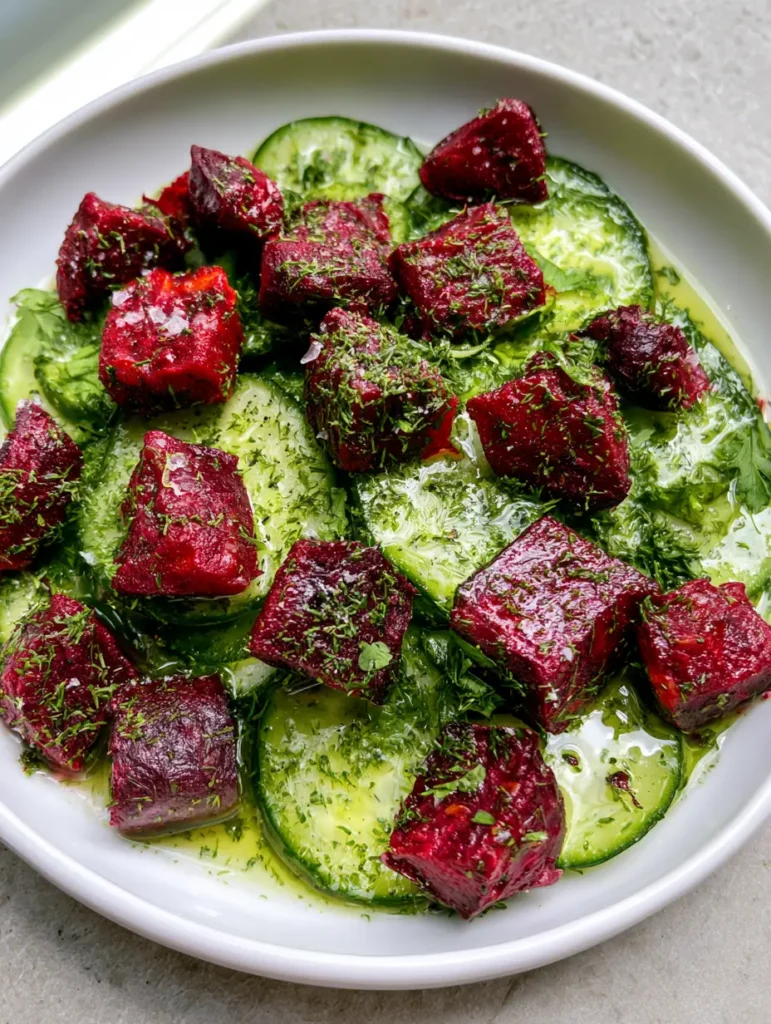
With your cucumber base ready, carefully scatter the beetroot cubes over the top. Do not toss the salad in a separate bowl! Tossing will cause the beet juice to bleed, staining the green cucumbers a muddy pink.
Drizzle the vinaigrette slowly over the cubes and cucumbers. Watch as it pools in the circular gaps between the cucumber rounds. This creates the “glossy” effect that characterizes a high-end restaurant dish.
The final flourish is the garnish. Dust the entire dish with the finely chopped fresh dill, the remaining parsley specks, and a final, intentional pinch of coarse sea salt. The salt grains should be visible on the matte surfaces of the beets.
Culinary Secrets for Success
- Temperature Control: Never add hot beets to cold cucumbers. The thermal shock will ruin the “crisp green-skinned” texture of the cucumbers and make them slimy.
- Herb Selection: Use only flat-leaf parsley (Italian parsley). Curly parsley is too fibrous and won’t provide the “tiny specks” required for the authentic look.
- The Bleed Factor: If you are worried about the beets staining the dish, pat the cubes dry with a paper towel after cutting and before plating. This removes the excess surface juice.
- Acid Balance: If your beets are exceptionally sweet, increase the lemon juice in the vinaigrette by 1 tsp (5ml) to maintain the flavor profile.
The Best Pairings for Your Vibrant Salad
This Cucumber Beetroot Salad is incredibly versatile. For a light summer lunch, pair it with a refreshing spicy pineapple cucumber salad to lean into the cooling properties of vine vegetables.
If you need a more substantial meal, serve this alongside a hearty high-protein chickpea salad or a classic mediterranean pasta salad. The earthiness of the beets complements the nutty flavor of chickpeas perfectly.
For those who love a picnic spread, this salad stands up well next to a broccoli salad with bacon (coming soon) or even a zesty mexican street corn salad, providing a much-needed acidic contrast to creamier sides.
Proper Storage and Meal Prep Tips
While the Cucumber Beetroot Salad is best served immediately for maximum visual impact, you can prep the components in advance. Store the roasted beetroot cubes and the sliced cucumbers in separate airtight containers in the refrigerator for up to 3 days.
The vinaigrette can also be made 48 hours in advance, though the green color may dull slightly over time as the acid reacts with the chlorophyll. Give it a vigorous shake before drizzling.
We do not recommend freezing this salad. The cell walls of the cucumber will collapse upon thawing, and the beetroot will lose its signature matte texture, becoming watery and unappealing.
Expert Troubleshooting (FAQ)
You can prep the roasted beets and sliced cucumbers 24 hours in advance, but assemble and dress the salad just before serving to maintain the ‘crisp’ texture of the cucumber and the visual clarity of the dressing.
While raw beets are edible, roasting them is essential to achieve the ‘matte, softened’ texture described in this recipe. Raw beets are much harder and will not absorb the vinaigrette as effectively as roasted cubes.
To prevent staining, do not toss the salad. Instead, layer the ingredients as instructed. Patting the roasted beet cubes dry with a paper towel before plating also helps minimize juice transfer.
For this specific visual result, we recommend leaving the skins on, especially when using English cucumbers. The vibrant green skin provides a beautiful color contrast against the red beets.
The translucency is achieved by pulsing the herbs in a blender rather than pureeing them. This allows the oil to take on a pale green tint without becoming thick or opaque like a pesto.
The Ultimate Cucumber Beetroot Salad Recipe
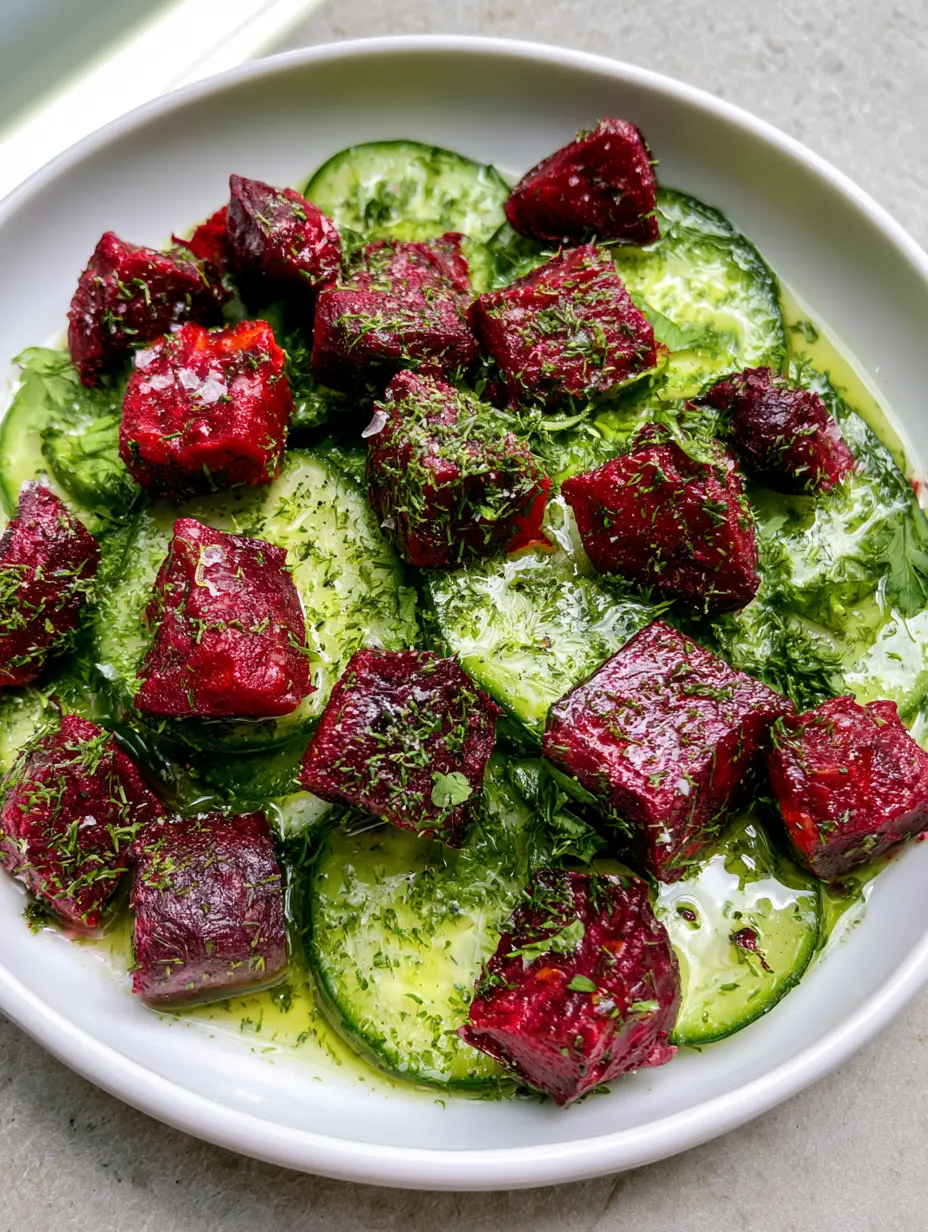
Cucumber Beetroot Salad with a Translucent Green Herb Vinaigrette
Ingredients
Equipment
Method
- Preheat oven to 400°F (200°C). Wrap whole beets in foil and roast for 45-60 minutes until softened.
- Once cool, peel the beets and cut into 1/2-inch uniform cubes. They should have a matte finish.
- Use a mandoline to slice cucumbers into thin circular rounds. Layer them in a shallow white bowl.
- Blend oil, lemon juice, and half the parsley. Drizzle over the beets and cucumbers, letting it pool in the crevices.
- Top with chopped dill, remaining parsley, and coarse sea salt for a sparkling finish.
Notes
Do not toss the salad; layer it to prevent the red beet juice from staining the green cucumbers.
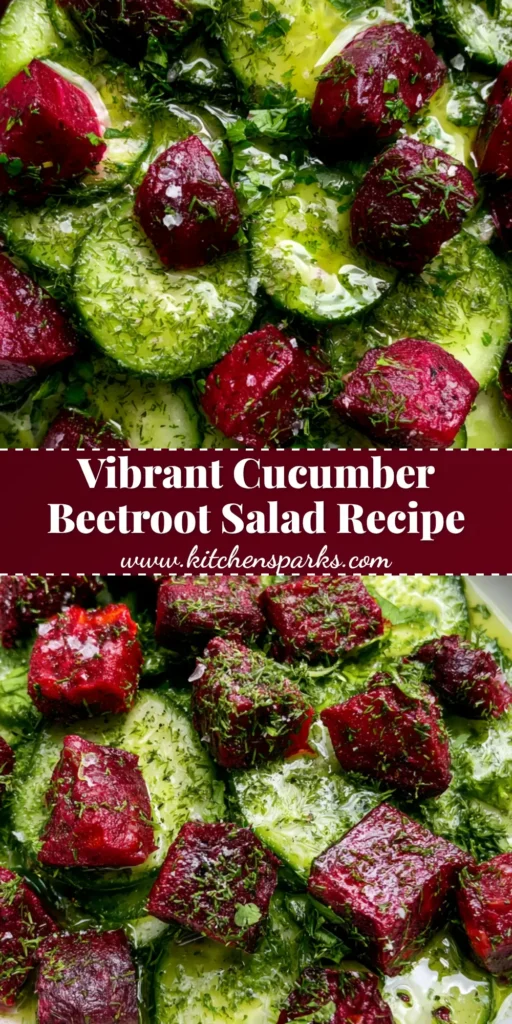
Bring This Culinary Vision to Life
The beauty of the Cucumber Beetroot Salad lies in its simplicity and the precision of its execution. By following these professional steps, you transform humble root vegetables into a work of art that is as delicious as it is photogenic.
We would love to see your results! If you make this dish, please leave a comment below and share your photos. Don’t forget to follow us on Pinterest for more visually-inspired recipes and culinary deep-dives.