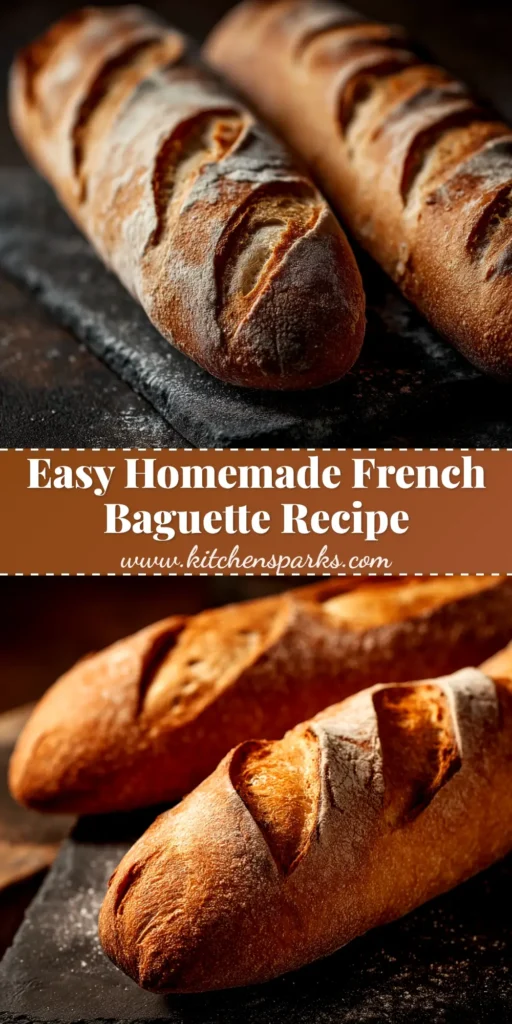
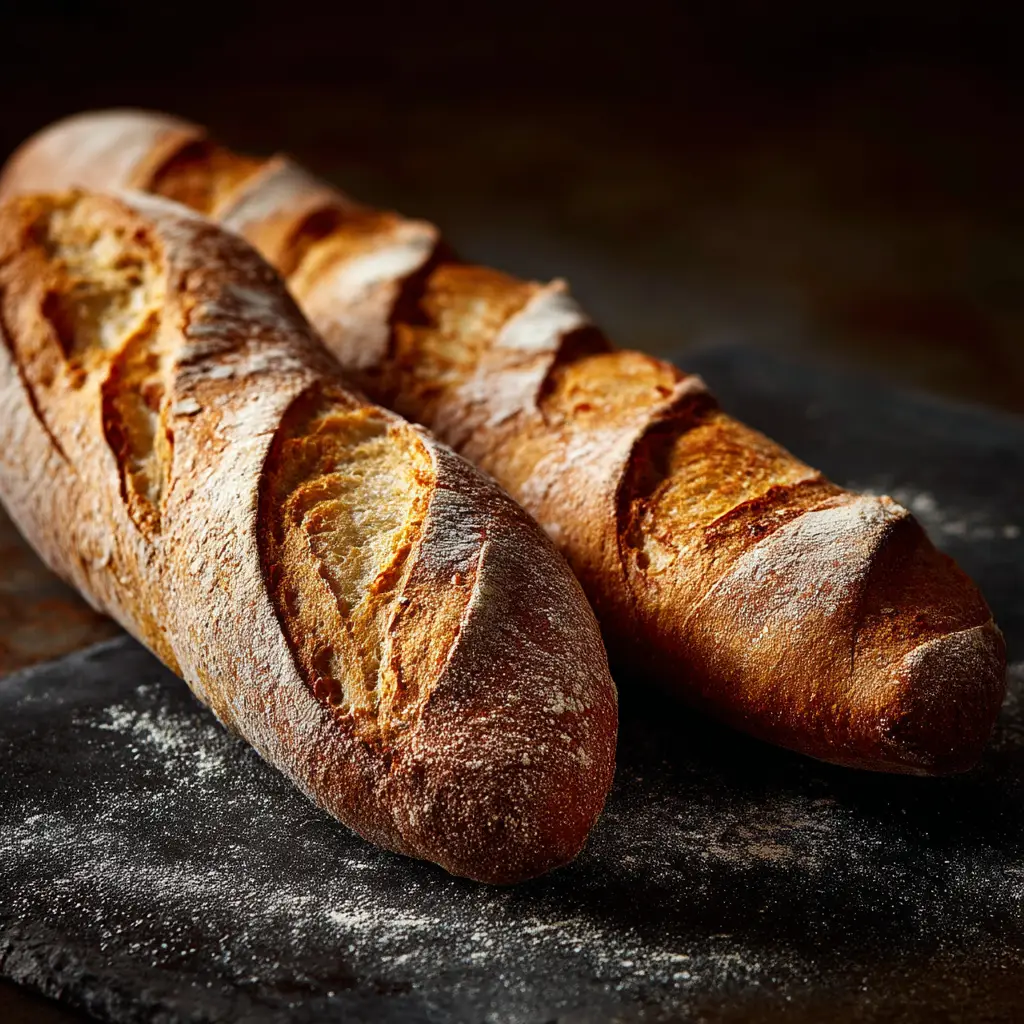
There’s nothing quite like the crackle of a warm, crusty baguette fresh from the oven. That aroma, that texture—it’s a simple pleasure we often leave to the professionals. But what if you could recreate that authentic bakery experience in your own kitchen? This French baguette recipe is designed for the enthusiastic home cook, striking the perfect balance between traditional methods and straightforward instructions. Forget dense, disappointing loaves; prepare for a bread with a deeply golden, shatteringly crisp crust and a light, airy, and wonderfully chewy interior. This guide will walk you through every step, demystifying the process and empowering you to bake the perfect loaf.
Why This is the Only French Baguette Recipe You’ll Need
This isn’t a quick, no-knead recipe that sacrifices texture for convenience. Nor is it an overly complex, professional baker’s formula. Instead, this recipe honors the tradition of the French baguette while making it completely achievable for you. We focus on technique over technology, explaining the ‘why’ behind each step—from developing the dough to creating that all-important steam in your oven—so you can bake with confidence and achieve consistently spectacular results. It’s the perfect weekend baking project that yields a truly rewarding and delicious outcome.
The Key Ingredients for an Authentic Baguette
The beauty of a classic French baguette lies in its simplicity. With just four basic ingredients, the quality of each one truly shines. There’s nowhere to hide, so choosing the right components is the first step toward perfection.
Flour: The Heart of Your Bread
For that signature chewy crumb, you need a flour with a moderate protein content. While French T55 flour is traditional, a good quality unbleached all-purpose flour works wonderfully. Avoid high-protein bread flour, which can make the crumb too dense and tight.
Yeast, Water, and Salt: The Supporting Trio
Instant yeast is used for its reliability and ease of use. Filtered water is recommended to ensure the yeast can thrive without interference from chemicals like chlorine. Finally, a fine sea salt is crucial for both flavor and controlling the yeast’s fermentation, which helps develop a more complex taste in the final dough.
Essential Equipment for Baguette Success
While you don’t need a professional bakery, a few key pieces of equipment will make a significant difference. A stand mixer with a dough hook is helpful for kneading but not essential; you can develop the gluten by hand. A digital kitchen scale is non-negotiable for accurate measurements. Most importantly, a baking stone or steel is crucial for that immediate burst of heat that creates the perfect oven spring and a crispy bottom crust. You’ll also need a lame or a very sharp razor blade for scoring the loaves.
How to Make Our French Baguette Recipe: A Step-by-Step Guide
Follow these instructions closely, and you’ll be on your way to baking incredible homemade baguettes. This process takes time, but most of it is hands-off, allowing the dough to develop its characteristic flavor and texture.
- Activate the Yeast: In a small bowl, whisk together the warm water, yeast, and sugar. Let it stand for 5-10 minutes until it becomes foamy. This proves your yeast is active.
- Mix the Dough: In the bowl of a stand mixer fitted with the dough hook, combine the flour and salt. With the mixer on low, slowly stream in the yeast mixture. Mix until a shaggy dough forms.
- Knead the Dough: Increase the speed to medium-low and knead for 6-8 minutes, or until the dough is smooth, elastic, and pulls away from the sides of the bowl. If kneading by hand, turn the dough out onto a lightly floured surface and knead for 10-12 minutes.
- First Rise (Bulk Fermentation): Place the dough in a lightly oiled bowl, cover it with plastic wrap, and let it rise in a warm place for 1 to 1.5 hours, or until doubled in size. This slow rise is where the flavor begins to develop.
- Divide and Pre-shape: Gently deflate the dough and turn it out onto a clean work surface. Divide it into two equal pieces. Gently pat each piece into a rough rectangle and then fold it into a log to create some surface tension.
- Bench Rest: Cover the logs with a clean kitchen towel and let them rest for 15-20 minutes. This allows the gluten to relax, making the final shaping easier.
- Final Shaping: Working with one piece at a time, gently press the dough into a thin rectangle. Fold the top third down to the center and press to seal. Fold the bottom third up and seal. Then, fold the dough in half lengthwise and pinch the seam tightly to seal. Gently roll the log back and forth, applying gentle pressure from the center outwards, until it is about 15 inches long. Place the shaped baguettes on a parchment-lined baking sheet or a baguette pan.
- Second Rise (Proofing): Cover the baguettes loosely with plastic wrap and let them rise for 30-45 minutes, until they look puffy. They won’t quite double in size this time.
- Prepare for Baking: While the baguettes are proofing, place your baking stone or steel on the middle rack of the oven and preheat to 450°F (232°C). Place a shallow metal pan (like a broiler pan) on the bottom rack.
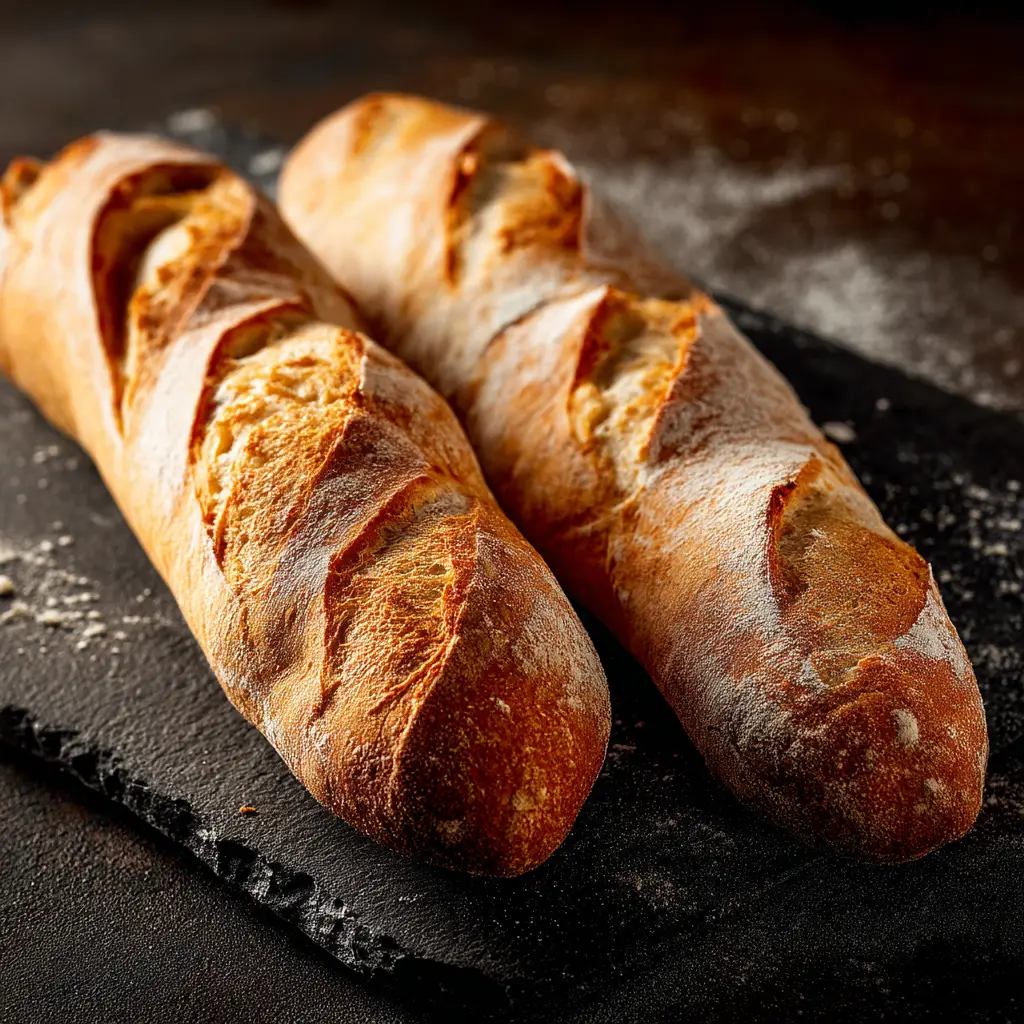
- Score and Bake: Just before baking, use a lame or sharp razor to make 3-4 diagonal slashes along the top of each loaf. This allows the steam to escape and the bread to expand fully. Carefully place the baguettes (on their parchment) onto the hot baking stone. Pour 1 cup of hot water into the metal pan on the bottom rack to create steam. Close the oven door immediately.
- Bake to Perfection: Bake for 20-25 minutes, or until the crust is a deep golden brown and an instant-read thermometer inserted into the center registers 200-210°F (93-99°C). For an even crispier crust, you can carefully remove the steam pan after the first 10 minutes of baking.
- Cool Completely: Let the baguettes cool on a wire rack for at least 30 minutes before slicing. This is a crucial step that sets the crumb. Enjoy it with a simple dish of Garlic Butter Mushrooms for a delightful meal.
Pro Tips for a Bakery-Perfect Crusty Baguette
Achieving that signature crust is the hallmark of a great French baguette recipe. The secret is steam. Creating a steamy environment for the first few minutes of baking keeps the surface of the dough moist, allowing it to expand fully (this is called “oven spring”). The steam then dissipates, allowing the crust to form and turn deeply golden and crisp. Don’t skip the step with the pan of hot water!
Another tip is to trust the bake. Don’t be afraid to let your baguettes get a deep, dark golden brown. This color is where the flavor is. A pale baguette is often an under-baked one. It’s the perfect side to a comforting bowl of lasagna soup or Italian sausage soup.
Storing Your Homemade Baguettes
Homemade baguettes are best enjoyed the day they are made. The crust will be at its peak crispness. To store, keep them in a paper bag at room temperature for up to two days. Avoid plastic bags, as they trap moisture and will make the crust soft. You can revive a day-old baguette by spritzing it lightly with water and warming it in a 350°F (175°C) oven for 5-7 minutes.
Frequently Asked Questions (FAQs)
Absolutely! You can knead the dough by hand on a lightly floured surface. It will take about 10-12 minutes of consistent kneading to develop the gluten properly. The dough should be smooth, elastic, and pass the ‘windowpane test’.
Big holes, or an open crumb, come from a properly hydrated and fermented dough. Be careful not to add too much extra flour while kneading, and handle the dough gently after the first rise to avoid deflating the air pockets that have developed.
The secret lies in three things: proper dough development through sufficient kneading, a slow fermentation to build flavor, and a hot, steamy oven during the initial baking phase to create a perfectly crisp crust.
The best flour for baguettes is unbleached all-purpose flour. Its moderate protein content provides the perfect balance of chewiness and a light, open crumb. High-protein bread flour can make the baguette too dense.
The most common reason for a non-crusty baguette is a lack of steam in the oven. Steam keeps the dough’s surface moist for the first few minutes of baking, allowing it to rise fully before the crust sets. Without it, the crust forms too early and won’t get that signature crispiness.
The Best Authentic French Baguette Recipe
French Baguette Recipe (The Authentic & Easy Way)
Ingredients
Equipment
Method
- In a small bowl, whisk together the warm water, yeast, and sugar. Let it stand for 5-10 minutes until it becomes foamy.
- In a stand mixer bowl, combine flour and salt. On low speed, slowly stream in the yeast mixture until a shaggy dough forms.
- Increase speed to medium-low and knead for 6-8 minutes (or 10-12 minutes by hand) until the dough is smooth and elastic.
- Place dough in an oiled bowl, cover, and let rise in a warm place for 1-1.5 hours, or until doubled.
- Gently deflate the dough, divide it into two equal pieces, and form each into a rough log.
- Cover the logs and let them rest for 15-20 minutes.
- Shape each piece of dough into a 15-inch log by patting into a rectangle, folding, sealing, and rolling gently.
- Place shaped baguettes on a parchment-lined sheet, cover, and let rise for 30-45 minutes.
- Preheat oven to 450°F (232°C) with a baking stone on the middle rack and a shallow metal pan on the bottom rack.
- Make 3-4 diagonal slashes on each loaf. Place them on the hot stone and pour 1 cup of hot water into the bottom pan to create steam.
- Bake for 20-25 minutes until deep golden brown and the internal temperature reaches 200-210°F (93-99°C).
- Cool completely on a wire rack before slicing.
Notes
Ensure your oven is fully preheated before baking; the initial high heat is key to good oven spring.
Share Your Creation!
Now that you’ve mastered the art of the homemade French baguette, it’s time to enjoy the fruits of your labor. There’s immense satisfaction in slicing into a loaf you’ve crafted with your own hands. We hope you love this recipe as much as we do. If you bake it, please share your creations and tag us on Pinterest! We can’t wait to see your beautiful baguettes.