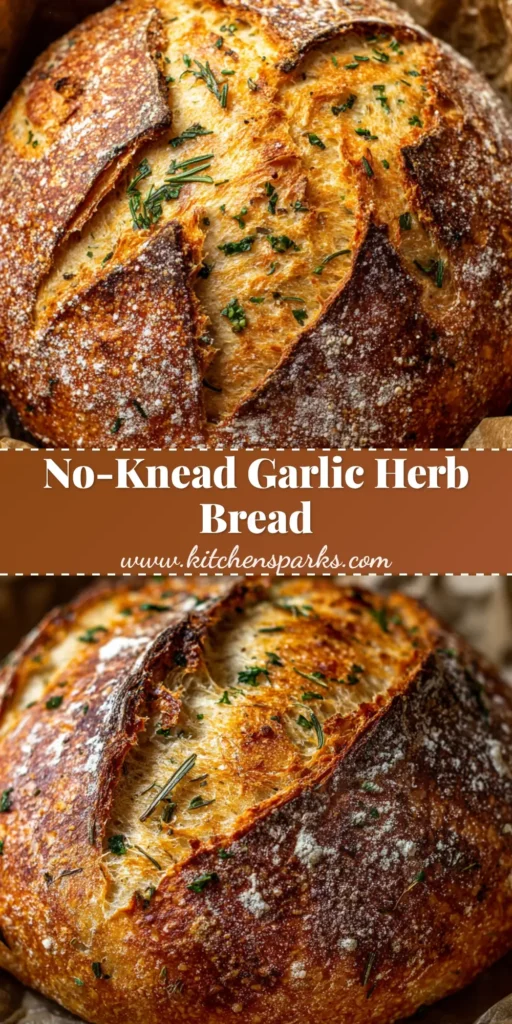
Prepare to be captivated by the intoxicating aroma of freshly baked bread filling your kitchen. This Garlic Herb Dutch Oven Bread recipe is a game-changer, delivering a bakery-quality artisan loaf with an incredibly deep golden-brown, blistered crust and a soft, airy interior that’s almost effortless to achieve.
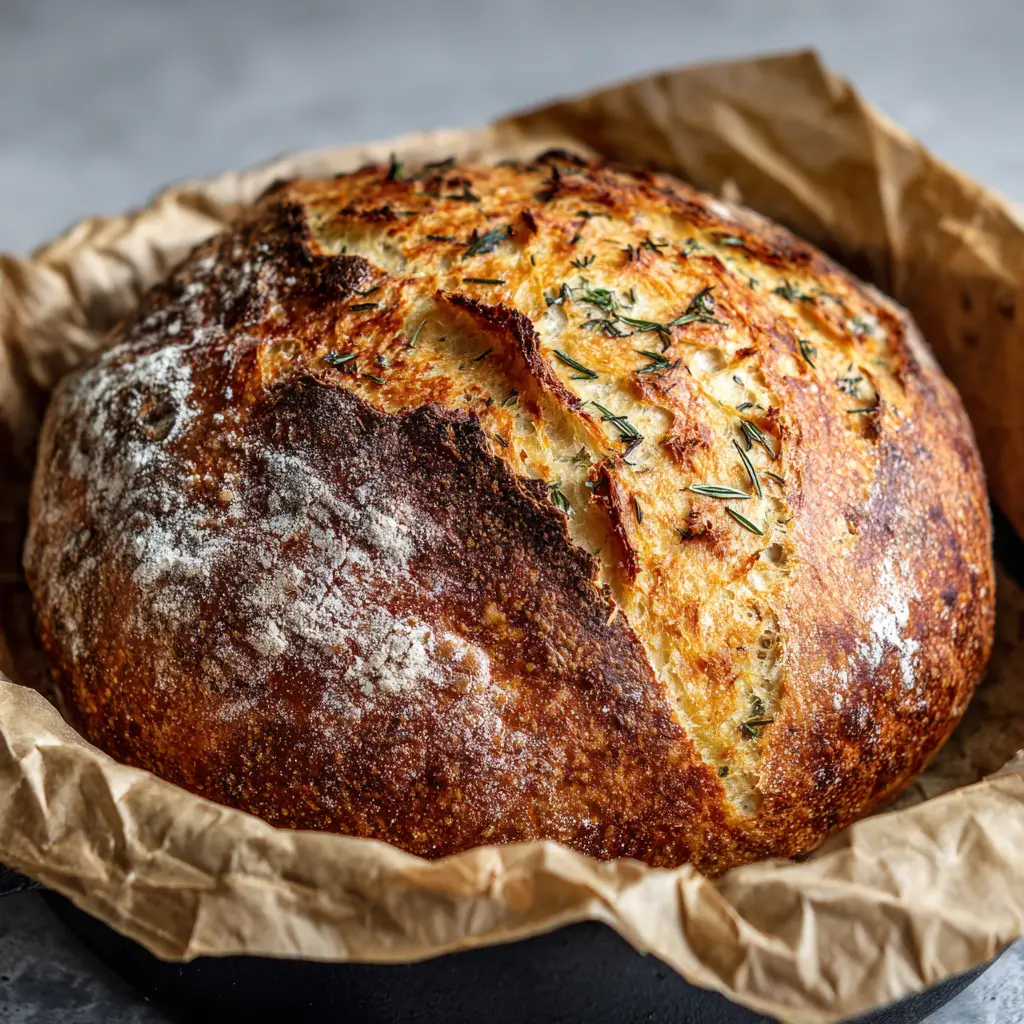
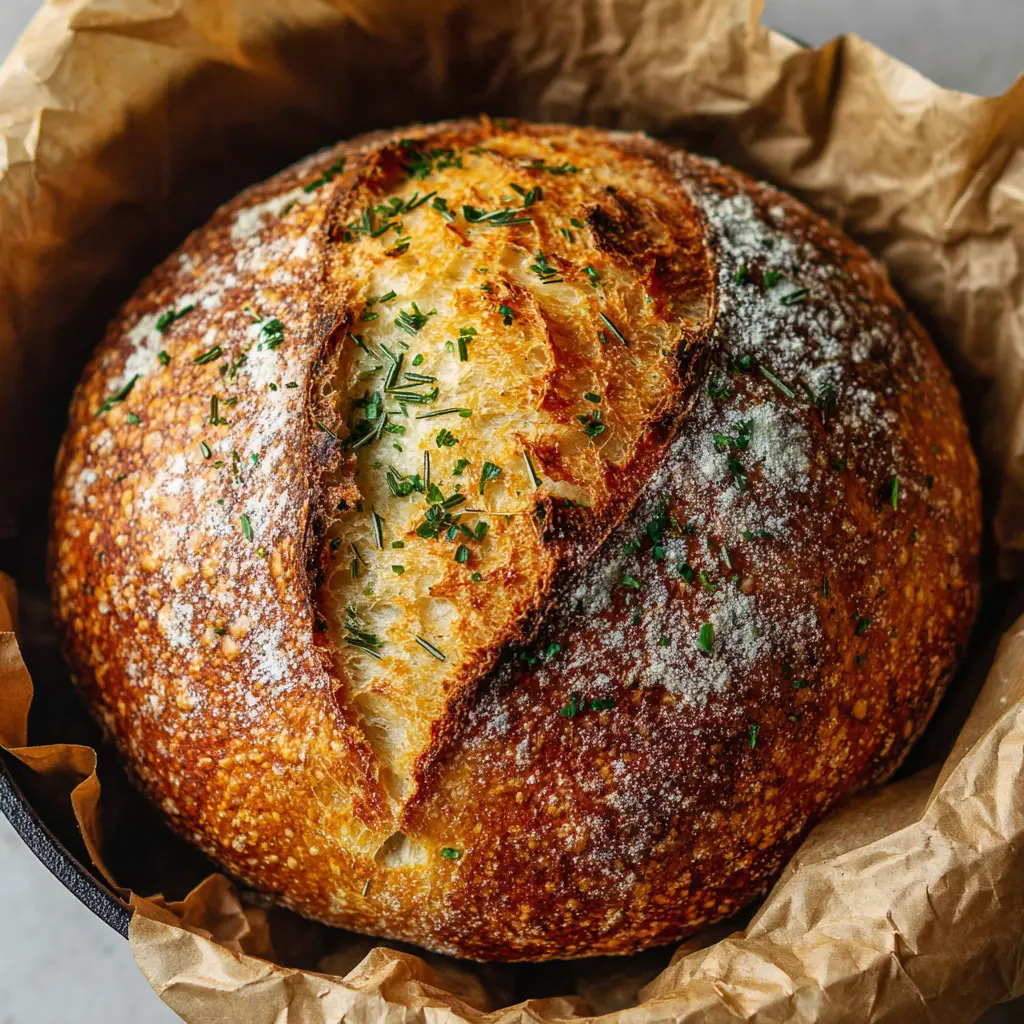
Imagine pulling a masterpiece from your oven: a perfect round boule, resting on crinkled parchment inside a classic black Dutch oven. You’ll hear the crackle of the thick, crusty exterior as you slice into it, revealing a tender, open crumb studded with fresh rosemary and thyme. This isn’t just bread; it’s an experience.
Using a simple no-knead technique, this recipe relies on a long, slow fermentation to develop incredible flavor and texture. The magic happens inside the Dutch oven, which traps steam to create the perfect environment for that coveted crispy crust and soft crumb. It’s the kind of bread that makes any meal feel special.
Why You’ll Love This Recipe
- Incredibly Crusty Exterior: The Dutch oven method creates a professional-bakery-level crust that is deep golden-brown, wonderfully thick, and covered in beautiful, rustic blisters.
- Soft & Airy Interior Crumb: The high-hydration, no-knead dough develops a beautifully open, chewy, and tender crumb that’s perfect for tearing, dipping, and savoring.
- Rich Garlic & Herb Flavor: Finely chopped fresh rosemary, thyme, and garlic are embedded throughout the dough, infusing every single bite with their aromatic and savory character.
- Stunningly Simple Method: This is a true “mix and forget” recipe. With no kneading required, it’s perfect for both beginners and experienced bakers looking for an easy, reliable loaf.
Ingredients & Substitutions
Bread Flour: This is the structural backbone of our bread. Bread flour has a higher protein content than all-purpose flour, which helps develop strong gluten for a chewier, more structured, and airy crumb.
- 4 cups (512g) Bread Flour
- 1 tsp (3g) Granulated Sugar
Yeast: Instant yeast is the magic ingredient that makes the dough rise, creating that light and airy texture. It works faster and can be mixed directly with the dry ingredients.
- 2 ¼ tsp (7g) Instant Yeast
Seasoning: A simple combination of salt, garlic, and fresh herbs provides the signature savory flavor. The salt is also crucial for controlling the yeast and tightening the gluten structure.
- 2 tsp (12g) Kosher Salt
- 4 cloves Garlic, finely minced
- 1 tbsp (4g) Fresh Rosemary, finely chopped
- 1 tbsp (3g) Fresh Thyme, finely chopped
Water: Lukewarm water hydrates the flour and activates the yeast. The temperature is key—too hot and it will kill the yeast, too cold and it will slow it down significantly.
- 2 cups (480ml) Lukewarm Water (around 100°F/38°C)
Equipment Needed
- 5 to 6-quart Dutch Oven
- Large Mixing Bowl
- Parchment Paper
- Dough Scraper (optional)
- Cooling Rack
Step-by-Step Instructions
Phase 1: Mix the No-Knead Dough
In a large bowl, whisk together the bread flour, instant yeast, kosher salt, sugar, chopped rosemary, and chopped thyme. Make sure the dry ingredients are thoroughly combined to ensure an even rise and flavor distribution.
Add the minced garlic and the lukewarm water to the bowl. Use a spatula or wooden spoon to mix until a shaggy, sticky dough forms and no dry flour patches remain. Do not overmix; the goal is simply to combine.
Phase 2: The First Rise (Bulk Fermentation)
Cover the bowl tightly with plastic wrap or a clean kitchen towel. Let the dough rise at room temperature for 12 to 18 hours. You are looking for the dough to more than double in size, with a surface covered in visible bubbles.
This long, slow rise is where the complex flavors develop. The perfect sensory cue is a tangy, yeasty aroma when you uncover the bowl.
Phase 3: Shaping and Second Rise
Lightly flour a clean work surface. Gently scrape the bubbly, sticky dough out of the bowl. With floured hands, gently fold the dough over onto itself a few times to form a rough ball (a boule).
Place the shaped dough onto a large piece of parchment paper. Loosely cover it and let it rest for 30 minutes while your oven preheats.
Phase 4: Preheating and Baking
Place your Dutch oven with the lid on into the cold oven. Preheat the oven to 450°F (232°C). It is critical that the Dutch oven gets screaming hot, which takes about 30 minutes.
Once preheated, carefully remove the hot Dutch oven. Using the parchment paper as handles, lift your dough and gently lower it into the Dutch oven. Lightly dust the top of the loaf with a pinch of flour for that classic rustic look.
With a sharp knife or a bread lame, make one confident, deep score across the top of the loaf, about ½ inch deep. This allows the steam to escape and controls the bread’s expansion.
Cover the Dutch oven and bake for 30 minutes. The trapped steam will create a moist environment, allowing the bread to spring up beautifully. Then, remove the lid and bake for another 15-20 minutes, or until the crust is a deep, golden-brown with pronounced blisters. The bread is done when an instant-read thermometer inserted into the center reads 205-210°F (96-99°C).
Phase 5: Cooling
Using the parchment paper, carefully lift the finished loaf out of the hot Dutch oven and place it on a wire cooling rack. It’s crucial to let the bread cool for at least one hour before slicing. This allows the interior crumb to set properly; slicing it too early can result in a gummy texture.
Expert Tips for Success
- Don’t Rush the Rise: The long 12-18 hour fermentation is essential for flavor and texture. Find a warm, draft-free spot in your kitchen and let the yeast do its work.
- Handle the Dough Gently: When shaping the boule, be gentle. You want to preserve the beautiful air bubbles that developed during the first rise.
- Ensure Your Dutch Oven is HOT: A properly preheated Dutch oven is the secret to a phenomenal crust. Placing the cool dough into the hot pot creates the initial burst of steam needed for oven spring.
- Cool Completely: The most challenging step is waiting! Letting the bread cool fully before slicing is non-negotiable for achieving the perfect soft, airy crumb.
Storage & Reheating
Store your Garlic Herb Dutch Oven Bread at room temperature in a bread box or a paper bag for up to 3 days. Avoid storing it in a plastic bag, which can trap moisture and soften the beautiful crust you worked so hard to create.
To freeze, slice the loaf completely and wrap it tightly in plastic wrap, then place it in a freezer-safe bag. It will keep for up to 3 months. You can toast individual slices directly from the freezer.
What to Serve With This
This rustic loaf is a versatile companion to countless meals. It’s absolutely perfect for sopping up the last delicious bits of a hearty soup, like our creamy cheesy-broccoli-potato-soup or the viral TikTok Lasagna Soup.
Use thick slices as the ultimate foundation for a mouthwatering spicy Korean BBQ chicken sandwich. Or, toast it with a bit of extra olive oil and serve it alongside a crowd-pleasing appetizer like our zesty buffalo chicken dip for your next get-together.
FAQ
Yes, you can use all-purpose flour. The bread will still be delicious, but the interior crumb may be slightly less chewy and more tender due to the lower protein content.
Fresh herbs provide the best flavor, as seen in the photos. However, you can substitute them with dried herbs. Use about 1 teaspoon of dried rosemary and 1 teaspoon of dried thyme.
For the best results with a thick, crispy, and blistered crust, a Dutch oven is highly recommended. It traps steam, which is crucial for the bread’s texture. A heavy, oven-safe pot with a tight-fitting lid could work as an alternative.
The best visual cue is a deep, golden-brown crust color. For 100% accuracy, use an instant-read thermometer; the internal temperature of the bread should be between 205-210°F (96-99°C).
A dense crumb is usually caused by a few things: your yeast might be expired, the dough didn’t rise long enough (under-proofed), or the dough was handled too aggressively during shaping, which deflates the air bubbles.
The Best Homemade Bread Awaits!
There is nothing more rewarding than the sight, sound, and smell of a perfect loaf of homemade bread. We know you’ll fall in love with this simple yet spectacular Garlic Herb Dutch Oven Bread.
If you make this recipe, be sure to leave a comment and rating below! And don’t forget to follow us on Pinterest at @kitchen_spark for more delicious inspiration.
Recipe Card
Crusty Garlic Herb Dutch Oven Bread (Easy No-Knead Recipe)
Ingredients
Equipment
Method
- In a large bowl, whisk together the bread flour, instant yeast, kosher salt, sugar, chopped rosemary, and chopped thyme. Add the minced garlic and lukewarm water, mixing with a spatula until a shaggy, sticky dough forms.
- Cover the bowl tightly and let it rise at room temperature for 12 to 18 hours, until the dough has doubled in size and is covered in bubbles.
- Gently scrape the dough onto a floured surface and fold it into a ball (boule). Place on parchment paper, cover, and let rest for 30 minutes.
- Meanwhile, place a Dutch oven with its lid in the oven and preheat to 450°F (232°C).
- Carefully remove the hot Dutch oven. Use the parchment paper to lower the dough into it. Dust with flour, score the top, cover, and bake for 30 minutes.
- Remove the lid and bake for another 15-20 minutes, until the crust is a deep golden-brown and an internal thermometer reads 205-210°F (96-99°C).
- Lift the bread out and let it cool completely on a wire rack for at least 1 hour before slicing.
Notes
Handle the Dough Gently: When shaping, be gentle to preserve the air bubbles that developed during the first rise.
Ensure Your Dutch Oven is HOT: A properly preheated Dutch oven is the secret to a phenomenal crust.
Cool Completely: Letting the bread cool fully before slicing is non-negotiable for achieving the perfect soft, airy crumb.