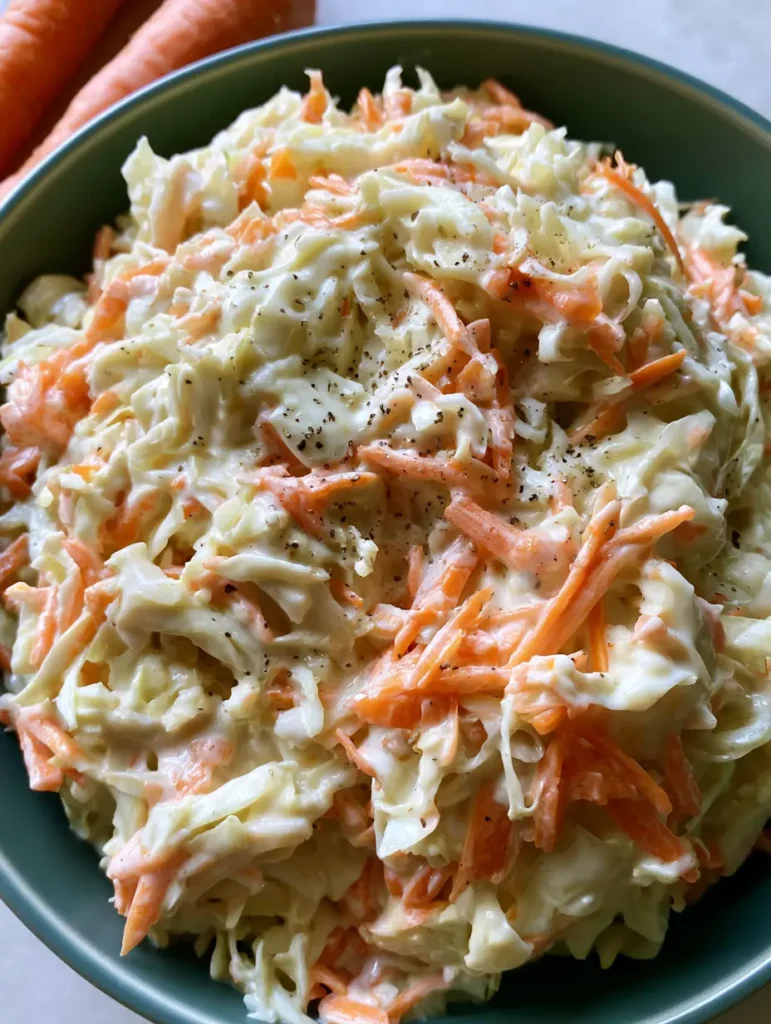
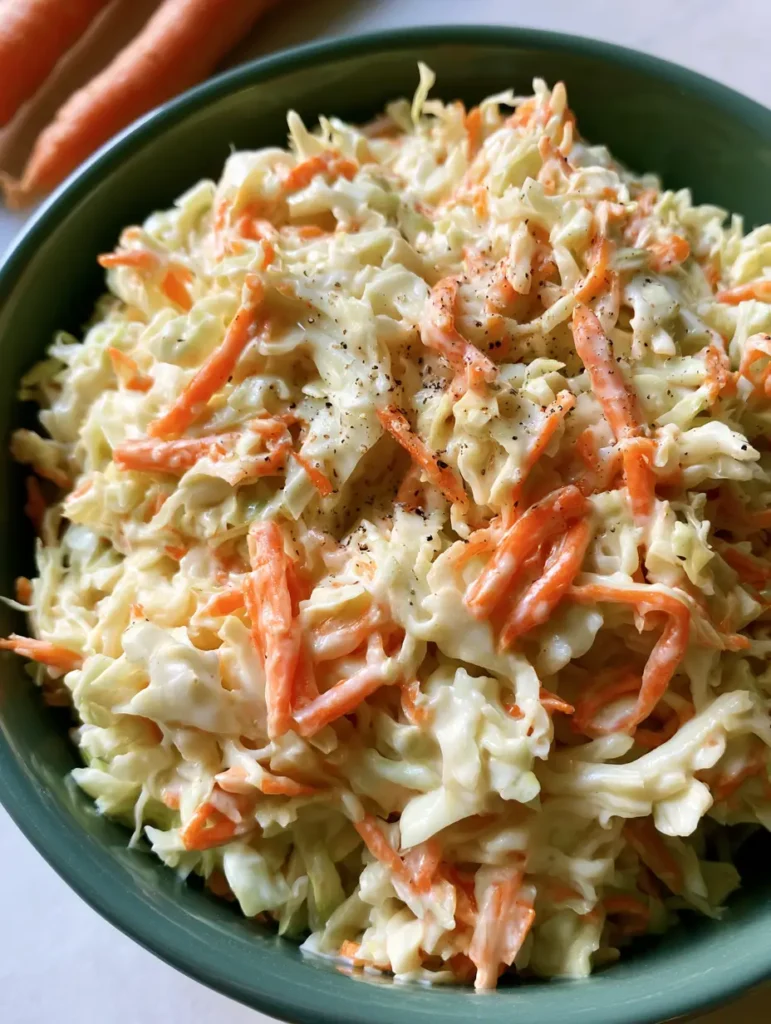
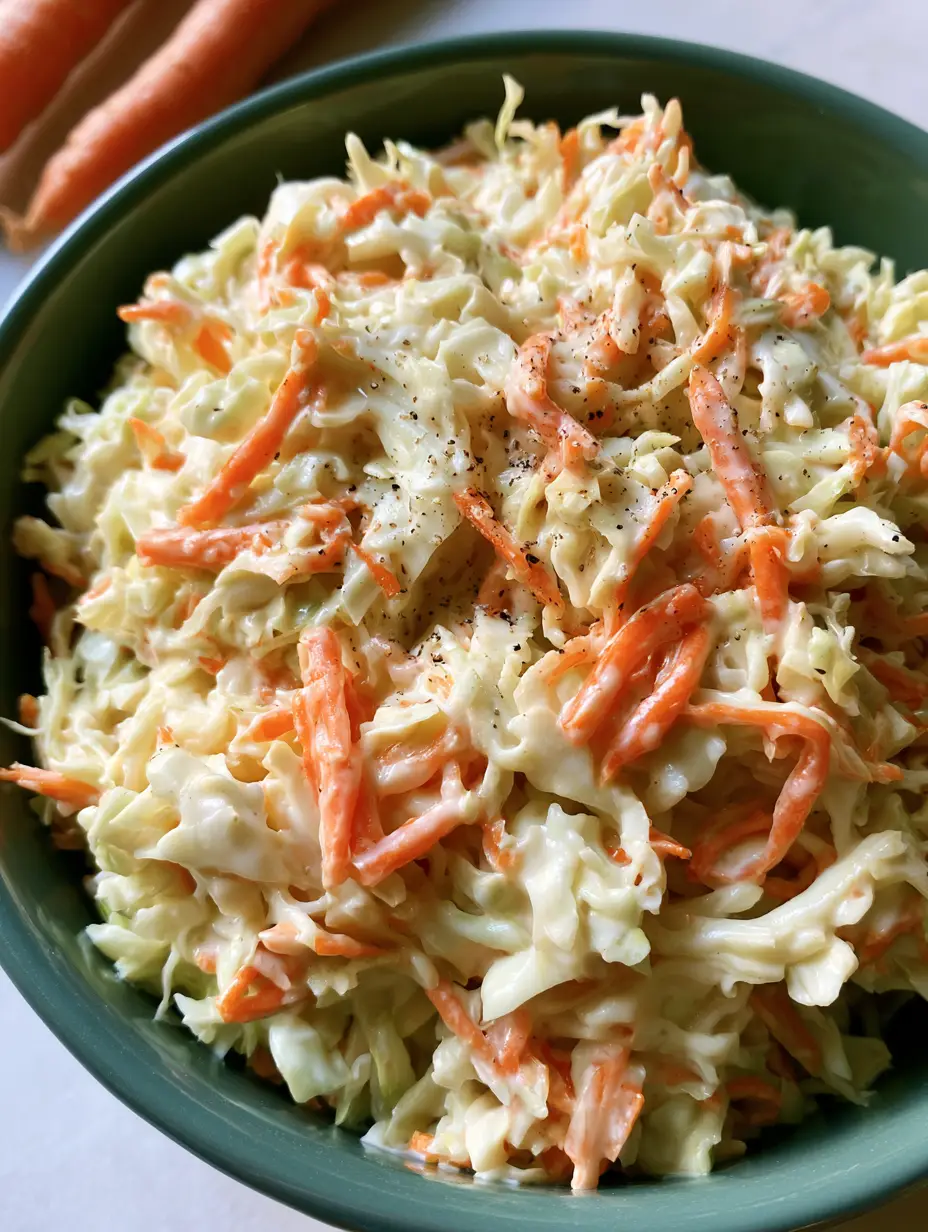
When it comes to the quintessential summer side dish, nothing competes with a perfectly executed Homemade Coleslaw Recipe. This isn’t just a side dish; it is a masterclass in texture and balance, featuring a vibrant mound of thinly shredded pale green cabbage and crisp, julienned orange carrots.
The hallmark of a truly elite Homemade Coleslaw Recipe lies in its dressing—a thick, glossy, ivory-colored coating that clings to every strand without pooling at the bottom of the bowl. Finished with coarse specks of freshly cracked black pepper, this dish provides the cooling crunch needed for any heavy main course.
Whether you are hosting a backyard barbecue or looking for the perfect topping for smash burger tacos, this recipe delivers a professional result every time. The soft daylight reflecting off the deep green ceramic bowl showcases the fresh, handheld-photo quality of a dish made with care and precision.
Why This Homemade Coleslaw Recipe Redefines Deli Standards
- Visual Sophistication: The contrast between the dense, pale green cabbage and the vibrant orange julienned carrots creates a professional, high-end aesthetic.
- Superior Dressing Texture: We achieve a thick, ivory-colored gloss that provides a velvety mouthfeel rather than a watery, thin liquid.
- Structural Integrity: Using professional salting techniques ensures your cabbage remains crunchy for hours, even after being dressed.
- Balanced Flavor Profile: A precise ratio of acidity to sweetness cuts through the richness of the creamy base, highlighted by the bite of cracked black pepper.
The Core Components of a Flawless Cabbage Base
Green Cabbage (approx. 2 lbs / 900g): This is the foundation of your Homemade Coleslaw Recipe. We look for a tight, heavy head of cabbage that, when shredded, yields those signature pale green ribbons seen in our deep green ceramic bowl.
Raw Carrots (2 large / 225g): Rather than grating them into a mush, we julienne these into matchsticks. This technique preserves their vibrant orange color and adds a distinct “snap” to every bite.
Fine Sea Salt (1 tsp / 6g): While invisible in the final photo, salt is the “culinary forensic” secret. It draws out excess moisture from the cabbage before dressing, preventing the slaw from becoming soggy.
Crafting the Signature Glossy Ivory Dressing
High-Fat Mayonnaise (1 cup / 240ml): This provides the “ivory” base color and the thick, glossy texture required for the dressing to coat the vegetables properly.
Apple Cider Vinegar (2 tbsp / 30ml): The acidity acts as a brightener, cutting through the heavy creaminess of the mayo and reacting with the sugars to create a complex tang.
Granulated Sugar (2 tbsp / 25g): Essential for balancing the vinegar, sugar ensures the Homemade Coleslaw Recipe has that classic, approachable flavor profile found in top-tier delis.
Freshly Cracked Black Pepper (1/2 tsp / 1g): These fine dark specks are scattered across the surface, providing a sharp visual contrast and a subtle floral heat.
Essential Tools for Professional Vegetable Prep
To achieve the “handheld smartphone photo” perfection seen in our visual blueprint, you need a very sharp chef’s knife or a mandoline slicer. A sharp blade ensures the cabbage is shredded into fine ribbons rather than crushed, which preserves the cellular structure and crunch.
You will also need a large mixing bowl for the initial “wilt” and a separate whisk to emulsify the dressing until it reaches that thick, ivory consistency. Finally, a deep green ceramic bowl is recommended for serving to make the pale greens and vibrant oranges pop visually.
How to Make the Perfect Homemade Coleslaw Recipe
Phase 1: Precision Shredding and the Salt Cure
Begin by removing any bruised outer leaves from your green cabbage. Halve and core the cabbage, then use your chef’s knife to shred it into very thin ribbons, approximately 1/8 inch (3mm) wide.
Place the shredded cabbage in a colander and toss with the fine sea salt. Let it sit for 20 minutes; this “forensic” step ensures your Homemade Coleslaw Recipe stays crunchy and the dressing remains thick rather than diluted by cabbage juice.
Phase 2: Julienning the Carrots
Peel your carrots and cut them into 2-inch (5cm) planks. Slice these planks into thin matchsticks (julienne). This method ensures the carrots stand out as vibrant orange streaks against the pale green cabbage, just like the whole carrots seen in the background of our prep area.
Phase 3: Emulsifying the Glossy Ivory Dressing
In a small bowl, combine the mayonnaise, apple cider vinegar, and sugar. Whisk vigorously until the sugar has dissolved and the dressing is completely smooth, glossy, and ivory-toned.
Taste the dressing at this stage. It should be tangy, slightly sweet, and thick enough to coat the back of a spoon without running off immediately.
Phase 4: The Final Toss and Seasoning
Rinse the salted cabbage under cold water to remove excess salt and pat it thoroughly dry with paper towels. Combine the dried cabbage and julienned carrots in a large bowl.
Pour the dressing over the vegetables and toss gently until every strand is coated. Transfer the mixture to a deep green ceramic bowl and finish with a generous scattering of freshly cracked black pepper across the top surface.
Expert Tips for a Picture-Perfect Result
- The Drying Step: Never skip drying the cabbage after rinsing. Even a small amount of water will break the emulsion of the dressing, losing that “glossy ivory” look.
- Chill Time: While delicious immediately, letting the slaw rest in the fridge for 30 minutes allows the flavors to meld while the cabbage retains its structural integrity.
- Pepper Texture: Use a coarse grind for your black pepper. The larger specks are more visually striking against the creamy dressing than fine, powdered pepper.
- Cabbage Temperature: Keep your cabbage ice-cold until the moment you shred it. Cold cabbage is more brittle and shreds into cleaner, sharper ribbons.
Storage and Make-Ahead Advice
This Homemade Coleslaw Recipe is best enjoyed within 24 hours of preparation. While it will stay safe to eat in an airtight container for up to 3 days, the cabbage will slowly lose its crunch as it marinating in the acidic dressing.
We do not recommend freezing coleslaw. The freezing and thawing process destroys the cell walls of the cabbage and causes the mayonnaise-based dressing to break, resulting in a separated, unappealing texture.
What to Serve With This Creamy Coleslaw
This slaw is the ultimate companion for rich, savory meats. It provides a necessary acidic lift when served alongside French onion pork chops or as a refreshing side to creamy chicken alfredo.
For a classic deli-style lunch, pair this Homemade Coleslaw Recipe with an Amish pasta salad and some grilled protein. The creaminess of the slaw also acts as a perfect foil for the bold, spiced flavors found in chicken tortas (coming soon).
Frequently Asked Questions
While a food processor is fast, it often chops the cabbage too finely, leading to a mushy texture. For the best visual and culinary results, use a sharp chef’s knife or a mandoline to create long, thin ribbons.
The key is using a high-quality, full-fat mayonnaise and properly emulsifying it with the vinegar and sugar. Ensure the vegetables are bone-dry before mixing, as any residual water will thin the dressing and ruin the glossy appearance.
It is best served within 24 hours for maximum crunch. You can store it in the refrigerator for up to 3 days, but be aware that the cabbage will soften and the dressing may slightly thin over time.
Apple cider vinegar is the gold standard for its fruity tang and mild acidity. However, white wine vinegar or champagne vinegar can be used for a cleaner, sharper finish that maintains the ivory color of the dressing.
Coleslaw becomes watery when the cabbage releases its natural juices after being mixed with sugar and salt. To prevent this, toss your shredded cabbage with salt and let it drain in a colander for 20 minutes before rinsing, drying, and dressing.
The Complete Homemade Coleslaw Recipe
Homemade Coleslaw Recipe: The Ultimate Creamy and Crunchy Classic
Ingredients
Equipment
Method
- Thinly shred the green cabbage into 1/8-inch ribbons. Toss with salt in a colander and let sit for 20 minutes to draw out moisture.
- Rinse the cabbage under cold water and pat extremely dry with paper towels to ensure a thick dressing later.
- Cut the carrots into thin matchsticks (julienne) to match the texture of the cabbage.
- In a separate bowl, whisk mayonnaise, vinegar, and sugar until glossy and ivory-colored.
- Toss the dried cabbage and carrots with the dressing. Top with freshly cracked black pepper in a green ceramic bowl.
Notes
Freshly cracked pepper provides better visual contrast and flavor than pre-ground pepper.
Final Thoughts on This Classic Side
Mastering the Homemade Coleslaw Recipe is a rite of passage for any home cook. By focusing on the visual cues—the ivory sheen of the dressing, the specific julienne of the carrots, and the ceramic presentation—you elevate a simple salad into a centerpiece.
If you enjoyed this recipe, please leave a comment below and let us know how it turned out! Don’t forget to follow us on Pinterest for more culinary inspiration and visual recipe guides.