There is nothing quite like the deeply savory aroma of a simmering saucepan of Homemade Turkey Gravy wafting through the kitchen. It is the crowning jewel of any holiday feast, possessing the remarkable ability to tie every single dish together on the plate. When crafted perfectly, it isn’t just an afterthought; it becomes the undisputed star of your dining table. This specific recipe has been carefully engineered to deliver an unparalleled culinary experience, focusing entirely on texture, depth of color, and pure flavor.
If you have ever struggled with pale, lumpy, or flavorless sauces, this comprehensive guide will change your kitchen game forever. We are aiming for a breathtakingly rich, dark brown finish that looks almost velvety as it catches the light. 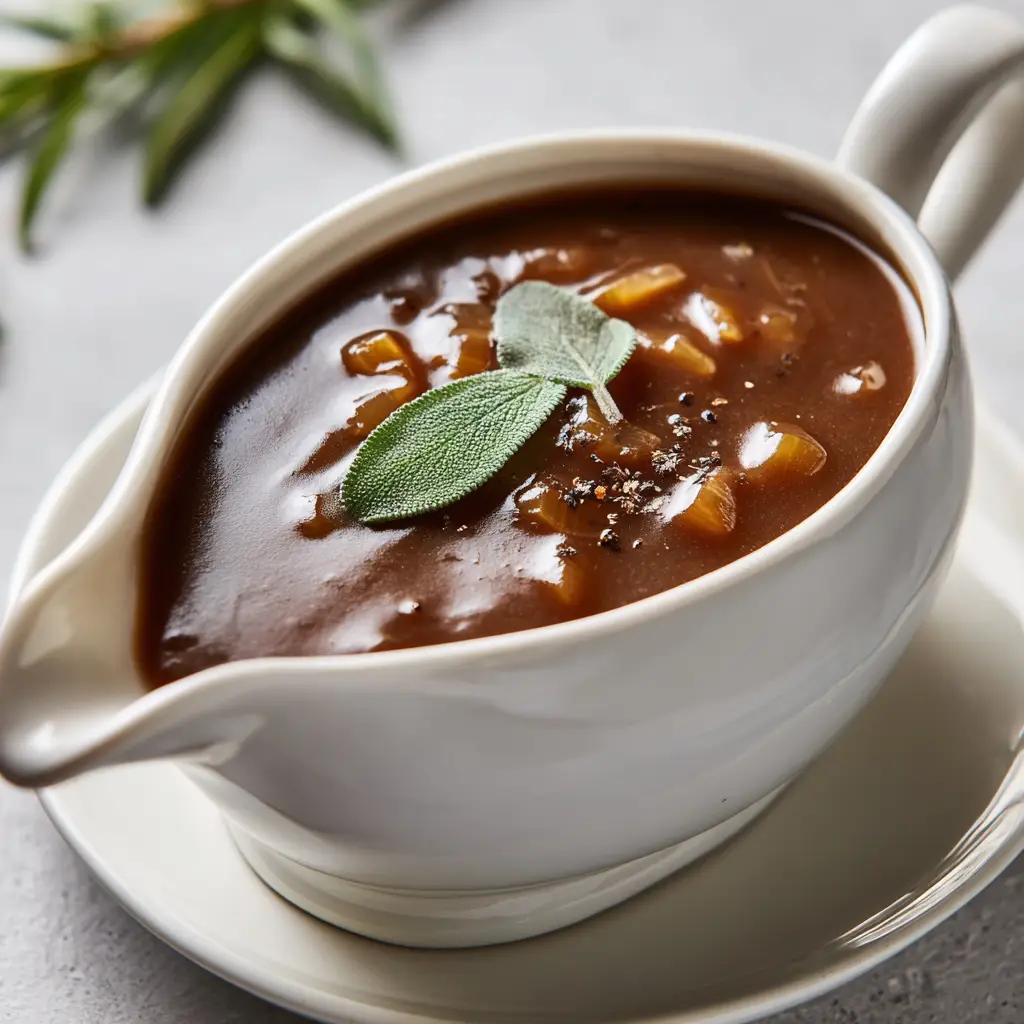
What truly sets this Homemade Turkey Gravy apart is the addition of finely diced, slow-cooked translucent onions that remain perfectly suspended throughout the savory liquid. These tiny, sweet aromatics melt in your mouth, providing a burst of deep, caramelized flavor with every single bite. Garnished simply with a single fresh green sage leaf and a tiny sprinkle of coarse cracked black pepper, this sauce is a true culinary masterpiece. Let’s dive into the science, the technique, and the secrets behind this flawless roast companion.
Why This Rich, Dark Homemade Turkey Gravy Is a Culinary Showstopper
Every great recipe relies on a harmonious balance of texture and flavor. Here is exactly why this particular method for Homemade Turkey Gravy yields such breathtaking results:
- Unmatched Glossy Texture: By carefully managing the temperature of your roux and whisking continuously, you achieve a thick, velvety consistency that effortlessly coats the back of a spoon.
- Aesthetic Perfection: The deep, dark brown color provides a striking visual contrast when served in a simple white ceramic gravy boat.
- Sweet, Aromatic Depth: The slow-cooked translucent onions provide tiny pockets of natural sweetness that beautifully balance the savory umami notes of the roasted turkey drippings.
- Sensory Garnishes: A single fresh green sage leaf and a deliberate sprinkle of coarse cracked black pepper resting on the surface offer an immediate, mouthwatering visual appeal.
- Structural Integrity: This gravy holds its thick, luxurious texture even as it cools slightly on the plate, never breaking or separating.
The Fundamental Building Blocks for a Deep, Velvety Sauce
To achieve the precise flavor profile and visual aesthetic of this Homemade Turkey Gravy, you need high-quality foundational ingredients. Each element serves a specific, irreplaceable culinary purpose in the sauce’s development.
Turkey Pan Drippings and Fat
You will need 1/4 cup (60ml) of rendered turkey fat from your roasting pan. This provides the authentic, roasted baseline flavor that store-bought stocks simply cannot replicate.
Unsalted Butter (If Needed)
If you do not have enough turkey fat, supplement with high-quality unsalted butter to reach the required 1/4 cup (56g) of total fat. Butter aids in the critical Maillard reaction when building your dark roux.
Finely Diced Yellow Onion
Use 1/2 cup (75g) of extremely finely diced yellow onion. These must be cut uniformly so they can slow-cook into translucent, tender bites that stay beautifully suspended in the finished sauce.
All-Purpose Flour
You will need 1/4 cup (30g) of standard all-purpose flour. This acts as our thickening agent, binding with the fat to create the structural backbone of our glossy sauce.
Rich Turkey Stock
Have exactly 3 cups (710ml) of warm, high-quality turkey stock ready. Warming the stock prevents the fat in the roux from seizing up, ensuring a perfectly smooth, lump-free integration.
Worcestershire Sauce
Add 1 tbsp (15ml) of Worcestershire sauce to the simmering liquid. This is the secret ingredient that guarantees that rich, dark brown visual aesthetic while enhancing the savory umami notes.
Coarse Cracked Black Pepper
Measure out 1/2 tsp (1.5g) of coarse cracked black pepper. Most of this will be whisked into the gravy, but a tiny pinch will be reserved for that beautiful, rustic surface garnish.
Fresh Green Sage
You will need just 1 whole, fresh green sage leaf. This serves as the iconic, vibrant green garnish that rests gently on the glossy surface right before serving.
Professional Kitchen Tools for Silky Smooth Results
The right equipment makes crafting this Homemade Turkey Gravy an effortless endeavor. Proper heat distribution and aeration are key to avoiding lumps.
- Heavy-Bottomed Stainless Steel Saucepan: A heavy bottom prevents the dark roux from scorching during the browning phase.
- Flexible Wire Whisk: Essential for vigorously incorporating the stock into the roux to break up any potential starch clumps.
- Fine Mesh Sieve (Optional): While we want to keep our translucent onions suspended, a sieve is handy if you need to strain out unwanted roasting pan debris from your drippings.
- White Ceramic Gravy Boat and Saucer: To perfectly match our visual blueprint and create a stunning presentation on your holiday table.
Mastering the Technique Behind the Ultimate Homemade Turkey Gravy
Building a pan sauce is all about patience, temperature control, and sensory awareness. Follow these exact steps to achieve that rich, velvety perfection.
Step 1: Slowly Sweating the Aromatics
Place your heavy-bottomed saucepan over medium-low heat. Add your 1/4 cup (60ml) of turkey fat (or butter supplement).
Once the fat is shimmering and gently bubbling, add the 1/2 cup (75g) of finely diced yellow onion. Stir constantly with a wooden spoon.
Cook them slowly for about 8 to 10 minutes. You are looking for a visual cue: the onions must become completely soft, glistening, and totally translucent without taking on any crispy browned edges.
Step 2: Crafting the Deep, Dark Roux
Once the onions are translucent and suspended in the fragrant fat, sprinkle the 1/4 cup (30g) of all-purpose flour evenly over the mixture.
Switch to your wire whisk. Whisk constantly as the flour absorbs the fat, turning into a thick paste. Continue cooking this mixture over medium heat for about 4 to 5 minutes.
Watch carefully as the color shifts from pale blonde to the color of wet sand, and finally to a deep, rich mahogany brown. It should smell intensely nutty and deeply roasted.
Step 3: Gradually Whisking in the Warm Liquids
With your roux deeply browned, slowly pour in the first 1/2 cup (120ml) of warm turkey stock while whisking frantically. The mixture will immediately sputter and thicken into a tight, dark paste.
Do not panic; this is normal. Continue pouring in the remaining 2 1/2 cups (590ml) of stock in a slow, steady stream while whisking in a figure-eight motion to reach every corner of the pan.
Stir in the 1 tbsp (15ml) of Worcestershire sauce to lock in that striking, dark brown color.
Step 4: Simmering for a Glossy, Velvety Finish
Bring the liquid to a gentle, rolling simmer over medium heat. Let it bubble softly for exactly 8 to 10 minutes.
As it reduces, the starches will swell, and the liquid will transform from a thin broth into a thick, glossy, velvety sauce. Dip a spoon into the gravy—if it coats the back thickly and you can draw a clean line through it with your finger, it is ready.
Remove the saucepan entirely from the heat to stop the cooking process.
Step 5: The Final Seasoning and Breathtaking Presentation
Whisk in half of your coarse cracked black pepper and a pinch of salt to taste (remember, your stock and drippings may already be salty).
Carefully pour the thick, dark liquid into your classic white ceramic gravy boat. Ensure the boat is resting on its matching white ceramic saucer to catch any drips.
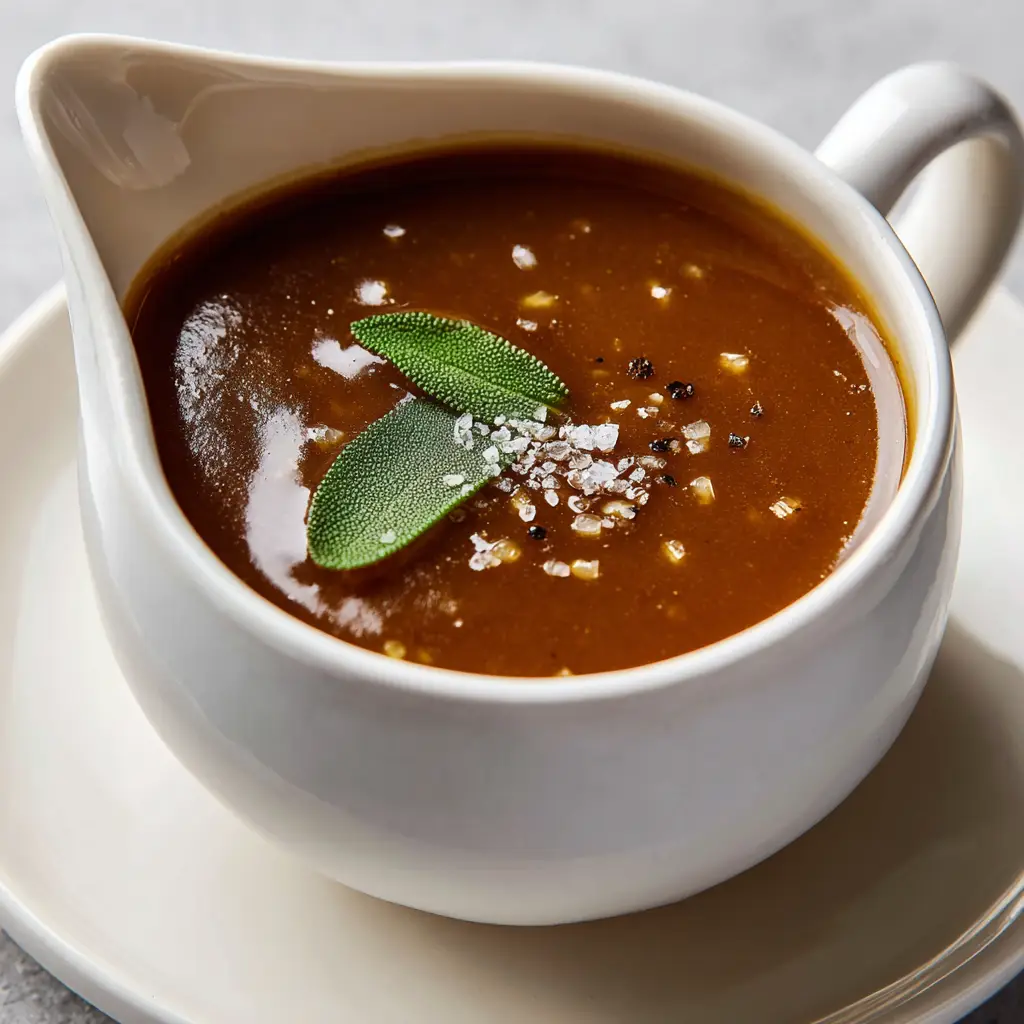
To finish, gently place a single fresh green sage leaf flat on the glossy surface of the warm sauce. Finally, add a tiny, delicate sprinkle of the remaining coarse cracked black pepper directly beside the leaf for a flawless visual presentation.
Pro Secrets for a Lumps-Free, Flawless Sauce Experience
Even seasoned home cooks can encounter hiccups when making sauces. Keep these crucial troubleshooting tips in mind for your Homemade Turkey Gravy.
- Always Warm Your Stock: Introducing ice-cold liquid to a hot fat-flour mixture causes the starches to immediately seize, creating stubborn lumps.
- Do Not Rush the Onions: Cooking the onions too fast will crisp them up. They must be cooked low and slow to achieve that sweet, translucent texture that suspends beautifully in the liquid.
- The Flour-to-Fat Ratio is Sacred: Always maintain an equal ratio (by volume) of fat to flour. If your gravy looks too greasy, your fat ratio was too high.
- Whisk the Corners: Flour loves to hide in the sharp corners of saucepans. Make sure your whisk is scraping the very edges to incorporate all the thickening power.
Preserving and Reheating Your Liquid Gold
Because this Homemade Turkey Gravy is incredibly flavorful, you will want to save every last drop. Proper storage ensures the texture remains velvety for days.
Allow the gravy to cool to room temperature before transferring it to an airtight glass container. It will keep beautifully in the refrigerator for up to 4 days.
You can also freeze this gravy for up to 3 months. Be aware that the starches may separate slightly upon thawing, resulting in a somewhat broken appearance.
To reheat properly, pour the chilled gravy into a saucepan over low heat. Whisk vigorously as it warms up; adding a tiny splash (about 1 tbsp/15ml) of water or stock will help restore that beautiful, glossy sheen perfectly.
Perfect Pairings for This Unforgettable Roast Sauce
While a gorgeous roasted bird is the traditional pairing, this incredibly versatile sauce elevates an endless array of comforting side dishes and hearty meals.
Drizzle this dark, velvety masterpiece over a heaping plate of scalloped potatoes and ham to add a deep, roasted umami flavor to the rich creaminess.
It acts as the absolute perfect dipping companion for crispy German potato pancakes, providing a savory contrast to the crunchy, fried edges.
If you are looking for an incredible holiday appetizer, serve your gravy alongside a platter of loaded mashed potato bites. The thick consistency clings beautifully to the crispy potato coating.
Leftovers have never been better when you use this rich pan sauce as the au jus for savory slow cooker French dip sandwiches. It soaks perfectly into the toasted bread.
You can even repurpose your leftover meat and this magnificent sauce by baking them into individual mini chicken pot pies for a comforting, warming weeknight dinner.
Common Questions About Creating Flawless Turkey Sauces
Yes! You can make this gravy up to 4 days in advance and store it in an airtight container in the refrigerator. Reheat gently on the stove, whisking continuously, and add a splash of warm stock to bring back its glossy sheen.
The secret is cooking extremely finely diced onions low and slow in the turkey fat for 8 to 10 minutes. This gentle sweating process releases natural sugars, turning the onions sweet and totally translucent without developing crispy, bitter edges.
Achieving a dark brown color requires cooking your butter and flour roux until it reaches a deep mahogany shade. Supplementing with a splash of Worcestershire sauce or browning liquid also guarantees a beautifully rich, glossy tone.
If your gravy is too thin, simply allow it to simmer uncovered for a few extra minutes so the liquid can reduce. As the water evaporates, the starches in the roux will swell, naturally thickening the sauce.
Lumps form when cold liquid hits a hot fat-flour mixture. Always warm your turkey stock before whisking it in. If lumps do form, quickly pour the gravy through a fine mesh sieve before serving to restore a velvety texture.
Printable Blueprint for Your New Favorite Gravy
Homemade Turkey Gravy: The Ultimate Recipe for a Rich, Glossy Finish
Ingredients
Equipment
Method
- Melt the turkey fat or butter in a saucepan over medium-low heat. Add the finely diced yellow onion and cook slowly for 8 to 10 minutes until completely translucent.
- Sprinkle the flour over the translucent onions and fat. Whisk constantly for 4 to 5 minutes until the mixture turns a deep, rich mahogany brown.
- Slowly pour in the warm turkey stock while whisking vigorously in a figure-eight motion. Stir in the Worcestershire sauce.
- Bring the mixture to a gentle simmer. Cook for 8 to 10 minutes until the liquid transforms into a thick, glossy, velvety sauce that coats the back of a spoon. Remove from heat.
- Whisk in a pinch of salt and half the black pepper. Pour into a white ceramic gravy boat. Garnish the glossy surface with a single fresh green sage leaf and a tiny sprinkle of remaining coarse cracked black pepper.
Notes
Do not rush the onions; cook them low and slow to achieve sweet, translucent perfection.
Store in an airtight container in the fridge for up to 4 days.

Final Thoughts on Elevating Your Holiday Dinner
Mastering this perfectly thick, undeniably glossy Homemade Turkey Gravy will change the way you approach holiday cooking. By taking the time to slow-cook those translucent onions and build a deeply roasted dark brown roux, you create a layer of flavor that elevates every single item on your plate.
We hope you enjoy the rich, velvety texture and the stunning visual presentation of the fresh sage leaf and coarse cracked black pepper against the brilliant white ceramic gravy boat. If you found success with this technique, please share your beautiful results with us! Pin this recipe to your favorite boards over at Pinterest and leave a comment below letting us know how it enhanced your holiday feast!