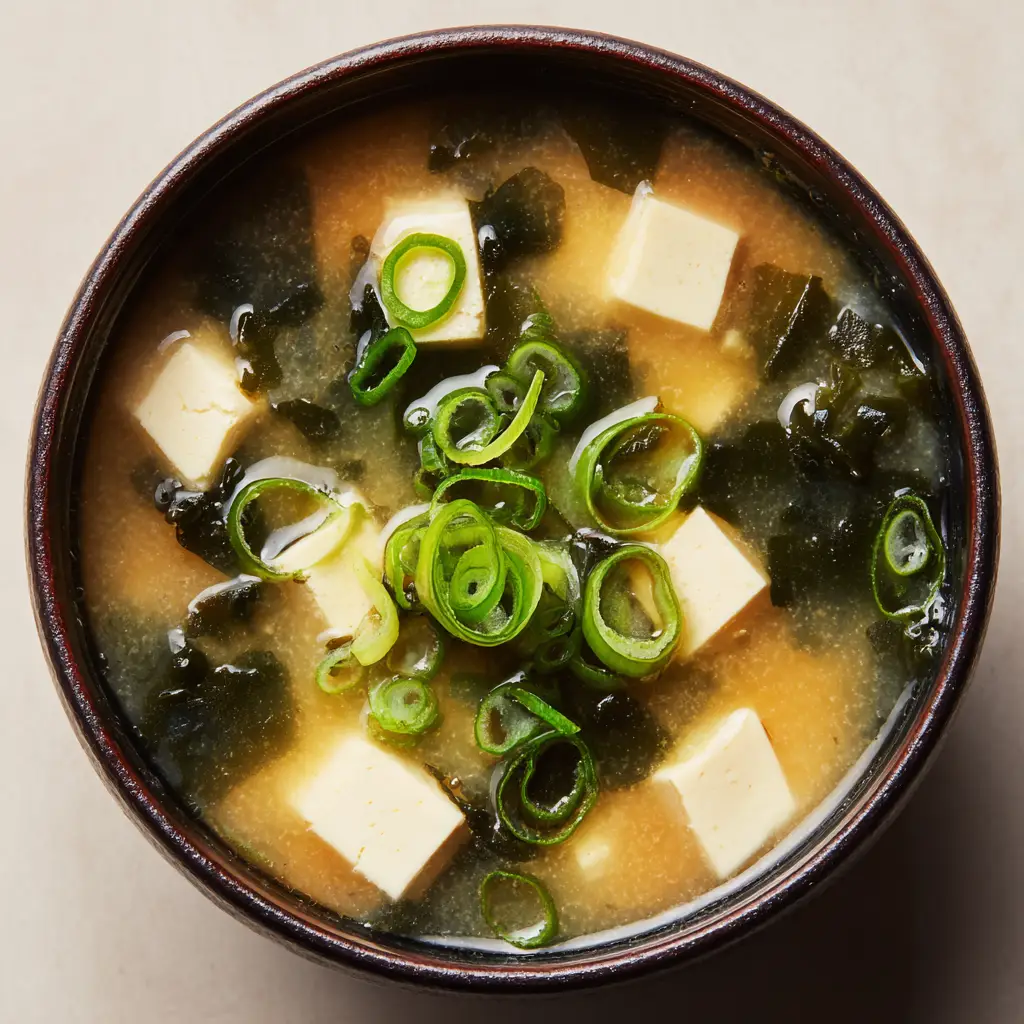
There is nothing quite as comforting as mastering a traditional Japanese Miso Soup Recipe right in your own kitchen. If you have ever longed to recreate that steaming, fragrant bowl from your favorite sushi restaurant, you are in the right place. The foundation of this dish relies on a deeply savory, cloudy golden-brown miso broth that awakens the senses.
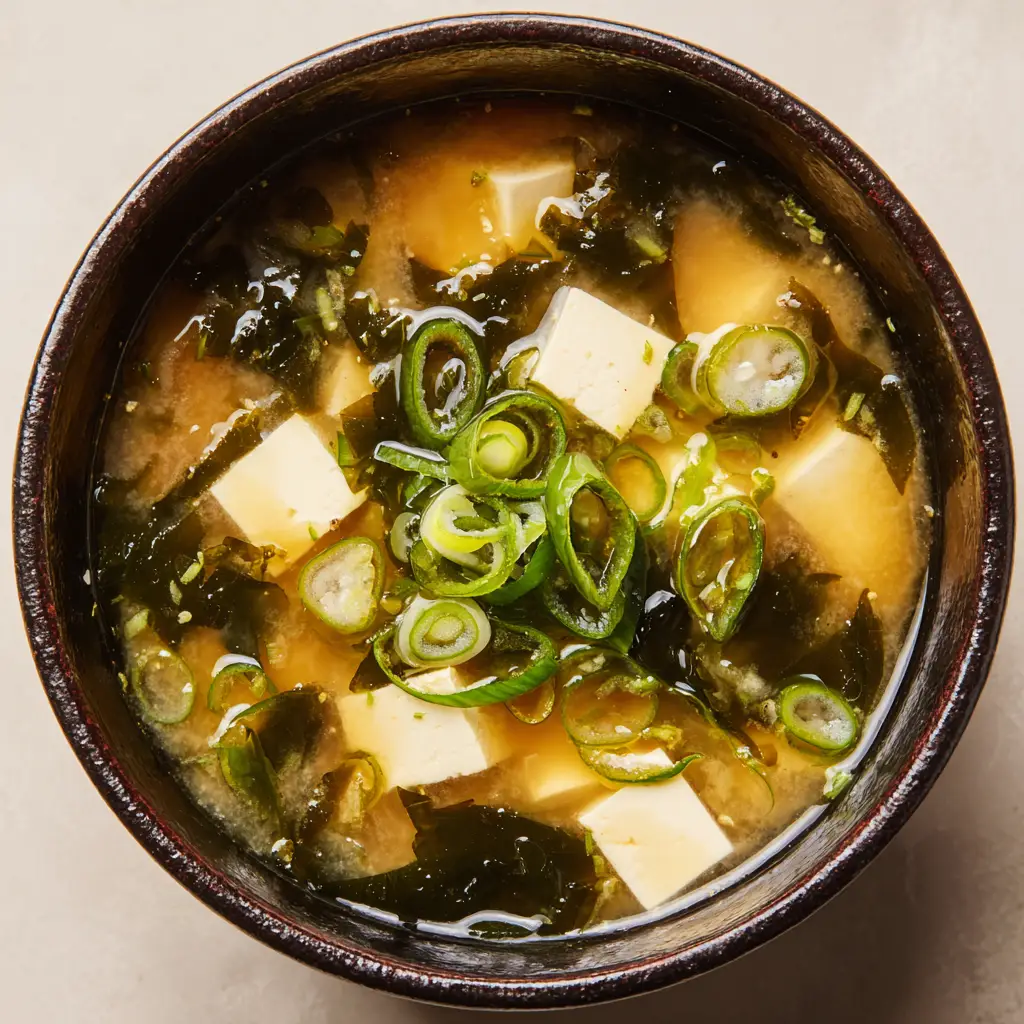
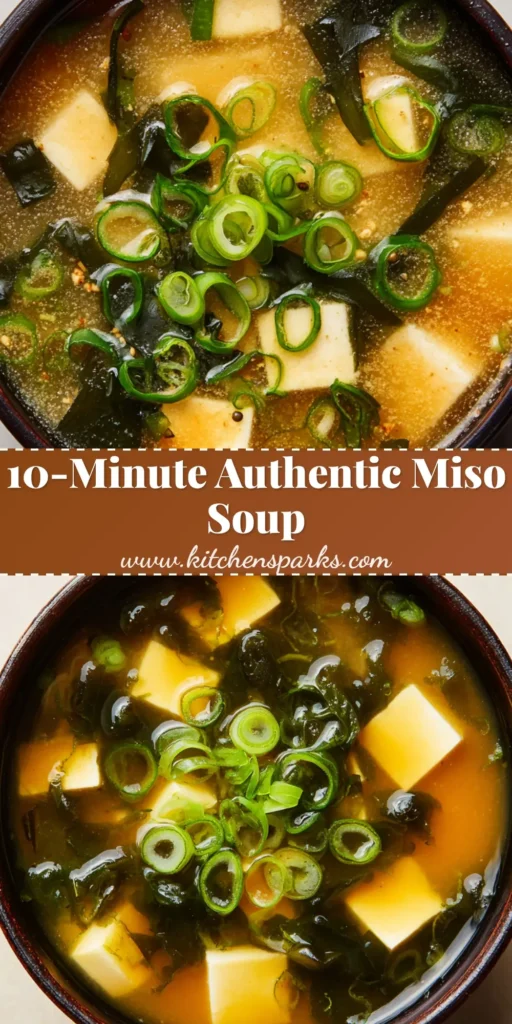
When you peer into the bowl, you are greeted by a beautiful culinary landscape. Submerged and floating in the savory broth are uniform squares of soft white silken tofu and delicate, translucent strips of dark green wakame seaweed. The surface is freshly garnished with thinly sliced bright green and white scallion rings, completing the visually stunning presentation.
Why This Traditional Japanese Broth Is Flawless
- Sensory Perfection: The cloudy, warm golden-brown miso broth delivers an immediate umami hit that smells faintly of the ocean and roasted soybeans.
- Textural Harmony: The delicate, melt-in-your-mouth soft white silken tofu perfectly contrasts with the slightly chewy, translucent strips of dark green wakame seaweed.
- Aromatic Finish: Thinly sliced bright green and white scallion rings provide a fresh, peppery bite that cuts through the rich dashi foundation.
- Incredibly Fast: This authentic Miso Soup Recipe takes less than 25 minutes from start to finish, making it a highly accessible weeknight luxury.
The Essential Components for Authentic Flavor
Dried Kombu (Kelp): This thick, dark dried kelp is the absolute bedrock of your dashi stock. You will need 1 piece (10g) to infuse the 4 cups (960ml) of water with crucial glutamic acids, providing the invisible savory backbone.
Bonito Flakes (Katsuobushi): These paper-thin shavings of smoked skipjack tuna are non-negotiable for a traditional flavor profile. Using 1 cup (15g) of loosely packed bonito flakes introduces an intoxicating smoky aroma and rich golden hue to the water.
Awase Miso Paste: To achieve that signature cloudy golden-brown color, a blend of red and white miso is vital. You will need 3 tbsp (45g) of this fermented soybean paste to provide the deep, salty, and slightly sweet suspension.
Soft Silken Tofu: You must use silken (kinugoshi) tofu, not block tofu, to achieve those uniform, delicate squares. About 1/2 cup (120g) of cubed soft white silken tofu will float beautifully in the steaming broth.
Dried Wakame Seaweed: This specific type of seaweed rehydrates into delicate, translucent strips of dark green. You only need 1 tbsp (5g) of the dried ingredient, as it expands significantly when exposed to moisture.
Fresh Scallions: Also known as green onions, these are the essential vibrant garnish. You will slice 2 stalks (30g) into thin green and white scallion rings to scatter across the surface right before serving.
Tools for Crafting the Perfect Bowl
Creating an authentic Miso Soup Recipe requires minimal but specific equipment to ensure precision. A medium-sized heavy-bottomed saucepan is necessary for regulating the water temperature during the delicate dashi steeping process.
You will also heavily rely on a fine mesh strainer to cleanly remove the spent kombu and bonito flakes from the golden broth. Finally, a small whisk or a traditional miso muddler is highly recommended to dissolve the thick paste without leaving any unwanted clumps.
Crafting the Cloudy Golden-Brown Elixir
Steeping the Kombu Base
Begin by placing 4 cups (960ml) of cold water and your 1 piece (10g) of dried kombu into your saucepan. Let the kombu soak off the heat for at least 10 minutes to slowly release its natural umami compounds into the water.
Place the saucepan over medium heat and watch it closely. Just as you see small bubbles forming at the edges and a faint oceanic steam rising, use tongs to remove the kombu before the water reaches a rolling boil.
Extracting the Bonito Flake Essence
Once the kombu is removed, allow the water to come to a gentle simmer. Instantly scatter the 1 cup (15g) of bonito flakes across the surface of the simmering water and let them steep for exactly 60 seconds.
Turn off the heat and let the flakes sink to the bottom, which takes about 3 minutes. Pour the entire mixture through your fine mesh strainer into a clean bowl, pressing lightly on the flakes to extract every drop of that clear, golden-brown dashi stock, then return the stock to the saucepan.
Rehydrating the Ocean Greens
While the dashi is steeping, place your 1 tbsp (5g) of dried wakame into a small bowl and cover it with cold water. Allow it to sit for 5 minutes until it unfurls into delicate, translucent strips of dark green seaweed.
Once fully expanded, drain the wakame thoroughly and gently squeeze out any excess water. Set these vibrant strips aside to be added to the final soup assembly.
Whisking the Miso Suspension
Bring your freshly strained dashi stock to a very gentle simmer over medium-low heat. Place 3 tbsp (45g) of awase miso paste into a small bowl or a ladle partially submerged in the broth.
Whisk a few tablespoons of the hot dashi into the miso paste until it forms a smooth, lump-free slurry. Stir this slurry back into the main pot, and watch as the clear liquid transforms into a beautiful, cloudy golden-brown miso broth.
The Final Assembly
Immediately reduce the heat to the lowest setting, as boiling the broth now will destroy the delicate miso flavors and ruin the cloudy suspension. Gently slide the 1/2 cup (120g) of cubed soft white silken tofu and the rehydrated wakame seaweed into the warm broth.
Allow the soup to sit on the heat for just 1 to 2 minutes until the tofu is warmed through. Ladle the steaming soup into dark ceramic traditional Japanese bowls and top generously with thinly sliced bright green and white scallion rings.
Professional Culinary Troubleshooting for Dashi & Miso
- Never Boil the Miso: Once the miso paste is whisked into the dashi, extreme heat will kill the beneficial probiotics and cause the soup to separate into an unappealing, grainy texture.
- Avoid Slimy Kombu: Removing the kelp right before the water boils prevents the release of bitter tannins and a sticky, mucilaginous texture that ruins the mouthfeel.
- Perfect Tofu Cubes: Slice your silken tofu in the palm of your hand using a butter knife to prevent the delicate squares from shattering on a cutting board.
- Adjusting Salinity: Miso paste varies wildly in sodium content depending on the brand. Always taste your golden-brown broth before adding the final tablespoon, adjusting the paste volume to suit your palate.
Preserving the Delicate Flavors for Later
If you have leftover soup, allow it to cool completely before transferring it to an airtight container. It will keep beautifully in the refrigerator for up to 3 days, though the vibrant colors of the scallions may fade slightly.
When you are ready to enjoy it again, reheat the soup on the stovetop over low heat, stirring gently until it is just steaming. Do not microwave the soup on high power or freeze it, as the silken tofu will take on a spongy, unpleasant texture when thawed.
What to Serve Alongside Your Steaming Bowl
This comforting umami broth is the perfect prelude to a wide variety of main courses and vibrant side dishes. For a complete feast, try pairing it with a deeply savory shrimp rice bowl loaded with fresh vegetables and sticky glaze.
If you are looking to build an authentic appetizer spread, serve this alongside a refreshing Asian edamame salad and some crispy fried enoki mushrooms. To round out the meal with intense flavor, a side of sesame-infused Korean spinach banchan provides a wonderful textural contrast to the soft tofu.
Frequently Asked Questions About Cooking Miso
Yes. To make a vegan miso soup, simply omit the bonito flakes and steep the kombu in the water for a longer period, or add dried shiitake mushrooms to the dashi base to replicate the smoky, savory umami flavor.
While you can use firm tofu if necessary, soft silken tofu is highly recommended. It provides the delicate, melt-in-your-mouth texture that perfectly complements the light, savory broth.
When stored in an airtight container in a cool, dark place, dried kombu can last for years. Bonito flakes are best used within 6 months of opening to maintain their potent, smoky aroma.
White miso (shiro) is sweeter and milder, while red miso (aka) is fermented longer for a deeper, saltier flavor. Awase miso is a blend of both, providing the perfect balanced, golden-brown profile used in traditional restaurant recipes.
Miso soup separates when it is brought to a boil after the miso paste has been added. High heat causes the proteins in the miso to coagulate, destroying the smooth, cloudy suspension. Always simmer gently on low heat.
The Ultimate Golden-Brown Miso Soup Blueprint
Authentic Miso Soup Recipe: The Secret to Golden Dashi Broth
Ingredients
Equipment
Method
- Place 4 cups (960ml) of water and 1 piece (10g) of dried kombu in a saucepan. Soak for 10 minutes, then heat over medium until just before boiling. Remove and discard the kombu.
- Bring the water to a gentle simmer. Add 1 cup (15g) of bonito flakes, simmer for 60 seconds, then remove from heat. Let sit for 3 minutes before straining the golden-brown dashi stock into a bowl.
- Soak 1 tbsp (5g) of dried wakame seaweed in cold water for 5 minutes until translucent and dark green. Drain, squeeze out excess moisture, and set aside.
- Return the strained dashi to the saucepan over medium-low heat. Place 3 tbsp (45g) of awase miso paste in a ladle, whisk with a little hot dashi until smooth, and stir it back into the pot.
- Reduce heat to low. Gently add the cubed silken tofu and rehydrated wakame to the cloudy miso broth. Warm for 1-2 minutes without boiling, then garnish with sliced scallions and serve.
Notes
If you are sensitive to sodium, start with 2 tablespoons of miso paste and taste before adding the third.
Bring the Japanese Teahouse to Your Table
Mastering this Miso Soup Recipe will forever change the way you view homemade Japanese cuisine. The mesmerizing sight of uniform squares of soft white silken tofu and delicate strips of dark green wakame seaweed floating in a cloudy golden-brown broth is a true culinary achievement.
If you successfully extracted that gorgeous golden dashi and achieved the perfect scallion garnish, we would love to hear about your experience! Please leave a rating and comment below, subscribe to our newsletter for more authentic recipes, and do not forget to share your steaming bowls on Pinterest!