Mastering Swiss Meringue Buttercream is a rite of passage for every serious home baker. Unlike its American counterpart, this frosting is a sophisticated emulsion of cooked egg whites, sugar, and high-quality butter that results in a cloud-like, stable finish.
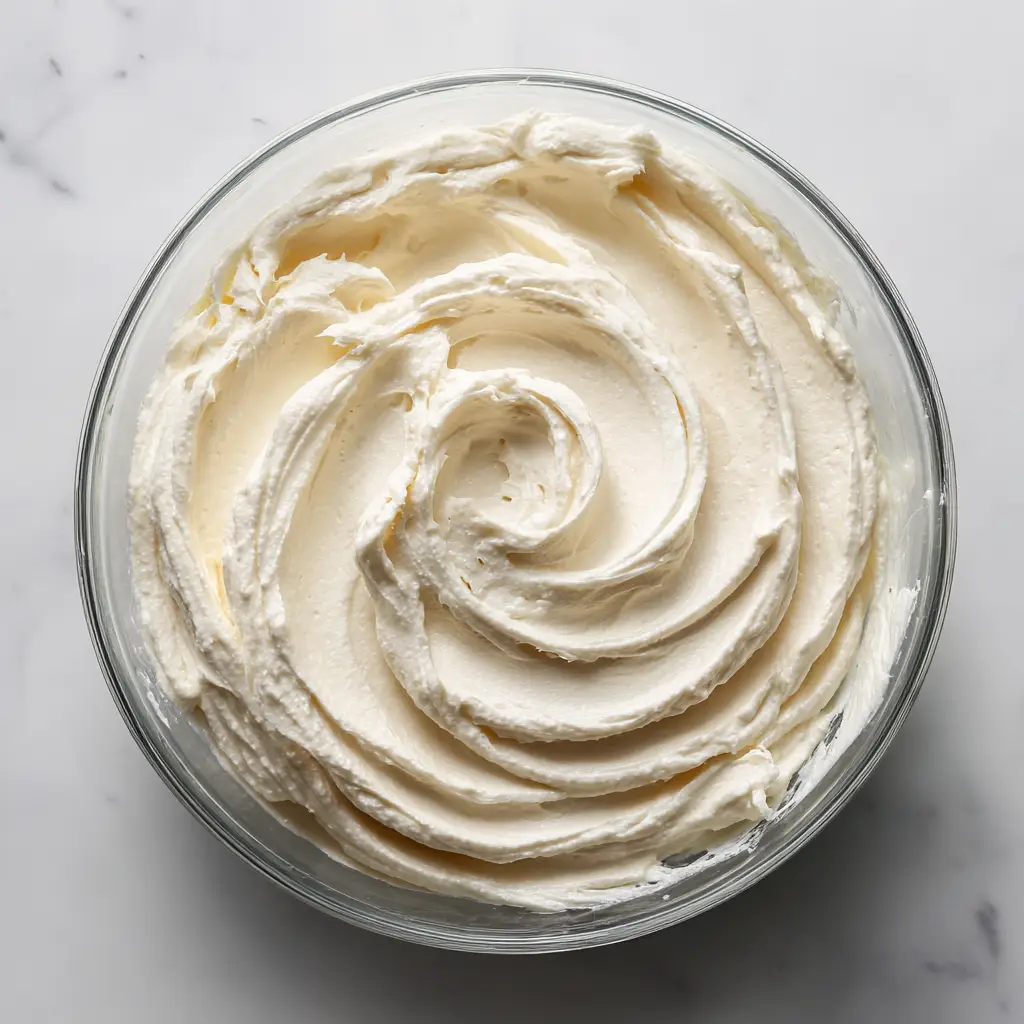
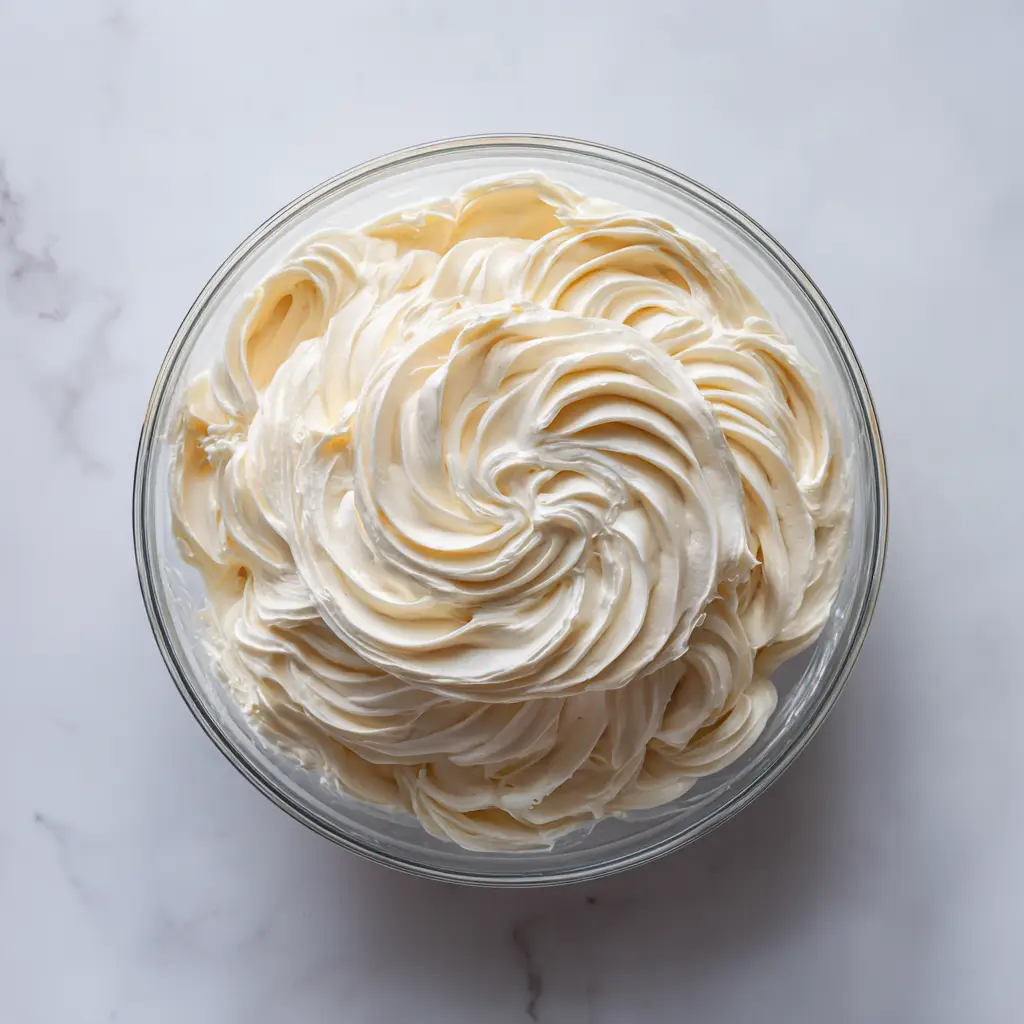
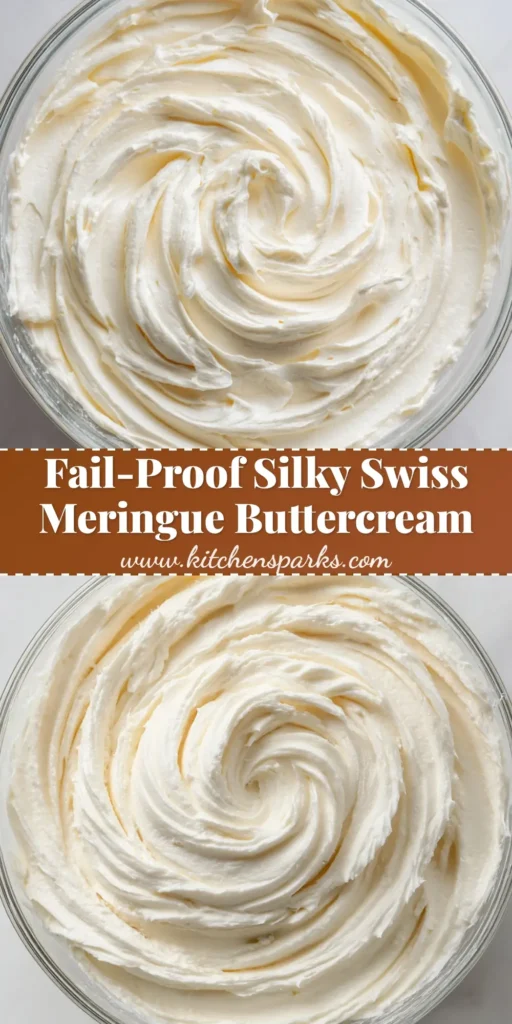
The visual hallmark of a perfect batch is its ivory-white hue and a texture so silky it reflects soft natural daylight. When you drag a spatula through the bowl, it should create deep, circular swirls with glossy, smooth ridges that hold their shape indefinitely.
In this guide, we are diving deep into the culinary science of Swiss Meringue Buttercream. We will explore how to transition from liquid egg whites to a dense, perfectly emulsified masterpiece that looks as stunning in a clear glass bowl as it does on a tiered cake.
The Unmatched Allure of Properly Emulsified Meringue Frosting
- Perfectly Balanced Sweetness: The dissolved granulated sugar provides a subtle sweetness that never overpowers the delicate flavor of the butter.
- Structural Integrity: This recipe creates a dense, thick frosting that is stable enough for complex piping while remaining incredibly smooth.
- Aesthetic Brilliance: The final result is a beautiful ivory-white, free of the yellow tint often found in lesser buttercreams, ensuring your bakes look professional.
- Silky Mouthfeel: Because the sugar is fully dissolved in the meringue stage, there is zero graininess, only a luxurious, tongue-coating silkiness.
Essential Elements for a Stable Ivory Emulsion
To achieve the visual result of a thick, glossy buttercream on a marble surface, you need specific foundational ingredients that work in harmony.
Egg Whites (150g or approx. 5 large): These provide the structural protein base. Use fresh eggs rather than boxed whites to ensure the meringue reaches its full volume and peak stability.
Granulated Sugar (1 ¼ cups / 250g): This sweetens the frosting and stabilizes the egg white proteins during the heating process. It must be completely dissolved to avoid any gritty texture in the final swirls.
Unsalted Butter (1 ½ cups / 340g): This is the soul of the Swiss Meringue Buttercream. Ensure it is at “cool room temperature” (approx. 65°F / 18°C) to allow for a perfect emulsion without melting the meringue.
Fine Sea Salt (¼ tsp / 1.5g): An invisible but critical ingredient. It cuts through the fat of the butter and heightens the overall flavor profile of the frosting.
Clear Vanilla Extract (1 tsp / 5ml): To maintain that specific ivory-white visual from our blueprint, using a clear extract prevents the frosting from taking on a beige or tan tint.
Precision Tools for Professional Results
Achieving deep, circular spatula swirls requires more than just technique; it requires the right equipment. A heat-proof glass bowl is essential for the double-boiler method, allowing you to monitor the water level and temperature accurately.
A stand mixer equipped with both a whisk attachment (for the meringue) and a paddle attachment (for the final emulsification) is highly recommended. The constant, high-speed aeration is what transforms heavy butter into a light, airy, and glossy medium.
Lastly, a digital thermometer is your best friend. Precision is the difference between a broken mess and a thick, silky frosting. You are looking for a specific temperature range to ensure the egg whites are safe to consume and the sugar is fully integrated.
The Science of Creating Perfect Glossy Ridges
Phase 1: The Thermal Dissolution
Begin by simmering two inches of water in a pot. Place your glass bowl over the top, ensuring the bottom does not touch the water. Whisk together your egg whites and granulated sugar constantly.
You are looking for the mixture to reach 160°F (71°C). At this point, the proteins are denatured and the sugar is fully dissolved. Use your fingers to rub a bit of the liquid; it should feel completely smooth, like silk.
Phase 2: Building the Meringue Foundation
Transfer the bowl to your stand mixer. Using the whisk attachment, beat the mixture on high speed. You will see the translucent liquid transform into a brilliant, opaque white.
Continue whisking until the bowl feels neutral to the touch and you have achieved stiff, glossy peaks. This is the “ivory-white” base that will eventually hold those deep spatula swirls. This process usually takes 10-15 minutes of vigorous aeration.
Phase 3: The Emulsification Journey
Switch to the paddle attachment and set the mixer to medium-low. Begin adding your butter, one tablespoon (14g) at a time. This is where the Swiss Meringue Buttercream truly forms.
Don’t panic if the mixture looks curdled or soupy midway through. Continue beating; the fat from the butter will eventually bond with the water in the egg whites. Watch for the moment the sound of the mixer changes to a “slapping” noise—this indicates the frosting is becoming dense and emulsified.
Expert Troubleshooting for a Flawless Finish
- If the mixture is soupy: Your meringue was likely too warm when you added the butter. Place the bowl in the fridge for 15 minutes, then beat again.
- If the mixture looks curdled: This usually means the butter was too cold. Simply keep beating, or use a hair dryer to gently warm the side of the bowl until the emulsion smooths out.
- To remove air bubbles: Once the Swiss Meringue Buttercream is made, run the paddle attachment on the lowest speed for 5-10 minutes. This creates that “glossy smooth ridge” look by knocking out excess air.
- Achieving the Ivory Hue: If your butter is very yellow, add a microscopic dot of purple gel food coloring. The purple neutralizes the yellow, leaving you with a clean, ivory-white finish.
Preserving Your Masterpiece: Storage and Re-whipping
Swiss Meringue Buttercream is remarkably resilient. It can sit at room temperature for up to two days, making it perfect for events. For longer storage, keep it in an airtight container in the refrigerator for up to two weeks.
When you are ready to use refrigerated buttercream, let it come to complete room temperature. This is vital. If you try to whip it while cold, it will break. Once softened, beat it with the paddle attachment until it regains its silky, thick consistency.
You can also freeze this frosting for up to three months. Thaw it overnight in the fridge and follow the same room-temperature re-whipping process to restore those glossy, deep swirls.
The Perfect Pairings for Silky Buttercream
This frosting is the ideal companion for sophisticated desserts. Try it swirled atop a strawberry banana pudding cake for a delightful contrast in textures. The stability of the Swiss Meringue Buttercream also makes it a great “glue” for whimsical treats like unicorn yogurt bark decorations.
While this is a sweet application, every great baker knows that a balanced palate is key. If you’re hosting a brunch, serve your sweet cakes alongside a savory Italian grinder tortellini salad or perhaps some three-cheese tomato bruschetta dip to satisfy every craving.
Frequently Asked Questions
Fresh egg whites are highly recommended because they provide better structural stability and volume. Some pasteurized carton whites may not whip into a stiff meringue.
Yes, for long-term storage it should be refrigerated. However, it is stable at room temperature for up to two days due to the high sugar and fat content.
If the frosting is soupy, your meringue was likely too warm. Chill the bowl in the refrigerator for 15-20 minutes, then whip it again until it thickens.
To achieve a true ivory-white look, use clear vanilla extract and a tiny drop of purple food coloring to neutralize the yellow pigments in the butter.
Curdling occurs when the butter is too cold compared to the meringue. Keep beating the mixture; the friction will eventually warm the butter and create a smooth emulsion.
The Definitive Swiss Meringue Buttercream Recipe
Swiss Meringue Buttercream: The Ultimate Guide to Achieving Silky, Glossy Ivory Frosting
Ingredients
Equipment
Method
- Whisk egg whites and sugar in a glass bowl over simmering water until the temperature hits 160°F (71°C) and sugar is dissolved.
- Transfer to stand mixer and whisk on high until the bowl is cool and stiff, glossy ivory-white peaks form.
- Switch to paddle attachment. Add butter one tablespoon at a time on medium-low speed until thick, silky, and fully emulsified.
- Add vanilla and salt. Run on low speed for 5 minutes to remove air bubbles and create smooth, glossy ridges.
Notes
If the frosting separates, keep beating; it will eventually come back together.
Master Your Baking Craft
Creating a bowl of Swiss Meringue Buttercream with deep, circular swirls and glossy ridges is a sign of a truly skilled baker. This frosting isn’t just a topping; it’s a structural element that elevates your desserts to a professional level of beauty and taste.
We would love to see your glossy frosting creations! Share your results in the comments below or tag us on social media. Don’t forget to follow kitchen_spark on Pinterest for more visual recipe blueprints and culinary inspiration.
Ready to level up? Sign up for our newsletter to receive weekly deep-dives into the science of baking and exclusive access to our latest recipe developments.
—