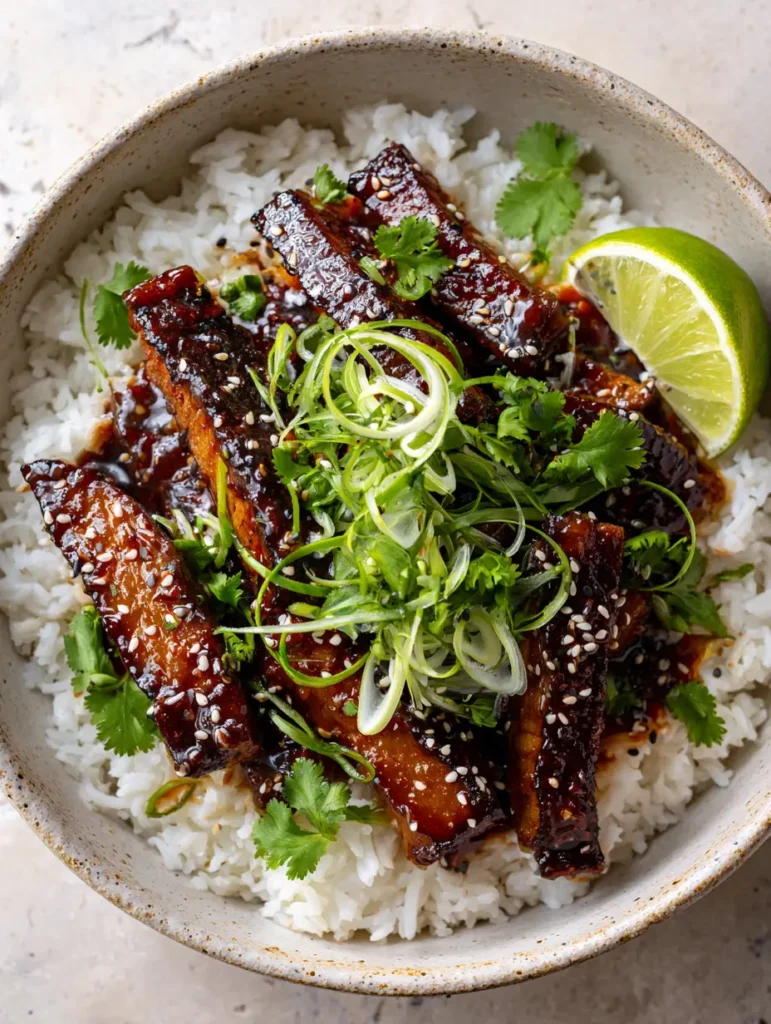
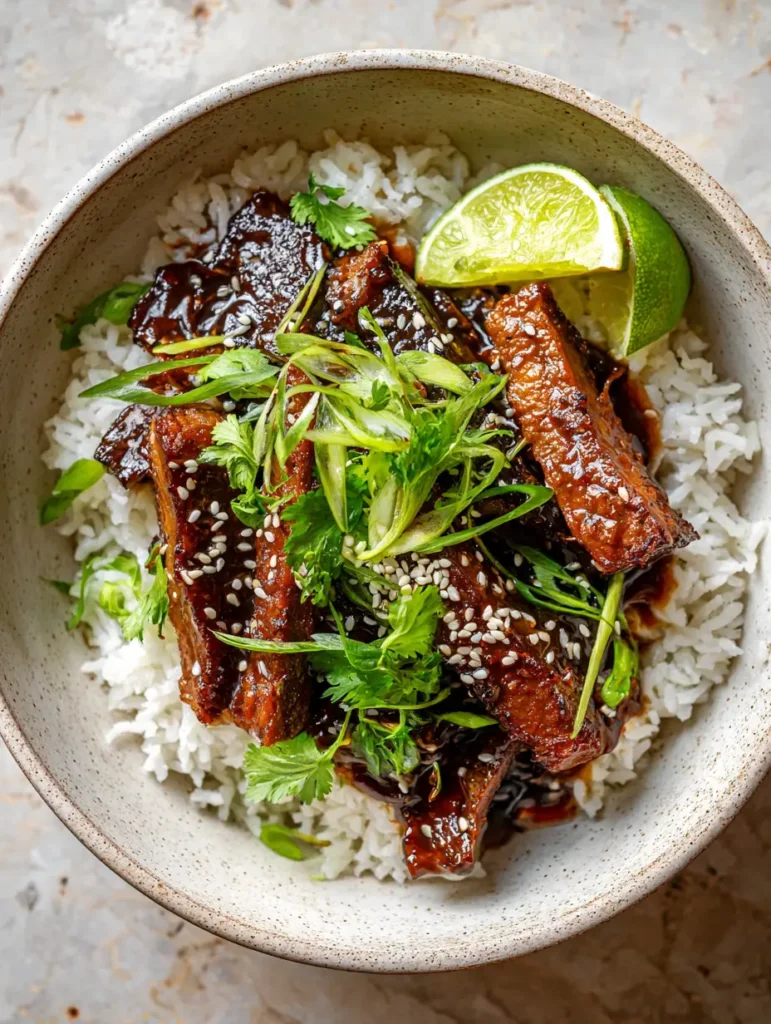
There is a specific culinary magic that happens when high-heat searing meets a zesty, citrus-infused reduction. This Ginger Lime Pork isn’t just a meal; it is a masterclass in texture and flavor contrast. Imagine tender strips of pork, deeply browned with caramelized edges, nestled atop a pillowy bed of steamed white coconut rice. The entire dish is brought to life by a thick, glossy, translucent glaze that carries the sharp bite of fresh ginger and the bright, acidic punch of lime.
When you look at this dish, the visual cues tell the story of its preparation. You see the vibrant green of thinly sliced scallions and fresh cilantro against the white sesame seeds, providing a crunch that cuts through the richness of the meat. Every element, from the charred pork tips to the glistening sauce, has been designed to satisfy both the eyes and the palate. Whether you are a seasoned home cook or a weeknight warrior, this recipe delivers restaurant-quality results in your own kitchen.
Why This Ginger Lime Pork Will Become Your New Weeknight Obsession
- The Perfect Texture Balance: We achieve deeply caramelized pork edges that provide a smoky contrast to the tender, juicy interior of the meat strips.
- Aromatics That Pop: By using both fresh grated ginger and lime zest, the aromatic profile is heightened, ensuring every bite is fragrant and bold.
- The Gloss Factor: Our specific reduction technique creates a translucent glaze that coats the pork perfectly without becoming gummy or overly sweet.
- Tropical Foundation: Instead of plain grains, we use coconut-infused rice to add a subtle creaminess that complements the acidity of the lime.
The Anatomy of Flavor: Essential Ingredients for Success
Pork Tenderloin or Loin: 1.5 lbs (680g). We recommend pork tenderloin for the most tender “melt-in-your-mouth” experience, sliced into thin, uniform strips to ensure even searing and maximum surface area for the glaze.
Jasmine Rice: 1.5 cups (285g). Long-grain jasmine rice provides the necessary floral aroma and fluffy structure required to support the heavy ginger lime glaze.
Full-Fat Coconut Milk: 1 can (400ml). This is the secret to the “visual fluffiness” described in our blueprint; the fats in the coconut milk coat each grain of rice, preventing clumping while adding a rich mouthfeel.
Fresh Ginger Root: 2 tbsp (30g), finely grated. Fresh ginger provides a heat and pungency that ground ginger simply cannot replicate, essential for that “glossy ginger” finish.
Fresh Lime Juice and Zest: 3 large limes. We use the zest for aromatic intensity and the juice to deglaze the pan, picking up all the browned bits (fond) from the pork strips.
Honey or Light Brown Sugar: 1/4 cup (85g). This provides the sugars necessary for the “caramelized pork edges” and gives the sauce its signature translucent sheen.
Neutral High-Smoke Point Oil: 2 tbsp (30ml) of avocado or grapeseed oil. Since we are searing the pork at high heat to achieve those browned edges, a low-smoke point oil like butter or extra virgin olive oil would burn and become bitter.
Foundational Seasonings: 1 tsp (6g) kosher salt and 1/2 tsp (3g) white pepper. These “invisible ingredients” enhance the natural savory notes of the pork without distracting from the citrus profile.
The Gear You Need for Professional Results
To achieve the “deeply browned” look of the pork seen in our visual guide, you need a heavy-bottomed skillet—ideally cast iron or stainless steel. These materials retain heat better than non-stick pans, which is crucial for caramelization. You will also need a fine-mesh zester for the ginger and lime to ensure the aromatics are small enough to melt into the sauce.
For the rice, a heavy-lidded saucepan or a dedicated rice cooker will ensure the coconut milk absorbs evenly without scorching the bottom of the grains. Finally, a sharp chef’s knife is non-negotiable for achieving those “thinly sliced green scallions” that serve as our vibrant garnish.
Mastering the Fluffy Coconut Rice Foundation
Prepping and Rinsing the Grains
Start by rinsing your jasmine rice under cold water until the water runs clear. This removes excess surface starch, which is the primary culprit of gummy or sticky rice. Proper rinsing ensures that each grain remains distinct and “fluffy” in the bowl.
The Coconut Absorption Method
In your saucepan, combine the rinsed rice, the can of coconut milk, 1/2 cup (120ml) of water, and a pinch of salt. Bring the mixture to a gentle simmer—not a rolling boil—then reduce the heat to the lowest setting and cover tightly. Let it steam for 15-18 minutes; the smell of tropical coconut will begin to fill your kitchen as the liquid disappears into the grains.
The Rest and Fluff Technique
Crucially, once the timer goes off, remove the pan from the heat but do not open the lid. Let it sit for 10 minutes. This allows the moisture to redistribute. Use a fork to gently fluff the grains, revealing the pearlescent white base for your Ginger Lime Pork.
Searing the Pork for Maximum Caramelization
Achieving the Perfect Sear
Pat the pork strips dry with paper towels. Any moisture on the surface of the meat will create steam, preventing that “deeply browned” crust we are looking for. Season the strips generously with salt and pepper right before they hit the pan.
High-Heat Execution
Heat your oil in the skillet until it shimmers and just begins to smoke. Add the pork strips in a single layer. Do not crowd the pan; if necessary, work in batches. Let the pork sit undisturbed for 2-3 minutes. You are looking for those “caramelized pork edges” to form—a deep, golden-brown color that signifies the Maillard reaction is complete.
Infusing the Aromatics
Once the pork is seared, toss in the grated ginger and lime zest. Stir constantly for 60 seconds. The heat will release the essential oils in the ginger and lime, creating an incredible aromatic base for the final glaze. If you enjoy this flavor profile, you might also love our creamy coconut garlic shrimp for another tropical-inspired dinner.
Crafting the Glossy Ginger Lime Glaze
The Deglazing Process
Pour in the lime juice and soy sauce. Use a wooden spoon to scrape the bottom of the pan, loosening the browned bits. This “fond” is concentrated flavor that will give your Ginger Lime Pork its professional depth.
Building the Translucent Sheen
Add the honey or brown sugar. Stir as the mixture bubbles. The glaze will begin to reduce and thicken. You are looking for a “glossy translucent sauce” that coats the pork strips evenly. If the sauce becomes too thick, add a tablespoon of water; if too thin, let it simmer for another minute.
Plating Like a Culinary Artist
To replicate the top-down view of our ceramic bowl, start with a generous base of the coconut rice. Use a spoon to create a slight well in the center. Arrange the seared pork strips over the rice, ensuring the “caramelized edges” are visible. Pour any remaining glaze from the pan directly over the meat.
Now, add the visual textures. Sprinkle the thinly sliced green scallions across the top, followed by a handful of fresh cilantro leaves. The contrast of the green against the brown pork is striking. Finish with a shower of white sesame seeds and place a fresh lime wedge on the side of the bowl for that final acidic hit.
Expert Tips for the Ultimate Ginger Lime Pork
- Slice while Semi-Frozen: To get perfectly thin, uniform “seared pork strips,” place your pork tenderloin in the freezer for 20 minutes before slicing. This firms up the meat and allows for precision cuts.
- The “Dry Meat” Rule: I cannot emphasize this enough—moisture is the enemy of the sear. Dry your pork thoroughly to get those crispy, caramelized edges seen in the photos.
- Balance the Acid: If your limes are particularly tart, add an extra teaspoon of honey to the glaze to balance the flavor profile.
- Rice Variety Matters: While jasmine is preferred, you can use basmati. However, avoid short-grain rice as it will be too sticky for this specific “bowl-style” presentation.
Storage, Reheating, and Meal Prep
This Ginger Lime Pork holds up beautifully for meal prep. Store the pork and rice in airtight containers in the refrigerator for up to 4 days. When reheating, add a splash of water or lime juice to the pork to loosen the glaze, as it will thicken further when cold. Reheat in a skillet over medium heat rather than a microwave to maintain the integrity of the caramelized edges.
For freezing, we recommend freezing the seared pork and glaze together, but making fresh coconut rice upon serving, as rice can sometimes become grainy after thawing.
What to Serve With Your Pork Bowls
While this is a complete meal on its own, you can round out the experience with a few side dishes. If you are looking for more bowl-style inspiration, check out our BBQ chicken rice bowls. If you want to lean into the citrus themes, our grilled shrimp skewers make a fantastic appetizer. For a different take on starch, you could even serve the pork alongside one-pot black beans and rice.
Frequently Asked Questions
Coconut water will provide flavor but lacks the fats necessary for that rich, fluffy texture. For the visual result in our photos, full-fat canned coconut milk is required.
The key is a high-smoke point oil and high heat. Ensure the pork strips are bone-dry before adding them to the pan, and do not move them for at least 2 minutes to allow a crust to form.
Use a heavy-bottomed saucepan and keep the heat at the absolute lowest setting once the rice is covered. The steam does the work, not the direct heat.
Yes, you can use pork loin or even boneless chicken thighs. Just ensure you slice them thinly to maintain the quick cooking time and glaze absorption.
Glossiness comes from the sugar (honey) reducing properly. If it’s dull, you may need to simmer it for another minute or two until it reaches a syrupy, translucent consistency.
The Complete Ginger Lime Pork Recipe
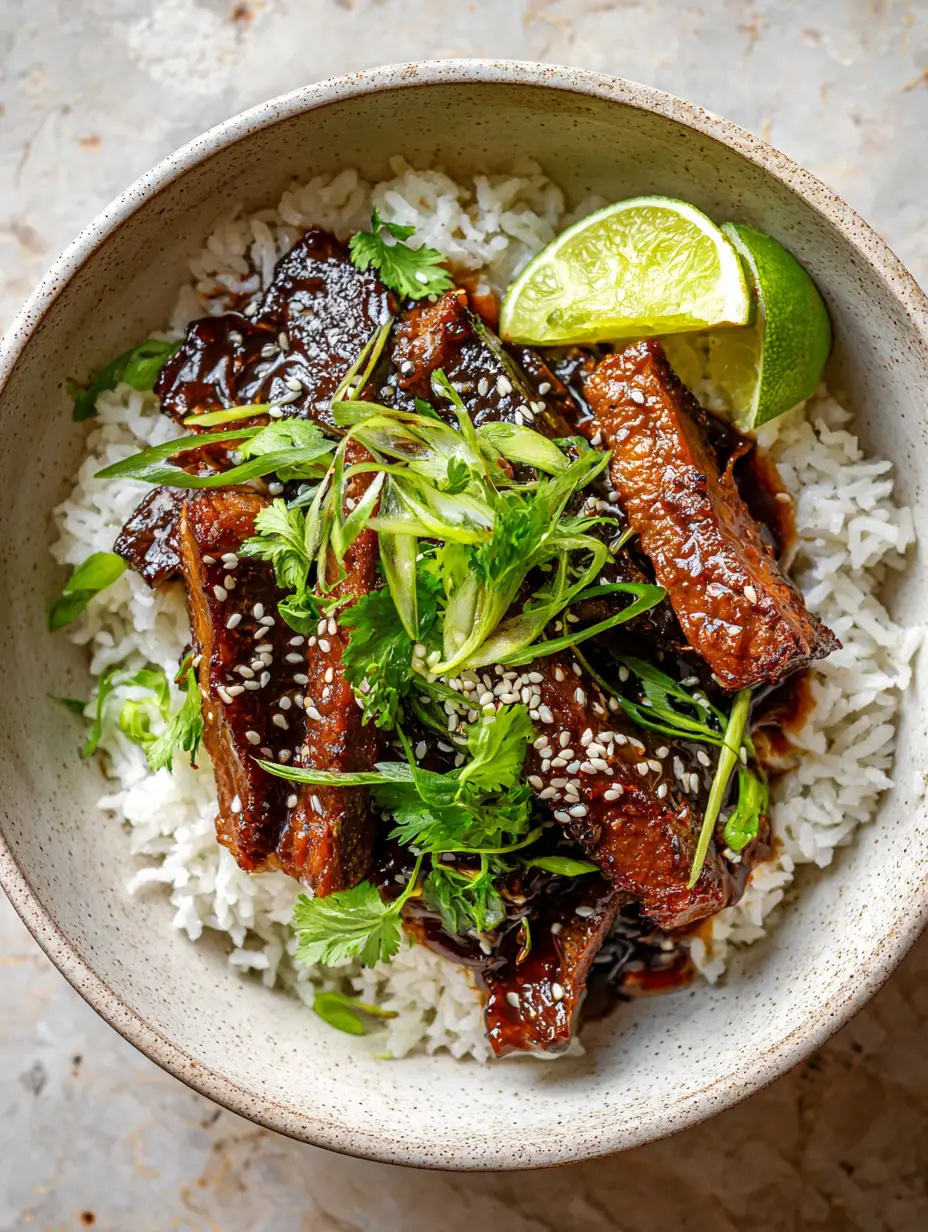
Ginger Lime Pork with Sticky Glaze and Fluffy Coconut Rice
Ingredients
Equipment
Method
- Combine rinsed rice, coconut milk, water, and salt in a saucepan. Bring to a boil, then cover and simmer on low for 18 minutes.
- Remove from heat and let sit covered for 10 minutes. Fluff with a fork to achieve a light, airy texture.
- Pat pork strips completely dry. Season with salt and pepper.
- Heat oil in a large skillet over high heat. Add pork in a single layer and cook undisturbed until deep brown caramelized edges form (about 3 minutes). Flip and cook for 1 more minute.
- Add ginger and lime zest to the pan, stirring for 60 seconds until fragrant.
- Stir in lime juice, honey, and soy sauce. Simmer until the sauce reduces into a thick, glossy, translucent glaze that coats the pork.
- Serve pork over coconut rice. Garnish with scallions, cilantro, sesame seeds, and a fresh lime wedge.
Notes
Work in batches to avoid crowding the pan, which leads to steaming instead of browning.
Bring the Zest to Your Table
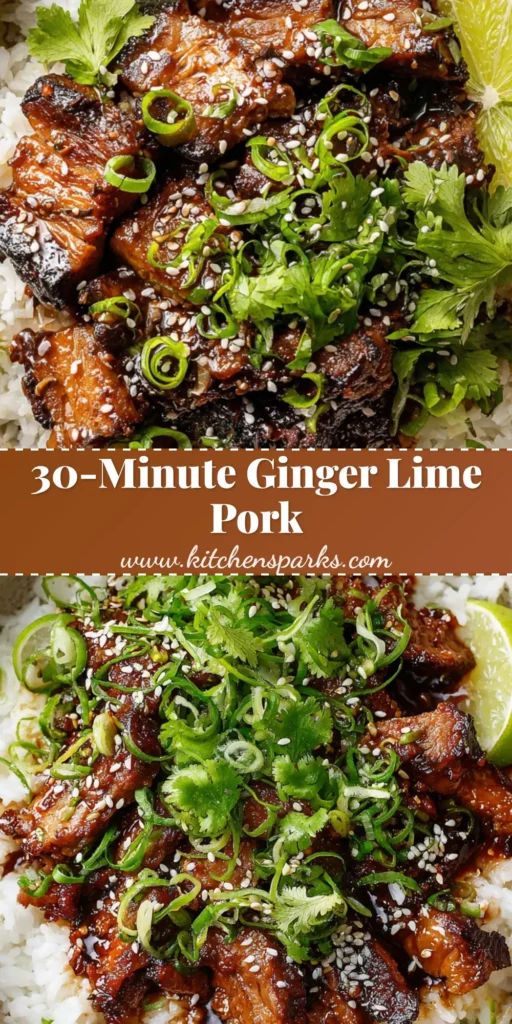
This Ginger Lime Pork is the ultimate evidence that simple ingredients, when treated with the right culinary techniques, can create an extraordinary dining experience. From the snap of the ginger to the creaminess of the coconut rice, it hits every sensory note. If you enjoyed this recipe, please leave a comment below and let us know how your sear turned out! Don’t forget to share your creations and follow us on Pinterest for more visual recipe inspiration.