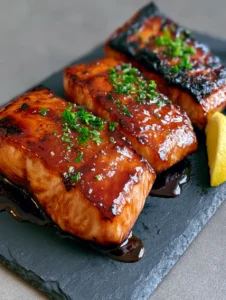
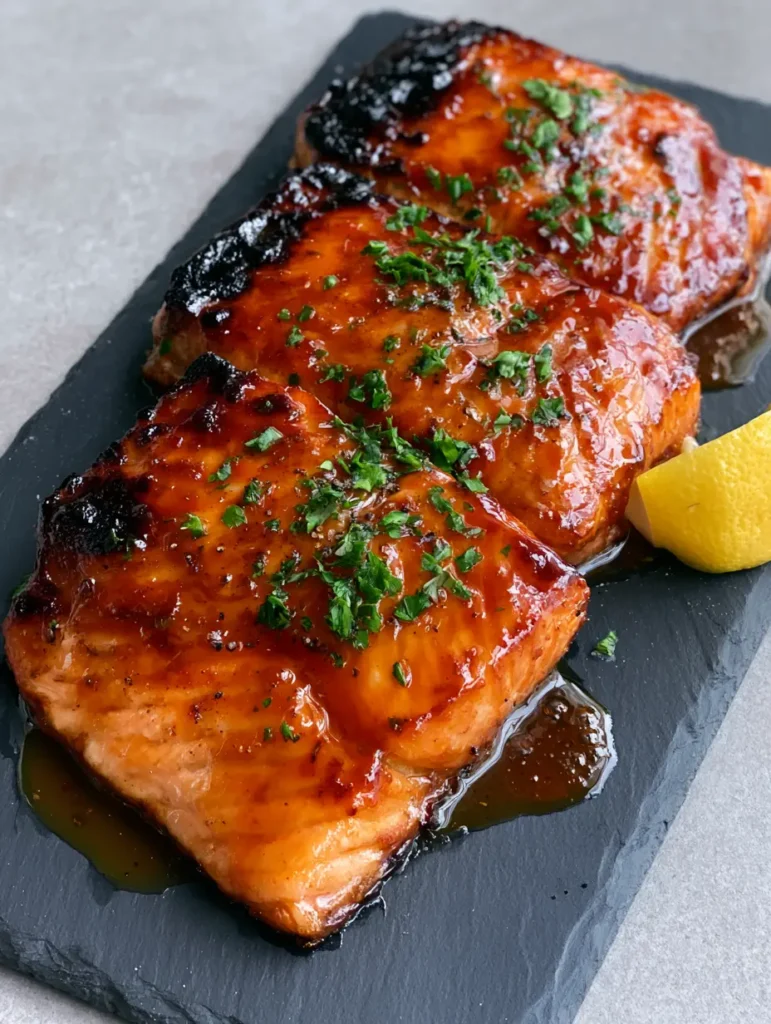
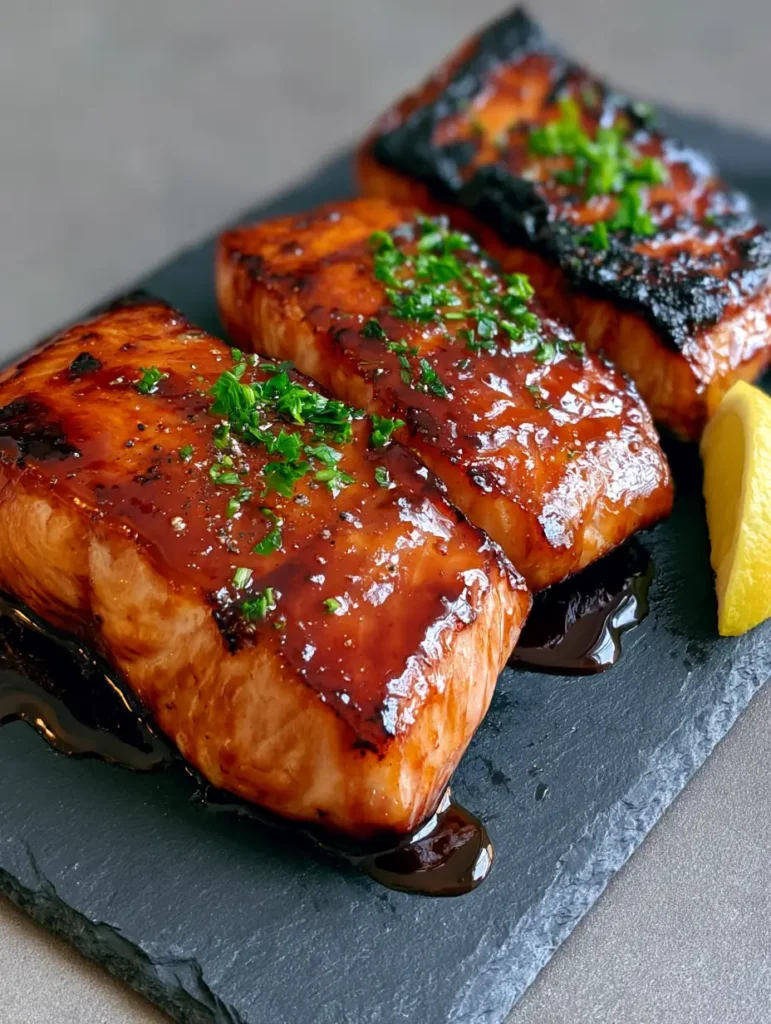
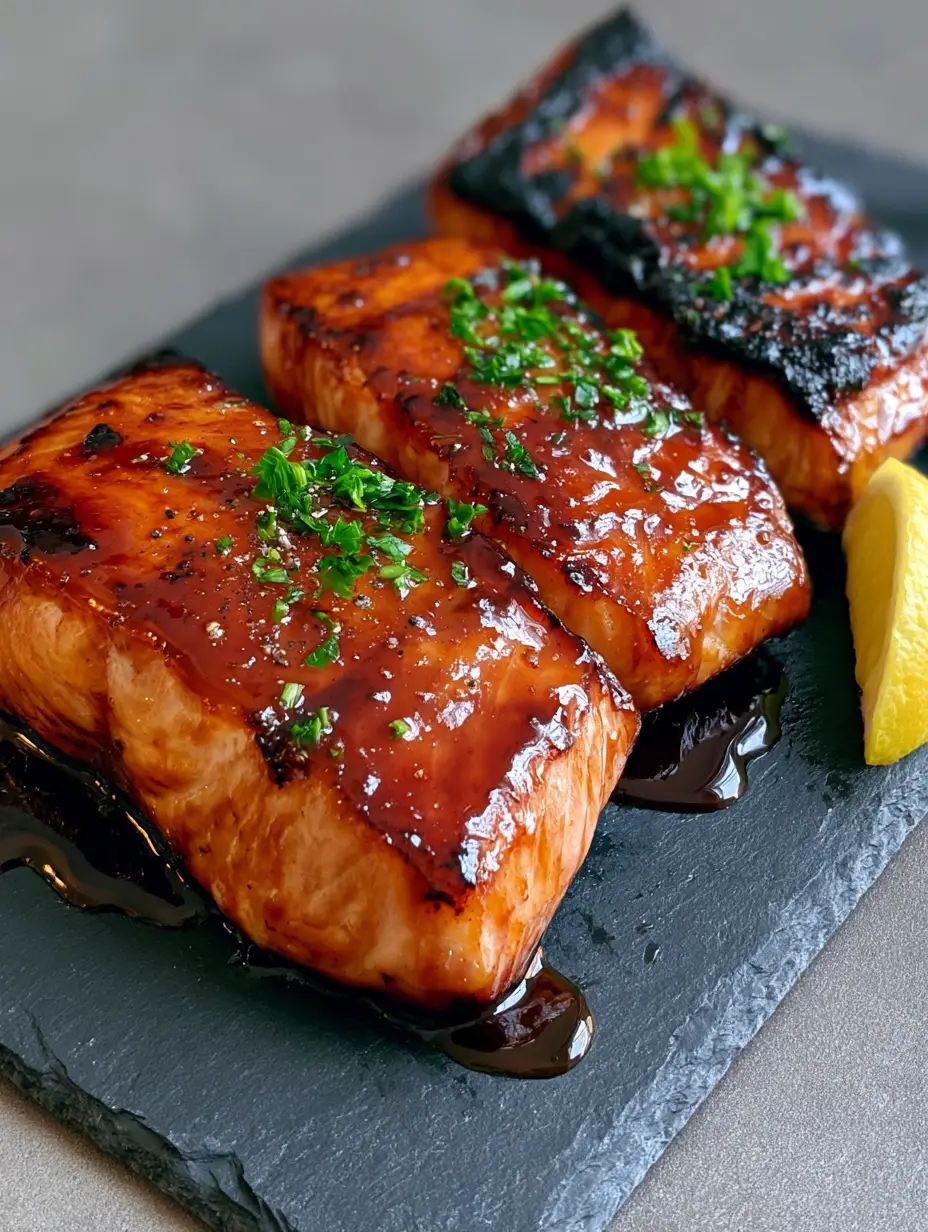
There is a specific culinary magic that happens when high heat meets the deep, molasses-rich sweetness of a Brown Sugar Glazed Salmon. Imagine pulling a tray from the oven where three thick Atlantic salmon fillets glisten under a deep amber, syrupy glaze that has bubbled and transformed into a dark, charred crust along the edges.
This isn’t just a quick weeknight meal; it is a sensory experience defined by the contrast of flaky, buttery fish and a brittle, caramelized sugar topping. Every bite offers a hit of cracked black pepper and the bright, citrusy lift of fresh lemon, perfectly mirroring the vibrant aesthetic of a high-end bistro dish.
Whether you are looking to impress guests or simply elevating your Tuesday night routine, this Brown Sugar Glazed Salmon delivers restaurant-quality results with minimal effort. The secret lies in the balance of the glaze and the precision of the heat to achieve that iconic “burnt sugar” edge without overcooking the delicate interior.
Why This Caramelized Atlantic Salmon Recipe Works
- The Perfect Char: By utilizing the broiler, we achieve a signature charred crust that shatters slightly before melting into the flaky Atlantic salmon.
- Glossy Visual Appeal: The glaze is engineered to be thick and syrupy, creating those beautiful amber pools around the base of the fish as seen in professional food photography.
- Balanced Flavor Profile: We balance the intense sweetness of the brown sugar with cracked black pepper and fresh lemon to ensure the dish remains sophisticated, not cloying.
- High-Protein Efficiency: Thick-cut fillets provide a substantial, satisfying meal that pairs beautifully with everything from summer salads to hearty grains.
The Anatomy of the Perfect Glossy Glaze
To achieve the visual depth described in our recipe blueprint, every ingredient serves a dual purpose: flavor and texture. We aren’t just looking for sweetness; we are looking for a glaze that clings to the fish and darkens under the flame.
Thick Atlantic Salmon Fillets: High-quality Atlantic salmon is preferred here for its higher fat content, which keeps the meat moist while the sugar undergoes the Maillard reaction. Use center-cut fillets for even cooking.
Dark Brown Sugar: 1/2 cup (110g) of packed dark brown sugar provides the molasses foundation required for that deep amber color. It caramelizes more effectively than light brown sugar, giving us that “burnt” edge we crave.
Soy Sauce: 2 tbsp (30ml) of soy sauce adds the necessary salt and umami. This creates a chemical bridge that prevents the sugar from tasting like candy and helps it adhere to the protein.
Dijon Mustard: 1 tbsp (15g) of Dijon acts as an emulsifier. It binds the oil and sugar together, ensuring the glaze doesn’t break or slide off the salmon during the baking process.
Olive Oil: 1 tbsp (15ml) of extra virgin olive oil is a “foundational invisible.” It conducts heat into the surface of the fish and ensures the glaze remains glossy rather than matte when cooled.
Cracked Black Pepper: 1 tsp (2g) of freshly cracked peppercorns provides a visual “speckled” finish and a spicy counterpoint to the caramelized sugar. Avoid pre-ground pepper for the best texture.
Fresh Parsley: 2 tbsp (8g) of finely chopped fresh parsley is essential for the final garnish. The green contrast against the deep amber glaze is what makes this dish “pop” on the plate.
Lemon Wedges: One bright yellow lemon is cut into wedges for serving. The acid is scientifically necessary to cut through the richness of the salmon fat and the sugar density.
Essential Equipment for a Professional Finish
To replicate the dark slate platter presentation, you need the right tools for the cooking phase. A heavy-duty rimmed baking sheet is non-negotiable for containing the syrupy glaze as it bubbles.
I highly recommend using parchment paper or a silicone baking mat. Brown sugar becomes incredibly sticky once charred, and this ensures your fillets remain intact when you transfer them to the serving platter.
A digital meat thermometer is your best friend here. For a flaky, tender texture, you want to pull the salmon when it reaches an internal temperature of 135°F (57°C), allowing carry-over cooking to bring it to a perfect 145°F (63°C).
The Step-by-Step Guide to the Perfect Brown Sugar Crust
Preparing the Salmon Base
Start by removing your salmon fillets from the refrigerator at least 15 minutes before cooking. This allows the protein to reach room temperature, ensuring the exterior chars at the same rate the interior cooks.
Pat the fillets bone-dry with a paper towel. Any residual moisture will steam the fish rather than sear it. Season the bare fillets with a pinch of kosher salt (not too much, as the soy sauce in the glaze adds saltiness).
Whisking the Amber Glaze
In a small bowl, combine the dark brown sugar, soy sauce, Dijon mustard, and olive oil. Whisk vigorously until the sugar has mostly dissolved into a thick, syrupy paste.
The consistency should be similar to warm honey. If it feels too thin, add another tablespoon of brown sugar. This thickness is what creates those luxurious pools around the base of the fish.
The Two-Stage Baking Process
Preheat your oven to 400°F (200°C). Arrange the fillets on your prepared baking sheet. Slather two-thirds of the glaze generously over the top and sides of each fillet.
Bake for 8-10 minutes. At this stage, the salmon will be nearly cooked through, and the sugar will have melted into a shiny coating. Now, it is time for the forensic visual magic: the char.
Achieving the Caramelized Charred Crust
Switch your oven to the Broil setting (High). Spoon the remaining glaze over the fillets. Place the pan on the top rack, about 4 inches (10cm) from the heating element.
Watch the oven closely! Within 2-3 minutes, the sugar will begin to bubble aggressively and turn from golden to a dark, charred amber. Once you see those dark edges forming, remove the pan immediately.
Expert Tips for Success
- Don’t Scrimp on the Sugar: If you reduce the sugar too much, you lose the viscosity. The “syrupy pools” depend on the sugar-to-liquid ratio being high.
- Skin-On vs. Skinless: I prefer skin-on salmon for this recipe. The skin acts as an insulator, preventing the bottom of the fish from overcooking while the top is under the broiler.
- Check for “The Flake”: Use a fork to gently press the side of the fillet. If it separates easily along the white fat lines (albumin), it is perfectly done.
- Let it Rest: Allow the salmon to sit for 3 minutes before serving. This allows the glaze to set into a tacky, glossy finish that won’t run off the fish.
What to Pair with Your Brown Sugar Glazed Salmon
Because this dish is remarkably rich, it pairs best with sides that offer high acidity or a refreshing crunch. A strawberry salad makes for a delightful lunch pairing if you have leftover salmon.
For a complete dinner, consider serving these fillets over a bed of jasmine rice to soak up the extra syrupy glaze. If you are looking for more seafood inspiration for your weekly rotation, my coconut garlic shrimp or crab imperial are excellent companions for a multi-course seafood feast.
If you’re planning a larger gathering, these fillets look stunning alongside smoky baked beans for a sophisticated “surf and turf” backyard vibe.
Frequently Asked Questions
Absolutely. You can whisk the brown sugar, soy sauce, and mustard up to 3 days in advance. Store it in an airtight container at room temperature; if it thickens too much, whisk in a teaspoon of warm water.
Yes, but the color will be lighter and the flavor less complex. Dark brown sugar contains more molasses, which is essential for achieving that deep amber, glossy finish and the rich charred edges seen in the photos.
The key is the two-stage cooking process. Bake the salmon at 400°F first to cook the fish, then only use the high-heat broiler for the final 2-3 minutes to caramelize the glaze without burning the sugars to a bitter state.
Ideally, yes. Keeping the skin on during baking protects the delicate flesh from the direct heat of the pan and helps the fillet hold its shape. You can easily slide the skin off before serving if preferred.
Use a thermometer to check for an internal temperature of 135°F (57°C). Visually, the salmon should be opaque and flake easily when pressed with a fork, while the glaze should be bubbling and thick.
The Ultimate Brown Sugar Glazed Salmon Recipe
Brown Sugar Glazed Salmon: The Ultimate 20-Minute Caramelized Dinner
Ingredients
Equipment
Method
- Preheat oven to 400°F (200°C) and line a baking sheet with parchment paper. Pat the Atlantic salmon fillets dry with paper towels.
- In a small bowl, whisk together the dark brown sugar, soy sauce, Dijon mustard, and olive oil until a thick syrupy paste forms.
- Place fillets on the baking sheet and coat with 2/3 of the glaze. Bake for 8-10 minutes until the fish is nearly cooked through.
- Switch oven to Broil (High). Apply the remaining glaze and place the tray on the top rack. Broil for 2-3 minutes until a dark charred crust forms on the edges and the glaze bubbles into syrupy pools.
- Remove from oven. Garnish with chopped parsley and cracked black pepper. Serve with a fresh lemon wedge.
Notes
Use dark brown sugar specifically for the deepest amber color and best caramelization.
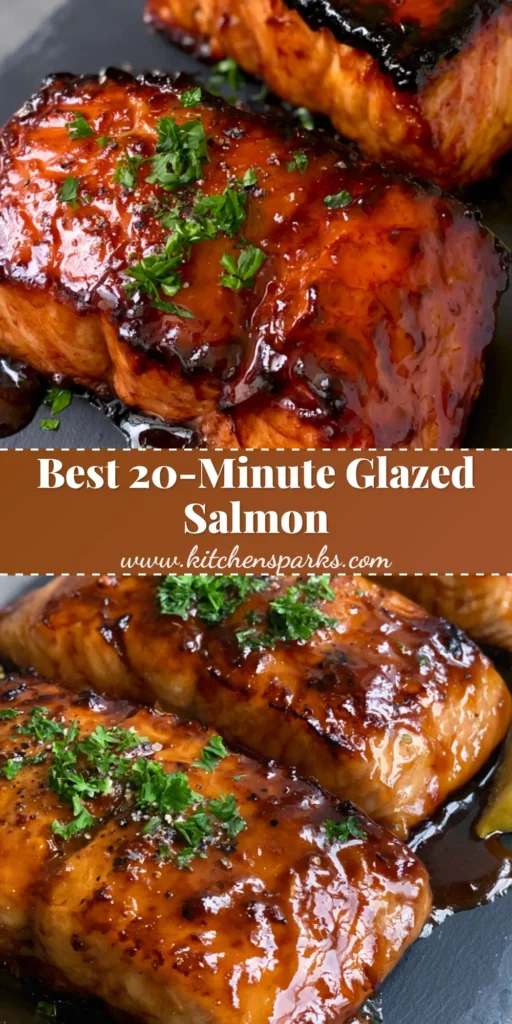
This Brown Sugar Glazed Salmon is a testament to the power of simple ingredients treated with professional technique. The contrast of the dark, charred edges against the tender pink Atlantic salmon creates a visual and culinary centerpiece that never fails to impress.
If you enjoyed this recipe, please leave a rating and a comment below! Your feedback helps other home cooks find success in the kitchen. Don’t forget to save this to your “Easy Dinners” board on Pinterest so you can find it whenever the craving for a caramelized crust hits.