The Authentic Greek Horiatiki Salad is a masterpiece of Mediterranean simplicity. Unlike the westernized versions found in many takeout joints, a true “Village Salad” (which is what Horiatiki translates to) contains absolutely no lettuce. It is a rustic, sun-drenched assembly of the freshest garden produce, dominated by the fragrance of dried oregano and the richness of high-quality extra virgin olive oil.
When you look at a traditional Horiatiki, you should see vibrant red wedges, translucent onion rings, and a proud slab of feta resting on top. This isn’t a tossed salad; it is a structured dish designed to be eaten slowly with a side of crusty bread. The goal is to create a “juice” at the bottom of the bowl—a divine emulsion of tomato water, salt, and olive oil that Greeks call “papara” when dipped with bread.
In this guide, we will recreate the exact visual and flavor profile of a seaside taverna in Mykonos. We are focusing on large, juicy tomato wedges and thick, crisp cucumber half-moons that provide a satisfying crunch in every bite. This is the ultimate summer dish that brings the Greek islands directly to your kitchen table.
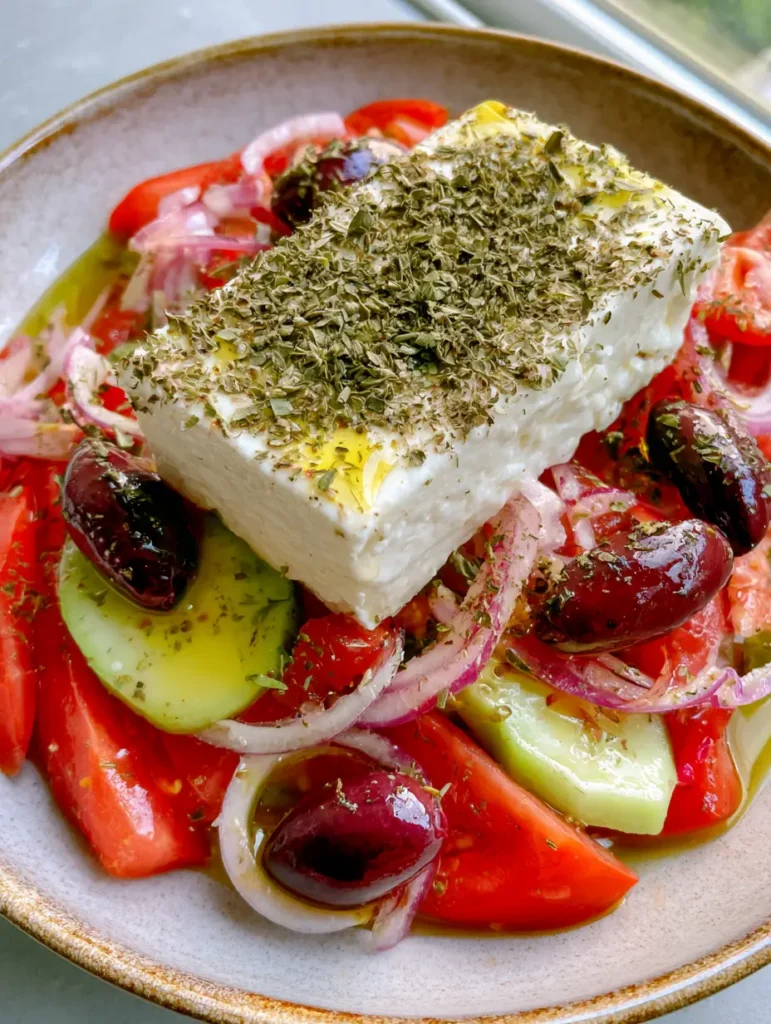
The Visual Allure of a Genuine Greek Village Salad
- No-Leaf Philosophy: Authentic Greek Horiatiki Salad relies on the structural integrity of chunky vegetables rather than leafy fillers, ensuring it never gets soggy.
- The Iconic Feta Slab: Rather than being crumbled, the feta is served as a thick, creamy rectangular block, allowing the diner to break off pieces as they eat.
- Saturated Color Palette: The deep reds of vine-ripened tomatoes contrast beautifully with the dark purple Kalamata olives and the stark white of the sheep’s milk cheese.
- Glistening Texture: A generous drizzle of golden liquid gold (extra virgin olive oil) creates a glossy finish that catches the light and carries the herbal notes of oregano.
The Essential Components for a Sun-Drenched Greek Bowl
Vine-Ripened Tomatoes: Use 4 large (approx. 800g) tomatoes that are heavy for their size. These provide the juicy base of the salad and the essential acidity that balances the salty cheese.
Crisp Garden Cucumbers: You will need 1 large (300g) cucumber, partially peeled to create a striped effect. These must be sliced into thick half-moons to provide the necessary “snap” and hydration.
Red Onion Rings: Use 1/2 a medium red onion (100g), sliced into paper-thin, translucent rings. These provide a sharp, pungent bite that cuts through the richness of the olive oil.
Whole Kalamata Olives: Include 1/2 cup (75g) of whole, brine-cured Kalamata olives. Leaving the pits in preserves the firm texture and prevents the salad from becoming overly salty too quickly.
Block Feta Cheese: Use one 7oz (200g) thick slab of high-quality Greek feta. Authentic feta is made from sheep or goat milk, providing a creamy yet tangy profile that crumbles differently than cow’s milk varieties.
Dried Greek Oregano: You need 1 teaspoon of high-fragrance dried oregano. This herb is the aromatic signature of the dish, providing an earthy, floral top note.
Extra Virgin Olive Oil: Use 1/4 cup (60ml) of the highest quality cold-pressed olive oil. It acts as both a dressing and a fat source that emulsifies with the vegetable juices.
Sea Salt: A foundational 1/2 teaspoon of flaky sea salt is required to “sweat” the tomatoes. This process is what creates the legendary salad juice at the bottom of the bowl.
Red Wine Vinegar (Optional but Recommended): A splash (1 tbsp / 15ml) provides an extra brighten-up to the tomatoes if they aren’t at their peak ripeness.
Tools Required for Professional Salad Architecture
To achieve the rustic, handheld-photo-ready look, you need a shallow, wide bowl. This prevents the ingredients from being buried and allows the feta slab to sit prominently on top. A very sharp chef’s knife is essential for creating those translucent onion rings without bruising the vegetable. Finally, a high-quality wooden spoon is better for a gentle toss than metal tongs, which can tear the delicate tomato skins.
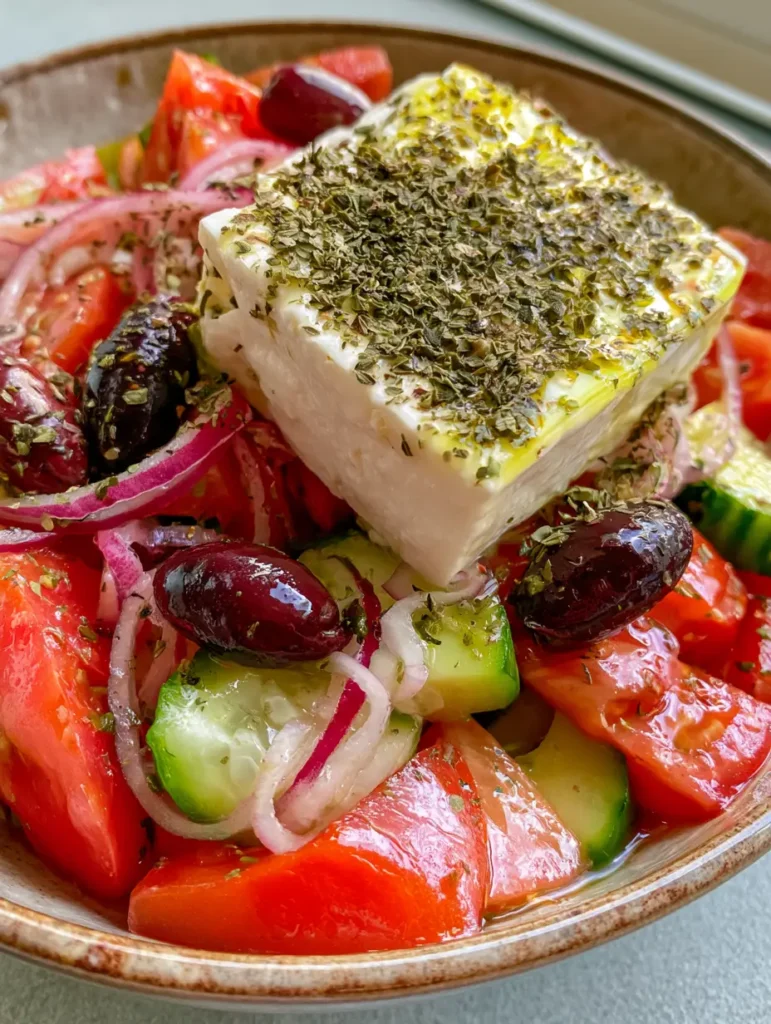
Architecting the Perfect Authentic Greek Horiatiki Salad
Preparing the Foundation: The Tomato Wedges
Start by washing and drying your tomatoes. Remove the core and slice each tomato into 8-10 large, irregular wedges. Do not dice them; the goal is a rustic, “chunky” appearance. Place them in your shallow bowl and sprinkle immediately with half of the sea salt. This allows the salt to begin drawing out the tomato water, which is the soul of the dressing.
Adding Crunch: The Cucumber Half-Moons
Peel your cucumber in alternating strips (leaving some skin for color and texture). Slice it down the middle lengthwise, then cut into thick half-moons about 1/2 inch (1.25cm) thick. Scatter these over the tomatoes. The thickness is key; they should look robust and hearty, matching the scale of the tomato wedges.
Developing the Aromatics: Red Onion and Olives
Slice your red onion into thin, almost see-through rings. If the onion is particularly sharp, you can soak the rings in cold water for 5 minutes and pat dry to mellow the flavor. Scatter the rings and the whole Kalamata olives over the vegetables. The dark purple of the olives should pop against the bright red and green base.
The Final Flourish: The Feta Slab and Oil Drizzle
Place your thick rectangular block of feta directly in the center of the salad. Do not break it. Drizzle the entire salad—concentrating on the feta and the tomatoes—with the extra virgin olive oil. The oil should glisten and pool slightly in the crevices of the vegetables. Finish by heavily dusting the feta and the surrounding salad with the dried oregano and the remaining salt.
Pro Tips for Taverna-Quality Results
- Temperature Matters: Never serve this salad ice cold. Let the vegetables sit at room temperature for 15 minutes before serving so the flavors of the oil and oregano can fully develop.
- The Olive Secret: Always use whole olives with pits. Pitted olives tend to absorb too much vinegar and can become mushy, losing the “glossy” look described in our visual prompt.
- Quality of Oregano: If possible, find dried oregano still on the branch. Rubbing it between your palms directly over the feta releases the essential oils for a much stronger aroma.
- Don’t Over-Mix: The beauty of the Authentic Greek Horiatiki Salad is its layered look. Give it one very gentle toss just before eating, but keep the feta block mostly intact until you are ready to dive in.
Shelf Life and Freshness Guidelines
This salad is best enjoyed within 30 minutes of assembly. Because the salt draws moisture out of the tomatoes and cucumbers, the vegetables will eventually lose their “crisp” texture and become soft. However, if you have leftovers, they can be stored in an airtight container in the fridge for up to 24 hours. Note that the olive oil may solidify slightly when cold; simply let it sit at room temperature for 10 minutes before eating.
Do not freeze this salad. The high water content of the cucumbers and tomatoes will cause them to collapse and turn to mush upon thawing, ruining the structural integrity of the dish.
What to Serve with Your Village Salad
To turn this into a full Mediterranean feast, pair it with proteins that share similar flavor profiles. It works exceptionally well alongside a Mediterranean chicken marinade or served as a fresh side to authentic chicken gyros.
If you love the flavors of this salad but want something more substantial for a potluck, you might also enjoy a Greek olive pasta salad or a Greek-style potato salad. For those following a grain-free lifestyle, this salad is the perfect precursor to a high-protein chickpea bowl.
Finally, no Greek meal is complete without bread. Use a thick crusty loaf to soak up the juices at the bottom of the bowl—this is the most “authentic” part of the experience!
Common Questions About Horiatiki
It is not recommended. Kalamata olives have a specific fruity, briny flavor and firm texture that canned black olives lack. For a true Horiatiki, stick with whole, dark purple Kalamata olives.
Yes, for authenticity. Serving the feta as a slab prevents it from dissolving into the tomato juices too quickly and allows guests to break off pieces, maintaining a creamier texture throughout the meal.
The secret is salting the tomatoes early. The salt draws out the water from the tomatoes, which then mixes with the extra virgin olive oil and oregano to create a flavorful emulsion perfect for dipping bread.
Red onion is the standard choice because it provides a sharp flavor and beautiful color. If the raw onion is too strong for you, soak the slices in cold water for a few minutes before adding them to the salad.
Traditional Greek Village Salad (Horiatiki) was created using only what a farmer could pick from their garden. Lettuce is not a traditional component of this specific summer dish; instead, it relies on tomatoes and cucumbers for structure and hydration.
Authentic Greek Horiatiki Salad Recipe
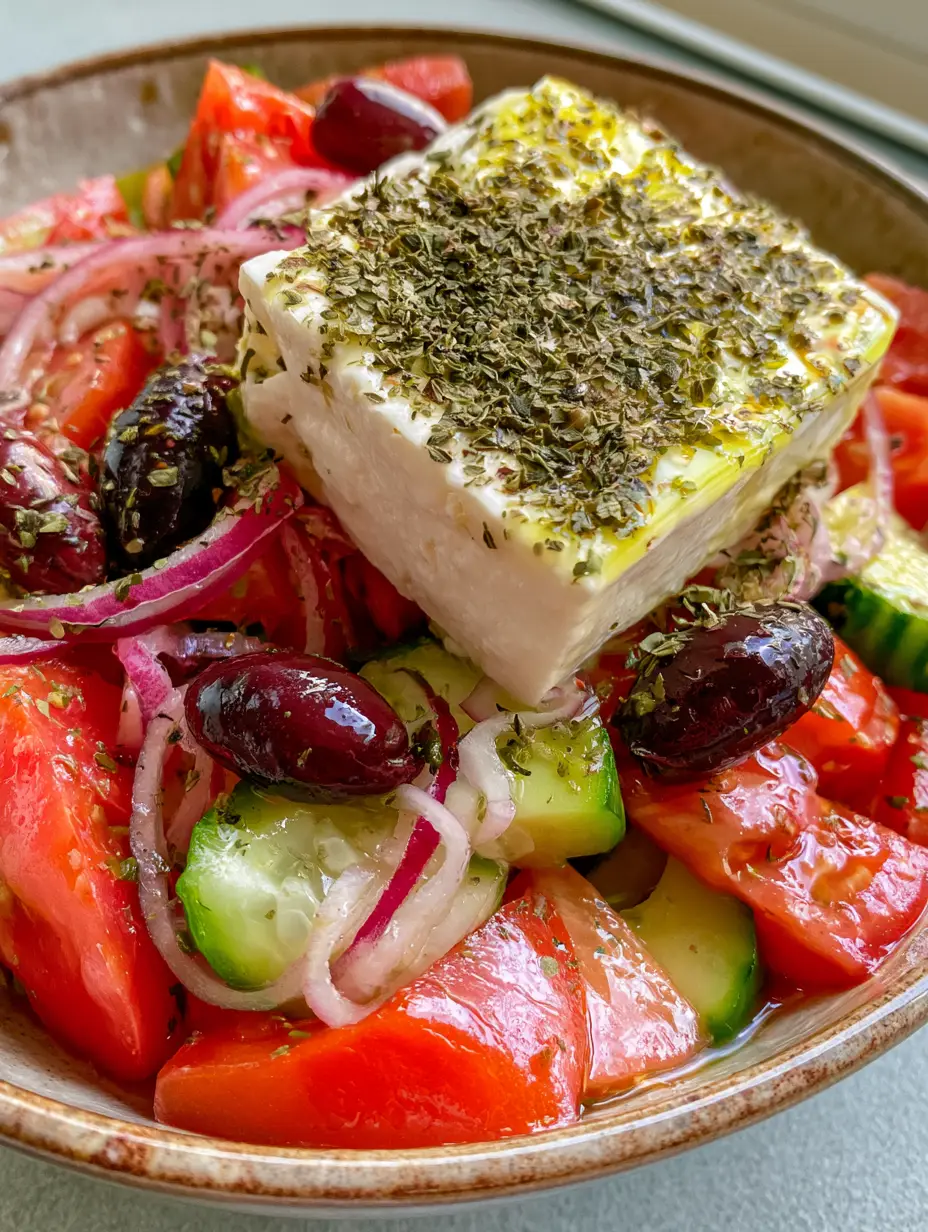
Authentic Greek Horiatiki Salad: The Traditional No-Lettuce Village Recipe
Ingredients
Equipment
Method
- Core the tomatoes and cut into large, rustic wedges. Place them in a shallow bowl and sprinkle with a pinch of sea salt.
- Partially peel the cucumber to create stripes. Slice lengthwise, then into thick 1/2-inch half-moons. Add to the bowl.
- Scatter the thin red onion rings and the whole Kalamata olives over the tomato and cucumber base.
- Place the whole slab of feta cheese prominently in the center of the salad bowl.
- Drizzle the extra virgin olive oil generously over the entire assembly until glistening. Heavily dust the feta and vegetables with dried oregano and remaining salt.
Notes
Always use a block of feta rather than crumbles to maintain authenticity.
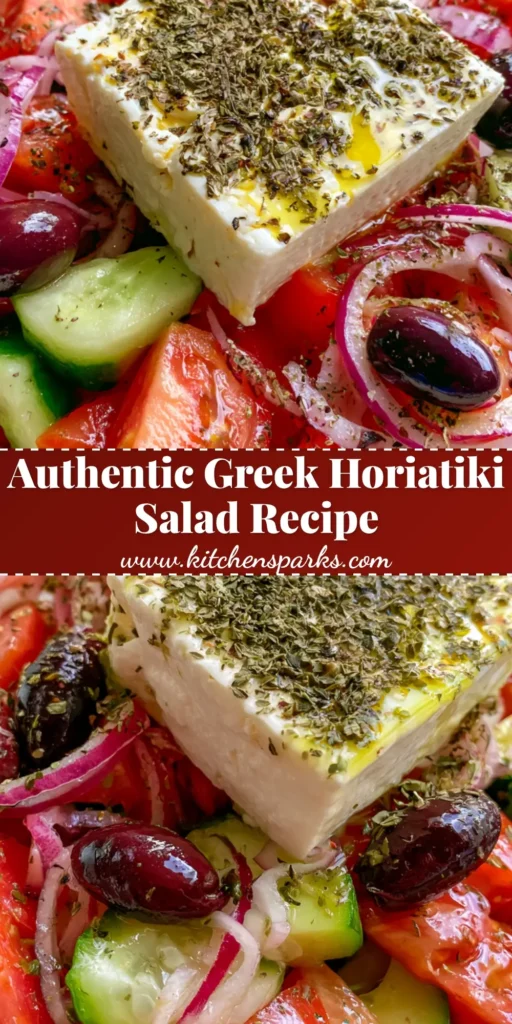
Bring the Flavors of Greece Home Today!
The Authentic Greek Horiatiki Salad is more than just a side dish; it is a celebration of seasonal produce and high-quality ingredients. Whether you are hosting a summer BBQ or looking for a healthy, vibrant lunch, this recipe delivers on every sensory promise. The combination of creamy feta, briny olives, and juicy tomatoes is a timeless classic for a reason.
If you enjoyed this recipe, please leave a comment below and let us know how your “papara” juice turned out! Don’t forget to share your creations and follow us on Pinterest for more Mediterranean inspiration. Happy cooking!