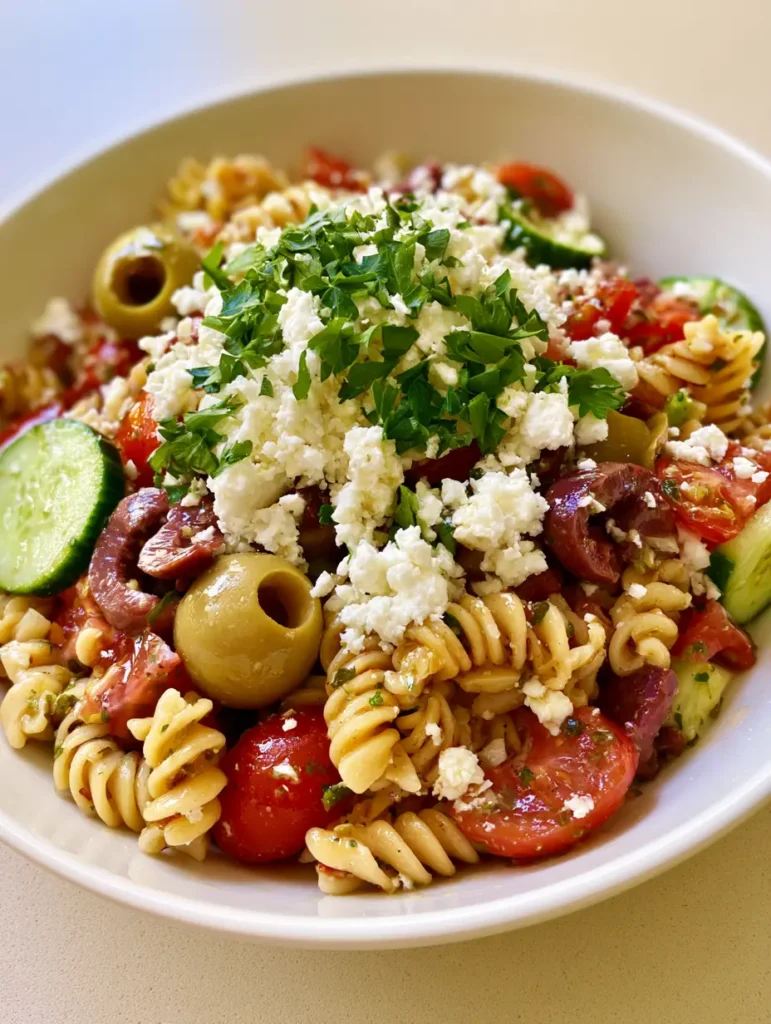
There is something undeniably magnetic about a vibrant, sun-drenched bowl of Greek Olive Pasta Salad sitting on a neutral beige tabletop, catching the soft, natural diffused daylight of a late afternoon. When you look at this dish, the first thing you notice is the glistening sheen on the rotini spirals, reflecting a perfectly emulsified clear lemon-herb dressing that ties every Mediterranean element together.
This isn’t just another side dish; it is a masterclass in textural contrast, featuring the snap of quartered cucumbers against the salty, buttery bite of whole pitted green olives and the wine-like depth of sliced Kalamata olives. Whether you are hosting a summer cookout or prepping a weeknight lunch, this recipe delivers an authentic handheld smartphone photo aesthetic with minimal effort and maximum flavor.
By focusing on high-quality ingredients like crumbled white feta cheese and finely chopped fresh flat-leaf parsley, we transform simple pantry staples into a culinary centerpiece. The minimalist white bowl presentation allows the bright reds of halved cherry tomatoes and the deep purples of the olives to pop, creating a visual feast that tastes even better than it looks.
Why You Will Crave This Mediterranean Inspired Greek Olive Pasta Salad
- The Perfect Al Dente Bite: Using rotini pasta ensures the ridges catch every drop of the lemon-herb vinaigrette for a consistent flavor profile in every forkful.
- Double the Olive Depth: The combination of whole pitted green olives for a mild, salty crunch and sliced Kalamatas for a tangy finish creates a sophisticated flavor layer.
- Fresh Herbaceous Garnish: A heavy hand of finely chopped fresh flat-leaf parsley provides a clean, peppery finish that cuts through the richness of the feta cheese.
- Vibrant Visual Appeal: Halved cherry tomatoes and quartered cucumber slices provide a structural integrity that keeps the salad looking fresh even hours after assembly.
The Anatomy of Ingredients for the Ultimate Greek Olive Pasta Salad
Rotini Pasta (16 oz / 450g): The spiral shape is essential for capturing the vinaigrette and providing enough surface area to hold onto the crumbled feta. Unlike smoother shapes used in a caprese pasta salad, rotini ensures no ingredient gets left at the bottom of the bowl.
Whole Pitted Green Olives (1 cup / 150g): These offer a meaty texture and a mild, briny flavor that balances the sharper notes of the vinegar. Ensure they are well-drained to prevent the salad from becoming overly salty.
Sliced Kalamata Olives (1/2 cup / 75g): These dark, almond-shaped olives provide a rich, fruity acidity that is a hallmark of an authentic Greek Horiatiki salad. Slicing them ensures their intense flavor is distributed evenly throughout the dish.
Cherry Tomatoes (2 cups / 300g): Halving these jewels releases just enough juice to mingle with the dressing without making the pasta soggy. They provide the necessary acidic pop and a splash of bright red color.
Cucumber (1 large / 300g): Use a seedless English cucumber, quartered and sliced thin. This provides a refreshing, cool crunch that contrasts beautifully with the soft, cooked pasta.
Crumbled Feta Cheese (1 cup / 150g): Look for a high-quality sheep’s milk feta stored in brine. It provides a creamy, tangy finish that acts as the “glue” for the other dry ingredients.
Fresh Flat-Leaf Parsley (1/2 cup / 15g): Finely chopped, this herb brings a garden-fresh aroma and a vibrant green garnish that elevates the dish from a simple pasta salad to an artisanal meal.
Lemon-Herb Vinaigrette (The Foundation): You will need extra virgin olive oil, fresh lemon juice, dried oregano, and a pinch of salt and black pepper. This clear dressing creates that signature glistening sheen seen in professional food photography.
Essential Kitchen Tools for Professional Results
To achieve the precise cuts and textures described, you will need a sharp Chef’s knife for quartering the cucumbers and finely chopping the parsley. A large stainless steel or minimalist white ceramic bowl is required for tossing the ingredients without crushing the delicate feta.
A high-quality whisk and a small glass jar are helpful for emulsifying the lemon-herb vinaigrette until it is translucent and thick. Finally, a large pot for boiling the pasta to a perfect al dente state is the backbone of the entire process.
Step-by-Step Guide to Crafting the Greek Olive Pasta Salad
1. Mastering the Pasta Foundation
Bring 4 quarts (4L) of heavily salted water to a rolling boil. Add the 16 oz (450g) of rotini pasta and cook according to package directions, but aim for exactly al dente—usually 1 minute less than the box suggests.
Drain the pasta and rinse briefly with cold water to stop the cooking process and remove excess starch. This step is crucial for ensuring the pasta doesn’t stick together and that the dressing stays clear and glistening rather than becoming cloudy.
2. Preparing the Mediterranean Produce
While the pasta cools, halve your cherry tomatoes and quarter your cucumber slices. Ensure the cucumbers are thin enough to be bite-sized but thick enough to maintain their crunch.
Finely chop the fresh flat-leaf parsley, discarding the thicker stems. If your green olives are not already pitted, remove the pits now, keeping the olives whole for a striking visual impact against the sliced Kalamatas.
3. Emulsifying the Glistening Lemon-Herb Vinaigrette
In a small jar, combine 1/2 cup (120ml) extra virgin olive oil with 1/4 cup (60ml) fresh lemon juice. Add 1 tsp (5g) of dried oregano, a pinch of sea salt, and cracked black pepper.
Shake or whisk vigorously until the mixture is fully combined and has a slight golden translucency. This dressing will coat the rotini and vegetables, giving them the “light, glistening sheen” that makes the dish look so appetizing in soft, natural light.
4. The Final Assembly and Garnish
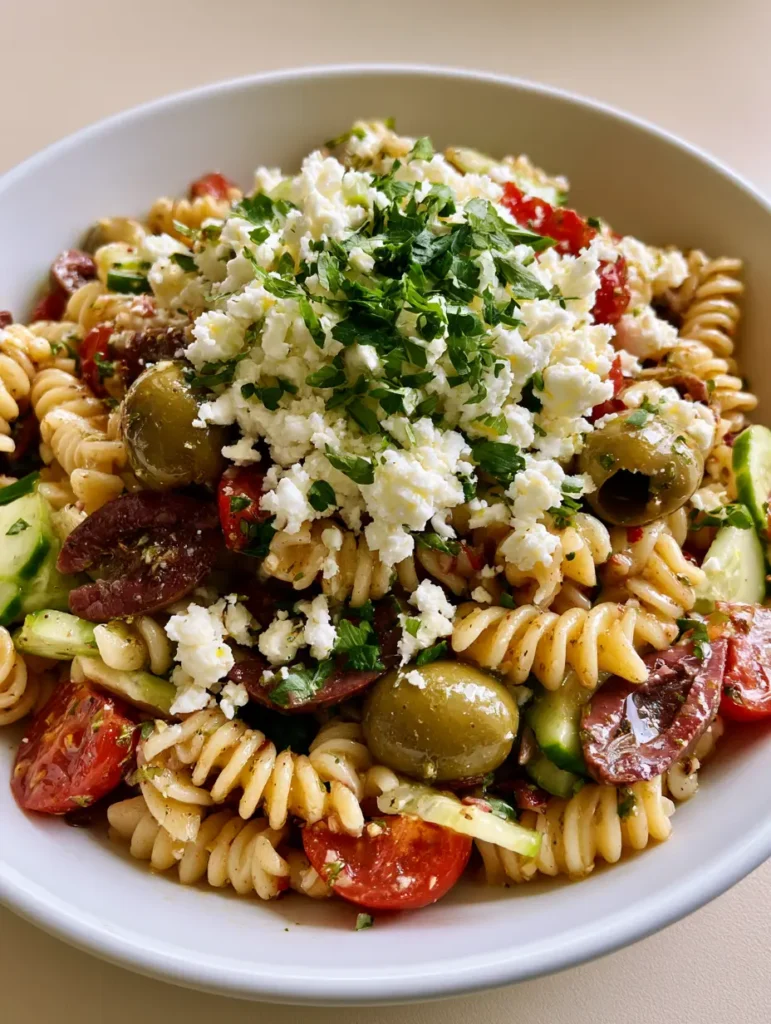
In your minimalist white bowl, combine the cooled rotini, whole green olives, sliced Kalamata olives, halved tomatoes, and quartered cucumbers. Pour the dressing over the top and toss gently with large spoons until every crevice of the rotini is coated.
Just before serving, fold in the crumbled feta cheese and the finely chopped parsley. Adding these last prevents the feta from breaking down into a paste, keeping the white crumbles distinct and visually appealing.
Pro Tips for the Best Pasta Salad Experience
- Salt the Water Like the Sea: Since we rinse the pasta to keep the dressing clear, the only time to season the pasta itself is during the boil. Don’t be shy with the salt!
- The Cooling Rule: Never add the dressing or the feta to hot pasta. The heat will melt the cheese and cause the pasta to absorb all the oil, leaving you with a dry, greasy salad instead of a glistening one.
- Olive Variety Matters: If you want to expand your flavor profile, you could experiment with Castlevetrano olives for a more buttery finish, similar to the flavor notes found in a Mediterranean Greek potato salad.
- Make it Ahead: This salad actually tastes better after 30 minutes of marinating at room temperature, allowing the lemon juice to soften the bite of the raw cucumbers.
Storage and Meal Prep Advice
The Greek Olive Pasta Salad keeps remarkably well in the refrigerator for up to 3-4 days. Store it in an airtight glass container to maintain the freshness of the vegetables.
If the pasta seems to have absorbed the dressing after a day in the fridge, simply add a teaspoon of fresh lemon juice or olive oil and give it a quick toss to restore that glistening sheen. This recipe does not freeze well due to the high water content of the cucumbers and tomatoes.
What to Serve With This Greek Olive Pasta Salad
This dish is incredibly versatile. It works as a standalone vegetarian meal or as a vibrant side for grilled proteins. For a complete Mediterranean feast, pair it with a tender Greek marinated chicken or some Greek chicken kabobs (coming soon).
If you are looking for a higher protein option to serve alongside, consider a high-protein chickpea salad or even some grilled shrimp. The acidity of the lemon-herb dressing also makes it a perfect companion to heavier dishes like creamy steak pasta for a balanced buffet spread.
Frequently Asked Questions
Absolutely. It actually tastes better after 30 minutes. If making a day ahead, add the fresh parsley and extra feta just before serving to keep them vibrant.
Cool the pasta completely before adding the dressing. If the pasta is hot, it will absorb the oil and lemon juice, leaving the salad looking dull instead of glistening.
Yes! Briefly rinsing the pasta in cold water removes excess starch, which prevents the pasta from sticking and ensures the lemon-herb vinaigrette stays clear and glistening.
A combination of whole pitted green olives for mild saltiness and sliced Kalamata olives for tangy, wine-like depth provides the most authentic Mediterranean flavor profile.
Rotini is the ideal choice because its spiral ridges are perfect for catching the vinaigrette, crumbled feta, and finely chopped herbs in every bite.
The Ultimate Greek Olive Pasta Salad Recipe
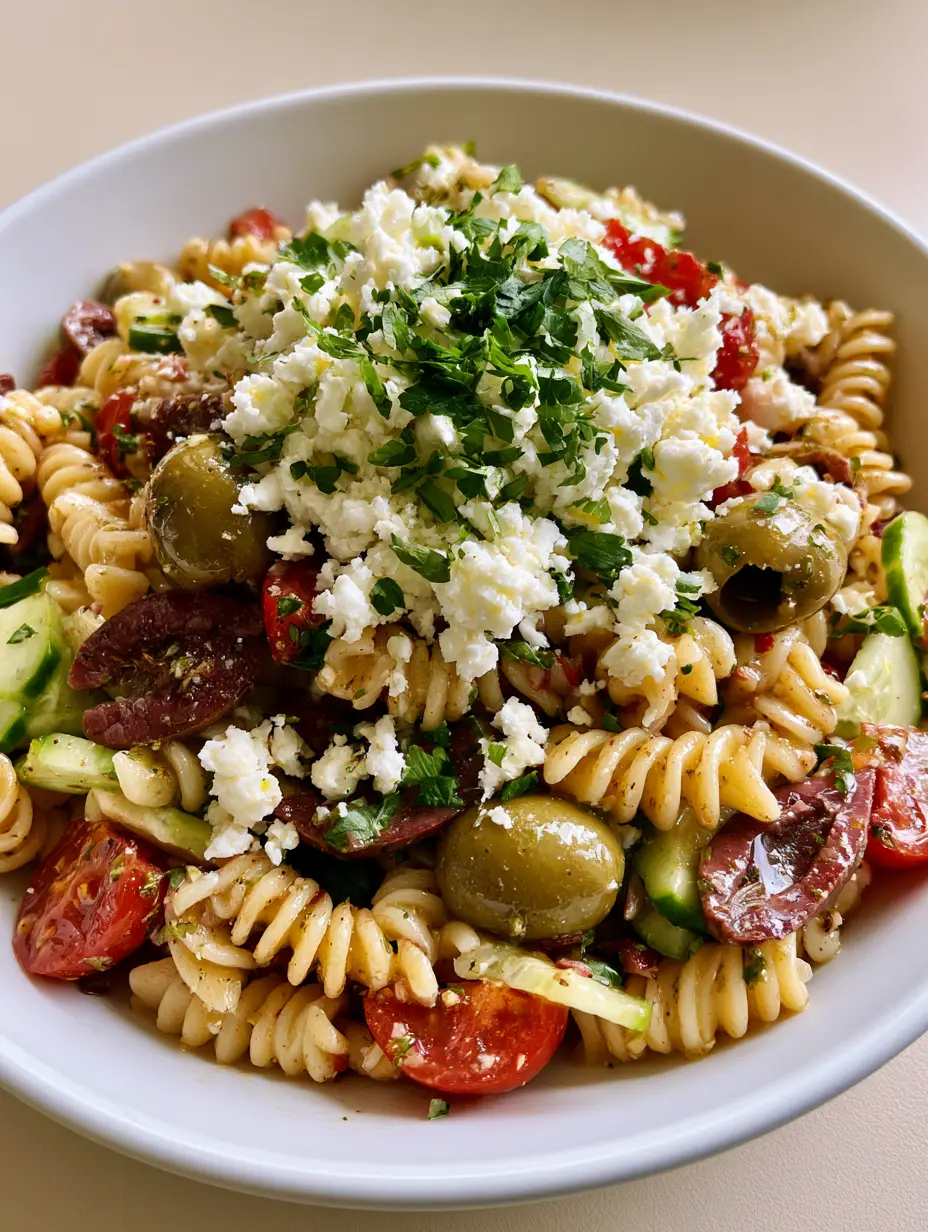
Greek Olive Pasta Salad with Lemon-Herb Vinaigrette
Ingredients
Equipment
Method
- Boil rotini in salted water until al dente. Drain and rinse with cold water to ensure a glistening finish.
- Halve the cherry tomatoes, quarter the cucumber slices, and finely chop the fresh parsley.
- Whisk olive oil, lemon juice, and oregano in a jar until emulsified and clear.
- Toss pasta with olives, tomatoes, and cucumbers in a minimalist bowl with the dressing. Fold in feta and parsley last.
Notes
Add feta just before serving to maintain its bright white color.
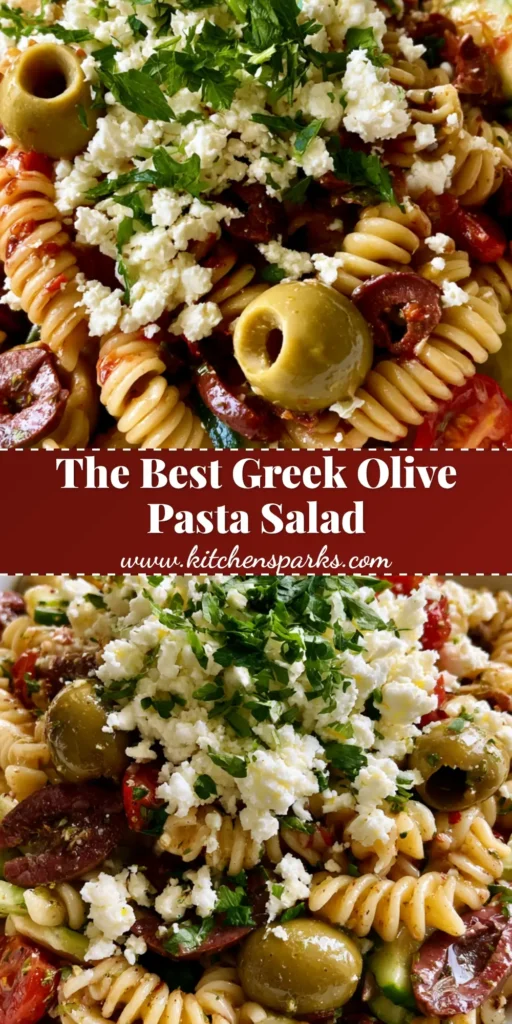
Transform your next meal with this visually stunning and flavor-packed Greek Olive Pasta Salad. It captures the essence of Mediterranean dining with its fresh produce, briny olives, and zesty vinaigrette. Perfect for food photography lovers and home cooks alike, this recipe is a guaranteed crowd-pleaser.
If you enjoyed this recipe, please leave a comment below and let us know how it turned out! Don’t forget to follow us on Pinterest for more culinary inspiration and share your photos with the hashtag #KitchenSpark.