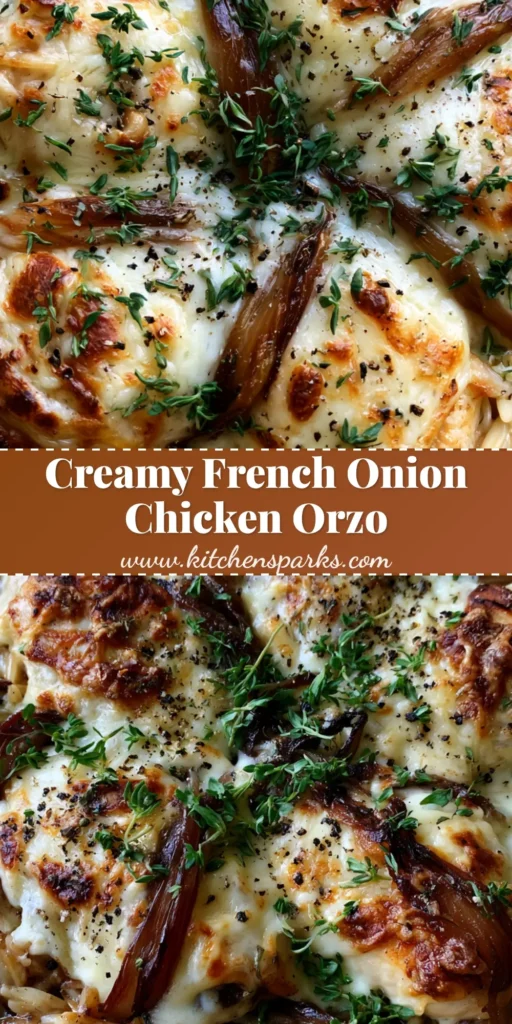
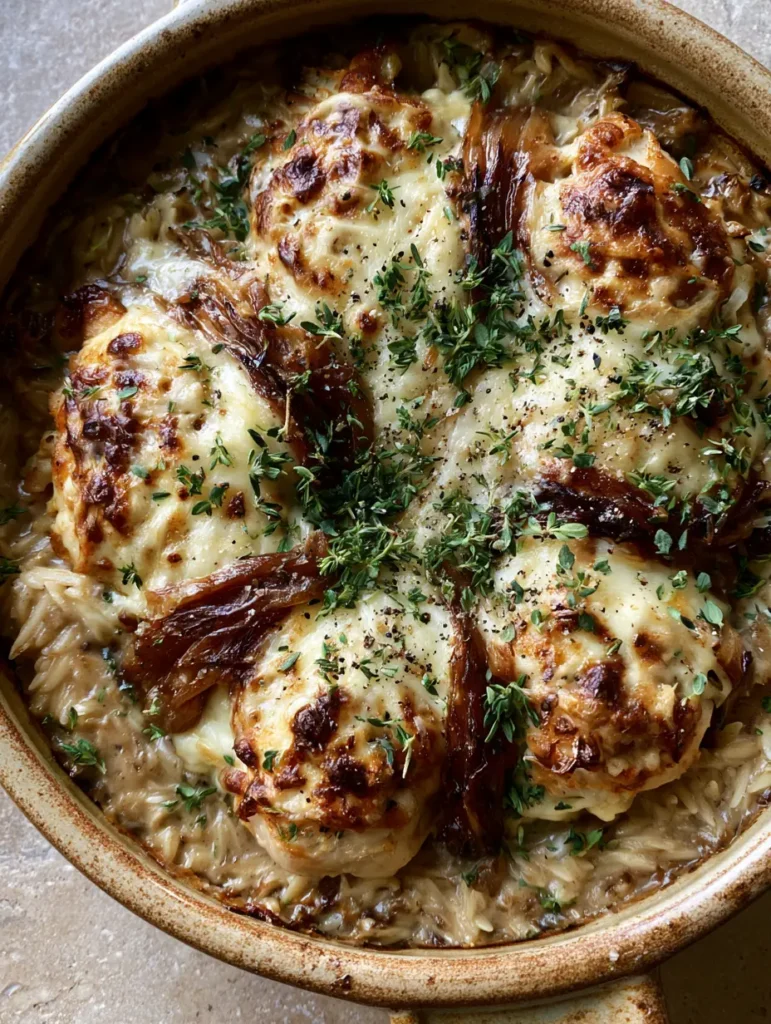
There is a specific kind of culinary magic that happens when the deep, umami-rich flavors of a classic French onion soup meet the creamy, comforting texture of a modern pasta bake. This French Onion Chicken Orzo is the embodiment of that synergy. Imagine a rustic ceramic baking dish, pulled straight from the oven, where the surface is a landscape of bubbling, gooey Gruyère cheese punctuated by charred golden spots and aromatic sprigs of fresh thyme.
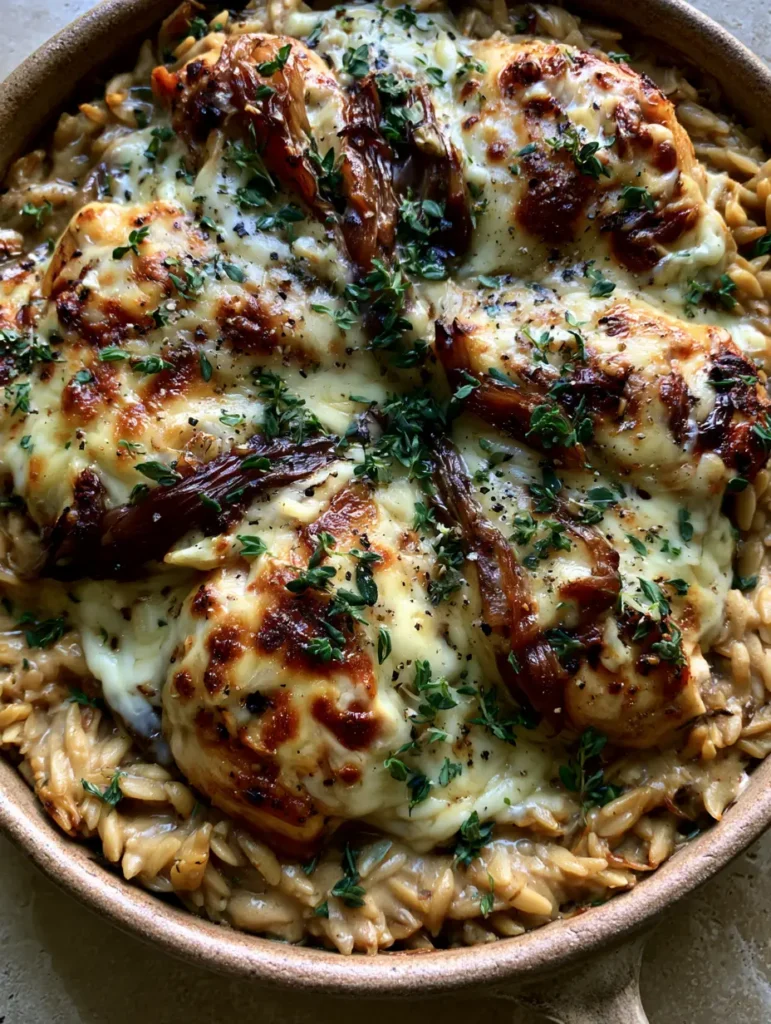
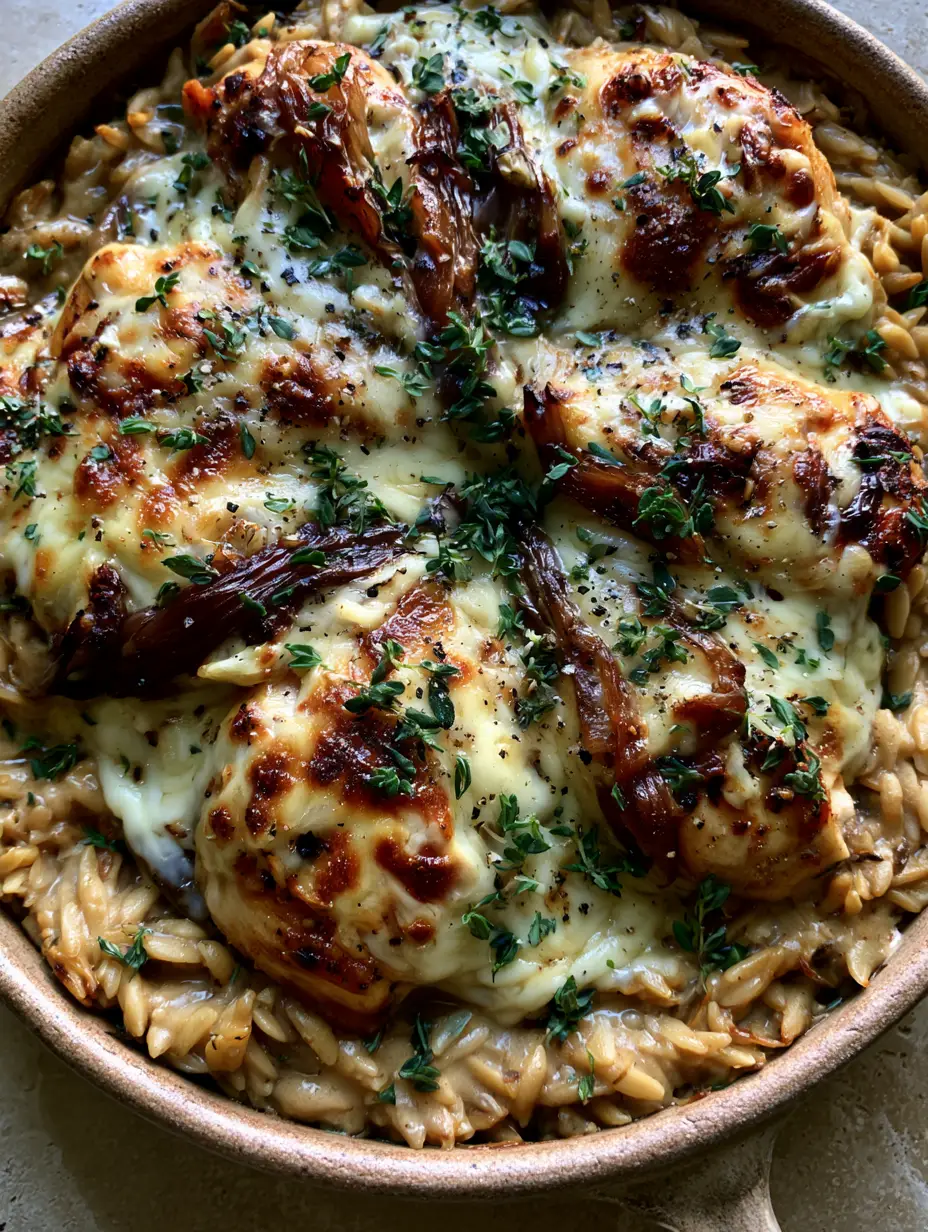
Underneath that decadent cheese blanket lies a bed of perfectly tender orzo pasta, each grain saturated in a savory, light brown onion gravy. The dish is topped with golden-brown seared chicken breasts that remain incredibly juicy thanks to the gentle braising environment of the casserole. It is a visual and sensory masterpiece, captured here in the soft, natural daylight of a home kitchen, highlighting every cracked black pepper flake and strand of caramelized onion.
Whether you are looking for a sophisticated weeknight dinner or a centerpiece for a Sunday gathering, this French Onion Chicken Orzo delivers a high-protein, flavor-packed experience that feels both nostalgic and fresh. The combination of slow-cooked onions and sharp cheese creates a depth of flavor that usually takes hours, yet this recipe is designed for the modern, enthusiastic home cook who values efficiency without sacrificing gourmet results.
Why You Will Crave This French Onion Chicken Orzo
- Textural Contrast: You get the crunch of the charred cheese spots, the silkiness of the caramelized onions, and the “al dente” bite of the orzo all in one forkful.
- Deep Umami Profile: By utilizing foundational French techniques for onion caramelization, we build a flavor base that is savory, slightly sweet, and incredibly robust.
- One-Pan Simplicity: While we utilize a baking dish for the final presentation, the bulk of the flavor is built in a single skillet, minimizing cleanup and maximizing efficiency.
- Visually Stunning: The contrast between the deep brown onions, the bright green thyme, and the melted white-gold Gruyère makes this a “smartphone-ready” meal that looks as good as it tastes.
The Flavor Foundation: Essential Ingredients and Substitutions
Boneless Skinless Chicken Breasts (1.5 lbs / 680g): These provide the lean protein core of the dish. For the best result, look for even-sized breasts to ensure they sear and bake at the same rate; you can substitute with chicken thighs if you prefer a higher fat content and more “forgiving” meat.
Orzo Pasta (1.5 cups / 330g): This small, rice-shaped pasta is the vehicle for our savory gravy. It absorbs the liquid beautifully while maintaining a distinct shape that is much more luxurious than standard long-cut pasta.
Yellow Onions (3 Large / approx. 700g): The star of the show. Yellow onions have the perfect sugar-to-sulfur ratio for long, slow caramelization, resulting in that iconic dark brown color and sweet flavor profile.
Gruyère Cheese (1.5 cups / 150g, freshly shredded): This Swiss-style cheese is traditional for French onion soup because of its superior melting capabilities and nutty, earthy notes. If you cannot find Gruyère, a high-quality Swiss or Fontina will work, though the flavor profile will shift slightly.
Beef Broth (3 cups / 710ml): We use a high-quality beef broth to achieve that characteristic “light brown cream sauce” look and deep savory backbone. You can use chicken broth for a milder flavor, but beef broth provides the most authentic French onion experience.
Fresh Thyme Leaves (1 tbsp / 4g): Thyme is the essential herb pairing for caramelized onions. The woody, citrusy notes cut through the richness of the cheese and the savory gravy.
Heavy Cream (1/4 cup / 60ml): This is our secret “invisible” ingredient that transforms a standard broth into a velvety, luscious sauce that coats every single grain of orzo without feeling overly heavy.
Balsamic Vinegar (1 tbsp / 15ml): A splash of acidity during the onion cooking process helps deglaze the pan and balances the sweetness of the caramelized onions.
Professional Tools for the Perfect Casserole
To achieve the visual result seen in our photos, you will need a large, heavy-bottomed skillet (preferably cast iron or stainless steel) for searing the chicken and caramelizing the onions. This ensures even heat distribution and a proper “fond”—the brown bits at the bottom of the pan that hold all the flavor.
You will also need a rustic ceramic baking dish (approx. 9×13 inch / 23×33 cm). The ceramic material retains heat beautifully, which is essential for getting those “charred golden spots” on the cheese under the broiler without drying out the pasta beneath. A microplane or box grater is also vital, as pre-shredded cheese often contains anti-clumping agents that prevent the “gooey, melted” texture we are aiming for.
Step-by-Step Instructions to Culinary Excellence
1. Searing the Chicken for Maximum Flavor
Pat your chicken breasts dry with paper towels; moisture is the enemy of a good sear. Season both sides generously with salt and coarse cracked black pepper. In your skillet over medium-high heat, add 1 tbsp (15ml) of olive oil. Sear the chicken for 3-4 minutes per side until a deep golden-brown crust forms. The chicken does not need to be cooked through at this stage, as it will finish in the oven.
2. The Art of the Caramelized Onion
Remove the chicken and lower the heat to medium. Add 2 tbsp (30g) of butter and your thinly sliced onions. This is the patience-testing part: cook the onions for 20-25 minutes, stirring occasionally. You are looking for them to turn a long, dark brown color. If the pan looks dry, add a splash of water. Finish by deglazing with balsamic vinegar, scraping up all those flavorful brown bits from the bottom of the pan.
3. Building the Savory Onion Gravy and Orzo
Add your dry orzo directly to the onions and toast it for 2 minutes until it smells slightly nutty. Stir in 1 tbsp (8g) of all-purpose flour to help thicken the sauce later. Slowly pour in the beef broth and heavy cream, whisking constantly. Bring the mixture to a gentle simmer. The liquid should begin to transform into a thick, light brown sauce that coats the back of a spoon.
4. Assembly and the “Bubbly Cheese” Finish
Pour the orzo and sauce into your ceramic baking dish. Arrange the seared chicken breasts on top, nestling them into the pasta. Evenly distribute the shredded Gruyère cheese over the chicken and orzo. Place the dish in a 400°F (200°C) oven for 15 minutes. For the final touch, switch to the broiler for 2-3 minutes, watching closely until the cheese is melted and bubbly with those signature charred golden spots.
Expert Tips for Success
- Don’t Rush the Onions: Real caramelization takes time. If you try to do it on high heat, you’ll burn the edges rather than developing the deep sugars.
- Orzo Hydration: If you find your orzo has absorbed too much liquid before it goes into the oven, add an extra 1/4 cup (60ml) of broth. It should look slightly “soupy” before baking, as the pasta continues to absorb moisture in the oven.
- Rest the Dish: Allow the French Onion Chicken Orzo to rest for 5-10 minutes after pulling it from the oven. This allows the sauce to set and the flavors to meld, preventing a “runny” casserole.
- Fresh Thyme Garnish: Always add the fresh thyme *after* the broiler stage. The heat of the dish will release the oils without burning the delicate leaves.
The Best Pairings for Your French Onion Feast
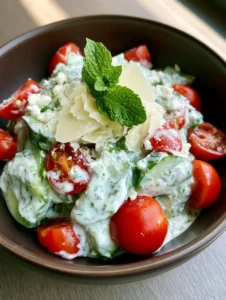
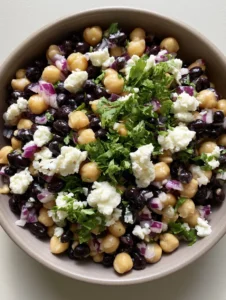
This dish is incredibly rich, so it pairs best with bright, acidic sides. Consider serving it alongside a high-protein Italian pasta salad for a lighter textural contrast, or perhaps some air fryer zucchini bites to add a crispy, vegetable-forward element to the meal.
If you enjoy the flavor profile of seared poultry and savory sauces, you might also love our Mediterranean chicken marinade for your next grilling session. For dessert, something citrusy like a strawberry matcha cookies or a light fruit-based treat helps cleanse the palate after the deep umami of the Gruyère and onions.
Frequently Asked Questions
You can caramelize the onions and sear the chicken a day in advance. However, for the best texture, we recommend boiling the orzo and baking the dish right before serving to prevent the pasta from becoming too soft.
Yes! Chicken thighs are excellent in this recipe as they remain very moist during the baking and broiling process. Just ensure they reach an internal temperature of 165°F (74°C).
The secret is the broiler. After baking the dish to heat everything through, switch your oven to the ‘High Broil’ setting for just 2-3 minutes. Stay by the oven and watch closely, as cheese can go from perfect to burnt in seconds.
If you cannot find Gruyère, the best substitutes are Emmental, Jarlsberg, or a high-quality Fontina. These offer similar melting properties and nutty flavor profiles.
Beef broth is the traditional base for French Onion soup. It provides the deep, brown color and the specific savory ‘umami’ depth that chicken broth lacks, creating a more authentic French Onion flavor.
The Complete French Onion Chicken Orzo Recipe
French Onion Chicken Orzo: The Ultimate One-Pan Comfort Casserole
Ingredients
Equipment
Method
- Season chicken with salt and pepper. In a large skillet over medium-high heat, sear in oil for 3-4 minutes per side until a golden-brown crust forms. Remove and set aside.
- In the same skillet, add butter and onions. Cook on medium for 20-25 mins until dark brown and soft. Deglaze with balsamic vinegar.
- Add orzo and flour to onions, stirring for 2 mins. Gradually whisk in beef broth and heavy cream until a light brown gravy forms.
- Transfer mixture to a baking dish. Top with chicken and Gruyère. Bake at 400°F (200°C) for 15 mins, then broil for 2-3 mins until cheese has charred spots.
Notes
Don't skip the resting period; it helps the sauce thicken around the orzo.
Wrapping Up Your Gourmet Kitchen Experience
Creating this French Onion Chicken Orzo is more than just making dinner; it’s about mastering the balance of simple ingredients to create something truly extraordinary. The deep, dark caramelized onions and the sharp, bubbly Gruyère transform humble orzo and chicken into a restaurant-quality meal. We hope this becomes a staple in your rotation!
Did you try this recipe? We’d love to see your results! Leave a comment below or share your photos with us. Be sure to follow us on Pinterest for more inspired weeknight dinners and culinary deep dives.