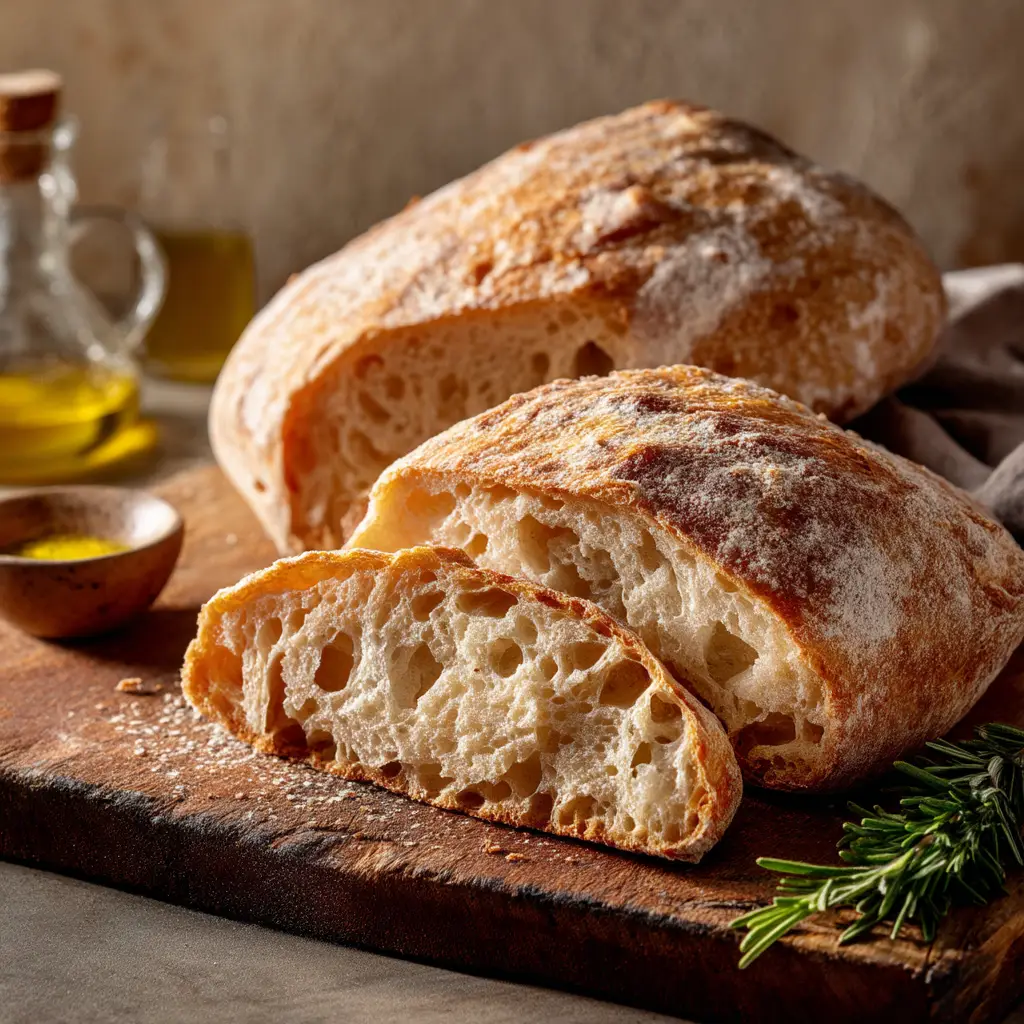
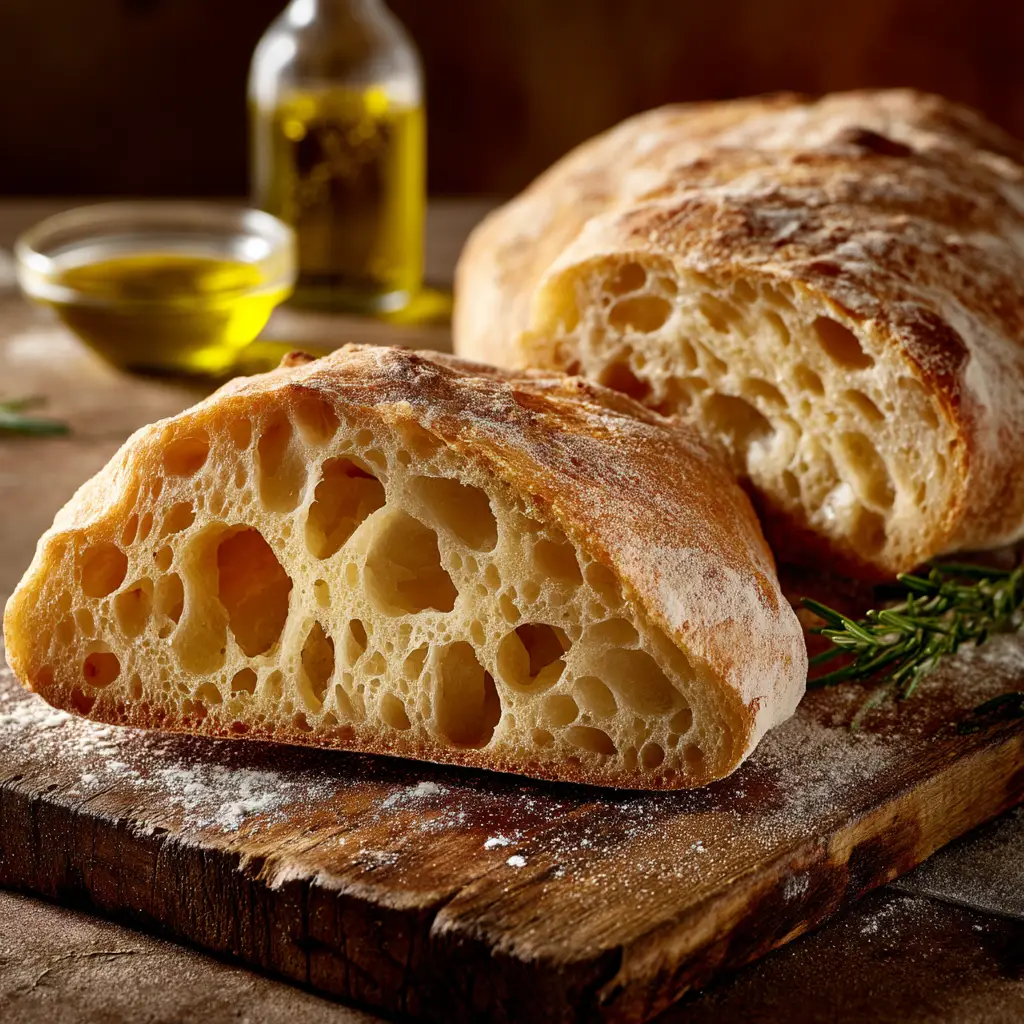
Ever dreamed of pulling a loaf of artisan-quality, crusty Homemade Ciabatta Bread from your own oven? Imagine a bread with a shatteringly crisp crust, a chewy, airy interior, and those signature large, irregular holes. It’s the perfect bread for sandwiches, dipping in olive oil, or serving alongside a hearty soup. Many home bakers feel intimidated by ciabatta, but this guide breaks down every step to ensure you achieve bakery-level results right in your own kitchen.
This recipe demystifies the process, focusing on the key techniques that deliver that iconic texture and flavor. We’ll walk through creating a “biga,” a simple pre-ferment that builds incredible depth of flavor, and handling the characteristically wet, sticky dough. Get ready to impress yourself, your family, and your friends with the best ciabatta you’ve ever tasted.
What Makes Ciabatta Bread So Special?
Ciabatta, which translates to “slipper” in Italian, is famous for its rustic, elongated shape and unique texture. The magic lies in its high hydration dough. This means it has a much higher water-to-flour ratio than many other bread recipes. This wet dough is what creates the beautiful, open crumb structure that ciabatta is known for. While it can be a bit tricky to handle at first, the payoff is a light, airy loaf that’s simply irresistible.
The Secret to a Perfect Crumb: The Biga Explained
Our key to a deeply flavorful Homemade Ciabatta Bread is the “biga.” A biga is a type of pre-ferment made from flour, water, and a tiny amount of yeast. You mix it up the day before you plan to bake and let it ferment for 12-16 hours. This slow fermentation process develops complex, nutty, and slightly tangy flavors that you just can’t get from a quick-rise dough. It also helps improve the dough’s structure, contributing to that perfect chewy texture.
Essential Ingredients for Homemade Ciabatta Bread
The beauty of this recipe is in its simplicity. You only need a few high-quality ingredients to create something truly special.
- Bread Flour: Higher in protein than all-purpose flour, bread flour provides the strength and structure needed to support the large air pockets in the dough.
- Instant Yeast: We’ll use a small amount for both the biga and the final dough.
- Water: Lukewarm water (around 90-100°F or 32-38°C) is ideal for activating the yeast.
- Fine Sea Salt: Salt is crucial for flavor and for controlling the yeast’s activity and strengthening the gluten structure.
- Olive Oil: A touch of olive oil adds flavor and softness to the crumb.
Tools of the Trade: What You’ll Need
You don’t need a professional bakery to make amazing ciabatta. Here are a few tools that will make the process easier:
- Stand Mixer: While not strictly necessary, a stand mixer with a dough hook is highly recommended for kneading this sticky, high-hydration dough.
- Large Bowl: You’ll need a big bowl for the dough to rise in.
- Dough Scraper or Bench Scraper: Essential for handling and folding the wet dough.
- Baking Stone or Steel: This helps create a super crisp bottom crust. A heavy, inverted baking sheet can also work in a pinch.
- Parchment Paper: For easy transfer of the loaves to the oven.
How to Make Homemade Ciabatta Bread (Step-by-Step)
This process is spread over two days, but the active time is minimal. Follow these steps closely for the best results. For another delightful baking project, consider our classic French baguette recipe.
Step 1: Making the Biga (The Day Before)
In a medium bowl, combine 1 cup (120g) of bread flour, 1/2 cup (120ml) of lukewarm water, and a pinch (1/8 teaspoon) of instant yeast. Stir with a spoon until no dry flour remains. The mixture will be stiff. Cover the bowl with plastic wrap and let it sit at room temperature for 12 to 16 hours. The biga is ready when it has doubled in size and is filled with bubbles.
Step 2: Mixing the Final Dough
To the bowl of a stand mixer fitted with the dough hook, add the mature biga, the remaining 2 1/2 cups (300g) of bread flour, the remaining 1 1/2 teaspoons of instant yeast, and the fine sea salt. Pour in the remaining 1 cup (240ml) of lukewarm water and the olive oil. Mix on low speed for 5-7 minutes. The dough will look shaggy. Increase the speed to medium-low and continue to mix for another 10-15 minutes. The dough will be very sticky and elastic, and it should start to pull away from the sides of the bowl.
Step 3: Bulk Fermentation and Folds
Scrape the dough into a large, oiled bowl. Cover it and let it rest for 30 minutes. After 30 minutes, perform the first set of “folds.” Wet your hands and reach under one side of the dough, stretch it up, and fold it over the center. Repeat this from all four sides. This process develops gluten without traditional kneading. Repeat the resting and folding process two more times, every 30 minutes. After the third fold, let the dough rise, covered, for 1 to 1.5 hours, or until it’s bubbly and nearly doubled.
Step 4: Shaping the Loaves
Generously flour your work surface. Carefully scrape the dough out of the bowl, trying to deflate it as little as possible. The dough will be very bubbly and loose. Gently stretch it into a rough 12×12 inch square. Sprinkle more flour on top and use a bench scraper to cut the dough in half. Gently stretch each half into a rectangular, slipper-like shape, about 10 inches long. Carefully transfer each loaf to a separate piece of parchment paper.
Step 5: The Final Proof
Loosely cover the shaped loaves with a floured tea towel and let them proof for 30-45 minutes. They will puff up slightly. While they proof, place your baking stone or steel on the middle rack of your oven and preheat to 450°F (232°C). Place a small metal pan on the bottom rack; we’ll use this to create steam.
Step 6: Baking to Perfection
Once preheated, carefully slide the parchment paper with one loaf onto the hot baking stone. Pour 1 cup of hot water into the metal pan on the bottom rack to create steam, and quickly close the oven door. Bake for 20-25 minutes, or until the crust is a deep golden brown and the internal temperature reaches 205-210°F (96-99°C). Transfer the baked loaf to a wire rack to cool completely. Repeat with the second loaf.
Pro Tips for the Best Homemade Ciabatta
Crafting the perfect Homemade Ciabatta Bread is an art. Here are some tips to help you succeed:
- Don’t Fear the Sticky Dough: The dough is supposed to be wet and sticky. Use wet hands or a dough scraper to manage it, and resist the urge to add too much extra flour.
- Be Gentle: When shaping the loaves, handle the dough as gently as possible to preserve the air bubbles created during fermentation.
- Steam is Key: The initial burst of steam in the oven is crucial for “oven spring” (the rapid rise of the dough) and developing that signature thin, crisp crust.
Storing Your Homemade Ciabatta
Ciabatta is best enjoyed on the day it’s baked. Once completely cooled, store it in a paper bag at room temperature for up to 2 days. Avoid storing it in plastic, as this will soften the crust. You can also freeze a whole or sliced loaf for up to 3 months. For a quick and delicious meal, try turning leftover slices into a Garlic Bread Grilled Cheese. Or serve it alongside a comforting bowl of White Lasagna Soup.
Frequently Asked Questions About Ciabatta Bread
Yes, but it requires more effort. You can mix the dough by hand with a sturdy spoon and then perform a series of slap-and-folds on a wet counter to develop the gluten. It will be messy, but it is possible to achieve a good result with patience.
The keys to an open crumb are high hydration, proper gluten development (through mixing and folding), and gentle handling. When you shape the loaves, be very careful not to press down or deflate the dough, as this will collapse the precious air bubbles you’ve developed during fermentation.
The best indicators are a deep, golden-brown crust and the sound it makes when you tap the bottom—it should sound hollow. For complete accuracy, use an instant-read thermometer to check the internal temperature, which should be between 205-210°F (96-99°C).
A biga is a pre-ferment made from flour, water, and yeast that rests for 12-16 hours before being added to the final dough. While you could find recipes that skip this step, we don’t recommend it. The biga is essential for developing the deep, complex flavor and perfect chewy texture of authentic ciabatta.
Ciabatta dough is intentionally a high-hydration dough, which means it has a very high water content. This wetness is precisely what creates the characteristic large, airy holes and moist crumb. Don’t be tempted to add too much flour; instead, use wet hands or a dough scraper to handle it.
Ready to Bake?
We hope you feel inspired to tackle this rewarding Homemade Ciabatta Bread recipe. The incredible flavor and texture are well worth the effort. When you pull these beautiful loaves from your oven, you’ll feel an amazing sense of accomplishment. Be sure to share your creations and tag us on Pinterest!
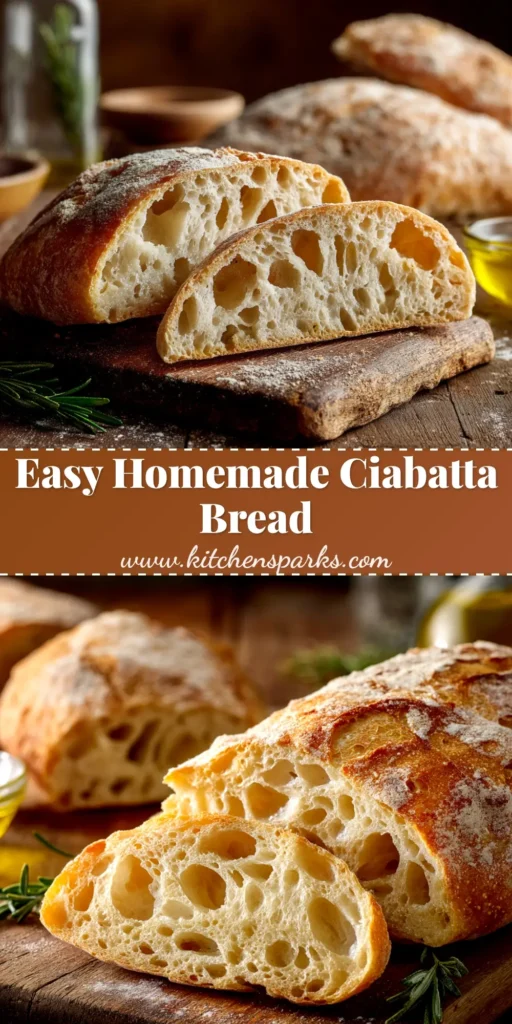
Homemade Ciabatta Bread Recipe
Homemade Ciabatta Bread: The Ultimate Recipe for a Perfect Crusty Loaf
Ingredients
Equipment
Method
- In a medium bowl, combine 1 cup (120g) of bread flour, 1/2 cup (120ml) of lukewarm water, and 1/8 tsp of instant yeast. Stir until no dry flour remains.
- Cover the bowl with plastic wrap and let it sit at room temperature for 12 to 16 hours, until doubled and bubbly.
- In a stand mixer with a dough hook, add the mature biga, 2 1/2 cups (300g) bread flour, 1 cup (240ml) water, 1 1/2 tsp instant yeast, salt, and olive oil.
- Mix on low for 5-7 minutes, then increase to medium-low and mix for 10-15 minutes until the dough is elastic and pulls away from the bowl sides.
- Scrape the dough into an oiled bowl, cover, and rest for 30 minutes.
- Perform three sets of folds, 30 minutes apart. To fold, wet your hands, stretch one side of the dough up and over the center, and repeat from all four sides.
- After the third fold, let the dough rise for 1 to 1.5 hours until bubbly and nearly doubled.
- Turn the dough onto a well-floured surface. Gently stretch into a 12x12 inch square and cut in half. Gently shape each half into a 10-inch long rectangle and place on parchment paper.
- Loosely cover the loaves and let them proof for 30-45 minutes.
- While proofing, preheat your oven with a baking stone to 450°F (232°C). Place an empty metal pan on the bottom rack.
- Slide one loaf onto the hot stone. Pour 1 cup of hot water into the metal pan to create steam. Close the door immediately and bake for 20-25 minutes.
- The loaf is done when deep golden brown. Cool completely on a wire rack before slicing. Repeat with the second loaf.
Notes
Cooling is Crucial: Do not slice the bread until it has cooled completely. Slicing it while hot can result in a gummy texture as the interior is still setting.