The Thai Chickpea Salad is a masterclass in textural contrast, combining the crisp, refreshing bite of a dual-cabbage slaw with the deep, earthy crunch of oven-roasted legumes. This isn’t just another sad desk lunch; it is a vibrant, nutrient-dense powerhouse that looks as though it stepped right out of a professional culinary studio. The secret lies in the interplay between the warm, slightly charred chickpeas and the cold, zingy peanut lime drizzle.
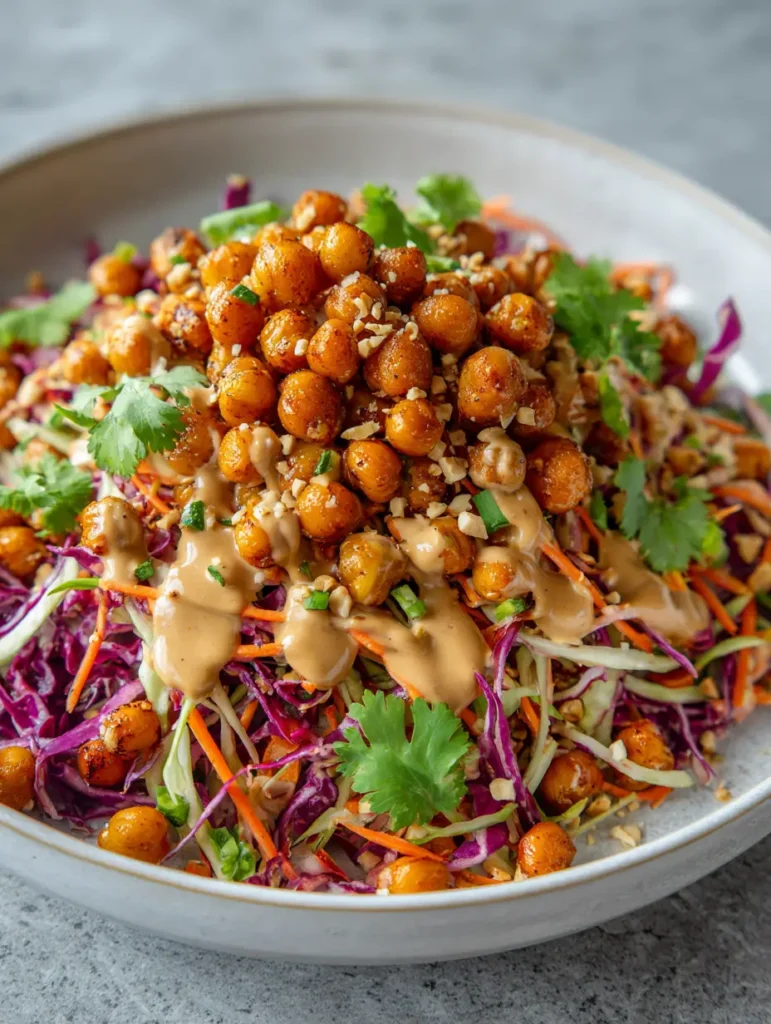
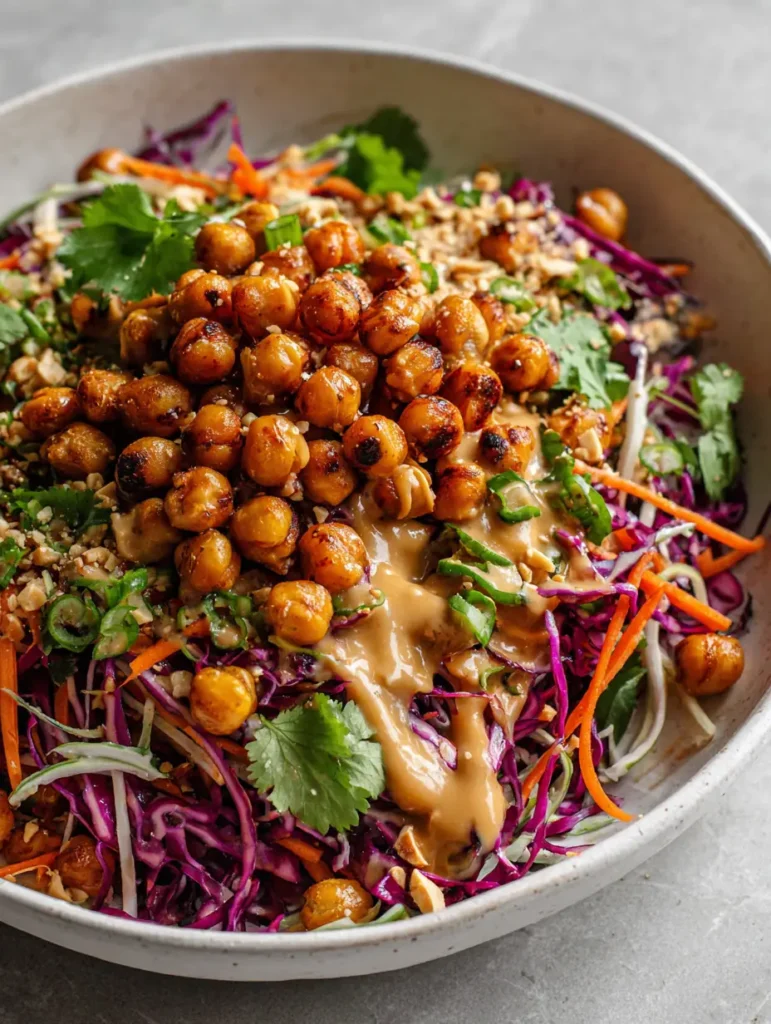
When you look at this dish, the first thing you notice is the explosion of color. The deep violet of the red cabbage balances the neon brightness of the julienned carrots, while the golden-brown roasted chickpeas provide a rustic, hearty topping. This Thai Chickpea Salad is designed to be as visually stunning as it is delicious, capturing that perfect “handheld smartphone photo” aesthetic that makes every home cook feel like a pro.
Whether you are looking for a high-protein vegan dinner or a meal-prep solution that won’t go soggy by noon, this recipe delivers. It borrows the aromatic profile of Southeast Asian cuisine—bright lime, pungent ginger, and rich peanut—and applies it to a structural salad that stays crunchy for hours. Let’s dive into how you can recreate this vibrant bowl in your own kitchen.
Why You Will Absolutely Crave This Vibrant Slaw
- The Ultimate Crunch Factor: By using both red and green cabbage, we create a base that maintains its structural integrity even after being dressed, providing a satisfying “snap” in every mouthful.
- Gourmet Roasted Texture: Unlike canned chickpeas added straight to a bowl, our chickpeas are roasted until they develop a deep golden-brown hue and specific charred spots for a smoky, nutty depth.
- Velvety Peanut Emulsion: The light-brown peanut dressing is thick enough to coat the vegetables without pooling at the bottom, ensuring every julienned carrot is infused with flavor.
- Visual Vibrancy: This dish is a “rainbow in a bowl,” making it a perfect centerpiece for healthy entertaining or a high-RPM social media post.
The Fresh Produce and Pantry Staples You’ll Need
To achieve the specific visual and flavor profile of our Thai Chickpea Salad, every ingredient serves a purpose. We aren’t just looking for flavor; we are looking for the specific textures described in our culinary blueprint.
Canned Chickpeas: 1 can (15 oz / 425g). These provide the plant-based protein and, when roasted properly, become the “crouton” of the salad with a golden, charred exterior.
Red and Green Cabbage: 2 cups (180g) of each, finely shredded. The dual-color approach is essential for that “vibrant” look, providing both peppery notes and a mild sweetness.
Carrots: 2 large (150g), julienned. You want these in thin matchsticks to mimic the texture of the shredded cabbage for a cohesive eating experience.
Creamy Peanut Butter: 1/2 cup (125g). This forms the light-brown base of our dressing, offering a rich mouthfeel that balances the acidic lime juice.
Fresh Lime Juice: 3 tbsp (45ml). Essential for cutting through the fat of the peanut butter and brightening the overall flavor profile of the Thai Chickpea Salad.
Grated Fresh Ginger: 1 tbsp (6g). This adds a subtle heat and a signature aromatic quality that is synonymous with Thai-inspired dressings.
Soy Sauce or Tamari: 2 tbsp (30ml). This provides the necessary salt and umami depth, ensuring the dressing isn’t just sweet but savory and complex.
Fresh Cilantro and Scallions: 1/2 cup (15g) and 3 whole stalks. These bright green garnishes are the final visual touch that makes the dish pop against the neutral grey stone background.
Roasted Peanuts: 1/4 cup (35g), crushed. Adding these provides a secondary layer of peanut flavor and an extra level of “shatter-crisp” texture.
Must-Have Kitchen Tools for the Perfect Slaw
Achieving the fine, uniform texture seen in the Midjourney prompt requires a few specific tools. While you can use a knife, these items will make the process much faster and more professional.
A high-quality mandoline slicer is your best friend for the cabbage. It allows you to achieve that “finely shredded” look that is nearly impossible to do consistently by hand. For the carrots, a julienne peeler or a sharp chef’s knife is required to create those thin, orange matchsticks that weave through the greens.
You will also need a large rimmed baking sheet for the chickpeas. Giving them plenty of space is the secret to getting those charred spots rather than just steaming them. A small whisk or a high-speed blender will ensure your peanut dressing is perfectly emulsified and “creamy light-brown” as described.
Achieving the Ultimate Golden-Brown Roasted Chickpea
The most critical step in this Thai Chickpea Salad is the preparation of the legumes. We aren’t looking for soft, mushy chickpeas; we want a firm, crunchy exterior with a slight char. Start by draining and rinsing your chickpeas thoroughly.
The absolute “Pro Tip” for roasting is to dry the chickpeas completely. Use a clean kitchen towel to roll them around until every drop of moisture is gone. If they are wet, they will steam in the oven instead of crisping up.
Toss the dry chickpeas with 1 tbsp (15ml) of avocado oil or light olive oil and a pinch of salt. Spread them in a single layer on your baking sheet. Roast at 400°F (200°C) for 20-25 minutes. Listen for the sound of them rattling on the pan—that’s the sound of moisture leaving and crunch arriving. You’ll know they are ready when you see those specific “golden-brown charred spots” mentioned in the visual blueprint.
Mastering the Velvety Peanut Lime Drizzle
A great Thai Chickpea Salad lives or dies by its dressing. We want a “thick, creamy light-brown peanut sauce” that is pourable but significant enough to sit on top of the vegetables without immediately disappearing.
In a medium bowl, combine your peanut butter, lime juice, soy sauce, grated ginger, and 1 tbsp (15ml) of maple syrup or honey for balance. If the mixture is too thick, whisk in warm water one tablespoon at a time. The goal is a consistency that allows for an “uneven drizzle,” creating those beautiful visual ribbons across the salad.
The dressing should taste like a balance of salty, sweet, sour, and spicy. If you enjoy a bit of heat, a teaspoon of Sriracha or red chili flakes fits perfectly here. This dressing is so versatile, it actually reminds me of the aromatics used in our zesty ginger lime pork, making it a staple for your recipe tin.
Building the Vibrant Cabbage and Carrot Base
While the chickpeas roast, it’s time to prep the “rainbow.” Shredding the red and green cabbage finely is vital for the mouthfeel. Thin ribbons of cabbage absorb the dressing better and are much easier to eat than large chunks. If you’ve ever made one-pot black beans and rice, you know how important texture is to a cohesive meal.
Mix the two cabbages in a large white ceramic bowl. The contrast between the deep purple and the bright green creates an instant visual impact. Add your julienned carrots to the mix. Use your hands or large tongs to toss them thoroughly, ensuring the colors are evenly distributed.
At this stage, the salad should look like a vibrant nest of vegetables. The “soft natural daylight” will catch the moisture on the freshly cut cabbage, making it look incredibly appetizing and fresh. Do not dress the salad until you are ready to serve to keep that “realistic texture” intact.
The Final Assembly and Garnish Protocol
Now comes the part where we turn individual components into the masterpiece seen in the prompt. Place a generous portion of the cabbage and carrot mix into a shallow white ceramic bowl. This choice of vessel is key—it allows the ingredients to spread out so every element is visible.
Top the center of the salad with a “generous portion” of the warm, roasted chickpeas. The heat from the chickpeas will slightly soften the cabbage underneath, releasing a wonderful aroma. Now, take your peanut dressing and perform that “uneven drizzle” over the top. Don’t cover everything; you want the vibrant colors of the vegetables to peek through.
Finally, the garnishes. Sprinkle the bright green fresh cilantro leaves and thinly sliced scallions over the bowl. The green against the light-brown sauce is a classic culinary color pairing. Finish with a handful of crushed roasted peanuts for that final layer of crunch and flavor. This level of detail is what separates a basic salad from a professional Thai Chickpea Salad.
Pro Culinary Hacks for Texture and Flavor
- The “Dry Chickpea” Rule: I cannot stress this enough—moisture is the enemy of the crunch. If you have time, let the chickpeas air dry for 30 minutes before oiling and roasting.
- Balance the Acid: If your peanut dressing feels too heavy, add an extra squeeze of lime. The acidity acts as a flavor enhancer, making the other ingredients “pop.”
- Mellow the Scallions: If you find raw scallions too pungent, soak the slices in ice water for 10 minutes before garnishing. This keeps them crisp but removes the “bite.”
- Salt Your Cabbage? For a softer slaw, you can lightly salt the cabbage and let it sit for 10 minutes, then squeeze out the water. However, for this specific Thai Chickpea Salad, we want the raw, vibrant crunch.
Meal Prep, Storage, and Freshness Guidelines
This Thai Chickpea Salad is an excellent candidate for meal prep, provided you store the components correctly. If you mix everything together, the cabbage will eventually wilt and the chickpeas will lose their hard-earned crunch.
To Store: Keep the shredded cabbage and carrots in an airtight container for up to 5 days. Store the peanut dressing in a separate glass jar. The roasted chickpeas should be kept in a container at room temperature with the lid slightly ajar to prevent them from becoming chewy.
To Re-Crisp: If your chickpeas have softened in storage, toss them back into a 350°F (175°C) oven or an air fryer for 3-5 minutes before serving. This restores that “golden-brown” texture that is so vital to the dish’s appeal.
Creative Ways to Plate and Pair Your Salad
While this Thai Chickpea Salad is a complete meal on its own, it also pairs beautifully with other dishes. If you are hosting a dinner party, consider serving it alongside succulent grilled shrimp skewers for added protein. The smoky char of the shrimp complements the charred spots on the chickpeas perfectly.
For a heavier meal, this salad works as a refreshing side to sweet and savory BBQ chicken rice bowls. The acidity of the lime and the crunch of the cabbage cut through the richness of the BBQ sauce. You could even use the peanut dressing as a dipping sauce for other appetizers, much like the versatility found in a bold cowboy butter spread.
Your Pressing Questions Answered
Absolutely. You can substitute almond butter, cashew butter, or even sunflower seed butter (for a nut-free version) and still achieve a similar creamy, light-brown consistency.
You can use canned chickpeas straight from the can, but you will miss the signature crunch and charred flavor that defines this Thai Chickpea Salad. Roasting adds a necessary textural contrast to the soft cabbage.
It is excellent for meal prep if stored deconstructed. Keep the cabbage mix, the dressing, and the roasted chickpeas in separate containers to ensure nothing goes soggy.
The secret is drying them completely before roasting and avoiding airtight storage while they are still warm. If they soften, a quick 5-minute air fry or bake will restore their crunch.
Yes, as long as you use tamari or coconut aminos in place of traditional soy sauce in the peanut lime dressing.
The Official Recipe Card: Thai Chickpea Salad
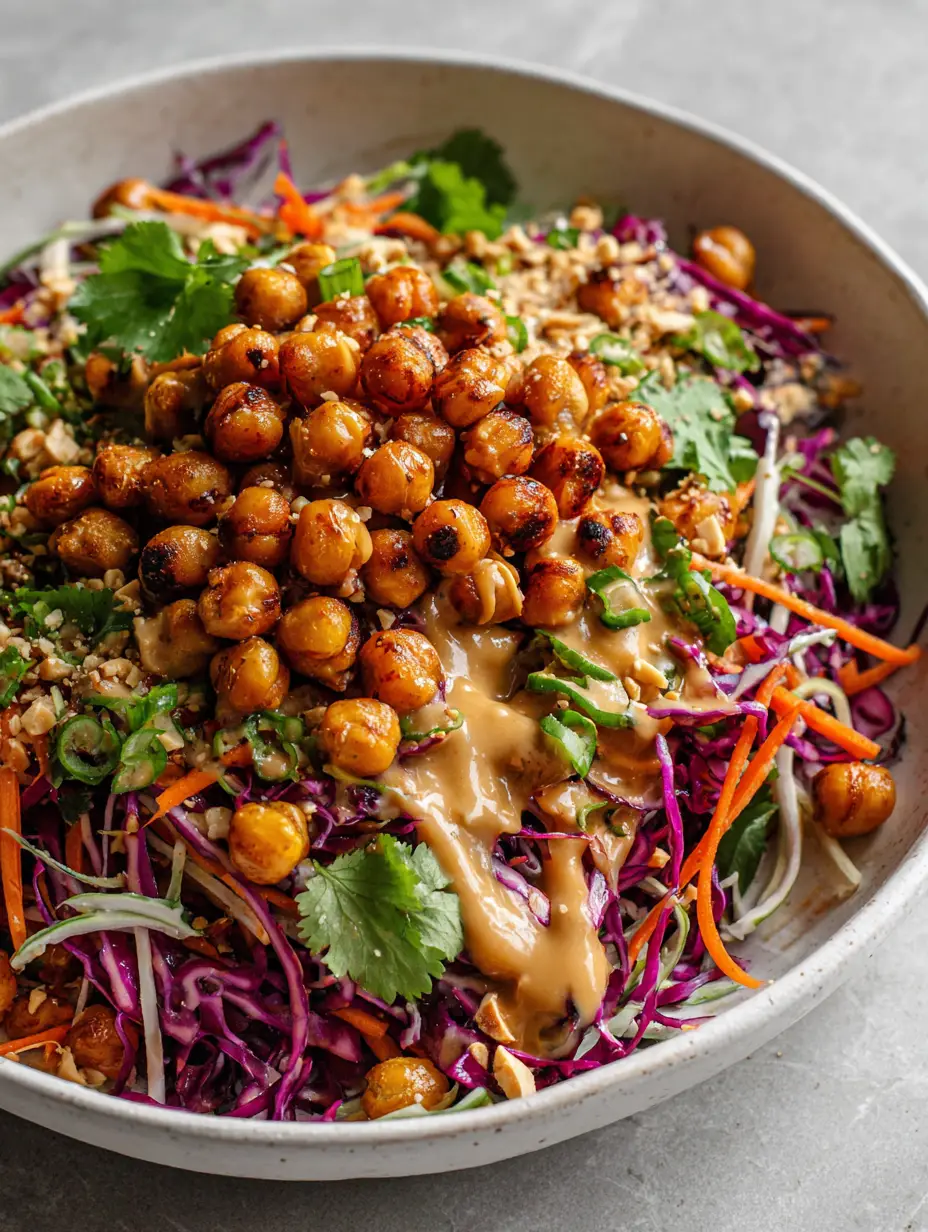
Thai Chickpea Salad with Roasted Chickpeas and Creamy Peanut Dressing
Ingredients
Equipment
Method
- Preheat oven to 400°F (200°C). Rinse and drain chickpeas, then dry thoroughly with a kitchen towel until no moisture remains.
- Toss chickpeas with oil and salt. Spread on a baking sheet and roast for 20-25 minutes until golden-brown with charred spots.
- In a bowl, whisk peanut butter, lime juice, soy sauce, ginger, and maple syrup. Add water 1 tbsp at a time until it reaches a drizzling consistency.
- Finely shred both cabbages using a mandoline. Julienne the carrots into thin matchsticks. Mix together in a large shallow bowl.
- Top the vegetable base with roasted chickpeas. Drizzle the creamy peanut sauce unevenly over the top. Garnish with cilantro, scallions, and crushed peanuts.
Notes
Store dressing and salad separately to prevent wilting.
Join the Community and Share Your Creation!
There is nothing quite like the satisfaction of pulling a vibrant, healthy meal like this Thai Chickpea Salad together in under 30 minutes. The combination of the creamy peanut lime dressing and the crunch of roasted chickpeas is a flavor profile you will find yourself returning to week after week. It’s a dish that proves healthy eating never has to be boring or bland.
If you made this recipe, we want to see it! Head over to Pinterest and share a photo of your bowl. Did you get those perfect charred spots on your chickpeas? Let us know in the comments below! Don’t forget to sign up for our newsletter for more recipe blueprints and culinary forensics delivered straight to your inbox.
Happy cooking, and enjoy every crunchy, peanut-buttery bite of your homemade Thai Chickpea Salad!