Welcome to the ultimate guide to making authentic Vietnamese pickled vegetables, also known as Đồ Chua. This vibrant, crunchy, and tangy condiment is the secret ingredient that elevates so many classic dishes. If you’ve ever craved that perfect balance of sweet and sour in a Banh Mi or a noodle bowl, you’re in the right place. This recipe is incredibly simple, requires just a few basic ingredients, and will quickly become a staple in your refrigerator.
Forget store-bought versions; homemade Đồ Chua is infinitely better. You control the ingredients, the level of sweetness, and the thickness of your cuts. Let’s dive in and make this delicious kitchen essential.
What Are Vietnamese Pickled Vegetables (Đồ Chua)?
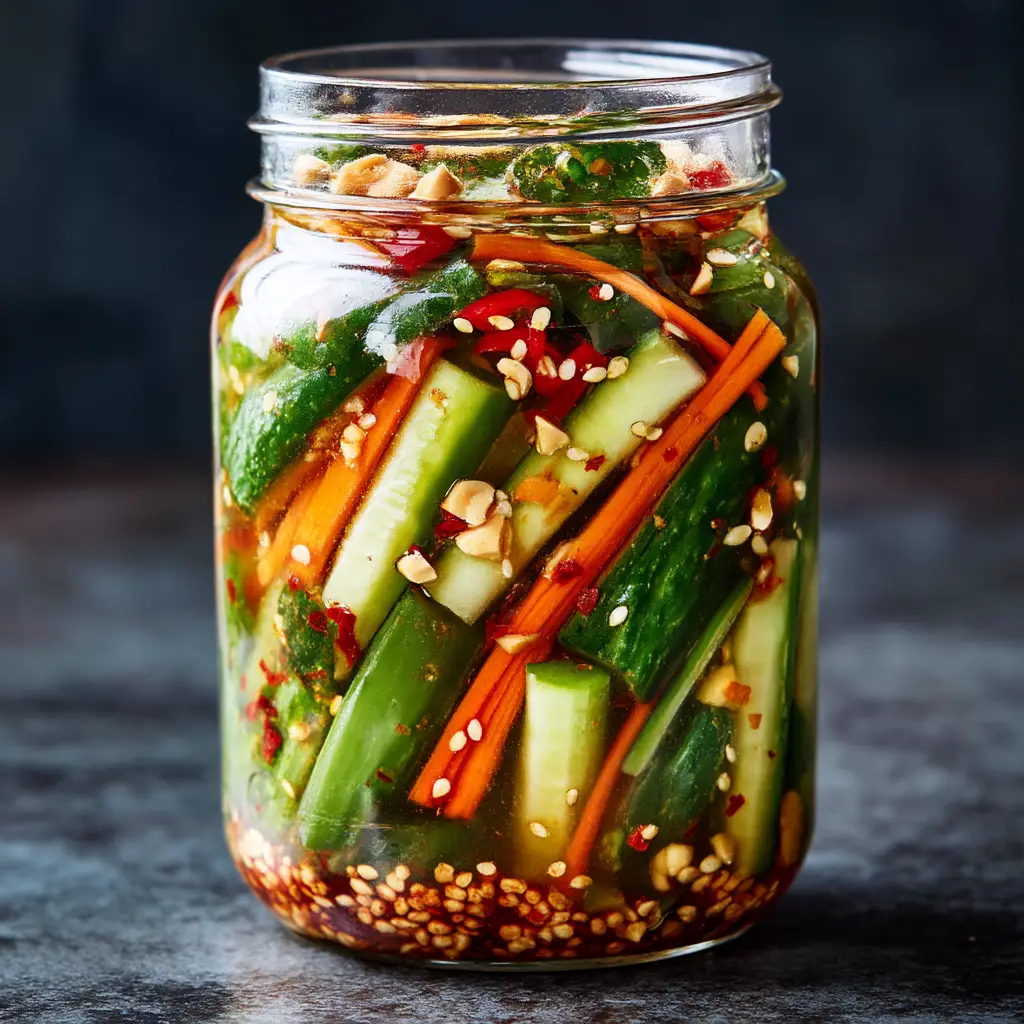
Đồ Chua is a classic Vietnamese condiment made from julienned daikon radish and carrots, pickled in a simple brine of vinegar, sugar, and salt. The name literally translates to “sour things.” Its signature characteristic is the delightful crunch and the perfect harmony of sweet and tangy flavors. It’s not a fermented pickle, but rather a quick pickle, meaning it’s ready to enjoy in just a few hours. This condiment is essential for adding brightness, texture, and a pop of flavor that cuts through richer elements in many dishes.
Core Ingredients for Authentic Flavor
The beauty of this recipe lies in its simplicity. You only need a handful of staple ingredients to create authentic Vietnamese pickled vegetables.
- Daikon Radish: This large, mild white radish provides the signature crunch and volume. Look for a firm, smooth daikon at your local grocery store or Asian market.
- Carrots: Carrots add a touch of sweetness, vibrant color, and another layer of texture.
- Distilled White Vinegar: The foundation of our pickling liquid. Its clean, sharp flavor is ideal for creating a tangy brine.
- Granulated Sugar: Balances the tartness of the vinegar, giving Đồ Chua its characteristic sweet and sour taste.
- Salt: Used initially to draw out excess moisture from the vegetables, ensuring they stay crisp. A small amount also goes into the brine to enhance the overall flavor.
Step-by-Step: How to Make Vietnamese Pickled Vegetables
Making your own Đồ Chua is a simple three-step process: prep the vegetables, make the brine, and combine. Follow these instructions for perfect results every time.
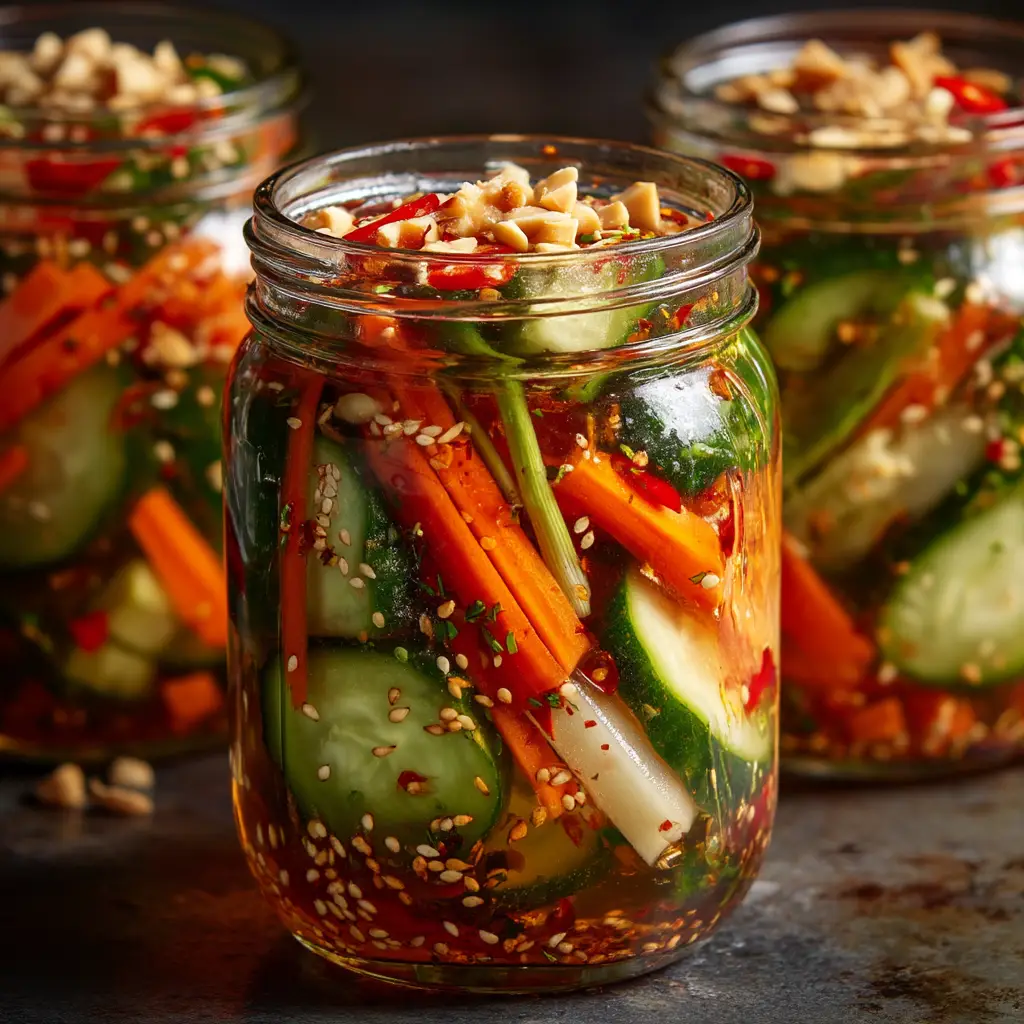
- Prep the Vegetables: First, peel the daikon radish and carrots. Cut them into thin, uniform matchsticks about 2-3 inches long. You can do this by hand with a sharp knife or use a mandoline with a julienne blade for faster, more consistent results. Place the julienned vegetables in a large bowl.
- Sweat the Vegetables: Sprinkle the vegetables with 1 tablespoon of salt and 1 tablespoon of sugar. Toss everything together and let it sit for about 15-20 minutes. This step is crucial as it draws out excess water, which helps the vegetables stay wonderfully crisp after pickling. After they’ve rested, rinse them thoroughly under cold water and drain well.
- Create the Brine & Pickle: In a separate bowl or large measuring cup, combine the warm water, distilled white vinegar, and remaining 1/2 cup of sugar. Stir until the sugar is completely dissolved. Pack the rinsed and drained vegetables into a clean glass jar. Pour the brine over the vegetables, ensuring they are fully submerged. Seal the jar and let it sit at room temperature for at least one hour before serving. For best results, refrigerate overnight.
Pro-Tips for Perfectly Crisp Pickles
The hallmark of great Vietnamese pickled vegetables is their crunch. Here are a few expert tips to ensure you get that perfect texture every single time.
- Don’t Skip the Salting Step: The initial salting and sugaring process (called “sweating”) is the most important step for achieving a lasting crunch. It removes excess moisture that would otherwise make your pickles soft.
- Use Warm Water for the Brine: Using warm (not boiling) water helps the sugar dissolve much faster, ensuring a smooth and well-balanced brine.
- Uniform Cuts are Key: Cutting your daikon and carrots to a similar size ensures they pickle evenly. A mandoline is a fantastic tool for this.
- Pack the Jar Tightly: Gently but firmly pack the vegetables into your jar. This helps keep them submerged under the brine, which is essential for proper pickling.
How to Serve Your Đồ Chua
The versatility of these Vietnamese pickled vegetables is one of their best qualities. They add a refreshing crunch to countless dishes. Try them with our Vietnamese Noodle Salad for a classic pairing. They are also fantastic on tacos, like these amazing chicken street tacos, or even to add some zest to a savory rice bowl like our Persian Jeweled Rice.
Storage Instructions
Store your Vietnamese pickled vegetables in a sealed glass jar in the refrigerator. They will be ready to eat after about an hour, but the flavor deepens and improves after 24 hours. They will stay crisp and delicious for up to 4 weeks in the fridge, making them a perfect condiment to make ahead and have on hand.
Frequently Asked Questions about Vietnamese Pickled Vegetables
Absolutely! To add a spicy kick, simply add a few thin slices of a fresh chili pepper (like a bird’s eye or jalapeño) or a teaspoon of red pepper flakes to the jar along with the vegetables before pouring in the brine.
Distilled white vinegar is recommended for its neutral flavor profile. You can experiment with rice vinegar or apple cider vinegar, but they will impart a slightly different flavor to the final product.
Daikon radish is traditional for its mild flavor and crisp texture. If you can’t find it, you can make this recipe with just carrots, or substitute with other firm vegetables like kohlrabi or jicama, though the flavor will not be traditional.
When stored in a sealed glass jar in the refrigerator, they will stay crisp and delicious for up to 4 weeks. The flavors will continue to develop over the first few days.
The most common reason for soft pickles is skipping the initial salting and sugaring step. This step, known as ‘sweating,’ draws out excess moisture from the vegetables and is crucial for maintaining a crisp texture.
Share Your Creations!
We hope you love this simple yet flavorful Vietnamese pickled vegetables recipe! It’s a fantastic way to add a touch of authentic Southeast Asian flavor to your home cooking. If you make it, don’t forget to leave a comment below and share your creations on Pinterest!
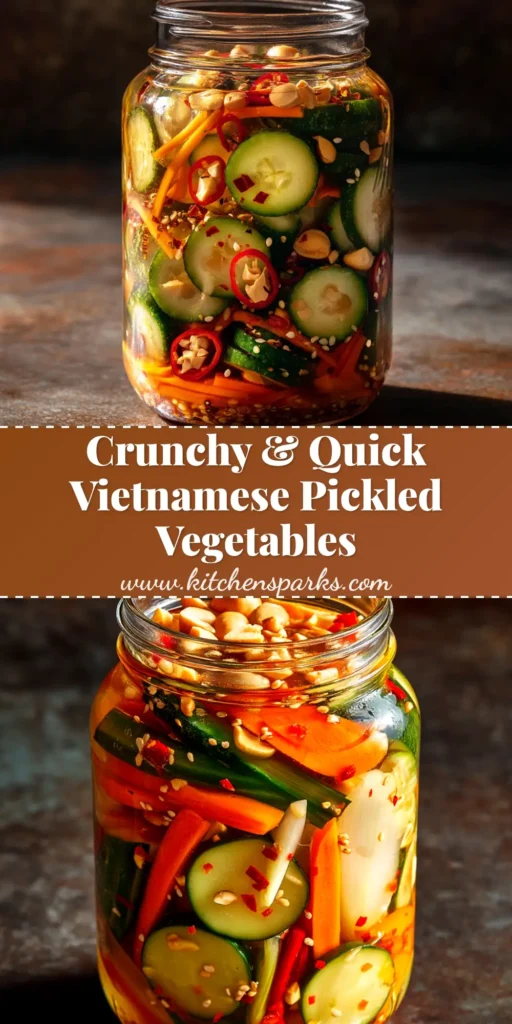
Vietnamese Pickled Vegetables (Đồ Chua Recipe)
Vietnamese Pickled Vegetables (Easy Đồ Chua Recipe)
Ingredients
Equipment
Method
- Peel and julienne the daikon radish and carrots into matchsticks about 2-3 inches long. Place them in a large bowl.
- Sprinkle the julienned vegetables with 1 tbsp of salt and 1 tbsp of sugar. Toss to combine and let sit for 15-20 minutes to draw out excess water. Rinse thoroughly under cold water and drain well.
- In a separate bowl, combine the warm water, distilled white vinegar, and the remaining 1/2 cup of sugar. Stir until the sugar is fully dissolved.
- Pack the rinsed and drained vegetables into a clean glass jar. Pour the brine over them, ensuring they are fully submerged. Seal the jar and let it sit at room temperature for at least 1 hour before serving. For best flavor, refrigerate overnight.
Notes
Make sure to use a clean, sterilized jar to prolong the shelf life of your pickles.