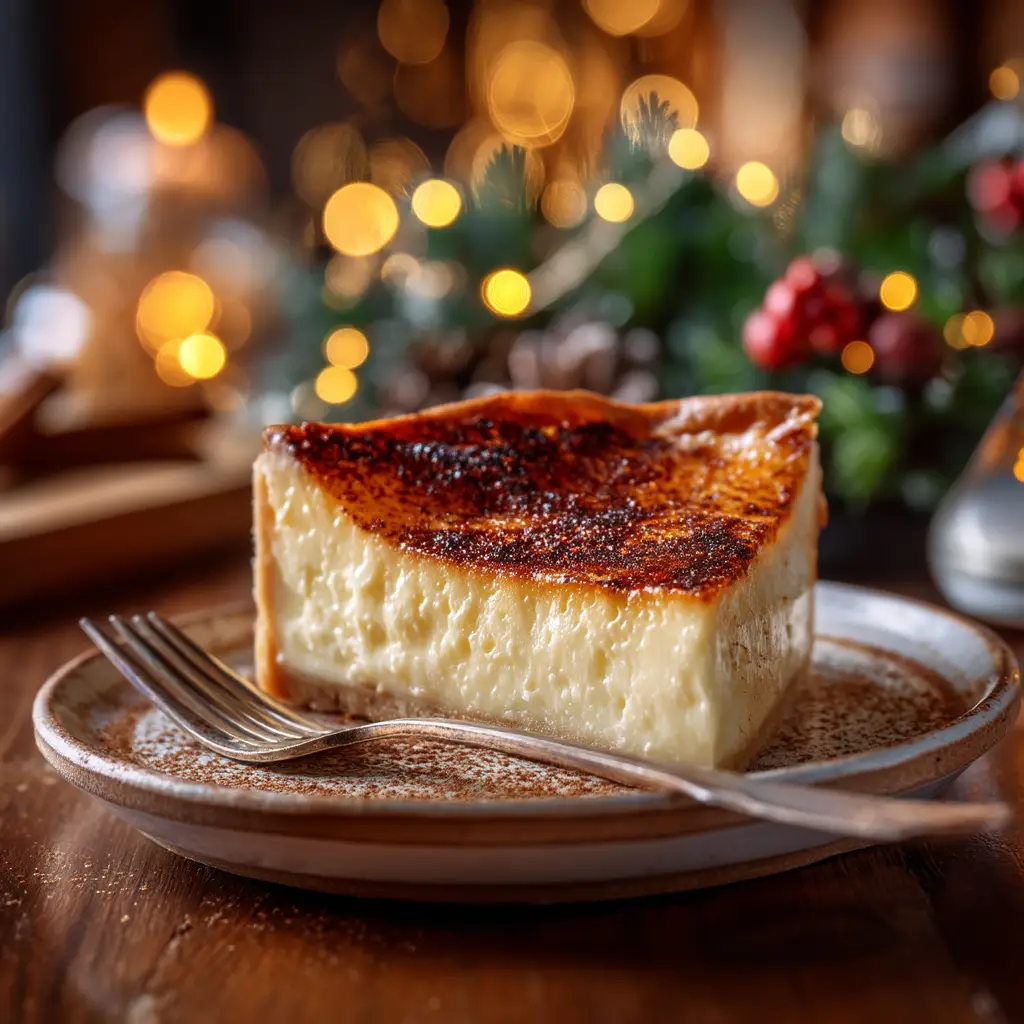
Ingredients
Equipment
Method
Prepare and Blind Bake the Crust
- Combine the flour and salt in a bowl. Cut in the cold butter using a pastry blender or your fingers until the mixture resembles coarse crumbs.
- Drizzle in the ice water, one tablespoon at a time, mixing gently until the dough just comes together.
- Form the dough into a disk, wrap it in plastic, and chill for at least 30 minutes.
- Roll the chilled dough out on a floured surface and fit it into a 9-inch pie plate. Trim and crimp the edges. Prick the bottom with a fork.
- Line the crust with parchment paper, fill with pie weights or dried beans, and bake at 400°F (200°C) for 15 minutes.
- Remove the weights and parchment, then bake for another 5-7 minutes, until the crust is a pale golden brown. Let it cool slightly while you prepare the filling.
Create the Silky Custard Filling
- In a large bowl, whisk the eggs, sugar, and salt together until just combined. Don't over-whisk.
- In a saucepan, gently heat the whole milk over medium heat until it's warm to the touch and small bubbles form around the edges. Do not let it boil.
- Slowly pour the warm milk into the egg mixture while whisking constantly. This is called tempering and prevents the eggs from scrambling.
- Stir in the vanilla extract and freshly grated nutmeg.
Bake to Perfection
- Reduce your oven temperature to 350°F (175°C).
- Place the partially baked pie crust on a baking sheet. Carefully pour the custard filling into the warm crust.
- Bake for 40-50 minutes. The pie is done when the center is nearly set but still has a slight jiggle (like Jell-O). The edges should be firm.
- Let the pie cool completely on a wire rack for at least 2 hours. This allows the custard to set fully.
Notes
Use Room Temperature Eggs: They incorporate more easily and create a smoother custard.
Don't Skip Tempering: Pouring the warm milk slowly is crucial. If you rush, you'll end up with sweet scrambled eggs.
Avoid Overbaking: The number one cause of watery or cracked custard pie is overbaking. The residual heat will finish cooking the center as it cools.
Strain the Custard: For an ultra-silky filling, strain the custard mixture through a fine-mesh sieve before pouring it into the crust.
Don't Skip Tempering: Pouring the warm milk slowly is crucial. If you rush, you'll end up with sweet scrambled eggs.
Avoid Overbaking: The number one cause of watery or cracked custard pie is overbaking. The residual heat will finish cooking the center as it cools.
Strain the Custard: For an ultra-silky filling, strain the custard mixture through a fine-mesh sieve before pouring it into the crust.