There is a profound difference between a broken, oily vinaigrette and a perfectly executed Creamy Balsamic Dressing. When you master the art of the emulsion, you transform a few simple pantry staples into a luxurious, tan-colored sauce that clings to every leaf of lettuce.
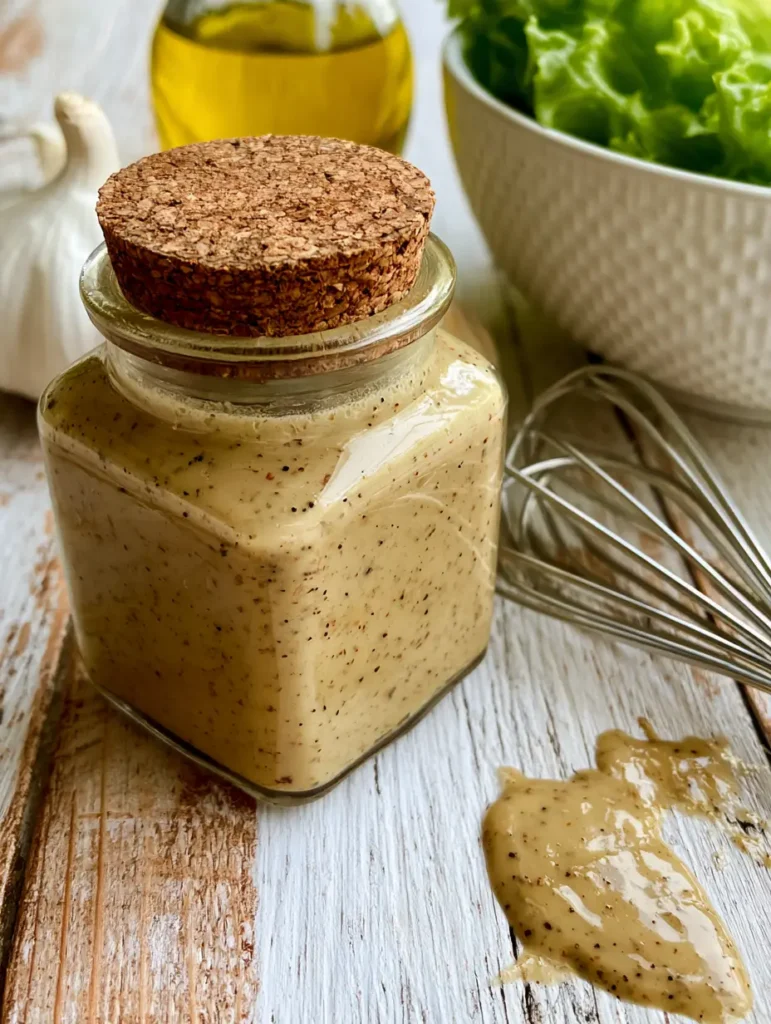
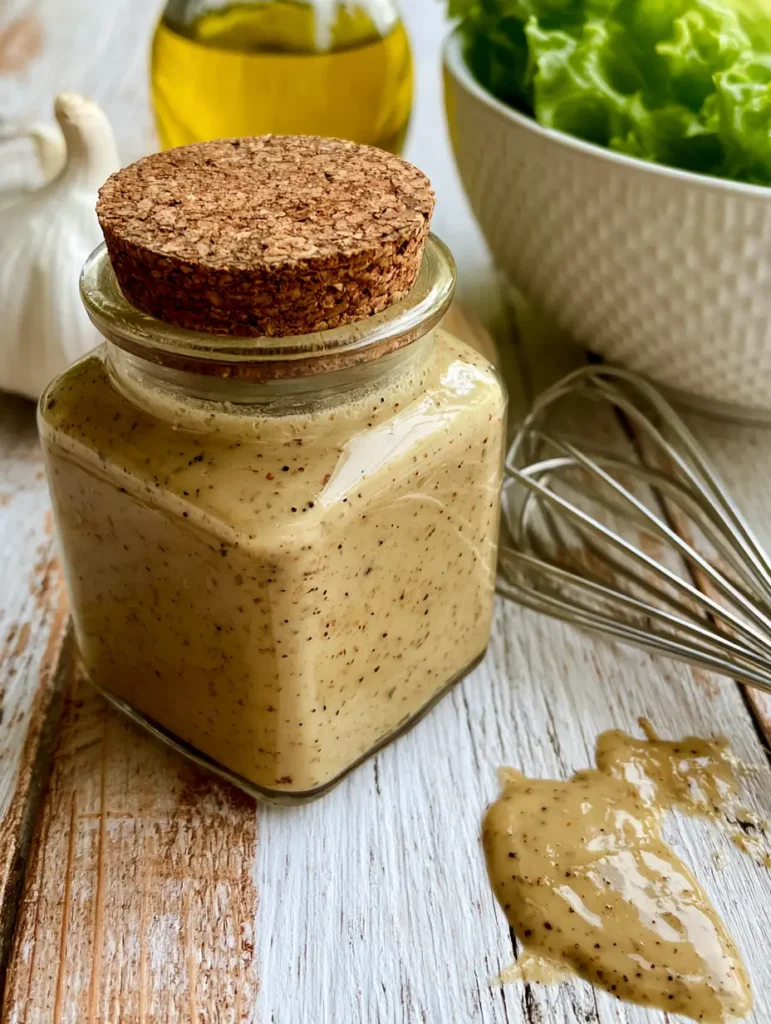
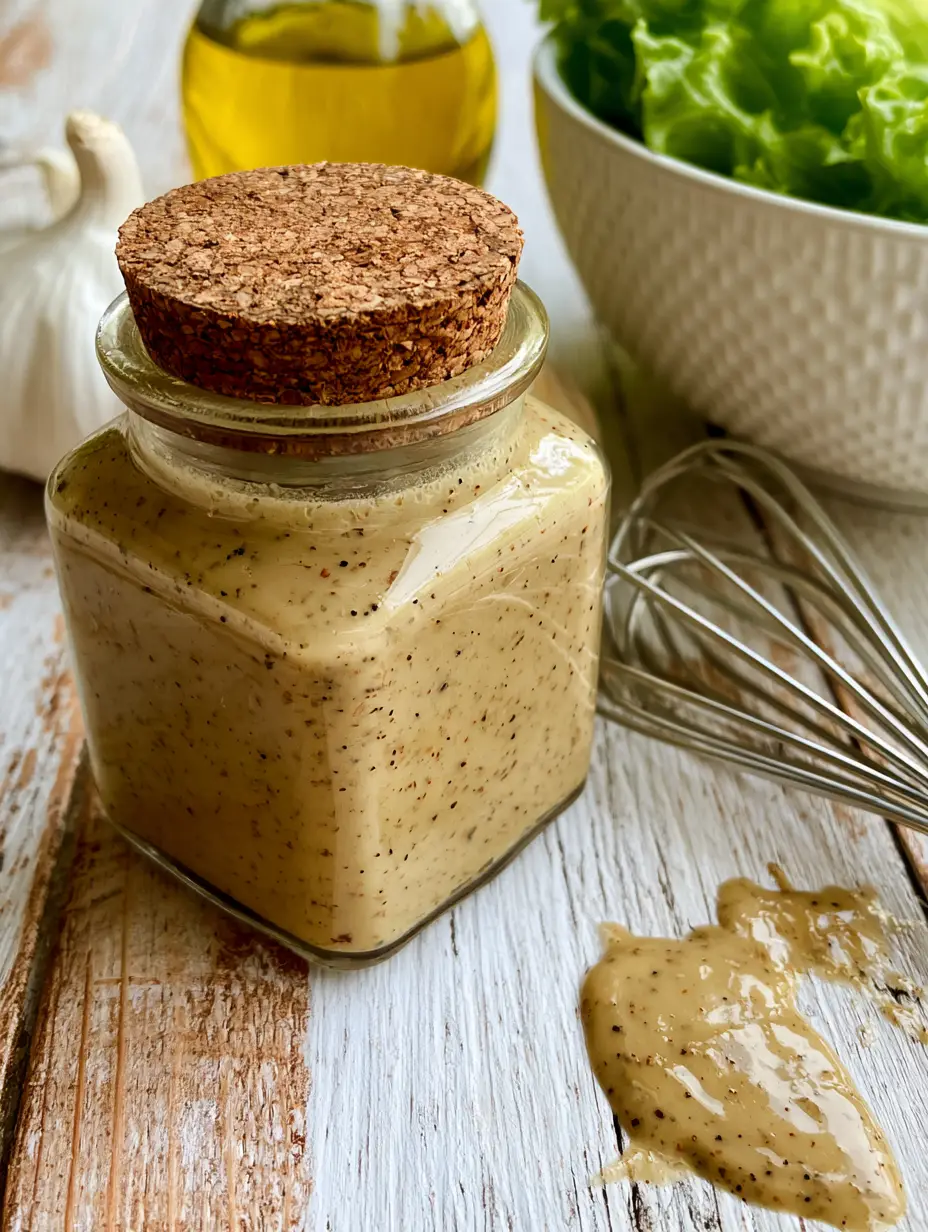
Imagine a dressing so stable and thick that it leaves a heavy residue on your whisk, much like the one resting on a rustic white-washed table in a sun-drenched kitchen. This isn’t just a topping; it is a culinary foundation that balances sharp acidity with the richness of high-quality liquid yellow olive oil.
Whether you are prepping a weekday lunch or hosting a formal dinner, this dressing offers a visual and flavor profile that rivals any high-end restaurant. The visible specks of cracked black pepper and the punch of fresh garlic create a sensory experience that is as beautiful as it is delicious.
The Culinary Science Behind This Emulsified Masterpiece
Creating a Creamy Balsamic Dressing that doesn’t separate requires more than just shaking a jar. It requires an understanding of emulsifiers—ingredients that bridge the gap between water-based vinegar and fat-based oil.
In this recipe, we utilize the natural lecithin in Dijon mustard and the proteins in honey to lock the oil molecules in place. This results in that signature light-tan hue and a texture that is velvety smooth rather than greasy.
When you look at your square glass jar, you should see a homogenous, opaque mixture. If you see streaks of dark vinegar at the bottom, the emulsion hasn’t fully formed, and we will teach you exactly how to fix that.
Why You Will Crave This Zesty Balsamic Blend
- Perfect Emulsification: The dressing achieves a thick, “tan” consistency that never separates, ensuring every bite of your creamy chicken pasta salad is perfectly coated.
- Balanced Flavor Profile: A sophisticated blend of tangy balsamic, spicy Dijon, and sweet honey that cuts through the richness of meats and cheeses.
- Visually Stunning: The contrast of tiny black pepper specks against the light-tan base looks incredible in a square glass jar with a natural cork stopper.
- Versatility: It functions as both a decadent salad topper and a robust grilled pork chop marinade for your weekend cookouts.
Essential Components for the Perfect Creamy Texture
Balsamic Vinegar of Modena: This provides the acidic backbone and the dark pigments that, when emulsified, turn into that beautiful tan color. Use a mid-range balsamic that is syrupy but still pourable.
Liquid Yellow Olive Oil: We recommend a mild extra virgin olive oil. Its buttery notes complement the vinegar without overpowering the delicate specks of black pepper.
Fresh White Garlic Bulb: Using fresh cloves from a whole bulb is non-negotiable for that sharp, aromatic bite. Avoid the pre-minced jarred variety, as it lacks the sulfurous punch needed here.
Dijon Mustard: This is your primary emulsifier. It provides a tiny bit of heat and the structural integrity required to keep the oil and vinegar married together.
Honey or Maple Syrup: A touch of sweetness balances the acetic acid of the vinegar. It also adds a glossy sheen to the final dressing.
Cracked Black Pepper & Kosher Salt: Use a coarse grind for the pepper so the “specks” are visible in the jar. Salt is essential to draw out the flavors of the garlic.
Must-Have Tools for the Home Chef
To achieve the results seen in our kitchen, you will need a stainless steel whisk. The thin wires are necessary to break the oil into microscopic droplets during the emulsification process.
You will also need a medium-sized mixing bowl—glass or stainless steel works best. Avoid plastic bowls, as they can retain oily residues that prevent a clean emulsion from forming.
Finally, for storage and presentation, a square glass jar with a natural cork stopper is ideal. Not only does it look beautiful on a rustic table, but the cork provides a breathable seal that keeps the flavors mellow.
The Step-by-Step Path to a Stable Emulsion
Preparing the Aromatic Base
Begin by smashing two large cloves from your white garlic bulb. Mince them into a fine paste using the side of your knife and a pinch of salt; this releases the natural oils and ensures no large chunks end up in your smooth dressing.
Place the garlic paste into your bowl and add 1/4 cup (60ml) of balsamic vinegar, 1 tablespoon (15g) of Dijon mustard, and 1 tablespoon (21g) of honey. Use your stainless steel whisk to combine these until the mixture is uniform and the honey is fully dissolved.
The Slow-Stream Emulsification Process
This is the most critical stage. While whisking vigorously with one hand, begin drizzling 3/4 cup (180ml) of yellow olive oil in a very thin, steady stream—almost a drip at first. You want to see the dark vinegar mixture gradually lighten in color.
Continue whisking until all the oil is incorporated. As you work, the liquid will transform into a thick, tan cream. You will know you have succeeded when the dressing leaves thick, heavy ribbons on the tines of your whisk.
Seasoning for Visual and Flavor Impact
Now, add 1/2 teaspoon (1g) of freshly cracked black pepper. The specks should be distinct and evenly distributed throughout the tan base. Taste the dressing; it should be zingy but smooth. If it feels too sharp, whisk in another teaspoon of honey.
Pour the finished Creamy Balsamic Dressing into your square glass jar. Secure the natural cork stopper and let it sit for at least 10 minutes before serving to allow the garlic to infuse.
Expert Tips for a Professional Finish
- Temperature Matters: Ensure your olive oil and vinegar are at room temperature. Cold oil is more difficult to emulsify and may result in a greasy texture.
- The “Fix” for Separation: If your dressing breaks (oily at the top, watery at the bottom), place a fresh teaspoon of mustard in a clean bowl and slowly whisk the broken dressing into it.
- Whisking Intensity: Do not be afraid to use some elbow grease. The faster the whisk moves, the smaller the oil droplets become, leading to a more stable “creamy” result.
- Garlic Mellowing: If you find raw garlic too pungent, you can sauté the minced garlic in a tiny bit of the oil for 30 seconds before adding it to the vinegar base.
Storage, Freshness, and Proper Handling
Because this recipe uses fresh raw garlic, it should be stored in the refrigerator in your cork-topped glass jar. It will stay fresh and vibrant for up to 7 days.
Note that high-quality olive oil may solidify slightly when chilled. If this happens, simply set the jar on the counter for 15 minutes and give it a quick stir with your whisk to restore that emulsified tan glow.
We do not recommend freezing this dressing, as the emulsion will break during the thawing process, losing that thick, creamy mouthfeel we worked so hard to achieve.
What to Pair With Your Creamy Balsamic Dressing
This dressing is a chameleon in the kitchen. Its thick texture makes it the perfect companion for a mediterranean pasta salad, where it can coat the nooks and crannies of the pasta without pooling at the bottom of the bowl.
For a lighter option, drizzle it over a marinated cauliflower salad (coming soon) or simple raw mixed greens. The acidity of the balsamic beautifully cuts through the earthiness of cruciferous vegetables.
If you have leftover dressing, try using it as a dipping sauce for warm bread or as a flavorful base for a Italian bow tie pasta salad featuring sun-dried tomatoes and fresh mozzarella.
Common Questions About Homemade Balsamic Vinaigrette
Yes, a blender or immersion blender works excellently and will often produce an even thicker, more stable emulsion than hand-whisking.
Stored in a sealed glass jar in the refrigerator, this dressing will stay fresh and flavorful for up to 7 days.
Yes! This recipe achieves its ‘creamy’ texture through a mechanical emulsion of oil and vinegar rather than adding cream or mayo, making it naturally dairy-free.
The tan color is the result of emulsification. When dark balsamic vinegar and yellow olive oil are beaten into tiny droplets, they reflect light differently, resulting in an opaque, light-tan appearance.
If it isn’t creamy, the emulsion has likely failed or you missed an emulsifier like Dijon mustard. Be sure to drizzle the olive oil in a very slow, thin stream while whisking vigorously.
How to Make the Best Creamy Balsamic Dressing
Creamy Balsamic Dressing: The Ultimate Emulsified Vinaigrette Recipe
Ingredients
Equipment
Method
- In a medium bowl, whisk together the balsamic vinegar, Dijon mustard, honey, and garlic paste until smooth.
- While whisking constantly, slowly drizzle in the olive oil in a very thin stream. The mixture should turn from dark brown to a thick, light-tan cream.
- Whisk in the cracked black pepper and salt. Look for the visible black specks against the tan base.
Notes
Use high-quality balsamic for the best tan color.
Closing & Call to Action
Mastering a homemade Creamy Balsamic Dressing is a rite of passage for every home cook. It elevates the simplest bowl of greens into a culinary event. Once you see those black pepper specks against the tan emulsion in your own square glass jar, you’ll never go back to store-bought again.
Did this recipe change your salad game? We would love to hear from you! Leave a comment below or share your kitchen creations with us. Be sure to follow us on Pinterest for more visually stunning recipe inspiration!